Reducing diabetes supply waste means using your medical resources efficiently to avoid surplus, unnecessary expense, and environmental harm. People managing diabetes with insulin generate 1.2 to 1.4kg of waste monthly, including packaging, disposable devices, and expired supplies. That number adds up fast, and most of it is preventable. The good news is that practical strategies, from auditing your inventory to using reusable devices and selling surplus supplies, can make a real difference for your wallet and the environment.
How to reduce diabetes supply waste by auditing your inventory
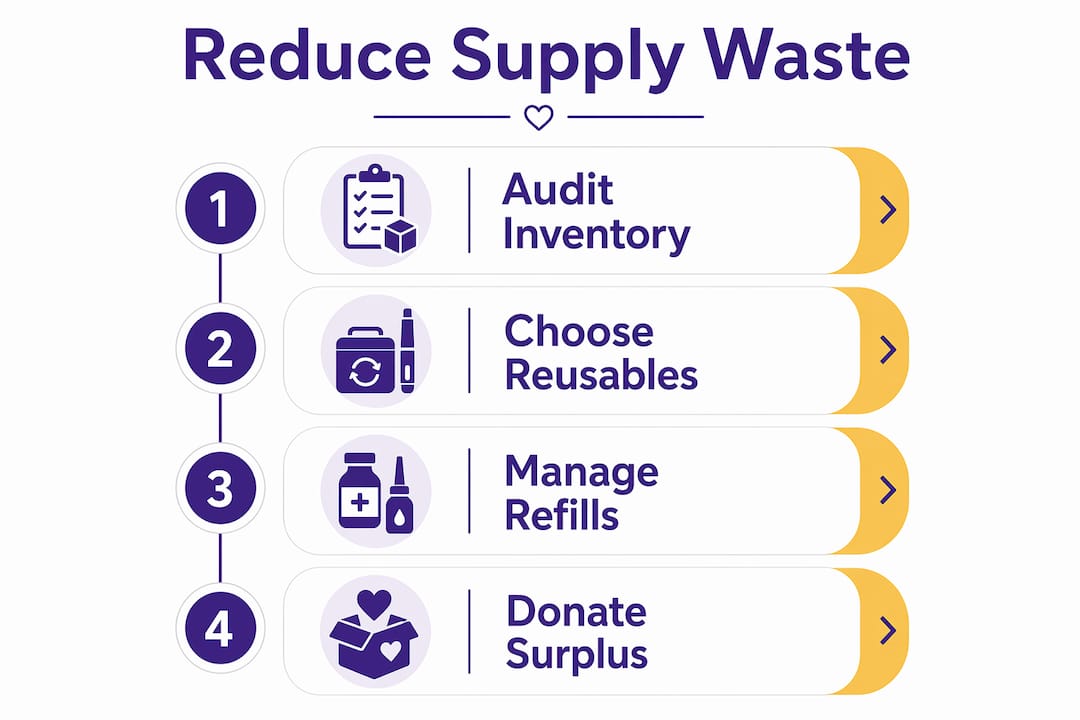
Inventory auditing is the single highest-impact behavior for cutting supply waste. Auditing before auto-refills consistently yields the biggest reduction in expired and excess supplies. Without a clear picture of what you already have, you keep ordering more and the pile grows.
Here is a simple process to audit your diabetes supply inventory:
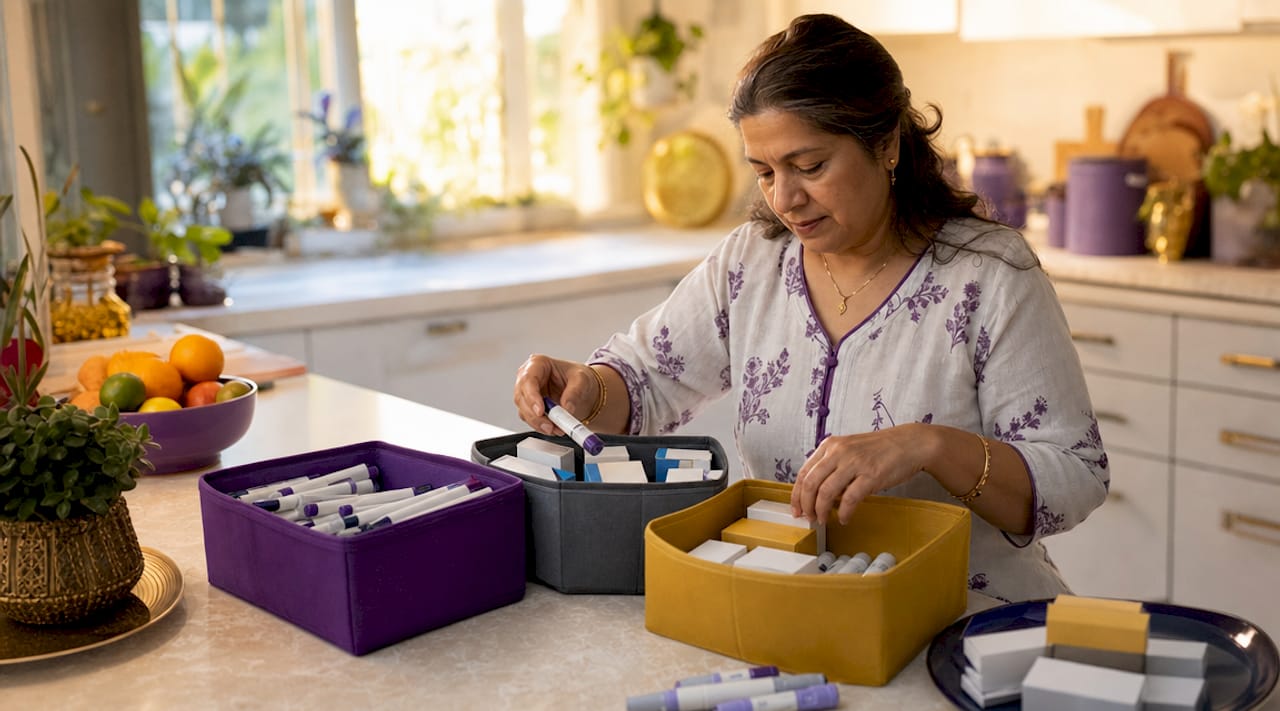
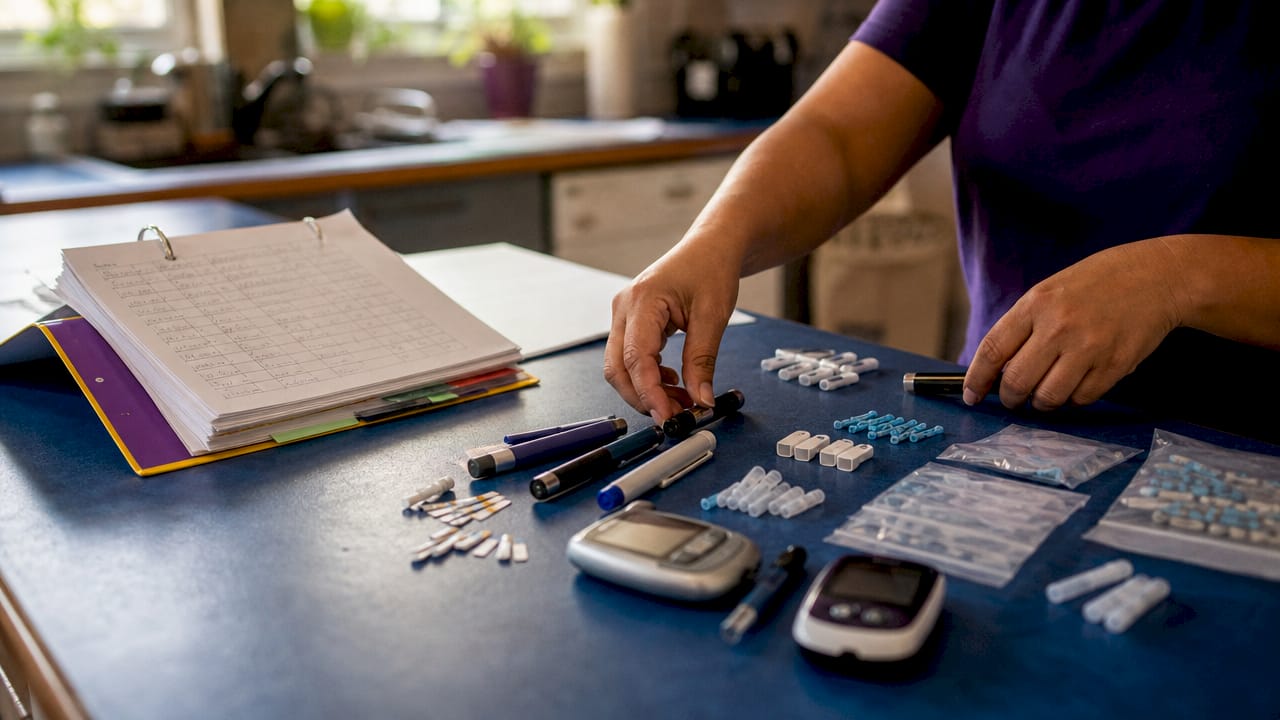
- Gather everything in one place. Pull all supplies from drawers, cabinets, and bags. Include test strips, lancets, insulin pens, CGM sensors, and infusion sets.
- Check expiration dates. Separate anything expired or expiring within 30 days. Expired supplies are unusable and represent money already lost.
- Count and document quantities. Record what you have and how much you use per week. A simple spreadsheet or a free app like Medisafe works well for this.
- Compare against your refill schedule. If you have a 90-day supply of test strips and your next shipment arrives in two weeks, contact your insurer or pharmacy to delay the order.
- Repeat every 60 days. Supplies change as your therapy changes. A quarterly audit is the minimum; every two months is better.
The benefit of this process goes beyond reducing clutter. You avoid paying for supplies you already have, and you catch expiring items in time to use or donate them. A well-maintained diabetic supply inventory also gives you leverage when talking to your provider about adjusting prescriptions.
Pro Tip: Set a phone reminder for the first day of every other month to do a 10-minute supply count. Consistency matters more than perfection.
What reusable and shelf-stable supplies can do for your waste footprint
Two-thirds of people with diabetes want more reusable devices, and half are concerned about packaging waste. The market is responding, but you can act now with what is already available.
Reusable and longer-lasting devices that reduce disposable waste include:
- Reusable insulin pens such as the Novo Nordisk NovoPen 6 or Sanofi’s AllStar, which use replaceable cartridges instead of single-use pens
- Dexcom G7 and Freestyle Libre 3 CGM sensors, which have shorter wear cycles but generate less packaging per reading than older systems
- Omnipod DASH and Omnipod 5 pods, which Insulet supports through a pod return program for decontamination and industrial recycling at no cost to you
For shelf-stable supplies like alcohol swabs, lancets, and gauze, buying in bulk reduces per-unit packaging waste significantly. A 500-count box of BD Ultra-Fine lancets produces far less plastic waste than five 100-count boxes. The cost per unit drops too, which is a direct way to reduce diabetes supply costs without changing your routine.
| Supply type | Reusable option | Waste reduction benefit |
|---|---|---|
| Insulin delivery | Reusable pen with cartridges | Eliminates single-use pen barrel waste |
| Glucose monitoring | Dexcom G7, Freestyle Libre 3 | Less packaging per sensor cycle |
| Pod-based insulin delivery | Omnipod with pod return program | Industrial recycling instead of landfill |
| Lancets and swabs | Bulk purchase (500+ count) | Less packaging per unit used |
Manufacturer recycling programs are gaining traction as real sustainability measures, not just marketing. Insulet’s program is one of the few that provides a verified recycling pathway. Check your device manufacturer’s website for current return options before assuming none exist.
Pro Tip: When switching to a reusable pen, ask your pharmacist for a cartridge-compatible prescription. Some providers default to disposable pens unless you specifically request the reusable version.
How insurance refill cycles create surplus and what you can do about it
Insurance 90-day auto-refill cycles ship fixed quantities regardless of how much you actually use. This is one of the most common and least discussed reasons why diabetes supply surplus builds up at home. When your consumption changes, the shipments do not automatically adjust.
The problem compounds when therapy changes. GLP-1 prescriptions grew over 300% from 2022 to 2025. Patients who transitioned from insulin to GLP-1 therapy were left with large quantities of insulin pens, needles, and test strips they could no longer use. That is a direct example of why diabetes supply transitions waste money and generate avoidable surplus.
Insurance contract renegotiations in 2026 have made this worse by narrowing brand selections and forcing patients onto substitute products. If your insurer switches your preferred CGM brand, you may be left with sensors that no longer match your reader or receiver.
Steps to manage insurance-driven surplus:
- Call your insurer before each refill cycle. Ask to delay or reduce a shipment if you have more than a 30-day supply on hand. Most insurers allow this with a simple phone request.
- Request brand-specific prescriptions. Ask your doctor to write “dispense as written” or specify the exact brand to prevent automatic substitutions.
- Opt out of auto-refill when possible. Many mail-order pharmacies allow you to switch to on-demand ordering. This gives you control over timing and quantity.
- Track therapy changes immediately. The moment your doctor discusses a therapy change, contact your pharmacy and insurer to pause upcoming shipments before they ship.
Understanding why mail order creates surplus is the first step to stopping it. The system is not designed with your storage space or consumption rate in mind. You have to manage it actively.
What to do with surplus, unused, or expired diabetes supplies
Surplus supplies sitting in a drawer are not just clutter. They represent money you have already spent and resources that could help someone else. Here is how to handle them responsibly.
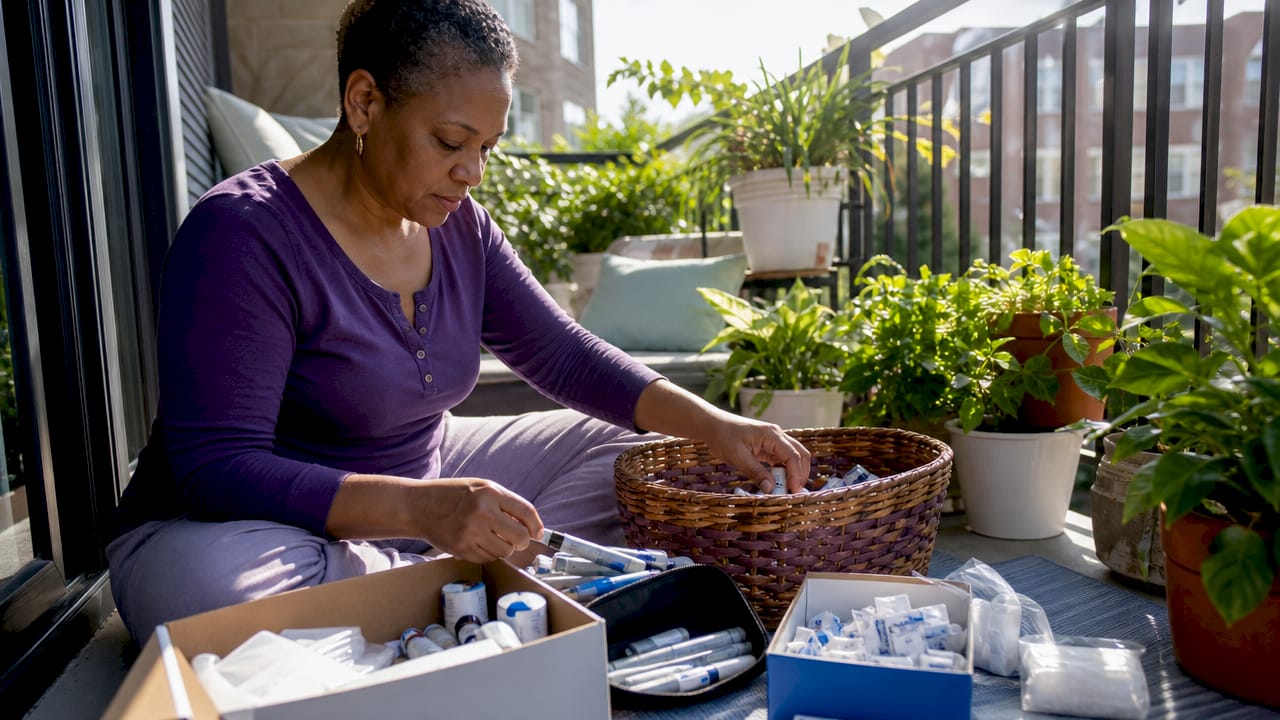
- Sort by condition. Separate sealed and unexpired supplies from opened or expired ones. Only sealed, unexpired supplies have resale or donation value.
- Check legal return options. Pharmacies and insurers cannot accept returns of dispensed supplies, even if they are sealed. This is a regulatory restriction, not a policy choice. Do not waste time trying to return supplies to CVS, Walgreens, or your mail-order pharmacy.
- Sell sealed, unexpired supplies. Buyback platforms pay for sealed supplies and connect them with buyers who need affordable options. Dexcom G6, Dexcom G7, Freestyle Libre sensors, Omnipod pods, and sealed test strips are all in demand. This is the fastest way to recover value from surplus.
- Donate if selling is not an option. Organizations like Insulin Help and local free clinics accept sealed, unexpired supplies. Donating is the right move when supplies are close to expiration or when you prefer not to sell. Compare your options carefully before deciding. A donation vs. selling comparison can help you choose what fits your situation.
- Dispose of sharps and biohazard materials safely. Used lancets, pen needles, and syringes must go into an FDA-cleared sharps container. Many pharmacies, including Walgreens and CVS, offer free sharps disposal programs. Never place loose sharps in household trash.
Expired supplies should never be used, sold, or donated. Discard them through your local household hazardous waste program or ask your pharmacist about medication disposal options. Safety comes first.
Using HSAs to purchase supplies and taking advantage of manufacturer insulin price caps at $35 per month are two additional ways to reduce diabetes supply costs without changing your clinical routine. Spending smarter upfront means less surplus to manage later.
Key takeaways
Cutting diabetes supply waste requires four consistent actions: auditing your inventory, choosing reusable devices, managing insurance refill cycles, and responsibly handling surplus through selling or donation.
| Point | Details |
|---|---|
| Audit every 60 days | Count supplies and compare against refill schedules before each shipment arrives. |
| Choose reusable devices | Reusable insulin pens and manufacturer recycling programs cut disposable waste significantly. |
| Manage auto-refills actively | Call your insurer to delay or reduce shipments when you have excess supply on hand. |
| Sell sealed surplus supplies | Buyback platforms pay for sealed, unexpired Dexcom, Freestyle Libre, and Omnipod supplies. |
| Dispose of sharps safely | Use FDA-cleared sharps containers and pharmacy disposal programs for biohazard materials. |
What I have learned from years of watching supply waste pile up
I have seen the same pattern repeat itself more times than I can count. Someone switches therapy, or their insurer forces a brand change, and suddenly there is a cabinet full of supplies they cannot use and cannot return. The frustration is real. But what strikes me most is how preventable it is once you stop treating surplus as a safety net.
The mindset shift that matters most is moving from “more is safer” to “enough is enough.” Keeping a 90-day buffer feels reassuring until you realize your therapy changed three months ago and that buffer is now dead weight. Auditing your supplies regularly is not about being rigid. It is about staying in control of your own resources.
I also think the environmental side of this deserves more attention than it gets. Diabetes management is not optional, and the waste it generates is not a personal failing. But choosing a reusable pen over a disposable one, or returning Omnipod pods through Insulet’s program, are real choices with real impact. You do not have to choose between managing your health and being responsible about waste. The two are not in conflict.
The secondary market for sealed supplies is one of the most underused tools available to people with diabetes. Selling surplus supplies through a local buyback service is not complicated, and it puts money back in your pocket while keeping usable supplies out of the trash. That is a win on every level.
— Liliana
Turn your surplus supplies into cash with Orlando Diabetic Supplies Buyback
If you have sealed, unexpired supplies sitting unused after a therapy change or insurance switch, Orlando Diabetic Supplies Buyback makes it easy to recover their value. The process is straightforward: contact the team, get a fair quote, and receive same-day cash for accepted items.
Orlando Diabetic Supplies Buyback accepts Dexcom G6 and G7 sensors, Freestyle Libre 2 and 3, Omnipod pods, and sealed test strips. There is no complicated process and no waiting around. If you are ready to clear out your surplus and get paid for it, start by learning how to get cash for unused supplies. You can also explore options for selling previous device supplies if you have recently switched devices. Local, fast, and honest.
FAQ
How much waste does diabetes management generate per month?
People who use insulin generate roughly 1.2 to 1.4kg of waste monthly, including disposable devices and packaging. This figure covers insulin pens, lancets, test strip vials, CGM applicators, and related materials.
Can I return unused diabetic supplies to my pharmacy?
No. Retail pharmacies and insurers are legally prohibited from accepting returns of dispensed supplies, even when they are sealed and unexpired. Your best options are selling through a buyback service or donating to a qualified organization.
What diabetic supplies can I sell for cash?
Sealed, unexpired supplies with active demand include Dexcom G6 and G7 sensors, Freestyle Libre 2 and 3 sensors, Omnipod DASH and Omnipod 5 pods, and sealed boxes of test strips. All items must be unopened and within their expiration date.
How do I stop my insurance from sending too many supplies?
Contact your insurer or mail-order pharmacy directly and request on-demand ordering instead of automatic refills. You can also ask your doctor to write a brand-specific prescription to prevent substitutions that leave you with incompatible surplus.
Is it safe to donate or sell supplies that are close to expiration?
Supplies with less than 90 days until expiration are generally not accepted by buyback services and may not be practical for donation recipients. Check expiration dates before offering any supplies, and never sell or donate expired products.