
Fair market value for test strips is the price a willing buyer and seller agree on based on brand, expiration date, packaging condition, quantity, and current market demand. In the diabetic supplies world, this figure is not fixed. It shifts with meter popularity, supply availability, and whether you are buying retail or selling back unused boxes. Understanding what is fair market value for test strips helps you avoid overpaying at the pharmacy, get a fair price when selling extras, and budget more confidently for your diabetes management.
What is fair market value for test strips?
Fair market value, in the context of diabetic test strips, is the standard industry term for the price a product would sell for under normal market conditions. No pressure, no distress, and both parties informed. For test strips specifically, five core factors drive that number: brand reputation, expiration date, packaging integrity, quantity available, and current market demand.
Retail prices in the US range from $0.10 to $0.80 per strip for over-the-counter consumers as of 2026, with branded system-locked strips sitting at the higher end. That spread is wide enough to matter. A box of 50 branded strips can retail for up to $75.99, while institutional contract pricing can drop as low as $12.50 per box for the same strip count.
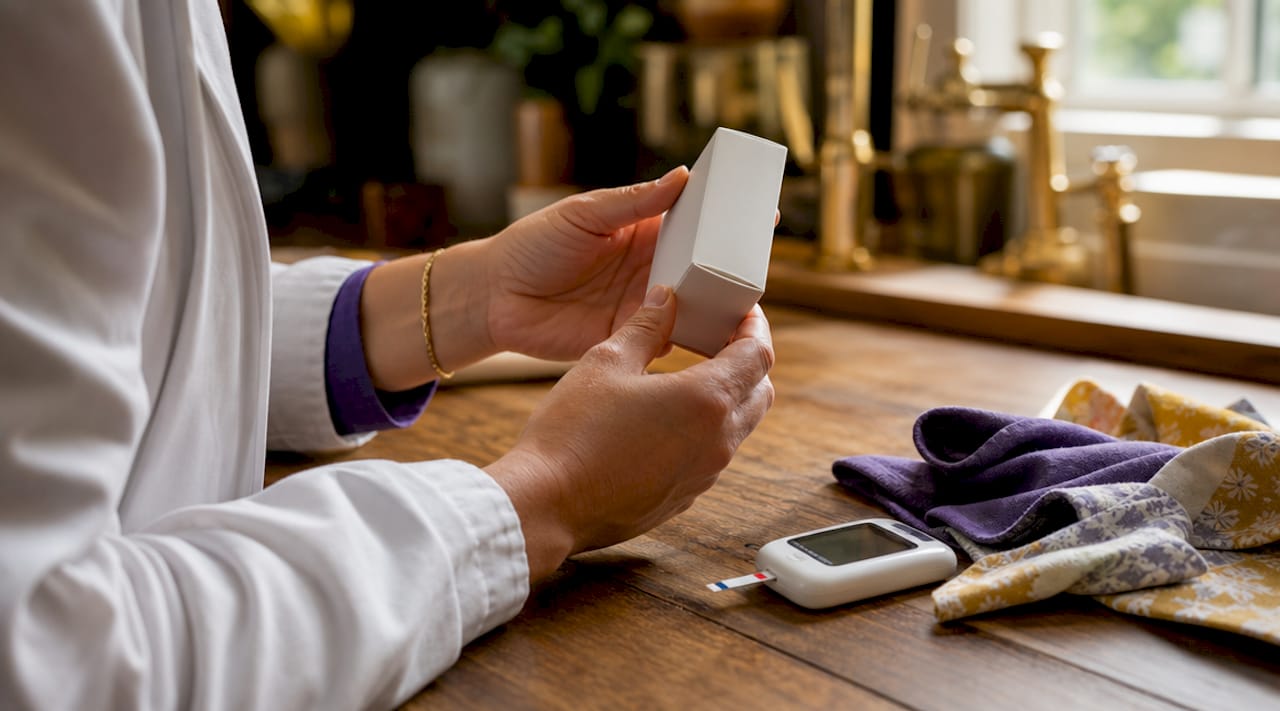
The value of test strips also fluctuates with the popularity of the glucose meter they are designed for. When a meter becomes widely used, demand for its compatible strips rises and so does the resale price. When a meter is discontinued, leftover strips lose value fast. This dynamic makes the test strips market price more like a commodity than a fixed retail product.
What factors determine the fair market value of diabetic test strips?
Several specific variables shape how much your test strips are worth, whether you are buying or selling.
- Brand and meter compatibility. Strips made for popular meters like the Abbott FreeStyle Libre, Dexcom-compatible systems, or Bayer Contour carry higher demand and therefore higher value. Learn more about how brand differences affect value in the resale market.
- Expiration date. Boxes expiring within 6 months are routinely excluded from resale listings. Buyers want shelf life. Strips with more than 6 months remaining are considered the gold standard for value.
- Packaging condition. Factory-sealed boxes command the best prices. Opened, damaged, or repackaged boxes lose value immediately because buyers cannot verify the contents or storage history.
- Quantity. Larger quantities attract bulk buyers and reduce per-unit cost. A single box of 50 strips has less leverage than a lot of 400.
- Storage history. Exposure to heat or moisture compromises strip accuracy and reduces buyer willingness to pay. Strips stored in a cool, dry place hold their value better.
- Market demand. Demand shifts with insurance coverage changes, meter recalls, and seasonal supply trends.
Understanding these factors helps you set realistic expectations before you buy or sell. A sealed box of FreeStyle Lite strips with 10 months of shelf life is worth considerably more than an opened box expiring next month.
Pro Tip: Check the expiration date and storage conditions before pricing your strips. These two factors alone can move your offer up or down by 30% or more in the resale market.
How do branded, generic, and bulk-purchase test strips compare in value?
Pricing for test strip kits varies significantly depending on whether you are buying branded retail boxes, institutional white-box versions, or bulk quantities online.
| Strip Type | Typical Price Range (per strip) | Key Consideration |
|---|---|---|
| Branded retail (50-count box) | $0.50 to $0.80 | Highest cost; widely available at pharmacies |
| Institutional white box | $0.25 to $0.45 | Same accuracy; 30-50% lower cost |
| Bulk online (100-400 count) | $0.15 to $0.40 | Best per-strip value; requires planning |
| Legacy branded strips (retail) | Up to $1.40 per strip | Older formats; limited availability |
| Generic compatible strips | $0.10 to $0.30 | Lower cost; verify meter compatibility |
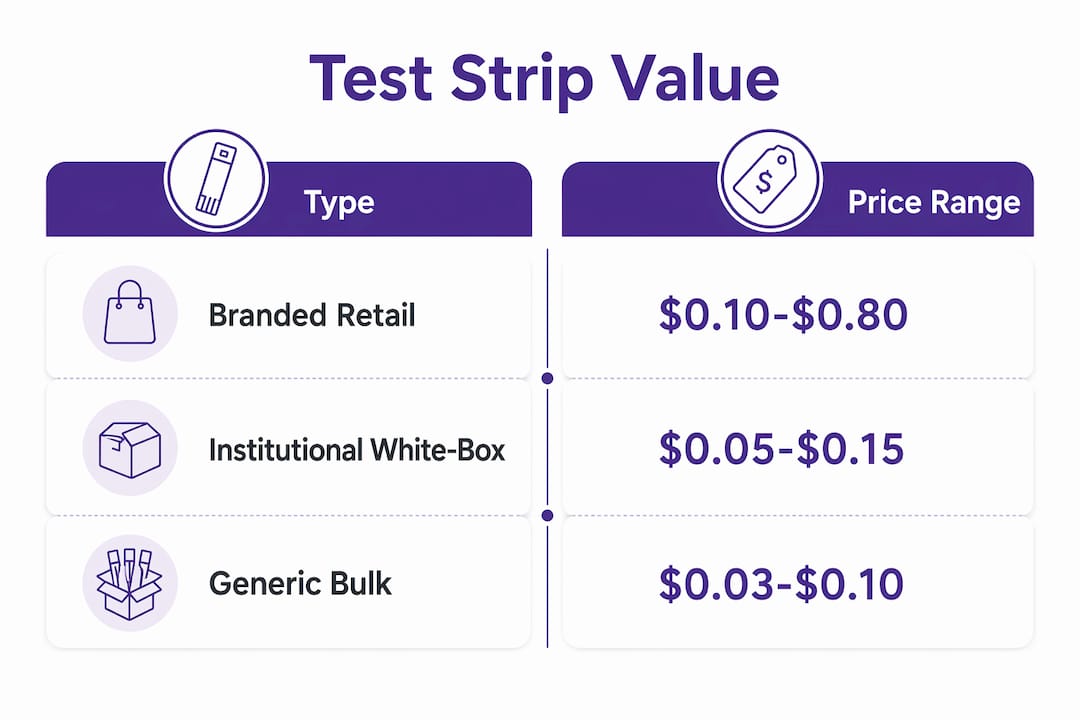
Institutional white-box strips are manufactured to the same standards as retail-branded yellow boxes and are commonly used in healthcare facilities. They are legal for consumer purchase and can save hundreds of dollars annually. The only difference is the packaging. The strip inside is functionally identical.
Buying in bulk is the other major lever for reducing cost. Purchasing 100 to 400 strips at a time lowers the cost per strip by 15 to 45% compared to standard 50-count retail boxes. Consumers can save over $30 per box buying bulk online versus local pharmacy prices. That adds up fast for someone testing multiple times per day.
Generic compatible strips occupy the lowest price tier, but compatibility is not guaranteed across all meters. Always confirm that a generic strip is validated for your specific meter model before purchasing. A strip that triggers error messages wastes money regardless of its sticker price.
What hidden costs and market nuances affect the true value of test strips?
The average price of glucose test strips on the shelf is only part of the story. Several hidden costs affect what you actually pay per accurate reading.
Error-related wastage is one of the most overlooked factors. When a strip produces an error message due to an insufficient blood sample, you discard it and use another. Some meters require less blood, reducing strip waste by 20 to 30 strips per year. That reduction directly lowers your true cost per test, even if the strips themselves cost slightly more.
Retail pharmacy markup is another hidden cost. Retail pharmacies treat test strips as high-margin specialty items, creating significant price disparity compared to online specialist stores. Comparing unit price rather than box price is the most reliable way to identify genuine savings. A 100-count box at $45 beats a 50-count box at $30 every time.
Here are the other nuances worth knowing:
- Insurance coverage can make a $0.80-per-strip brand effectively free, but coverage varies by plan and meter type. Always verify your formulary before switching brands.
- Expired or improperly stored strips carry real risk. Inaccurate readings from degraded strips can lead to poor dosing decisions, which is a cost that goes far beyond dollars.
- Resale market risks include buying strips that were improperly stored or are closer to expiration than advertised. Reputable sellers disclose storage history and expiration dates upfront.
Pro Tip: When comparing test strip options, calculate the cost per accurate test, not just the cost per strip. Factor in your meter’s error rate and your testing frequency to get the real number.
Understanding total diabetes management costs means looking past the sticker price. Reliability, wastage, and insurance all shape what you actually spend each month.
How to assess and maximize fair market value when buying or selling
Whether you are shopping for strips or selling unused boxes, a clear process protects your money.
- Calculate unit price, not box price. Divide the total cost by the number of strips. A $48 box of 100 strips costs $0.48 per strip. A $30 box of 50 costs $0.60. The larger box wins even though it looks more expensive.
- Check expiration dates before any transaction. Strips with more than 6 months of shelf life hold full market value. Anything under 3 months is difficult to sell and risky to buy for long-term use.
- Inspect packaging integrity. Factory-sealed boxes are the only acceptable standard for resale. If the seal is broken, the value drops to near zero in the secondary market.
- Consider institutional white-box options. If your meter is compatible, white-box strips from specialized distributors offer the same accuracy at 30 to 50% less. This is one of the least-known cost-saving options available to consumers.
- Know the legal requirements before selling. Legal resale of diabetic test strips requires that strips be unopened, unexpired, and properly stored. Sellers must also avoid violating program rules on medical supply resale. Selling strips received through Medicare or Medicaid is prohibited.
- Use current market data to price accurately. Check listings on reputable buyback services and compare against current retail prices to set a fair asking price. Orlando Diabetic Supplies Buyback offers transparent, same-day pricing for sealed strips in the Orlando area.
If you have unused strips because you switched meters, changed insurance, or received more than you needed, selling them is a practical option. Unused strips sitting in a drawer lose value as they approach expiration.
Key takeaways
The fair market value of test strips is determined by brand, expiration date, packaging condition, quantity, and demand. No single factor works in isolation.
| Point | Details |
|---|---|
| Price range in 2026 | Retail strips cost $0.10 to $0.80 per strip; institutional pricing can drop to $0.25 per box. |
| Expiration is critical | Strips with more than 6 months of shelf life hold full resale value; under 3 months is nearly unsellable. |
| Bulk buying saves money | Buying 100 to 400 strips at a time reduces per-strip cost by 15 to 45% versus retail 50-count boxes. |
| White-box strips are legitimate | Institutional white-box strips are functionally identical to retail versions and cost 30 to 50% less. |
| Legal resale requirements | Strips must be unopened, unexpired, and properly stored to qualify for legal resale. |
What I have learned about test strip value after years in this market
Working with diabetic supplies every day, I have seen the same mistakes repeated by both buyers and sellers. The biggest one is treating all test strips as interchangeable. They are not. A sealed box of FreeStyle Lite strips with 9 months of shelf life and a box of the same brand expiring in 6 weeks are not the same product, even if they look identical on the outside.
The second mistake is ignoring the white-box option entirely. Most people have never heard of institutional strips. Once they learn that the strip inside is manufactured to the same standard as the retail version, they feel like they have been overpaying for years. Because they have been.
I also see sellers undervalue their strips because they do not know the current market. Someone with four sealed boxes of Contour Next strips might accept $10 when the fair price is $30 or more. Knowing the test strips market price before you negotiate is the difference between a fair deal and a bad one.
My honest advice: check expiration dates religiously, buy in bulk when your usage is predictable, and do not let unused strips expire in a drawer. Sell them while they still have value. The resale market for diabetic supplies is active, and there are buyers who genuinely need what you have. For anyone budgeting around diabetes, planning your supply costs in advance makes a real difference.
— Liliana
Get fair cash for your unused test strips today
If you have sealed, unexpired test strips sitting unused, Orlando Diabetic Supplies Buyback makes it simple to turn them into cash. We serve Orlando, Florida and surrounding areas with same-day offers on Dexcom G6 and G7, Freestyle Libre, Omnipod, and sealed test strips.
No waiting, no guesswork. You contact us, we assess your supplies, and you get a fair offer the same day. Our pricing reflects real market value, not lowball estimates. We are a local business built on trust, and we treat every seller with honesty and respect. Visit our page on how to sell unused supplies to see exactly how the process works and what we accept.
FAQ
What is the fair market value for test strips in 2026?
Fair market value for test strips ranges from $0.10 to $0.80 per strip in the US retail market as of 2026, depending on brand, quantity, and expiration date. Institutional pricing can drop as low as $0.25 per strip for white-box versions of the same product.
How much can I get for selling unused test strips?
The resale price depends on brand, expiration date, and packaging condition. Sealed boxes with more than 6 months of shelf life from popular brands like FreeStyle Lite or Contour Next typically fetch the highest offers from buyback services.
Are white-box test strips as good as retail branded strips?
Yes. Institutional white-box test strips are manufactured to the same standards as retail-branded versions and are commonly used in healthcare facilities. They are legal for consumer purchase and cost 30 to 50% less than pharmacy retail prices.
What makes test strips lose resale value?
Strips lose value when they are close to expiration, have damaged or opened packaging, or have been stored in heat or humidity. Resale listings commonly exclude strips expiring within 6 months because buyers prioritize reliability.
Is it legal to sell unused diabetic test strips?
Selling unused test strips is legal provided they are factory sealed, unexpired, and properly stored. Strips obtained through Medicare or Medicaid cannot be resold, as this violates federal program rules.