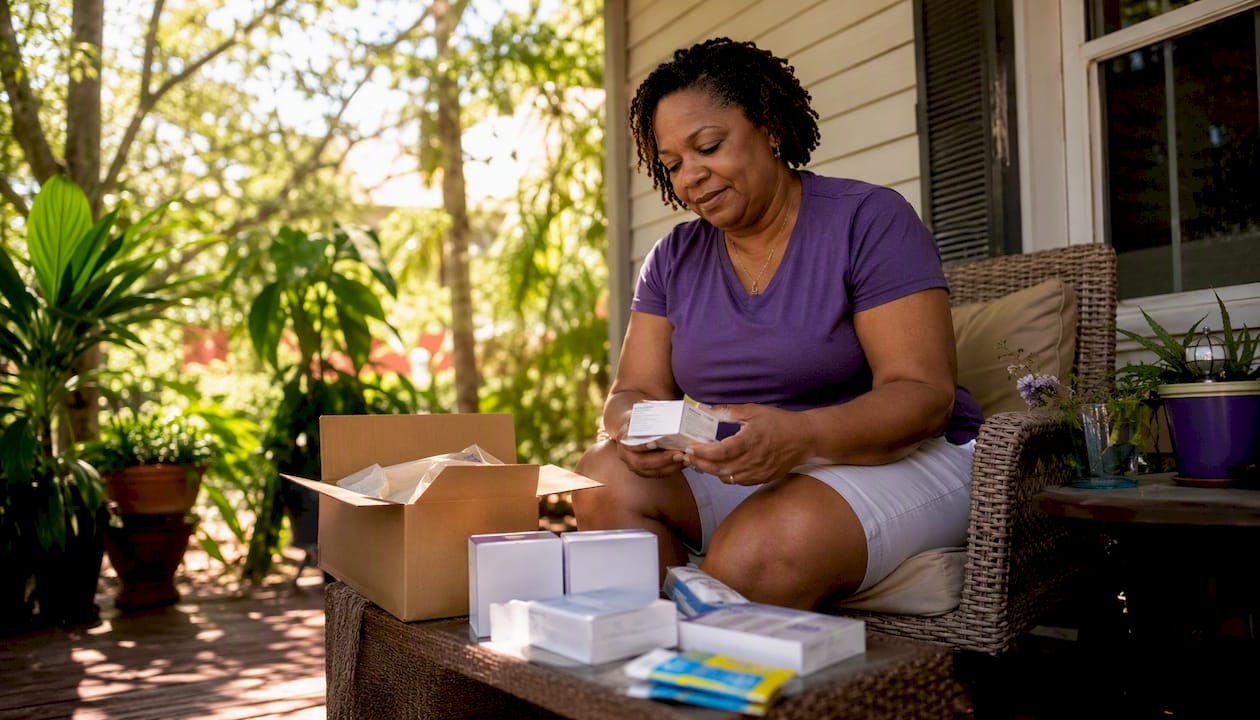

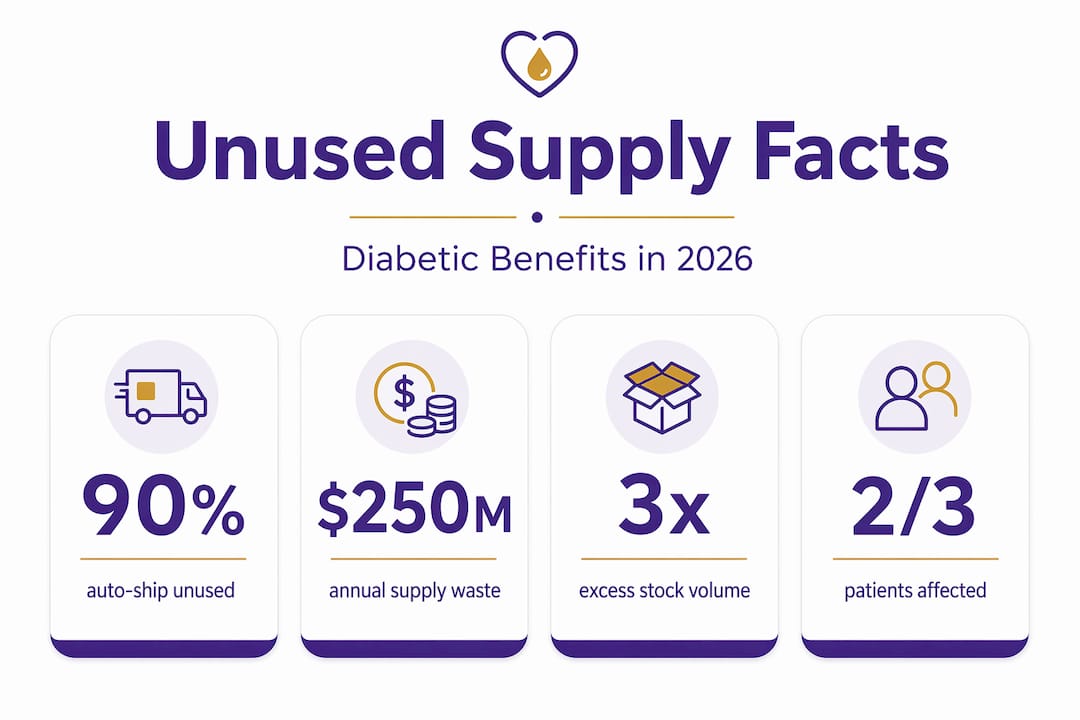
Millions of Americans with diabetes are sitting on drawers full of unopened test strips, unused CGM sensors, and sealed insulin pens. Understanding why diabetic supply benefits go unused is not just frustrating trivia. It reveals a real pattern that costs patients money, wastes medical resources, and leaves people without supplies they already paid for. The causes run deeper than forgetfulness. They stretch from insurance policies to gaps in education to legal barriers most people never knew existed.
Table of Contents
- Key takeaways
- Systemic causes of diabetic supply overstock
- Why patients stop using their supplies
- Donating or selling unused supplies
- Maximizing diabetic supply benefits with smart financial tools
- My honest take on why this problem keeps going
- Turn your unused supplies into cash or help
- FAQ
Key takeaways
| Point | Details |
|---|---|
| Insurance auto-refills drive waste | 90-day auto-shipment cycles send supplies whether you need them or not, creating household surpluses. |
| Therapy changes leave supplies behind | GLP-1 prescriptions grew over 300% between 2022 and 2025, leaving insulin pens and strips unused. |
| Education gaps kill CGM adoption | Patients who never learn proper sensor application or data reading abandon devices quickly. |
| FSA and HSA rules catch people off guard | FSAs expire; HSAs roll over. Knowing the difference prevents forfeited funds and wasted supply purchases. |
| Selling unused supplies is legal and practical | Unopened, unexpired over-the-counter diabetic supplies can be sold or donated under specific guidelines. |
Systemic causes of diabetic supply overstock
The single biggest driver of unused diabetic supplies is not patient behavior. It is the structure of insurance itself. Most plans operate on mandatory 90-day auto-refill cycles that ship supplies on a fixed calendar, regardless of whether you have actually used what arrived last quarter. If your doctor adjusts your dosage, you switch therapies, or you simply test less often, the supplies keep coming.
This has become even more visible in recent years as GLP-1 medications like semaglutide transformed diabetes management for millions of Type 2 patients. Many of these patients dramatically reduced or completely stopped using insulin, leaving behind full boxes of test strips and insulin pens with years of shelf life remaining. According to open health reporting, GLP-1 prescriptions surged over 300% between 2022 and 2025. The supplies that arrived before that prescription switch did not disappear. They stacked up.
Here is why that surplus stays stuck at home rather than being recirculated:
- Pharmacies cannot legally accept returns. Major pharmacy chains restrict returns on hygiene-sensitive or refrigerated products. Once a product leaves the pharmacy, CVS and similar retailers cannot verify whether it was stored correctly, which makes reshelving it a safety and liability issue.
- No federal redistribution system exists. There is no government program that tracks or reclaims billions in unused supplies discarded every year. Insurers pay. Pharmacies ship. No one collects the surplus.
- Patients are rarely told to pause refills. Providers focus on prescribing and adjusting therapy. Coordinating with insurance to modify auto-refill schedules is typically left to the patient, who may not realize it is an option.
- Treatment changes happen faster than shipping cycles. A therapy shift can happen at a single appointment. The next auto-refill often processes within days, before any supply adjustment takes effect.
The policy gap where insurers, pharmacies, and regulators operate without any standardized process for reclaiming or redistributing paid but unused supplies is a primary reason why diabetic supply usage issues persist at a household level.
This is not a fringe problem. The U.S. healthcare system generates enormous volumes of sealed, unexpired diabetic supplies every year with no coordinated mechanism to recover their value.
Why patients stop using their supplies
The systemic causes explain the volume of waste. But there is a second layer of reasons why diabetic supply benefits go unused, and it lives closer to home. Patient education, or the lack of it, plays a major role that the medical community consistently underestimates.
Continuous glucose monitors are a perfect example. When a patient receives a Dexcom G6 or Freestyle Libre for the first time, they often get a box, a brief tutorial, and a send-off. What they frequently do not get is hands-on instruction for skin preparation, proper sensor placement, or troubleshooting adhesion issues. The result is predictable: the sensor falls off, the patient gets frustrated, and the remaining sensors in the box go untouched. Research confirms that inadequate CGM guidance is one of the leading reasons patients abandon these devices.
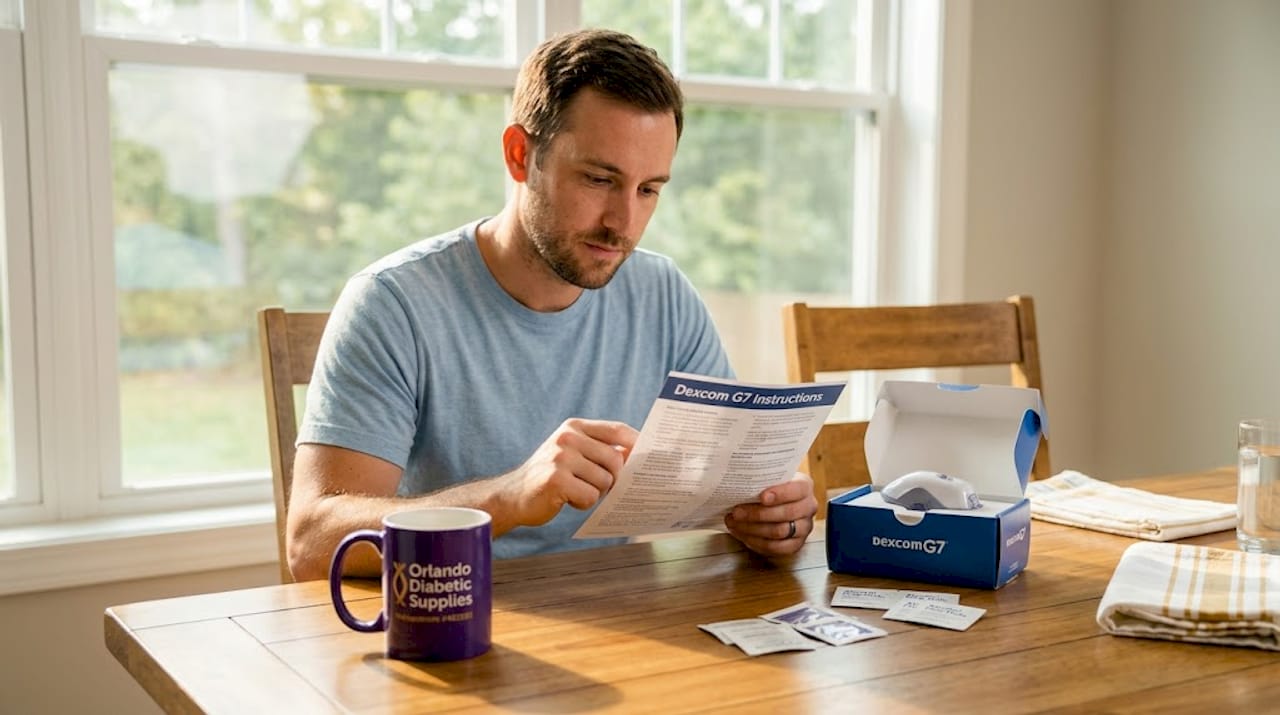
There is also the data problem. A CGM generates a continuous stream of glucose readings, trend arrows, and pattern reports. That information is only useful if someone explains what it means. Many patients report never having their CGM data reviewed or explained by a clinician. When the data feels meaningless, wearing the device feels pointless. The sensors accumulate.
Here are the most common behavioral reasons for unused diabetic aids:
- No follow-up after device initiation. A single training session is rarely enough. Without a follow-up visit or phone check-in, patients figure things out on their own or give up.
- Skin and adhesion failures. Improper prep with wipes, sweaty skin, or placing sensors near waistbands causes early detachment. Patients often blame themselves rather than the technique.
- Overwhelming complexity. Apps, alarms, Bluetooth pairing, and trend arrows can feel like too much too fast, especially for newly diagnosed patients managing multiple lifestyle changes at once.
- Psychological burnout. Diabetes management is relentless. Some patients consciously or unconsciously step back from the data as a way to cope, which means supplies sit unused.
Pro Tip: If your CGM keeps falling off, try cleaning the site with an alcohol wipe, letting it dry completely for at least 60 seconds, then applying a skin-tac adhesive wipe before placing the sensor. This single change prevents the majority of adhesion failures.
Understanding these reasons for unused diabetic aids matters because they are fixable. Better support from pharmacists and providers, combined with patient willingness to ask for help, can significantly reduce the pile of unused technology in the drawer.
Donating or selling unused supplies
Once you have unused supplies at home, your options are more structured than most people realize. The challenges using diabetic benefits often extend to figuring out what to do with the surplus. Here is a clear breakdown.
| Option | What qualifies | Key conditions |
|---|---|---|
| Sell to a buyback service | Test strips, CGM sensors, Omnipod pods, insulin pens | Unopened, unexpired, original packaging |
| Donate to aid organizations | Insulin, test strips, syringes | Unopened, unexpired, strict handling requirements |
| Return to pharmacy | Almost nothing | Not accepted in most cases |
| Dispose as medical waste | Opened, expired, damaged items | Follow local disposal guidelines |
For donation specifically, organizations like Insulin For Life accept only unopened and unexpired supplies to protect recipients from compromised products. This is a meaningful option if your supplies are still well within their expiration date and you want to direct them toward people who cannot afford their own.
For resale, here is what you need to know:
- Over-the-counter supplies like test strips and CGM sensors can be legally sold if they are sealed and unexpired.
- State laws vary slightly, so working with a local and established buyback service is the safest approach.
- Selling through a trusted local buyer means faster payment and fewer complications than online marketplaces.
- You can sell Dexcom G7 sensors and other advanced CGM products if the packaging remains intact.
The key point is that expired or compromised supplies should never be sold or donated. Responsible disposal protects everyone in the chain.
Maximizing diabetic supply benefits with smart financial tools
One of the most underutilized diabetic resources in American healthcare is the tax-advantaged spending account. FSAs and HSAs both cover diabetic supplies, but they work very differently, and confusing them leads directly to wasted money and wasted supplies.
FSAs, or Flexible Spending Accounts, are tied to your employer and typically have a use-it-or-lose-it rule at year end. Some plans allow a small rollover of around $610, but the majority of unspent funds are forfeited. HSAs, or Health Savings Accounts, are tied to high-deductible health plans and allow indefinite rollover of unused funds. Many people treat them identically and end up losing money or buying supplies they cannot use before the deadline.
Follow these steps to actually maximize your diabetic supply benefits:
- Know your account deadline. Log into your FSA portal in October each year and check your balance. Do not wait until December when stock and shipping timelines get unpredictable.
- Buy supplies you know you will use. An FSA deadline is not a reason to stock up on items that will expire before you need them. Buy within your realistic consumption window.
- Use HSA funds for durable items. Because HSA balances roll over indefinitely, they are better suited for larger purchases like CGM starter kits or Omnipod systems where the investment pays off over time.
- Document everything. Keep your receipts and explanations of benefits. Insurance denials happen, and having documentation lets you dispute or resubmit claims quickly.
Pro Tip: Many FSA holders underestimate their grace period. Some plans allow spending through March 15 of the following year. Check your specific plan documents before buying supplies in a panic in late December.
Strategic timing of purchases with your account funding schedule is the difference between maximizing your benefits and forfeiting them. A little planning goes a long way when it comes to avoiding the most common financial reasons why diabetic supplies are wasted.
My honest take on why this problem keeps going
I have spent a lot of time talking with people about their unused supplies, and what I have found is that the frustration runs in two directions at once. Patients feel guilty about the pile in their drawer. Providers feel like they explained everything. Both are partially right, and that gap is exactly where the problem lives.
From where I stand, the insurance auto-refill system deserves far more criticism than it gets. It was designed for convenience, but it operates like a conveyor belt with no off switch. Patients should absolutely be able to pause or modify their refill schedule without jumping through multiple phone trees to do it. The fact that no federal mechanism exists to recover or redistribute billions in wasted supplies annually is a policy failure, not a patient failure.
On the education side, I think providers and pharmacists underestimate how much follow-up actually matters. Handing someone a CGM box is not the same as teaching them to use it. The instruction gap around CGM application and data interpretation is something that pharmacists in particular have the skills to close, but it requires time and reimbursement models that currently do not prioritize it.
What I would encourage every reader to do is this: communicate proactively. Call your insurance to ask about pausing or adjusting your auto-refill. Ask your pharmacist to walk you through your CGM setup, not just once but again at your next refill. And if you already have supplies piling up, do not let them expire doing nothing. Sell them, donate them, or reach out to a service that can put them to better use.
— Liliana
Turn your unused supplies into cash or help
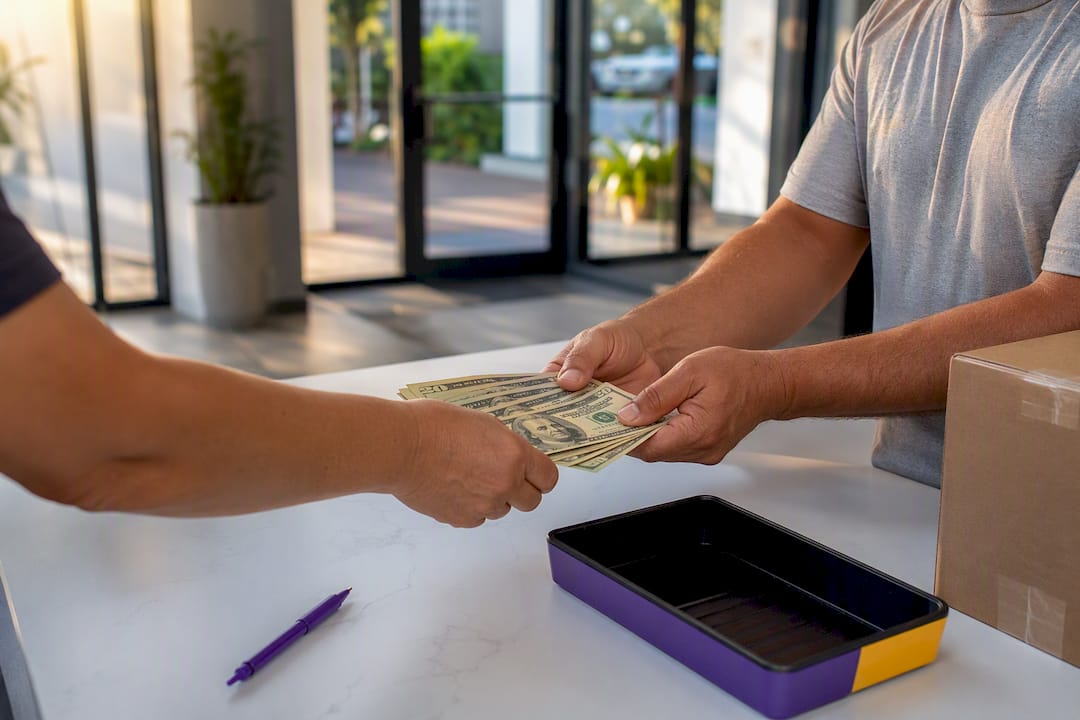
If you have sealed, unexpired diabetic supplies at home, you do not have to let them go to waste. Orlando Diabetic Supplies Buyback buys unused Dexcom G6 and G7 sensors, Freestyle Libre, Omnipod pods, and sealed test strips. The process is local, fast, and straightforward with same-day cash available.
Visit the step-by-step selling guide to see exactly what qualifies and how the process works. If test strips are what you have, check the page on selling test strips in Orlando for local pickup details. Every box you hand over is one fewer sealed product heading to the trash, and real money back in your pocket.
FAQ
Why do diabetic supply benefits go unused so often?
The most common reasons are insurance auto-refill programs that ship supplies on a fixed schedule regardless of need, therapy changes that leave supplies behind, and insufficient patient education on how to use advanced devices like CGMs.
Can I sell my unused diabetic test strips legally?
Yes. Unopened, unexpired over-the-counter test strips can be legally sold in most states. Working with a local buyback service like Orlando Diabetic Supplies Buyback is the simplest and safest way to do it.
What happens to diabetic supplies I can no longer use?
You have three main options: sell unopened, unexpired supplies to a buyback service; donate them to organizations like Insulin For Life that accept sealed and unexpired products; or dispose of expired and opened items through proper medical waste channels.
How do FSA and HSA accounts differ for diabetic supply purchases?
FSA funds typically expire at year end with only a small allowable rollover, while HSA funds roll over indefinitely. Knowing which account you have helps you plan purchases without losing money or overstocking supplies you cannot use in time.
What should I do if my CGM keeps falling off before I can use it?
Proper skin preparation is the fix most people never try. Clean the site with an alcohol wipe, let it dry fully, and consider using a skin-tac adhesive before placing the sensor. If sensors still fail, ask your pharmacist for a hands-on application review rather than abandoning the device entirely.