

Diabetic supply demand stays high because diabetes is a lifelong condition requiring continuous monitoring, and the regulatory, billing, and behavioral systems built around it physically prevent demand from falling. The industry term for this phenomenon is sustained chronic disease market demand, and it operates through overlapping forces: Medicare documentation cycles, insurance auto-refill programs, supply chain front-loading, and patient cost behaviors that delay but never eliminate consumption. Understanding why diabetic supply demand stays high matters whether you are managing your own supplies, watching your costs, or trying to make sense of why sealed boxes keep piling up at home.
Why diabetic supply demand stays high: the regulatory engine
The most underappreciated driver of continuous diabetic supply use is not patient need alone. It is the documentation and reimbursement framework built around that need. CMS requires documentation every 6 months to approve testing supplies beyond standard quantities. That rule creates a predictable, recurring supply cycle tied directly to provider visits, not to how much you actually use.
Here is how the cycle works in practice:
- You visit your provider for a required follow-up, typically every 6 months.
- Your provider documents your diabetes management status and supply usage.
- That documentation triggers a new supply authorization and shipment.
- The cycle resets, regardless of whether your previous supply is fully used.
Medicare-approved telehealth visits every 6 months serve as the billing and documentation hinge that operationally sustains supply ordering cycles. Even if you reduced your testing frequency for a month, the next provider visit resets your supply authorization back to full volume. This is why private insurance supply categories mirror similar documentation requirements. The system is designed to maintain supply throughput, not to calibrate it to individual usage.
Pro Tip: If you receive more supplies than you use, document your actual consumption at each provider visit. This creates a paper trail that can support adjustments to your supply quantities and may reduce surplus accumulation over time.
What role do patient cost barriers play in high diabetic supply demand?
Cost barriers do not reduce total demand. They shift it in time. 1 in 5 diabetes patients delay acquiring pumps or continuous glucose monitors due to cost, with financial strain cited by half of those surveyed. That statistic reveals something counterintuitive: delayed purchasing does not mean reduced need. It means compressed, catch-up purchasing later.
When you postpone a Dexcom G7 sensor order for two months because of a high-deductible period, you do not eliminate those two months of need. You absorb the gap and then resume full ordering once coverage or finances allow. This pattern plays out across millions of patients and creates what economists call deferred demand spikes, where a period of low ordering is followed by a surge.
Several specific behaviors sustain this pattern:
- Rationing sensors or test strips during high-cost periods, then resuming full use when costs drop
- Delaying Omnipod pod orders until insurance resets at the start of a new plan year
- Splitting Freestyle Libre sensor wear time beyond the recommended period to stretch supply, then reordering in bulk
- Skipping CGM subscriptions temporarily, then restarting with a full 90-day supply order
Pro Tip: If cost is causing you to ration supplies, check whether you qualify for manufacturer patient assistance programs. Dexcom, Abbott, and Insulet all offer income-based programs that can reduce out-of-pocket costs without interrupting your supply cycle.
You can also budget better with diabetes supplies by planning around your insurance reset dates and manufacturer rebate windows, which reduces both cost shock and the irregular ordering patterns that follow it.
How do supply chain constraints keep ordering volumes elevated?
Supply chain disruptions do not just create shortages. They create elevated ordering behavior that persists long after the shortage resolves. The FDA Medical Device Shortages List tracks active supply interruptions, and some device shortages are projected to persist through 2026. That visibility into shortage duration directly influences how wholesalers, pharmacies, and clinicians plan their ordering schedules.
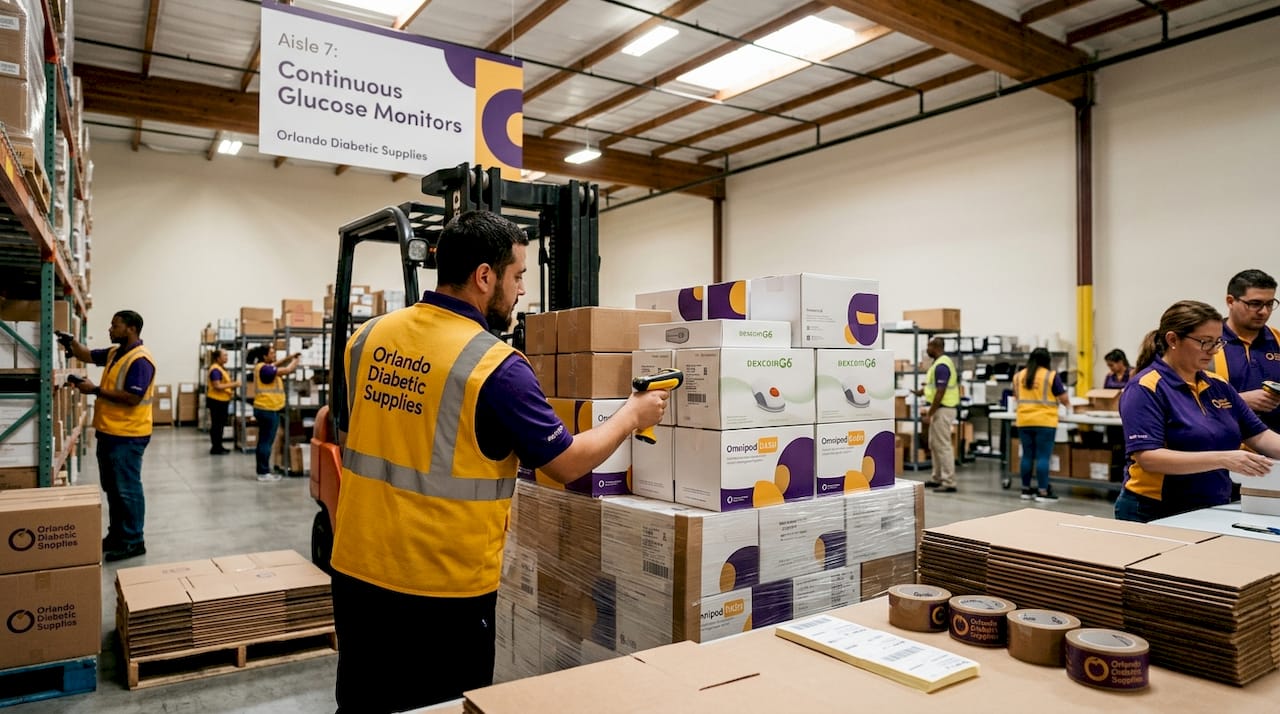
Dexcom’s CEO publicly acknowledged repeat sensor supply shortages during the G7 launch, and the company outlined a resilience approach to prevent recurrence. That kind of public acknowledgment signals to the entire supply chain that front-loading orders is a rational response, not an overreaction.
| Behavior | Cause | Effect on demand |
|---|---|---|
| Front-loading orders | Published shortage duration on FDA list | Ordering volume spikes before shortage hits |
| Seeking alternative products | Primary device backordered | Parallel demand for substitute supplies |
| Pharmacy buffer stocking | Anticipation of manufacturer delays | Elevated wholesale purchasing beyond patient need |
| Patient stockpiling | Fear of supply gaps from prior shortages | Accelerated refill requests before supplies run out |
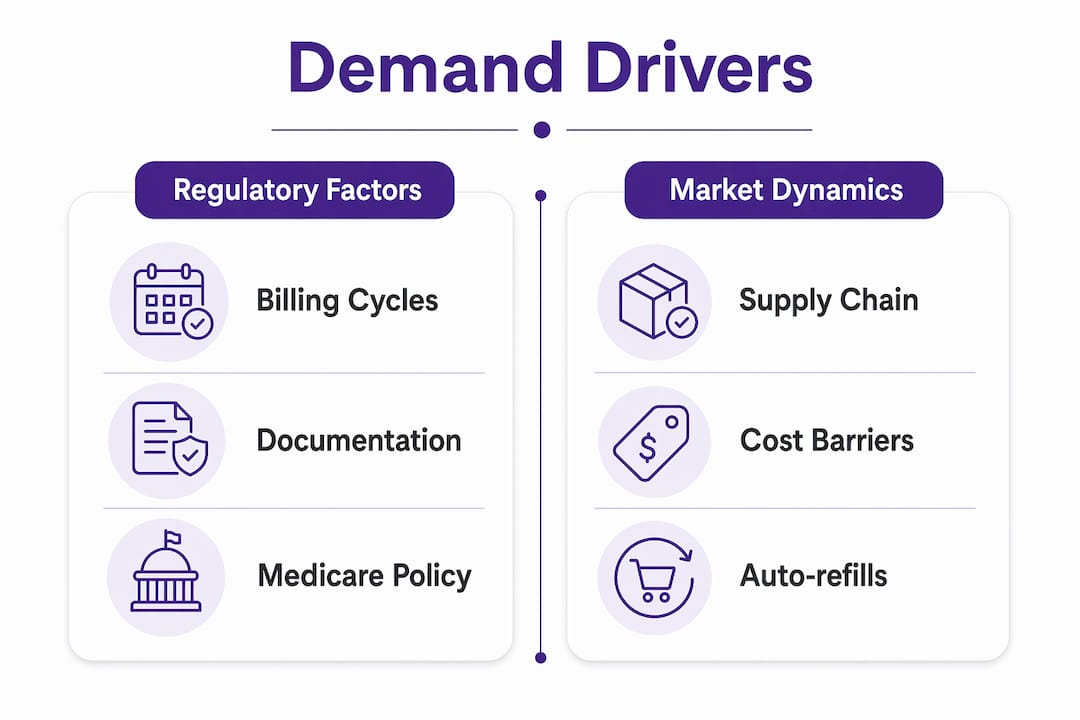
This table shows why supply chain disruptions do not simply reduce demand. They redistribute and amplify it. The net effect on total market ordering volume is consistently upward, even when individual patient usage stays flat.
How do Medicare payment dynamics sustain high ordering volumes?
Medicare’s reimbursement structure for continuous glucose monitors creates a financial incentive for suppliers to maintain high supply throughput. Medicare payments exceeded suppliers’ acquisition costs by $377 million from July 2022 to June 2023. That gap between what Medicare pays and what suppliers actually spend to acquire CGMs and sensors means suppliers profit more when billing volume stays high.
Medicare’s Part B structure allows monthly billing for CGM supplies as long as monthly supplies remain, which incentivizes sustained billing volume and frequent supply cycling. The Office of Inspector General also found that improper CGM coding led to an estimated $7 million in overpayments, pointing to systemic billing patterns that inflate supply volumes beyond actual patient consumption.
| Payment factor | Dollar impact | Market effect |
|---|---|---|
| Medicare overpayment vs. acquisition cost | $377 million (July 2022 to June 2023) | Suppliers incentivized to maximize billing volume |
| Improper coding overpayments | $7 million estimated | Systemic billing inflation beyond patient need |
| Monthly Part B billing cycle | Ongoing | Continuous supply cycling regardless of usage rate |
These numbers matter to you as a patient because they explain why suppliers rarely reduce shipment volumes voluntarily. The billing structure rewards throughput. Competitive bidding reforms and fee schedule adjustments have been proposed, but the market impact of those changes remains limited in 2026.
What impact do auto-refills and medication transitions have on supply surplus?
Insurance auto-refill programs ship fixed 90-day supplies regardless of actual consumption. That single policy is responsible for a significant portion of the sealed, unused diabetic supplies sitting in homes across the country. You may use 70 days of sensors in a 90-day cycle, but the next shipment arrives on schedule regardless.
The GLP-1 receptor agonist transition adds another layer. Medications like semaglutide (Ozempic, Wegovy) and tirzepatide (Mounjaro) are shifting many patients off insulin entirely. When that happens, the insulin supplies, test strips, and related products that were on auto-refill do not stop shipping immediately. The rapid adoption of GLP-1 therapies has left many patients with unused insulin supplies and no legal channel to return sealed products to the pharmacy or manufacturer.
This creates a paradox worth understanding:
- Demand at the market level stays high because billing and shipping cycles continue
- Individual patients accumulate surplus supplies they cannot use or legally return
- The surplus exists alongside genuine shortages in other product categories
- Diabetic mail order systems are structurally designed to ship on schedule, not to respond to actual usage
The result is a market where high demand and excess supply coexist. That is not a contradiction. It is the predictable outcome of a system built around billing cycles rather than consumption patterns.
Key takeaways
Diabetic supply demand stays high because regulatory billing cycles, insurance auto-refills, supply chain front-loading, and patient cost behaviors all sustain ordering volume independent of actual daily consumption.
| Point | Details |
|---|---|
| Regulatory billing cycles | CMS requires documentation every 6 months, resetting supply authorizations regardless of actual usage. |
| Patient cost delays | Deferred purchases due to cost create catch-up demand spikes, not permanent demand reduction. |
| Supply chain front-loading | FDA shortage listings cause wholesalers and patients to order ahead, inflating total market volume. |
| Medicare payment incentives | A $377 million overpayment gap incentivizes suppliers to maintain maximum billing throughput. |
| Auto-refill and therapy transitions | Fixed 90-day shipments and GLP-1 adoption create surplus supplies that coexist with high market demand. |
What I’ve learned watching this market from the inside
I have spent years working with patients in the Orlando area who are genuinely confused about why their supply closet is overflowing while their neighbor cannot get a Dexcom G7 sensor for weeks. The answer is not a mystery once you understand that this market is not driven purely by patient need. It is driven by billing cycles, documentation requirements, and shipping schedules that operate on their own logic.
What surprises most people is that the surplus and the shortage are not opposites. They are products of the same system. A patient on a GLP-1 medication who no longer needs insulin still has test strips arriving every 90 days. A pharmacy anticipating a Dexcom shortage front-loads its order. Both behaviors inflate demand metrics while individual patients experience completely different realities.
The practical implication for you is this: understanding these forces gives you more control. If you know your supplies are tied to a 6-month documentation cycle, you can time your provider visits to align with your actual needs. If you know auto-refills ship on a fixed schedule, you can contact your supplier to adjust quantities before the next shipment. And if you end up with sealed, unused supplies you cannot use, you have options beyond letting them expire in a drawer.
The market will stay elevated. That is structural, not accidental. But knowing why gives you the ability to manage your own supply situation with clarity instead of frustration.
— Liliana
Turn your unused diabetic supplies into same-day cash
If you have sealed, unused diabetic supplies sitting at home, Orlando Diabetic Supplies Buyback offers a fast, honest way to get cash for them today.
We buy Dexcom G6 and G7 sensors, Freestyle Libre, Omnipod pods, and sealed test strips from patients across Orlando and surrounding areas. No complicated process, no waiting. You contact us, we give you a fair price, and you get paid the same day. Whether your supplies piled up from auto-refills, a therapy change, or a prescription update, we make it simple to turn that surplus into money you can use. Visit our page on how to get cash for unused diabetic supplies to see exactly how it works.
FAQ
Why does diabetic supply demand never seem to drop?
Demand stays elevated because Medicare and insurance billing cycles ship supplies on fixed schedules tied to documentation requirements, not actual patient consumption. Even when individual usage drops temporarily, the billing and authorization system resets supply volumes at each provider visit.
Does switching to a GLP-1 medication reduce my supply demand?
Switching to a GLP-1 therapy like semaglutide often reduces insulin use, but auto-refill programs continue shipping fixed quantities until you actively cancel or adjust your orders. This is why many patients transitioning off insulin accumulate sealed supplies they no longer need.
How do supply shortages affect what I can order?
The FDA shortage list tracks active device shortages, and published shortage durations cause pharmacies and wholesalers to front-load orders. This can temporarily reduce availability for individual patients even while total market ordering volume rises.
Can I return unused diabetic supplies to my pharmacy?
No. Pharmacies and manufacturers do not accept returns on dispensed diabetic supplies for safety and regulatory reasons. Sealed, unused supplies can be sold through a diabetic supply buyback service like Orlando Diabetic Supplies Buyback instead of being discarded.
Why are Medicare payments for CGMs so much higher than what suppliers pay?
Medicare payments exceeded acquisition costs by $377 million in a single year because the fee schedule has not kept pace with falling device prices. That gap financially rewards suppliers for maintaining high billing volumes, which sustains market-level demand independent of patient need.