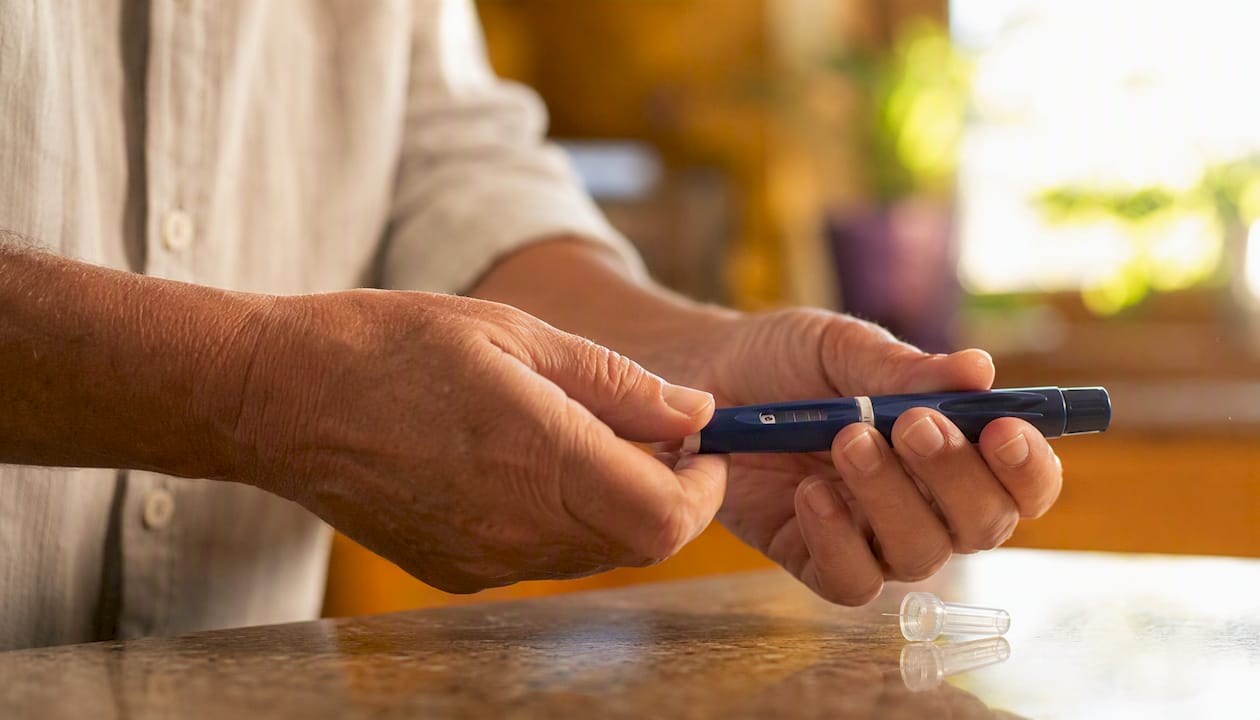
Basal-bolus insulin therapy uses two types of insulin together: a long-acting basal insulin that runs quietly in the background around the clock, and a rapid-acting bolus insulin you take at meals or to correct a high reading. According to the ADA’s insulin basics guidance, basal insulin keeps your glucose steady between meals and overnight, while bolus insulin handles the spikes that food causes. As a practical starting point, the UCSF Diabetes Teaching Center notes that basal needs often account for roughly 40–50% of your total daily insulin, with bolus covering the remaining 50–60%.
- Basal insulin = long-acting, background coverage (once or twice daily)
- Bolus insulin = rapid-acting, taken at meals and for corrections
- The split between them is a starting point, not a fixed rule — your clinician will adjust both based on your glucose patterns.
Pro Tip: If you are just starting insulin or thinking about changing your doses, bring your glucose log to your next appointment. Your clinician or certified diabetes educator (CDE) can use those patterns to set your starting doses safely.
Key Takeaways
Basal-bolus insulin therapy works because it separates background glucose control from mealtime coverage, letting you adjust each independently based on real glucose data and clinician guidance.
| Point | Details |
|---|---|
| Basal = background, bolus = mealtime | Basal runs 24/7; bolus is taken before meals and for corrections. |
| Starting split is roughly 40–50% basal / 50–60% bolus | This UCSF-cited guideline is a starting point, not a fixed rule — your TDI drives the math. |
| Use the 1800 rule and I:C ratio as estimates | Correction Factor = 1800 ÷ TDI; I:C ratio = 500 ÷ TDI; always confirm with your clinician. |
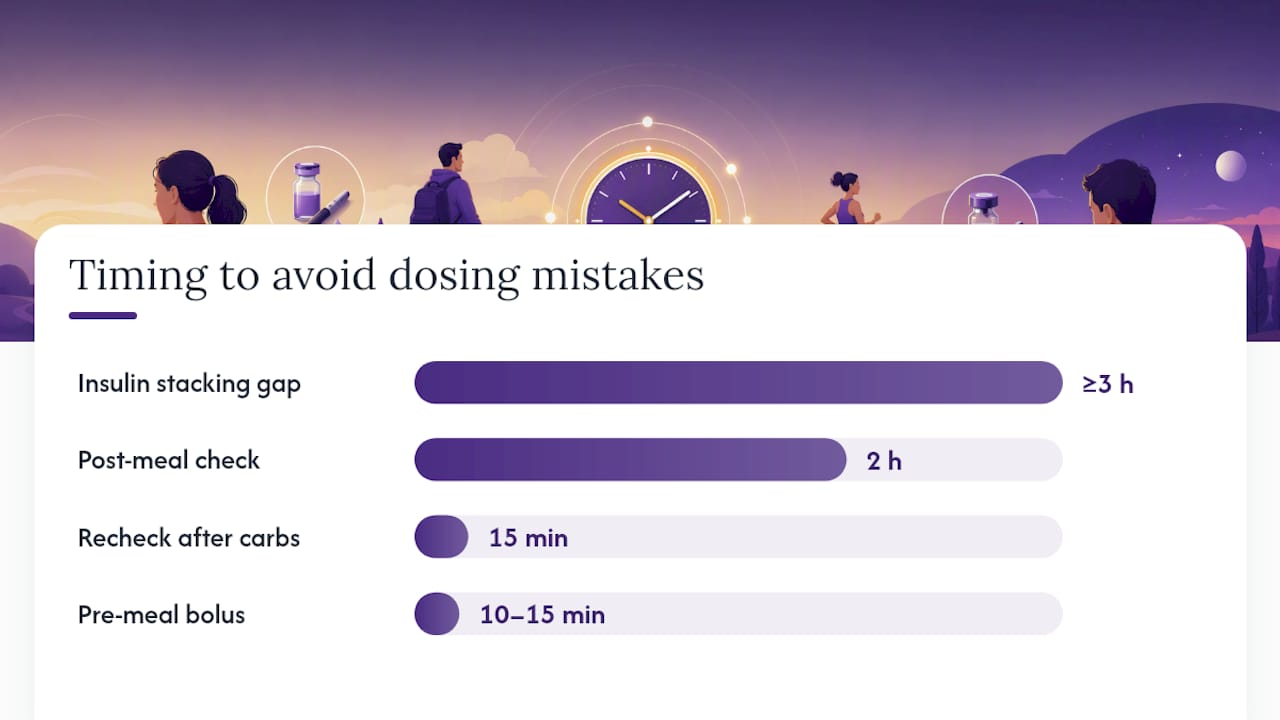
| Avoid insulin stacking | Wait at least 3 hours between rapid-acting correction doses to prevent hypoglycemia. |
| Consult your clinician before changing doses | Patterns in your glucose log are the most useful tool to bring to any dose-adjustment appointment. |
Table of Contents
- What does basal (background) insulin actually do?
- How does bolus (mealtime) insulin work, and when do you take it?
- Who benefits from basal-bolus therapy?
- How is basal-bolus therapy delivered?
- How are bolus doses calculated? A simple worked example
- Safety, monitoring, and mistakes that catch people off guard
- Common U.S. insulin brands: basal vs. bolus at a glance
- A note from Liliana on insulin education and supply planning
- If you have unused supplies after a regimen change, we can help
- Sources
What does basal (background) insulin actually do?
Think of basal insulin as cruise control for your blood sugar. Your liver releases glucose into your bloodstream even when you are not eating, and basal insulin keeps that output in check so your glucose stays stable overnight and between meals.
Common basal options available in the U.S. include:
- Lantus (insulin glargine): Once-daily injection; relatively flat action profile with no pronounced peak, lasting roughly 24 hours
- Levemir (insulin detemir): Often given once or twice daily; slightly shorter duration than Lantus for some people
- Tresiba (insulin degludec): Ultra-long-acting, with a duration beyond 42 hours; offers flexibility in injection timing
- Toujeo (concentrated insulin glargine U-300): A more concentrated form of glargine, often used when larger doses are needed in a smaller volume
Clinicians typically consider starting basal insulin when A1C remains above an individualized target despite oral medications, or when fasting glucose is consistently elevated. The ADA recommends beginning with basal insulin for many people with Type 2 diabetes, then reassessing whether mealtime coverage is also needed.
How does bolus (mealtime) insulin work, and when do you take it?
Bolus insulin is the booster your body needs when carbohydrates hit your bloodstream. It acts fast, peaks quickly, and clears within a few hours. Most rapid-acting bolus insulins should be taken about 10–15 minutes before a meal for best results, though your clinician may adjust that timing based on your glucose at the time.
Common bolus options in the U.S.:
- Humalog (insulin lispro): Onset roughly 15 minutes, peaks around 1–2 hours, duration 3–5 hours
- NovoLog (insulin aspart): Similar profile to Humalog; onset within 15 minutes
- Fiasp (faster-acting insulin aspart): Designed to start working within 2–4 minutes; useful for people who prefer to dose at the start of a meal or even right after
- Apidra (insulin glulisine): Onset within 15 minutes; duration roughly 3–5 hours
You also use bolus insulin for correction doses when your glucose is already high and you are not eating. For example, if your glucose reads 240 mg/dL before bed and your target is 120 mg/dL, a correction bolus can bring it down. The math for that is covered in the dosing section below.
Who benefits from basal-bolus therapy?
People with Type 1 diabetes almost always need both basal and bolus insulin because their pancreas produces little or none on its own. For Type 2 diabetes, the path is often stepwise. Many clinicians start with basal insulin alone and add mealtime bolus doses later if A1C stays above the individualized target, often focusing on the largest meal first before expanding to all meals. HCPLive’s clinical overview describes this approach as a practical way to limit injection burden while still improving control.
Benefits of basal-bolus therapy:
- Closely mimics how a healthy pancreas releases insulin
- Allows flexible meal timing since bolus doses match what you actually eat
- Improves post-meal glucose control compared with basal-only regimens
- Lets you make targeted adjustments to one component without disrupting the other
Trade-offs to consider:
- More injections per day (typically 4 or more with MDI)
- Requires carb counting or structured portion awareness
- Higher risk of hypoglycemia if doses are mistimed or stacked
- Needs more frequent glucose monitoring
If you have frequent highs after meals, persistent A1C above your goal, or a lifestyle that varies day to day, a conversation with your clinician about adding bolus coverage is worth having.
How is basal-bolus therapy delivered?
Multiple daily injections (MDI)
The most common approach: one or two basal injections per day plus a rapid-acting bolus before each meal. MDI works well for most people and requires only insulin pens or syringes. The Cashfordiabeticsuppliesorlando breaks down how pens, pumps, and CGMs fit together if you want a device-level comparison.
Insulin pump (CSII)
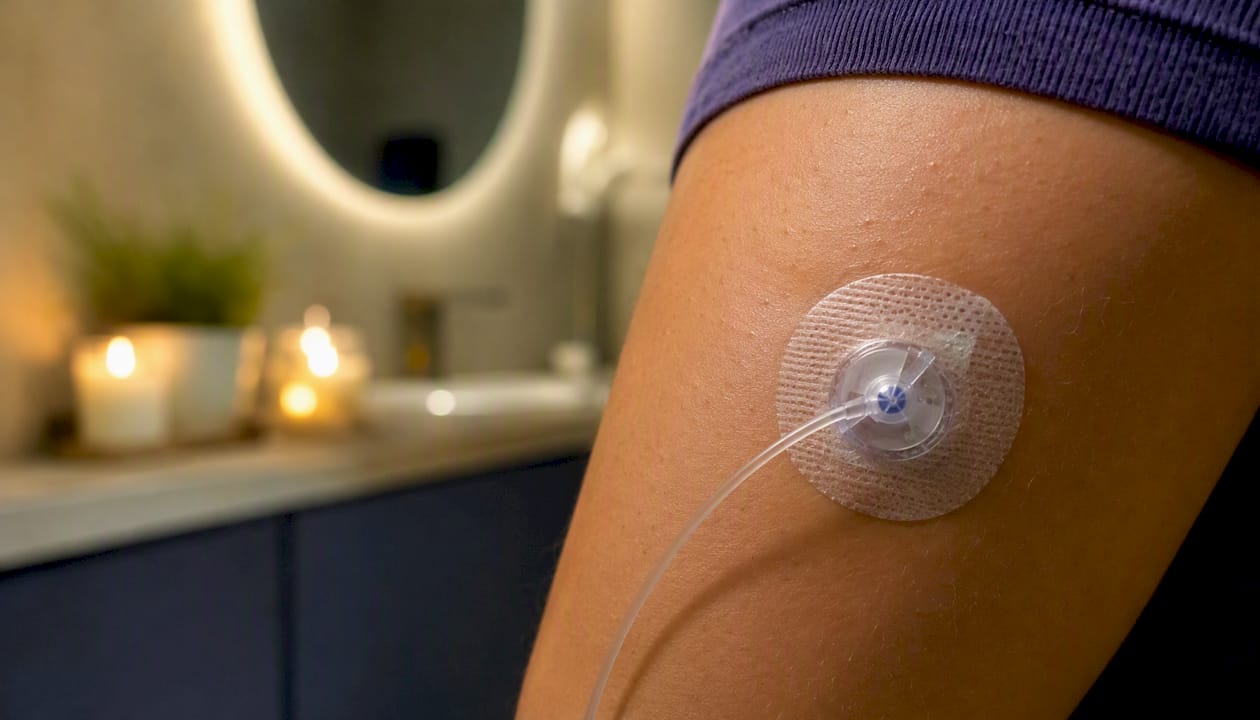
A pump delivers rapid-acting insulin continuously as a programmed basal rate, replacing long-acting injections entirely. You still program bolus doses at meals. Pumps suit people who need very precise basal adjustments throughout the day, those with unpredictable schedules, or anyone who wants to avoid multiple daily injections. They do require training and consistent attention to infusion sites.
Premixed insulin
Premixed insulins combine a fixed ratio of basal and bolus components in one vial or pen, such as NovoLog Mix 70/30. They simplify the schedule to two injections per day but offer far less flexibility. You cannot adjust the basal and bolus portions independently, which makes them a poor fit for anyone with variable meals or glucose patterns. They tend to work best for people who need a simpler regimen and eat on a consistent schedule.
How are bolus doses calculated? A simple worked example
Understanding the math helps you have a more productive conversation with your clinician. Two formulas do most of the work.
Step 1: Estimate your Correction Factor (CF)
The 1800 rule from UCSF estimates how many mg/dL one unit of rapid-acting insulin will lower your glucose:
Correction Factor = 1800 ÷ Total Daily Insulin (TDI)
Example: If your TDI is 40 units, your CF ≈ 45. One unit drops your glucose roughly 45 mg/dL.
Step 2: Estimate your Insulin-to-Carb Ratio (I:C)
A common starting estimate uses the 500 rule: 500 ÷ TDI = grams of carbohydrate covered per unit.
Example: 500 ÷ 40 units TDI = 12.5, so roughly 1 unit covers 12–13 grams of carbs.
Step 3: Calculate your full bolus
The combined formula is:
- Correction dose: (Current glucose − Target glucose) ÷ CF
- Meal dose: Carbohydrate grams ÷ I:C ratio
- Total bolus = correction dose + meal dose
Worked example:
- Current glucose: 200 mg/dL; target: 100 mg/dL
- Meal: 60 grams of carbohydrates
- TDI: 40 units → CF = 45, I:C = 1:12
Correction: (200 − 100) ÷ 45 = 2.2 units
Meal: 60 ÷ 12 = 5 units
Total bolus: ~7 units
These formulas are clinical starting estimates. Published literature challenges a rigid 50:50 basal-bolus split and recommends individualized titration. Never adjust your doses based on a formula alone without your clinician’s input.
Pro Tip: Wait at least 3 hours between rapid-acting correction doses. Taking a second correction too soon — before the first dose has finished working — is one of the most common causes of preventable hypoglycemia.
Safety, monitoring, and mistakes that catch people off guard
Good glucose monitoring is what makes basal-bolus therapy work. A continuous glucose monitor (CGM) like the Dexcom G7 or Freestyle Libre gives you real-time trends that fingerstick testing alone cannot. If you rely on fingersticks, check before meals, two hours after meals, at bedtime, and any time you feel off. The role of test strips in daily management is still relevant even for CGM users when calibration or sensor gaps occur.
Common mistakes to avoid:
- Insulin stacking: Taking a correction bolus before the previous rapid-acting dose has cleared (allow at least 3 hours). This is a well-documented cause of hypoglycemia
- Late bolusing: Dosing after you start eating instead of 10–15 minutes before, which lets glucose spike before insulin arrives
- Guessing carbs: Eyeballing portions leads to chronic under- or over-dosing; a food scale or carb-counting app improves accuracy
- Sliding scale only: Reactive correction without proactive meal dosing leaves post-meal spikes unaddressed
Hypoglycemia: signs and immediate steps
Low blood sugar (typically below 70 mg/dL) can happen with any insulin regimen. Signs include shakiness, sweating, confusion, and rapid heartbeat. The standard response: eat 15–20 grams of fast-acting carbohydrates (glucose tablets, 4 oz of juice), wait 15 minutes, and recheck. If glucose does not recover or you lose consciousness, call 911.
When to review your doses with your clinician:
- Illness, infection, or surgery (glucose often rises sharply)
- Significant exercise changes (can lower insulin needs for hours afterward)
- Stress or major schedule changes
- Weight loss or gain of more than 5–10 pounds
Pro Tip: Keep a simple log of your glucose readings, what you ate, and your doses for at least one week before any clinician appointment. Patterns in that log are far more useful than a single A1C number.
Common U.S. insulin brands: basal vs. bolus at a glance
Knowing the names on your prescription helps you ask the right questions at the pharmacy.
Basal (long-acting) insulins:
- Lantus (insulin glargine) — once daily, widely available
- Levemir (insulin detemir) — once or twice daily
- Tresiba (insulin degludec) — ultra-long-acting, flexible dosing window
- Toujeo (concentrated insulin glargine U-300) — higher concentration for larger dose needs
Bolus (rapid-acting) insulins:
- Humalog (insulin lispro) — pre-meal, 10–15 minutes before eating
- NovoLog (insulin aspart) — similar timing to Humalog
- Fiasp (faster-acting insulin aspart) — can be taken at meal start or just after
- Apidra (insulin glulisine) — pre-meal, rapid onset
Premixed option:
- NovoLog Mix 70/30 combines 70% intermediate-acting and 30% rapid-acting aspart in one injection. It simplifies the schedule but removes the ability to adjust basal and bolus independently, as noted by MedlinePlus.
Cost and insurance coverage vary widely across all these brands. Talk to your specialty pharmacy or clinician about biosimilar options, manufacturer savings programs, and formulary coverage before filling a new prescription. For readers managing supply costs, low-cost insulin management tools can help stretch a tight budget.
For non-insulin medication options, the GLP-1 safety information at Legacy Meds is a useful reference if your clinician is discussing combination therapy.
A note from Liliana on insulin education and supply planning
Understanding your insulin regimen is only half the picture. The other half is making sure your supplies — pens, cartridges, CGM sensors, test strips — are always on hand and not going to waste. One thing I see often: people switch insulin types or delivery methods and end up with sealed, unused supplies they no longer need. That is a real and common situation, and it does not have to mean a financial loss.
At Orlando Diabetic Supplies Buyback, we work with people in Orlando and surrounding areas who find themselves with excess diabetic supplies after a regimen change. If you switch from MDI to a pump, or from one CGM to another, those leftover sealed items may have real value. The supply management guide for 2026 covers practical ways to plan ahead and avoid waste.
One thing I want to be clear about: nothing in this article replaces a conversation with your clinician or certified diabetes educator. Insulin dosing is personal. Use this as a foundation for that conversation, not a substitute for it.
If you have unused supplies after a regimen change, we can help
Switching insulin types, moving to a pump, or upgrading your CGM often leaves you with sealed, unexpired supplies you no longer need. Orlando Diabetic Supplies Buyback pays same-day cash for unused Dexcom G6 and G7 sensors, Freestyle Libre, Omnipod pods, and sealed test strips in Orlando and surrounding areas.

Find out how to get cash for your unused supplies — the process is fast, honest, and local.
Sources
These resources back the guidance in this article and are worth bookmarking for your own research. Bring any questions they raise to your clinician or CDE.
- Calculating Insulin Dose | Diabetes Teaching Center
- MedlinePlus patient instructions
- PubMed: insulin timing and stacking considerations
This article is for general information only and is not a substitute for professional medical advice. Always consult your healthcare provider or certified diabetes educator before starting, stopping, or adjusting any insulin regimen.