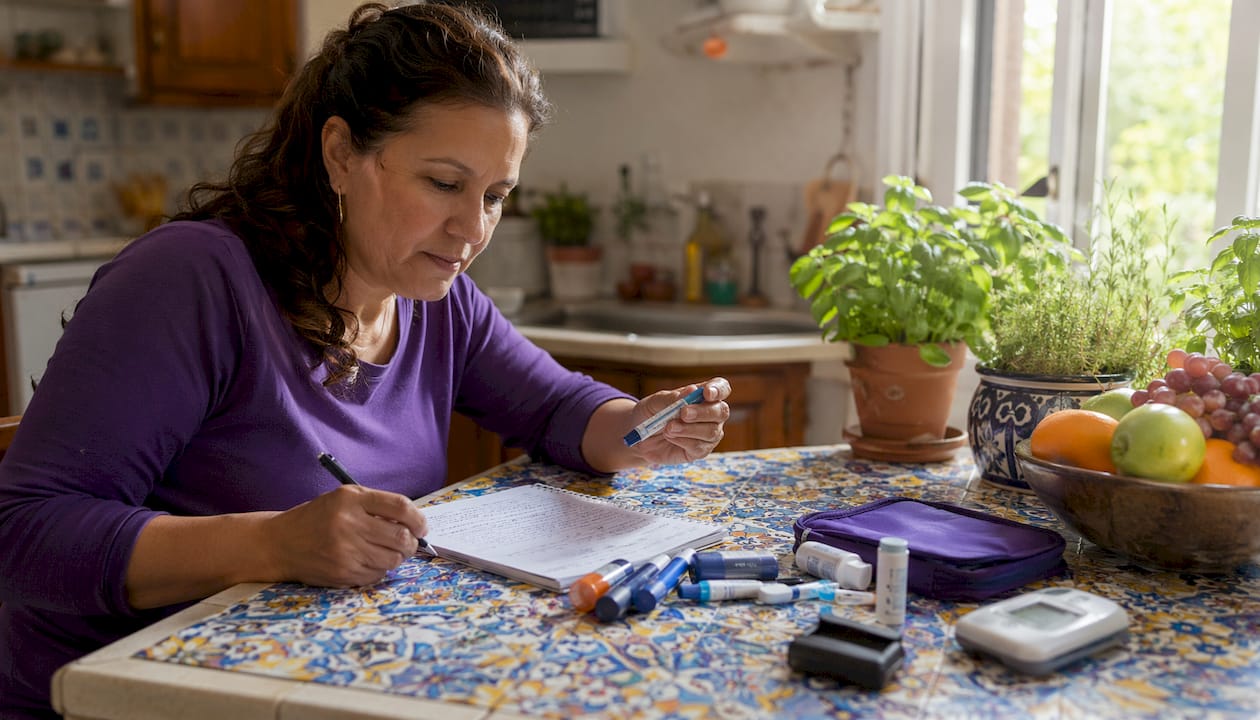
Effective diabetes supply management is the practice of organizing your insulin, devices, and consumables so you always have what you need, when you need it, without excess waste or runaway costs. The goal is to streamline diabetes supply management across every category you rely on, from Dexcom G6 and G7 sensors to Omnipod pods, Freestyle Libre patches, pen needles, and test strips. The American Diabetes Association recommends maintaining at least a 30-day working buffer with a 90-day reserve as the preparedness target. Getting there requires more than just ordering more supplies. It requires a system.
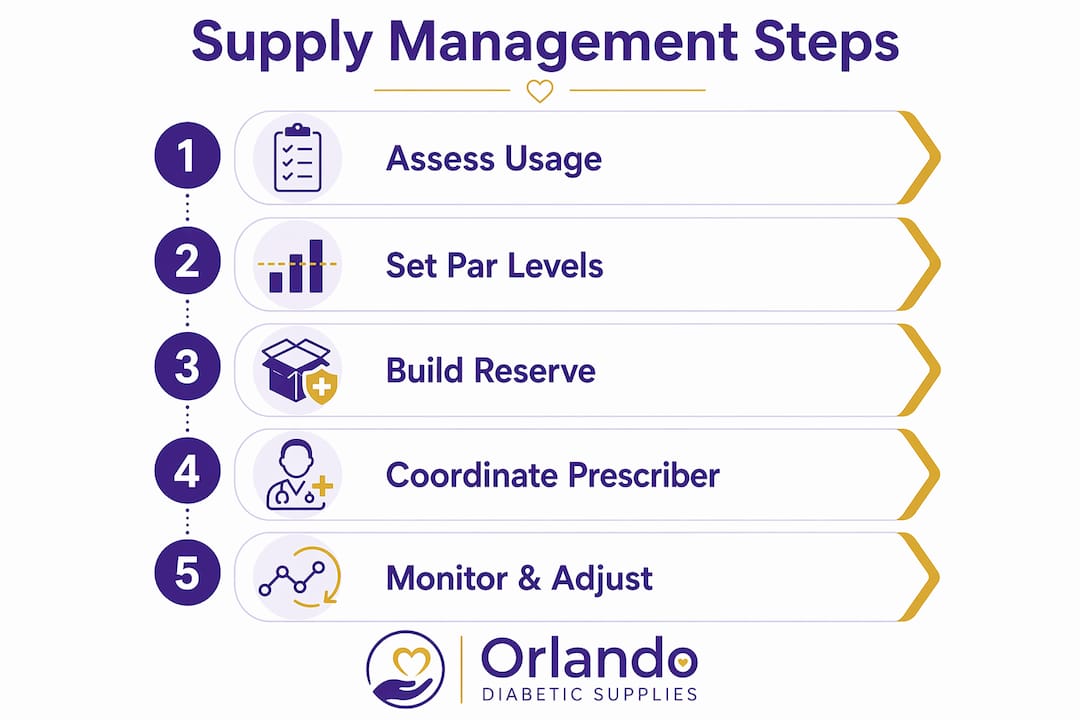
How to streamline diabetes supply management with accurate par levels
Par levels are the minimum quantities you keep on hand before reordering. Setting them correctly is the foundation of effective diabetes inventory management.
The most common mistake people make is treating their supplies as one big category. Pen needles alone come in multiple gauge and length combinations, and each variant behaves as a separate inventory item. Accurate par levels require auditing 90 days of actual prescription usage for each specific product variant. That means counting how many 4mm 32G needles you used last quarter, not just “pen needles” in general.
Coordinate with your prescriber when setting these numbers. Your usage shifts when your regimen changes, and a par level based on old data leads to either shortages or waste. The 2026 ADA Standards of Medical Care reinforce that supply planning should align with your current treatment protocol, not last year’s.
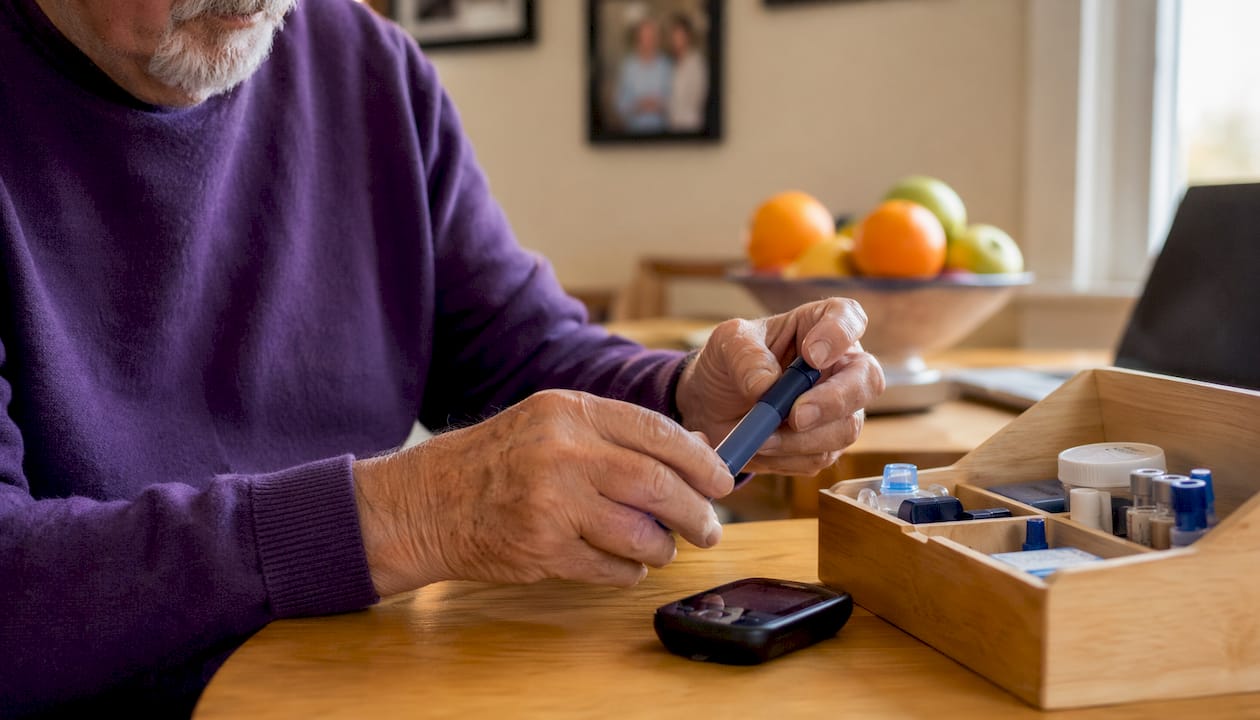
The table below shows common supply categories and how to think about their consumption rates.
| Supply category | Typical consumption rate | Key tracking note |
|---|---|---|
| Insulin vials or pens | 1–4 units per month depending on regimen | Track by brand and formulation separately |
| CGM sensors (Dexcom G7, Freestyle Libre) | 1–2 sensors per week | Confirm transmitter compatibility |
| Omnipod pods | 2–3 pods per week | Track pod lot numbers for recalls |
| Pen needles | 4–8 per day depending on injection frequency | Track by gauge and length as distinct items |
| Test strips | 1–10 per day depending on monitoring frequency | Must match your specific meter model |
| Lancets | 1–4 per day | Often overlooked; include in your count |
How do you build a 30- to 90-day diabetes supply reserve?
Building a reserve does not happen in one large order. Insurers routinely deny requests for oversized single fills. The correct approach is incremental: refill each prescription at the earliest allowed window, typically 3–5 days before your current supply runs out. Over several months, that small overlap accumulates into a meaningful buffer without triggering insurance flags.
- Switch to 90-day mail-order fills. Most commercial plans and Medicare Part D cover 90-day supplies through mail-order pharmacies at a lower copay than 30-day retail fills. This is one of the most cost-effective moves you can make.
- Coordinate with your prescriber early. Ask your doctor to write prescriptions that allow for the earliest possible refill date. A note in your chart documenting your preparedness plan helps avoid denials.
- Apply to manufacturer assistance programs. Programs like Lilly Cares and NovoCare provide insulin year-round at low or no cost, not just during emergencies. These programs are underused and can meaningfully supplement your reserve.
- Use calendar reminders. Set a recurring alert 7 days before each supply category runs low. This gives you time to handle delays without panic.
- Know your state’s emergency refill law. At least 19 US states permit pharmacists to dispense emergency insulin without prescriber contact, up to a 30-day supply. This is your backup, not your plan.
Pro Tip: Set up a simple spreadsheet with one row per supply category, your current quantity, your par level, and your next refill date. Review it every Sunday. Five minutes a week prevents a crisis.
Changing your medication also affects your reserve. If your prescriber switches you to a new insulin or a GLP-1 receptor agonist, your existing stock may become incompatible. Read more about how medication changes affect supplies before you build a large reserve of any single product.
What home delivery options make supply management easier?
Home delivery is one of the most underused tools for people managing diabetes supplies. Cardinal Health’s ContinuCare Pathway allows pharmacies to refer patients directly to home delivery of supplies with most orders arriving in under two days. That speed removes the single biggest friction point in supply management: the pharmacy trip.
Here is what to look for when evaluating a home delivery program:
- Medicare Part B coverage. Continuous glucose monitors and related supplies often qualify under Part B as durable medical equipment, not Part D. Confirm your delivery service bills the correct benefit to avoid out-of-pocket surprises.
- Automatic refill scheduling. The best programs sync with your prescription cycle and ship before you run out, without requiring you to call.
- Delivery confirmation and tracking. Temperature-sensitive supplies like insulin require cold-chain handling. Confirm the service uses insulated packaging and provides real-time tracking.
- Pharmacist access. A good home delivery program includes pharmacist support for questions about compatibility, dosing changes, or insurance issues.
Home delivery works best when it is part of a broader supply plan, not a standalone fix. Pair it with your 90-day fill strategy and your par-level tracking for the most reliable results. A pharmacist’s role in your supply chain is more significant than most people realize, especially when navigating insurance pathways.
What are the most common diabetes supply management mistakes?
The most expensive mistake in diabetes supply management is buying supplies that do not work together. Blood glucose meters and test strips are a connected system. A strip designed for one meter brand will not give accurate readings in another. This creates unusable inventory and real safety risk.
Here are the pitfalls that trip people up most often:
- Buying in bulk before confirming compatibility. Always verify that new strips, sensors, or pods match your current device before ordering a large quantity.
- Ignoring secondary supplies. Lancets, ketone strips, and sensor overtape are easy to forget. Granular tracking of secondary supplies is just as critical as tracking insulin. Running out of lancets is just as disruptive as running out of test strips.
- Hoarding beyond your 90-day target. Excess stock expires, and insurance plans flag unusual ordering patterns. A 90-day reserve is the target. Beyond that, you are creating waste, not security.
- Failing to rotate stock. Supplies sitting at the back of a drawer expire while newer stock gets used first. Always use the oldest supply first.
- Skipping system compatibility checks after a device upgrade. Switching from a Dexcom G6 to a G7 changes your sensor, transmitter, and compatible receiver. Your old G6 strips and accessories do not carry over.
Pro Tip: Label each supply bin with the expiration date of the oldest item inside. When you restock, check that date first. This one habit eliminates most expiry waste.
Reducing waste is a discipline, not a one-time fix. For a deeper look at cutting supply waste in 2026, the strategies go beyond just rotating stock.
Key Takeaways
Effective diabetes supply management requires accurate par levels, incremental reserve building, and system compatibility checks across every supply category.
| Point | Details |
|---|---|
| Set par levels by variant | Audit 90 days of usage per specific product, not by broad category. |
| Build reserves incrementally | Refill at the earliest allowed window to accumulate a 90-day buffer without insurance denials. |
| Use home delivery programs | Services like Cardinal Health ContinuCare deliver supplies in under two days and reduce pharmacy burden. |
| Verify system compatibility | Always confirm meter-strip and sensor-device compatibility before buying in quantity. |
| Track secondary supplies | Lancets, ketone strips, and sensor consumables belong in your inventory count, not as afterthoughts. |
Why I think most people manage their diabetes supplies backward
Most people I speak with manage their supplies reactively. They notice they are low, they call the pharmacy, and they hope it works out. That approach fails the moment there is a supply chain delay, an insurance issue, or a prescription lapse.
The shift that actually works is treating your supply inventory the way a small business treats its stock. You set par levels. You reorder on a schedule. You track expiration dates. None of this is complicated, but it requires a 20-minute setup and a weekly five-minute review.
The other thing I have noticed is that people underestimate how much complexity a single medication change introduces. The rise of GLP-1 receptor agonists has made diabetes drug distribution significantly more complex, and that complexity reaches individual patients. When your regimen shifts, your entire supply plan needs to shift with it. Most people do not realize this until they have a drawer full of supplies they can no longer use.
My honest recommendation: build your system before you need it. A 90-day reserve built over six months of early refills costs you nothing extra. It just requires consistency. And if you end up with supplies you cannot use because your regimen changed, do not let them sit and expire. There are better options.
— Liliana
What Orlando Diabetic Supplies Buyback does with your extra supplies
Sometimes a well-managed supply plan still produces surplus. A medication change, a device upgrade, or an insurance overship can leave you with sealed, unexpired supplies you no longer need.
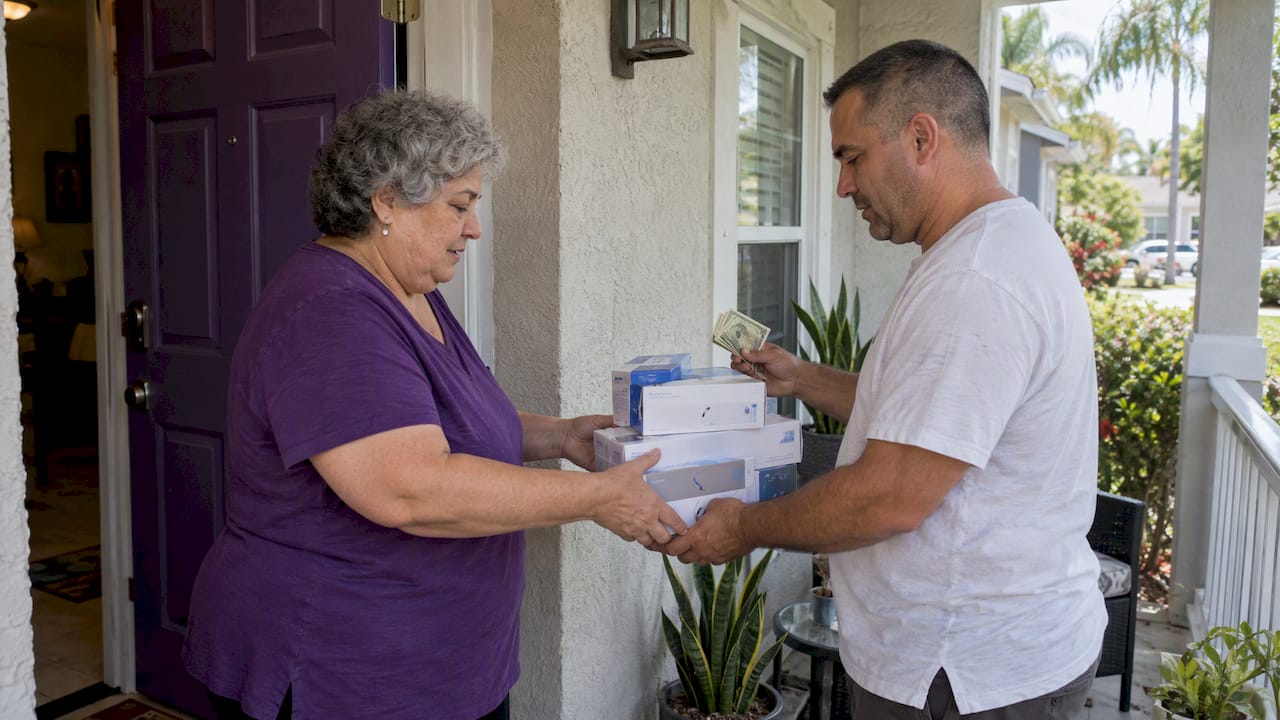
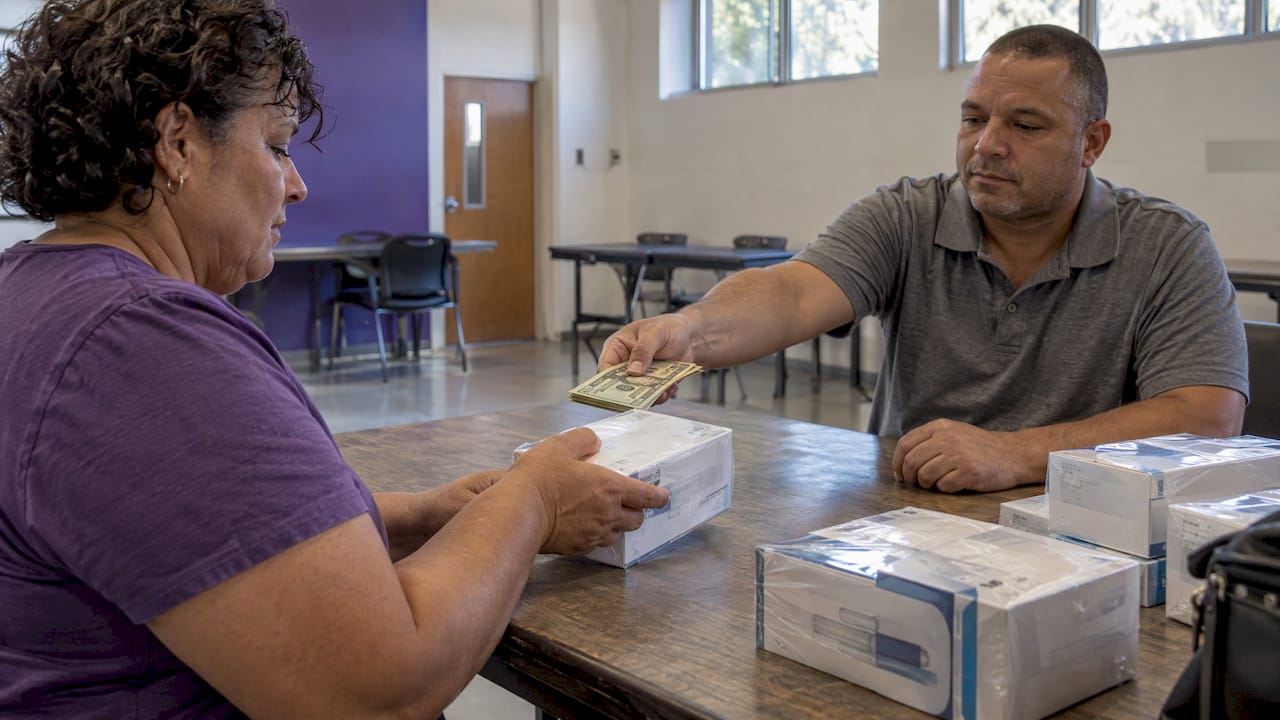
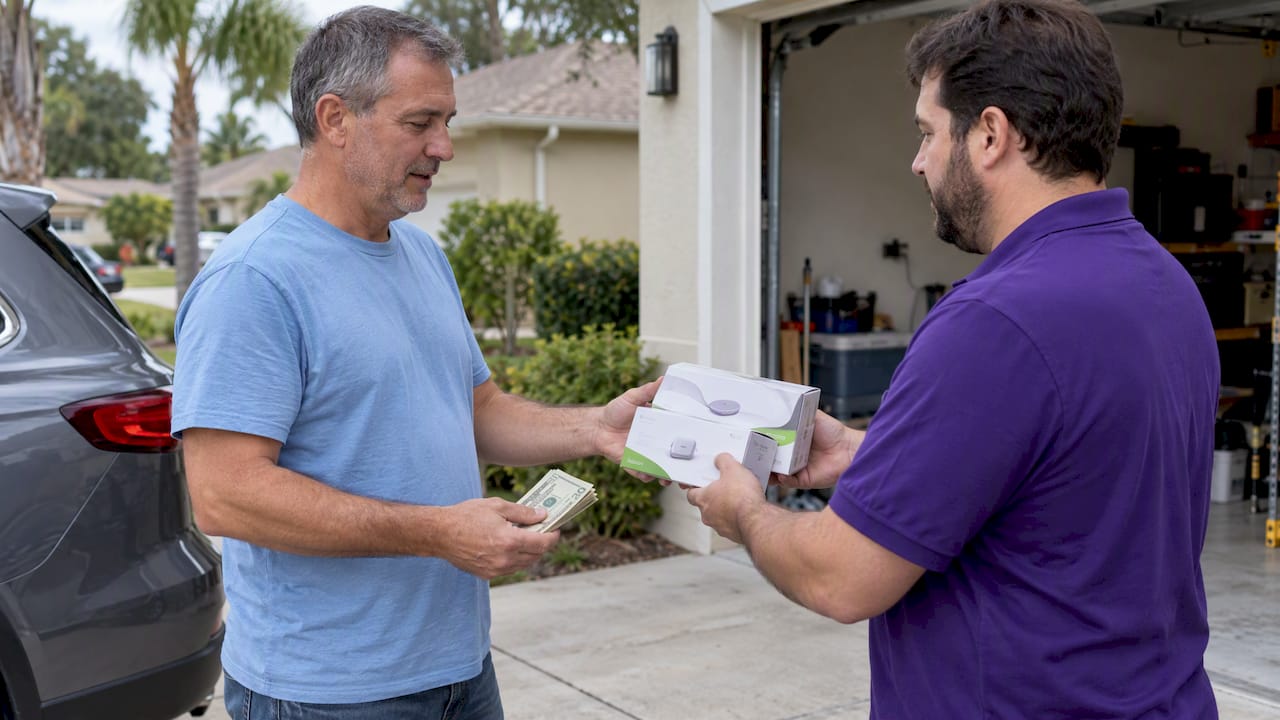
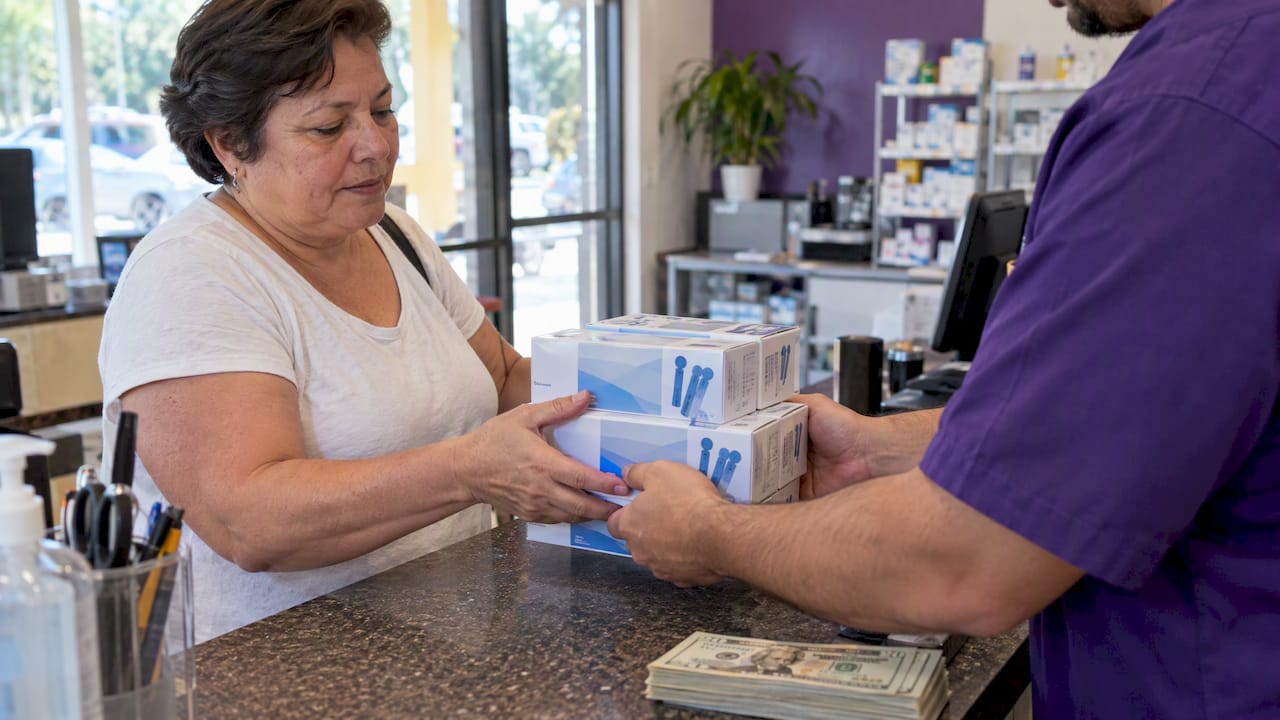
Orlando Diabetic Supplies Buyback pays same-day cash for unused Dexcom G6 and G7 sensors, Freestyle Libre patches, Omnipod pods, and sealed test strips in the Orlando, Florida area. The process is fast, local, and straightforward. You get a fair price, and your supplies go to someone who needs them. If you have unused diabetic supplies taking up space, selling them is a practical way to recover value and keep your inventory clean. Reach out to Orlando Diabetic Supplies Buyback to get a quote today.
FAQ
What is the recommended diabetes supply reserve size?
The preparedness target is a 90-day supply reserve with a 30-day working buffer as the minimum. Build toward 90 days incrementally through early refills.
How do I avoid insurance denials when building a supply reserve?
Refill each prescription at the earliest allowed window, typically 3–5 days before your current supply runs out. Large single orders are frequently denied. Incremental refills accumulate a reserve without triggering flags.
Are blood glucose meters and test strips interchangeable between brands?
No. Meters and strips are brand-specific systems. Using strips from a different brand than your meter produces inaccurate readings and creates unusable inventory.
What supplies do people most often forget to track?
Lancets, ketone strips, pen needle gauge-length variants, and sensor consumables like overtape are the most commonly overlooked items. Each belongs in your par-level tracking alongside insulin and sensors.
Can I get emergency insulin without a prescription?
At least 19 US states allow pharmacists to dispense emergency insulin without prescriber contact, typically up to a 30-day supply. Check your state’s specific law, and treat this as a backup rather than a primary supply strategy.