
The fastest wins on insulin costs come from discount cards like GoodRx and SingleCare, manufacturer patient assistance programs (PAPs), mail-order pharmacy fills, and the baseline option of vial-plus-syringe delivery. Add a local buy-back for any sealed surplus supplies, and you have a complete, practical cost-reduction plan you can start today.
Your quickest first steps:
- Check your insurance formulary online or call your plan to confirm which insulins and devices are covered at the lowest tier.
- Pull up GoodRx or SingleCare before your next pharmacy visit and compare prices at nearby pharmacies.
- Ask your prescriber about manufacturer PAPs if you are uninsured or underinsured.
- If vial-plus-syringe is clinically appropriate for you, ask your care team whether switching could lower your monthly spend.
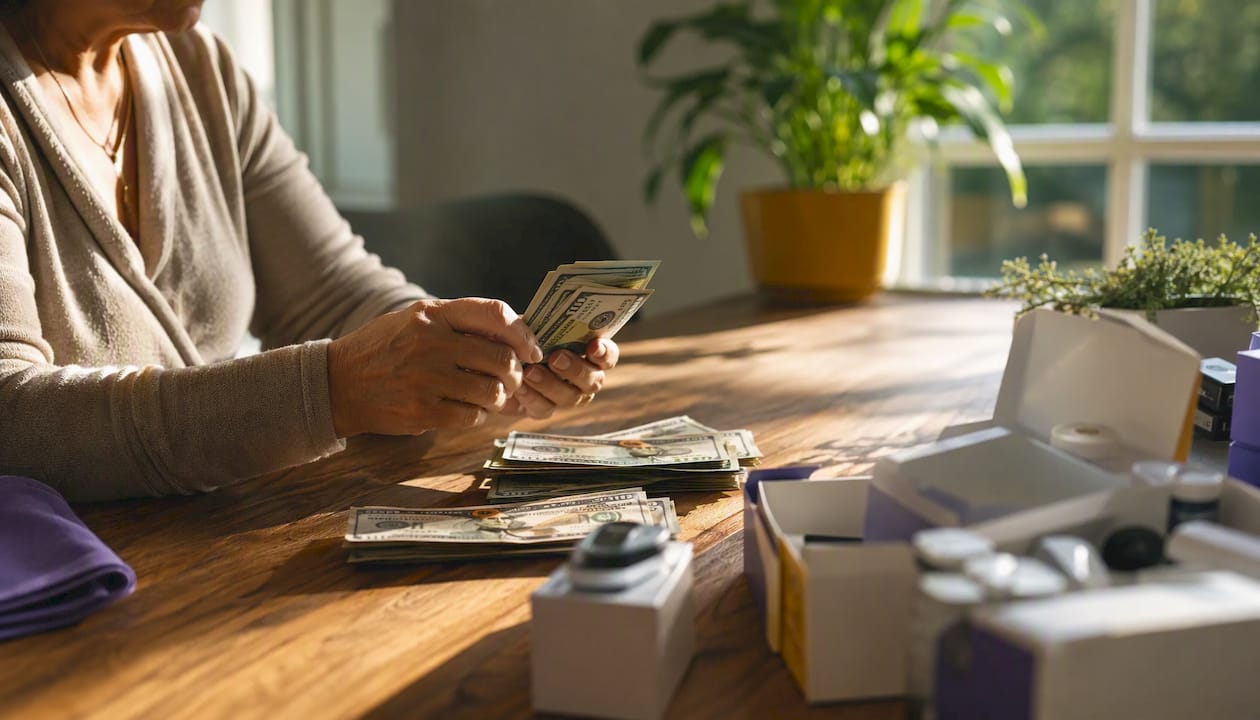
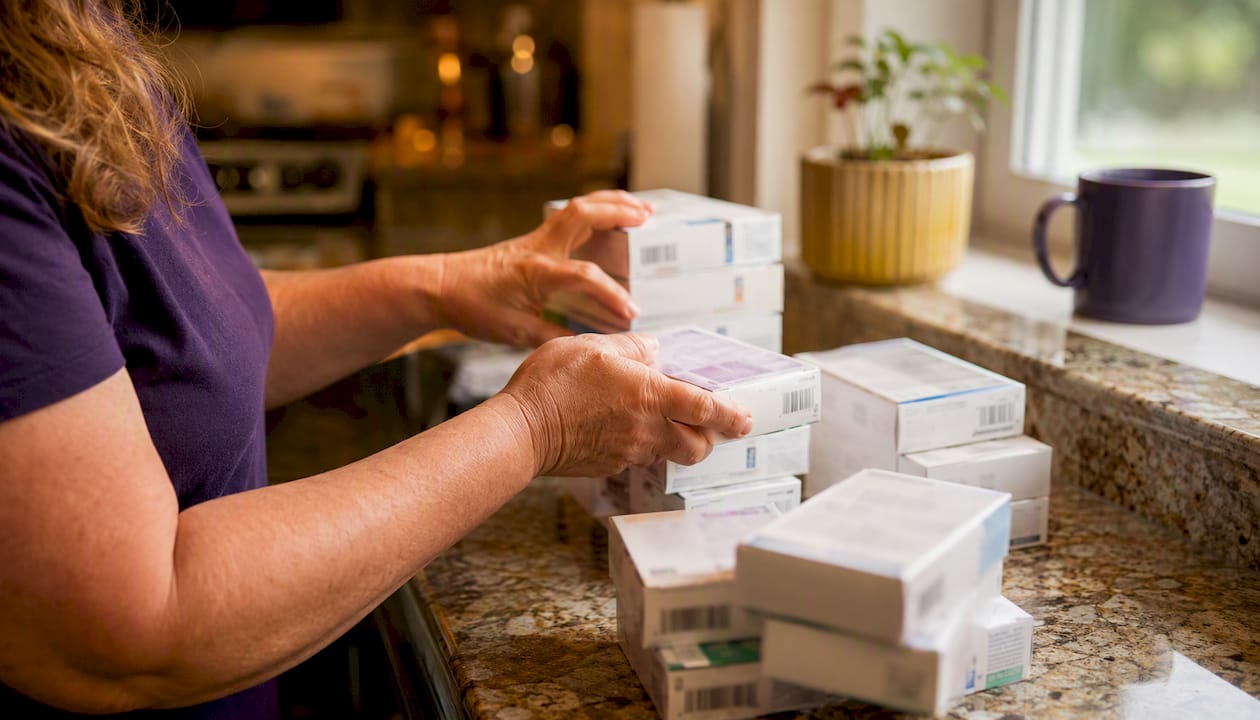
- Inventory any sealed, unexpired supplies you no longer use. Selling them locally for same-day cash is an immediate recovery option.
Top tools at a glance:
| Tool | Best immediate action |
|---|---|
| GoodRx / SingleCare | Compare prices before every pharmacy visit |
| Manufacturer PAPs & co-pay cards | Apply before paying full price |
| Mail-order pharmacy (Express Scripts / OptumRx) | Request 90-day fills for stable regimens |
| Vial + syringe | Ask your prescriber if it fits your clinical needs |
| FreeStyle Libre | Compare sensor cost-per-day against your current CGM |
| Orlando Diabetic Supplies Buyback | Sell sealed surplus supplies for same-day cash |
Table of Contents
- Why insulin and device costs are so high
- Top low-cost insulin management tools and programs to try first
- Which delivery and monitoring options fit your budget?
- How to shop and compare to get the lowest price
- Where to find financial assistance and official resources
- Selling unused sealed supplies: an immediate cash option
- A focused 5-step plan to lower your costs this week
- Key Takeaways
- The real cost of convenience in diabetes management
- Turn your unused diabetic supplies into same-day cash
- Authoritative sources and further reading
Why insulin and device costs are so high
The sticker price on insulin and diabetes technology rarely reflects what you will actually pay, and the gap between list price and your out-of-pocket cost depends on several overlapping factors.
List price vs. negotiated price. Insulin list prices in the U.S. are set by manufacturers, but pharmacy benefit managers negotiate rebates that rarely flow directly to patients paying cash. The result: the same vial can cost dramatically different amounts depending on whether you use insurance, a discount card, or pay cash at full price.
Pharmacy benefit vs. DME billing. This one surprises a lot of people. Some devices, including certain CGMs and pod systems, are billed through your pharmacy benefit rather than durable medical equipment (DME). The billing channel affects your copay and coverage rules significantly. A device processed through DME may count toward a different deductible than one processed through pharmacy, so verifying which channel your provider will use is a non-negotiable first step.
Upfront vs. recurring costs. A traditional insulin pump can run $6,000–$8,000 out of pocket without insurance, with ongoing pump supplies adding another $2,000–$6,000 per year. At the other end of the spectrum, a box of 100 syringes costs roughly $15–$20 at most pharmacies. The upfront number gets attention, but the recurring sensor, pod, and cartridge costs are often what strain a monthly budget most.
Understanding these drivers is what makes the programs below worth your time. Discount cards, PAPs, and mail-order options each target a specific part of this cost structure.
Top low-cost insulin management tools and programs to try first
ADCES guidance is clear: most people overpay because they check only one program before purchasing. The right move is to layer multiple options. Here is where to start.
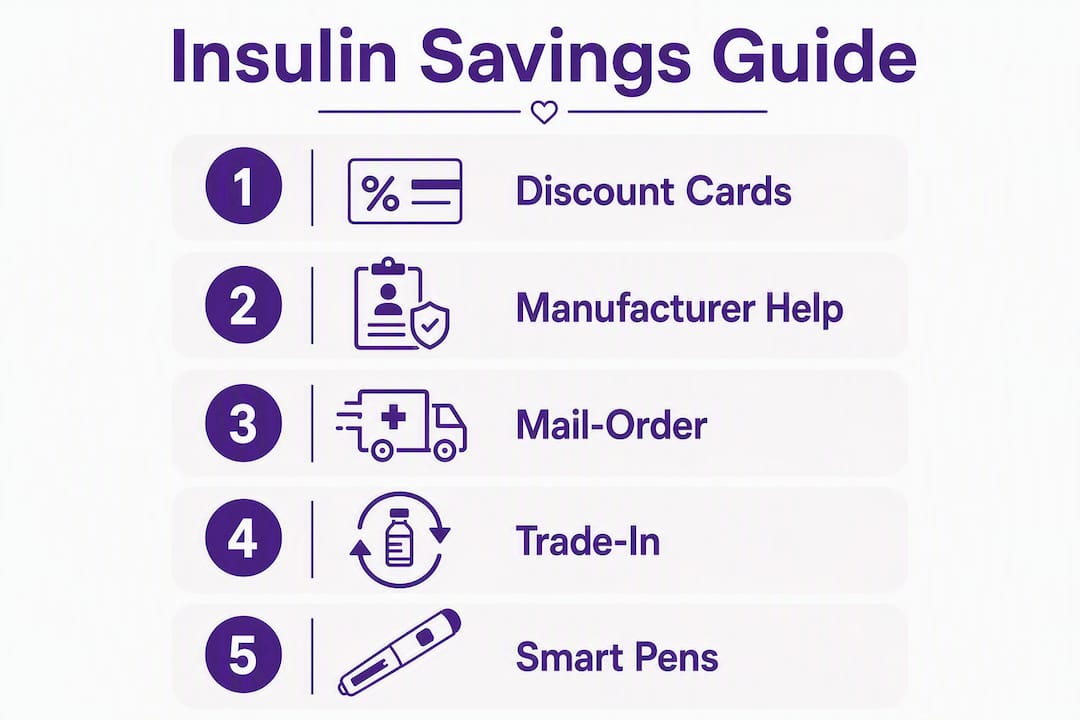
GoodRx and SingleCare discount cards
Both services work at the point of sale. You present the card or app coupon at the pharmacy counter, and the price drops immediately. No enrollment, no waiting period. GoodRx and SingleCare prices vary by pharmacy and ZIP code, so comparing both before you fill is worth the two minutes it takes. These cards are most effective for cash-pay patients or anyone whose insurance copay is higher than the discounted cash price.
Manufacturer PAPs and co-pay cards
Every major insulin and device manufacturer runs some form of patient assistance. Eli Lilly, Novo Nordisk, and Sanofi all offer PAPs for qualifying low-income or uninsured patients, and most device makers offer co-pay cards that cap what commercially insured patients pay per fill. Eligibility thresholds vary, but the savings can be substantial, including free supplies in qualifying cases. Apply directly through the manufacturer’s website or ask your prescriber’s office to help with paperwork.
Medicare patients have a separate protection: the Inflation Reduction Act capped out-of-pocket insulin costs at $35 per month for Medicare Part D beneficiaries.
Mail-order and specialty pharmacies
For stable, ongoing regimens, mail-order pharmacies like Express Scripts and OptumRx typically offer lower 90-day pricing than retail. Many insurance plans require or strongly incentivize mail-order for maintenance medications. The tradeoff is lead time: you need to plan refills two to three weeks ahead. Specialty pharmacies handle more complex devices and can sometimes access manufacturer pricing programs that retail pharmacies cannot.
Civica Rx insulin initiative
Civica Rx is a nonprofit generic drug manufacturer that has targeted insulin pricing as a public-health priority. Its program-level price targets aim to bring biosimilar insulin to market at lower list prices, reducing the baseline cost for patients who use participating pharmacies or programs. It is worth checking whether your state Medicaid program or health system has a Civica supply agreement.
Smart pens: InPen access program
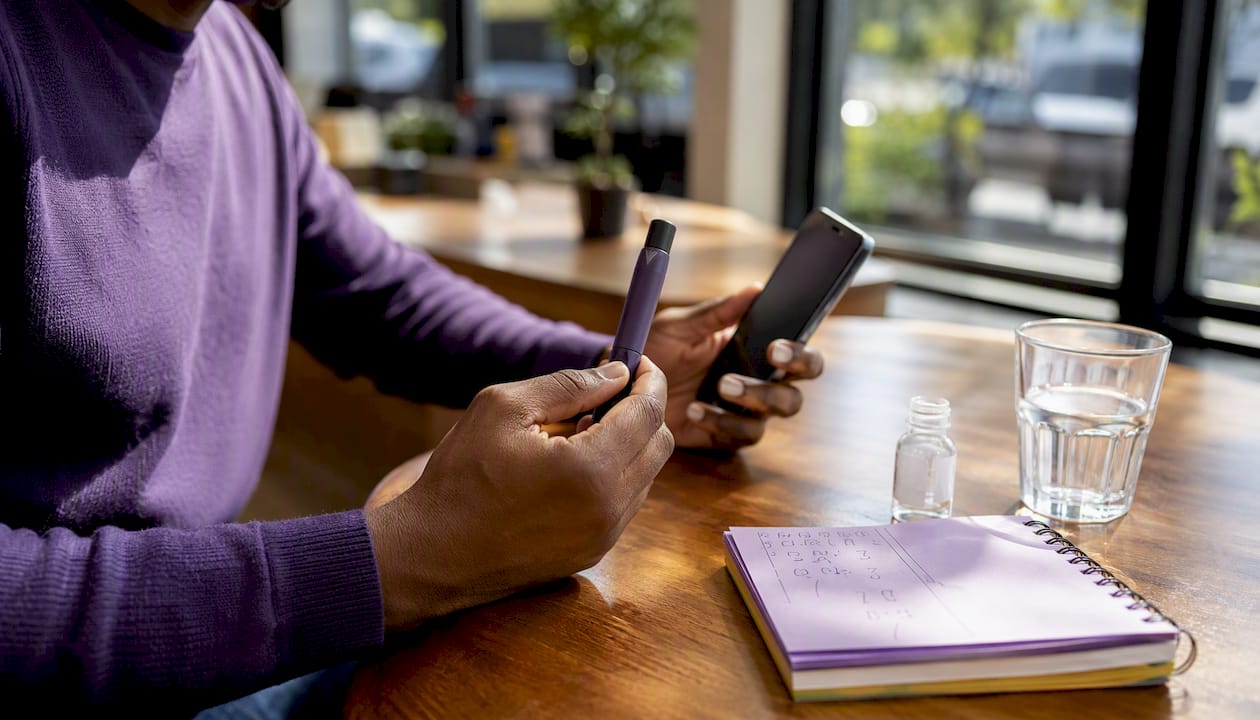
The InPen smart insulin pen pairs Bluetooth does tracking with a companion app, giving multiple-daily-injection users pump-like data at a fraction of the recurring cost. Medtronic’s access program advertises that eligible patients may pay as little as $60 per year. Costs and eligibility vary, so confirm current terms directly with Medtronic.
Trade-in and switch programs
Before buying a new pump, check the manufacturer’s site. MiniMed offers a Switch2System trade-in option with a reported $499 upgrade fee in one promotional example, compared with the full $6,000–$8,000 out-of-pocket price for a new system. These programs are commonly overlooked and can cut upfront capital cost significantly.
| Program / Tool | Typical savings mechanism | Best for |
|---|---|---|
| GoodRx / SingleCare | Point-of-sale coupon, instant discount | Cash-pay or high-copay patients |
| Manufacturer PAPs | Free or deeply reduced supplies | Uninsured / low-income patients |
| Manufacturer co-pay cards | Caps commercial insurance copay | Commercially insured patients |
| Mail-order (Express Scripts / OptumRx) | Lower 90-day pricing, auto-refill | Stable, ongoing regimens |
| Civica Rx initiative | Lower list-price biosimilar insulin | Anyone using participating programs |
| InPen access program | As low as $60/year for eligible patients | MDI users wanting smart tracking |
| Trade-in programs (e.g., MiniMed) | Reduced upgrade fee vs. full purchase | Existing pump users upgrading |
Pro Tip: Stack a manufacturer co-pay card with a mail-order fill when your plan allows it. Some plans permit this combination, and the savings from both can be larger than either alone. Confirm with your pharmacist before assuming they are stackable.
Which delivery and monitoring options fit your budget?
Choosing the right device is not just a clinical decision. It is a financial one. The table below compares categories by cost structure, not by brand ranking, so you can match the option to your actual budget and clinical need.
| Delivery / monitoring option | Typical upfront cost | Typical recurring cost | Insurance / prior auth likelihood | Ease of use | Prescription required? | Best budget fit |
|---|---|---|---|---|---|---|
| Vial + syringe | A box of 100 syringes costs roughly $15–$20 | Low (insulin vials) | High coverage likelihood | Moderate | Yes (insulin) | Tightest budgets, basic control |
| Disposable pens | Low to moderate | Moderate (pen cartridges) | High coverage likelihood | High | Yes | Step up from vials, convenience |
| Smart pen (InPen) | Low to moderate | Low (vs. pumps) | Varies; check formulary | High | Yes | MDI users wanting data, low recurring cost |
| Traditional insulin pump | High upfront cost without insurance | Significant recurring supply costs annually | Moderate; prior auth common | Moderate (training needed) | Yes | Clinical need for tight control; insurance required for most |
| Tubeless pod (Omnipod) | Moderate (PDM or app) | High (recurring pods) | Varies; pharmacy or DME | High | Yes | Convenience priority; coverage helps |
| CGM: FreeStyle Libre | Low to moderate (reader optional) | Moderate (sensors) | Increasingly covered | High | Yes | Budget CGM, trend monitoring |
| CGM: Dexcom G6/G7 | Moderate (transmitter) | Moderate to high (sensors) | High coverage likelihood | High | Yes | Real-time alerts, clinical support |
| Open-source AID (Loop, AndroidAPS, Trio) | Low to moderate (compatible hardware) | Ongoing (CGM + pump supplies) | Limited; DIY setup | Low (technical setup) | Yes (compatible devices) | Tech-savvy users; lower automation cost |
A few points worth knowing before you decide:
- Vial-plus-syringe remains the lowest-cost baseline. If cost is your primary driver and your clinician agrees it is appropriate, this is the starting point.
- FreeStyle Libre sensors often carry a lower cost-per-day than Dexcom sensors depending on your coverage and available coupons, making it a practical first CGM for budget-conscious patients.
- Dexcom G6/G7 provides real-time alerts and integrates with more AID systems, which matters clinically if you need tighter overnight control.
- Omnipod’s tubeless design is genuinely convenient, but the recurring pod cost is the highest recurring supply expense in the table. Coverage is the deciding factor.
- Open-source AID projects like Loop, AndroidAPS, and Trio are listed by ADCES as lower-cost automation alternatives, but they require technical setup, compatible hardware, and active clinician oversight. They are not a plug-and-play solution.
Safety note: Never switch insulin delivery methods or devices without consulting your care team. Changes to delivery method, basal rates, or CGM calibration require clinical oversight and, in many cases, formal device training.
How to shop and compare to get the lowest price
Follow these steps in order. Each one builds on the last, and skipping ahead usually means leaving money on the table.
- Log into your insurance portal and check the formulary. Find your insulin and any devices you use. Note the tier, the copay, and whether prior authorization is required. If your current insulin is on a higher tier, ask your prescriber whether a therapeutically equivalent option on a lower tier is appropriate for you.
- Call your pharmacy and ask which benefit channel they will use. Specifically ask: “Will this be billed through my pharmacy benefit or DME?” The answer changes your copay, your deductible, and sometimes your coverage entirely.
- Compare retail, mail-order, and discount-card prices side by side. Use GoodRx and SingleCare to get cash-pay prices at three nearby pharmacies. Then call your mail-order pharmacy for the 90-day price. Pick the lowest net cost after any applicable co-pay card.
- Apply for manufacturer PAPs before your next fill if you are uninsured or underinsured. Most applications take 10–20 minutes online. Your prescriber’s office can often submit on your behalf. Do not pay full price while an application is pending if you can delay a non-urgent fill.
- Request 90-day supplies when your regimen is stable. Most mail-order plans price 90-day fills at roughly two months’ cost, effectively giving you one month free. Confirm your plan’s rules before requesting.
- Verify the billing channel for any new device before you accept it. Ask your prescriber’s office and the dispensing pharmacy or DME supplier to confirm in writing which benefit channel will be used. Surprises at the counter are avoidable.
- Time your refills to avoid gaps and emergency fills. Emergency fills at out-of-network pharmacies often carry higher copays. Refill at 75–80% of your current supply to stay ahead.
Pro Tip: When speaking with your pharmacist, ask directly: “Is there a lower-cost alternative on my plan for this insulin or device?” Pharmacists can see your formulary in real time and often know about manufacturer programs you have not heard of. This one question has saved patients hundreds of dollars per fill.
Where to find financial assistance and official resources
Several channels exist beyond manufacturer programs, and most people with diabetes have not tapped all of them.
- ADCES Danatech affordability tool. The ADCES affordability program finder covers discount cards, PAPs, trade-in programs, subscription savings, and free trials in one searchable tool. Start here before calling manufacturers individually.
- American Diabetes Association insulin affordability page. The ADA maintains a current list of manufacturer programs, state programs, and emergency insulin access resources at diabetes.org.
- Affordable lab testing. Keeping your A1C and related labs current is part of managing costs long-term. Affordable lab testing options exist outside hospital systems and can reduce the total cost of your diabetes care.
When you apply for any assistance program, have these documents ready: proof of income (recent tax return or pay stubs), your insurance card or proof of no insurance, a current prescription, and your prescriber’s contact information. Most programs respond within two to four weeks, though some offer emergency bridge supplies faster.
Selling unused sealed supplies: an immediate cash option
If you have switched devices, changed prescriptions, or received more supplies than you used, selling sealed, unexpired items is one of the fastest ways to recover cash. This is not a long-term savings strategy. It is an immediate one.
How local buy-back works with Orlando Diabetic Supplies Buyback:
- You bring sealed, unexpired supplies to the local Orlando location for in-person inspection.
- Items are checked for condition, expiration date, and original packaging integrity on the spot.
- Eligible items receive a cash or electronic payment the same day, with no waiting period.
- Common accepted items include Dexcom G6 and G7 sensors, FreeStyle Libre sensors, Omnipod pods, and major-brand sealed test strips.
The most common reason people have surplus supplies is a device upgrade or prescription change. If you recently switched from a Dexcom G6 to a G7, or from Omnipod to a pump, you may have boxes of sensors or pods that are still sealed and well within their expiration date. Those items have real cash value. You can learn more about common device upgrade scenarios that typically create surplus supplies.
Safety and regulatory notes:
- Only sealed, unopened, unexpired items in original manufacturer packaging are eligible.
- Never attempt to sell opened, used, or expired supplies.
- Follow your state’s rules on supply resale and confirm item eligibility before traveling to the location.
Pro Tip: Before your appointment, photograph each box showing the lot number, expiration date, and sealed condition. This speeds up the inspection and gives you a record of what you brought in.
Local buy-back services are a practical, immediate option for people who have already made a device switch and want to recover some of the cost. For a step-by-step walkthrough of selling unused test strips and other supplies in Orlando, that resource covers the process in detail.
A focused 5-step plan to lower your costs this week
You do not need to do everything at once. This plan is designed to get you real savings within seven days.
- Day 1–2: Check your formulary and get discount-card prices. Log into your insurance portal and note your insulin’s tier and copay. Then open GoodRx and SingleCare and compare prices at three nearby pharmacies. If the discount-card price is lower than your copay, use the card for your next fill.
- Day 3: Apply to manufacturer PAPs and request co-pay card enrollment. Visit the manufacturer’s website for your insulin and any devices you use. Complete the PAP application or enroll in the co-pay card program. Ask your prescriber’s office to submit supporting documentation if needed.
- Day 4–5: Compare mail-order vs. retail pricing and set up auto-refill if cheaper. Call your mail-order pharmacy (Express Scripts, OptumRx, or your plan’s designated service) and ask for the 90-day price on your current insulin. If it is lower than retail, request a 90-day supply and set up automatic refills.
- Day 6: Inventory your sealed supplies and evaluate selling surplus items. Go through your supply storage and identify any sealed, unexpired items you no longer need. If you are in the Orlando area, check what Orlando Diabetic Supplies Buyback accepts and schedule an in-person visit for same-day cash.
- Day 7: Schedule a follow-up with your clinician. Confirm any insulin or device changes with your care team before implementing them. Document your new pricing, programs enrolled in, and any pending applications so you have a clear record going forward.
Key Takeaways
The fastest, most reliable way to lower insulin and device costs is to layer discount cards, manufacturer PAPs, and mail-order pricing together, then recover immediate cash from any sealed surplus supplies you no longer need.
| Point | Details |
|---|---|
| Start with discount cards | GoodRx and SingleCare give instant savings at the pharmacy counter with no enrollment required. |
| Apply for manufacturer PAPs early | Uninsured and low-income patients can receive free or deeply reduced supplies; apply before your next fill. |
| Mail-order saves on stable regimens | 90-day fills through Express Scripts or OptumRx typically cost less than monthly retail fills. |
| Vial + syringe is the lowest baseline | A box of 100 syringes costs roughly $15–$20; the lowest-cost delivery option when clinically appropriate. |
| Orlando Diabetic Supplies Buyback | Converts sealed, unexpired surplus supplies into same-day cash for Orlando-area patients who have switched devices. |
The real cost of convenience in diabetes management
There is a gap between what the diabetes technology industry sells and what most people actually need to stay healthy on a budget. The marketing around pumps and CGMs is compelling, and the clinical benefits are real for many patients. But the framing almost always skips the part where recurring sensor and pod costs add up to thousands of dollars per year.
The honest tradeoff is this: vial-plus-syringe is unglamorous, but it works. For someone whose primary barrier to good diabetes management is cost, starting there and adding technology incrementally, as coverage or income allows, is a smarter path than taking on a $6,000 pump and then struggling to afford the supplies. A smart pen like InPen sits in a genuinely useful middle ground: it gives you dose-tracking data and app integration at a fraction of the recurring cost of a pump, and the access program can bring annual cost down to $60 for eligible patients.
What I see consistently is that people focus on the device and overlook the programs. A manufacturer PAP or a stacked discount card can save more money in a single month than switching devices entirely. The ADCES affordability tool exists precisely because this information is scattered and hard to find. Using it before you buy anything is not optional if cost matters to you.
Turn your unused diabetic supplies into same-day cash
If you have sealed, unexpired Dexcom G6 or G7 sensors, FreeStyle Libre sensors, Omnipod pods, or major-brand test strips sitting unused, Orlando Diabetic Supplies Buyback offers a straightforward way to convert them into cash today.
The process is simple: bring your sealed, unexpired items to the Orlando location, and the team inspects them on the spot. Eligible items get paid out the same day, in cash or electronic transfer, with no waiting and no shipping. This is a practical option for anyone in Orlando and the surrounding areas who has switched devices, changed prescriptions, or accumulated more supplies than they need.
It is a direct way to offset the cost of your next supply purchase or simply recover money you have already spent. Visit the how to get cash for unused diabetic supplies page to see accepted items, condition requirements, and how to prepare for your visit.
This article is general information, not medical or financial advice. Confirm current program terms, eligibility rules, and any device or insulin changes with your care team and insurer before acting.
Authoritative sources and further reading
- ADCES Danatech Diabetes Technology Affordability Tool — Program finder covering discount cards, PAPs, trade-ins, and subscription savings.
- American Diabetes Association: Affordable Insulin Resources — Current manufacturer programs, state programs, and emergency access resources.
- Healthline: Cost of Insulin Pumps, Pens, Syringes, and More — Detailed cost breakdowns for delivery methods, including upfront and recurring expenses.
- ADA Consumer Guide: Browse and Compare Diabetes Products — Side-by-side product comparisons for pumps, CGMs, and pens.
- Helmsley Charitable Trust — Funds diabetes programs and technology access initiatives that reach patients through health systems.