
Diabetes management technology falls into five core categories: glucose monitoring (measuring blood sugar), insulin delivery (getting insulin into your body), automated insulin delivery or AID (systems that combine both and adjust doses automatically), software and data platforms (apps and cloud tools that turn device data into useful reports), and adjunct devices (connected pens, inhaled insulin, and standalone meters). According to the ADA Standards of Care in Diabetes, these categories now include CGMs, insulin pumps, AID systems, connected insulin pens, and diabetes self-management software, with AID systems preferred for many people who are insulin-dependent.
Here is a quick map of each category so you can jump to the section that matters most to you:
- Glucose monitoring: fingerstick meters, flash/FGM sensors, real-time CGMs, and implantable sensors. Most useful for anyone managing diabetes, regardless of treatment type.
- Insulin delivery: syringes, standard pens, connected smart pens, traditional pumps, and patch pumps. Primarily for people who take insulin.
- Automated insulin delivery (AID) / hybrid closed loop: a pump, a CGM, and a dosing algorithm working together. Best suited for type 1 and insulin-treated type 2 diabetes.
- Software and data platforms: apps like Dexcom Clarity and FreeStyle LibreLink, dosing calculators, and clinic-sharing tools. Valuable for everyone using a connected device.
- Adjunct devices: connected pens (like InPen), inhaled insulin, and blood glucose meters. Fill specific gaps in monitoring or delivery.
The Endocrine Society and the ADA both emphasize that the right category depends on your treatment goals, lifestyle, and willingness to learn a device. If you end up with sealed, unused supplies after switching devices, local buy-back services like Orlando Diabetic Supplies Buyback offer same-day cash for eligible items in the Orlando area.
Table of Contents
- How diabetes technologies are grouped and what each group does
- Glucose monitoring explained: from fingersticks to real-time CGMs
- Insulin delivery options: from syringes to smart pens and patch pumps
- Automated insulin delivery and hybrid closed-loop systems
- Apps, dosing advisors, and data platforms: making device data useful
- What clinical guidance says about who should use which technology
- Cost and insurance basics in the United States
- How to pick the right diabetes tech for your situation
- Managing extra or unused supplies: storage, resale, and buy-back
- Key Takeaways
- The gap between the newest device and the right device
- Authoritative sources and further reading
How diabetes technologies are grouped and what each group does
The functional grouping of diabetes technology is not arbitrary. Monitoring and delivery are separate categories because they solve different problems: one tells you what your glucose is doing, the other controls how much insulin you get. Software is its own category because raw device data is not useful until it is organized into trends, reports, and alerts. AID sits at the intersection of monitoring and delivery, which is why it gets its own section.
The table below maps each category to the practical dimensions that matter most when you are comparing options with your care team.
| Category | Best for | Automation level | Calibration needed | Typical wear/use interval | Integration potential | Cost/coverage shape | Ease of use |
|---|---|---|---|---|---|---|---|
| Fingerstick (SMBG) | All types, backup use | None | N/A (direct blood) | Per test, strips replaced as used | Syncs to some apps | Low device cost; strips add up | Very easy |
| Flash/FGM CGM | Non-insulin and MDI users | None (scan to read) | None on current devices | 14 days (e.g., FreeStyle Libre 3) | App, clinic platforms | Moderate; often pharmacy channel | Easy |
| Real-time CGM (rtCGM) | Insulin users, hypoglycemia risk | Decision support via alarms | None on most current devices | 7–15 days depending on sensor | Pump, phone, clinic | Higher; DME or pharmacy | Moderate |
| Insulin pump (open loop) | Type 1, type 2 on MDI | None to decision support | Requires paired CGM | Infusion set: 2–3 days; pump: years | CGM, apps | High upfront; ongoing supplies | Moderate to high |
| AID / hybrid closed loop | Type 1, insulin-treated type 2 | High (automated basal/microbolus) | Minimal on modern systems | Sensor + infusion set intervals | CGM + algorithm required | High; prior auth common | High learning curve |
| Connected pen | MDI users bridging to pump | Decision support (dose logging) | Requires separate CGM | Pen cartridge as needed | CGM apps, clinic platforms | Moderate | Low to moderate |
| Software/data platforms | All device users | Reporting and alerts | N/A | Continuous sync recommended | All major devices | Often free or low cost | Easy |
FDA clearances for hybrid closed-loop systems and interoperable CGMs have expanded steadily in recent years, which means the device options and compatible pairings in this table keep growing. The ADA and Endocrine Society both note that AID systems are now the preferred approach for many insulin-dependent people, a shift that reflects both clinical evidence and improved device reliability.
Glucose monitoring explained: from fingersticks to real-time CGMs
Glucose monitoring is the foundation of diabetes management. Every other technology category depends on knowing what your blood sugar is doing.
Self-monitoring with blood glucose meters (SMBG)
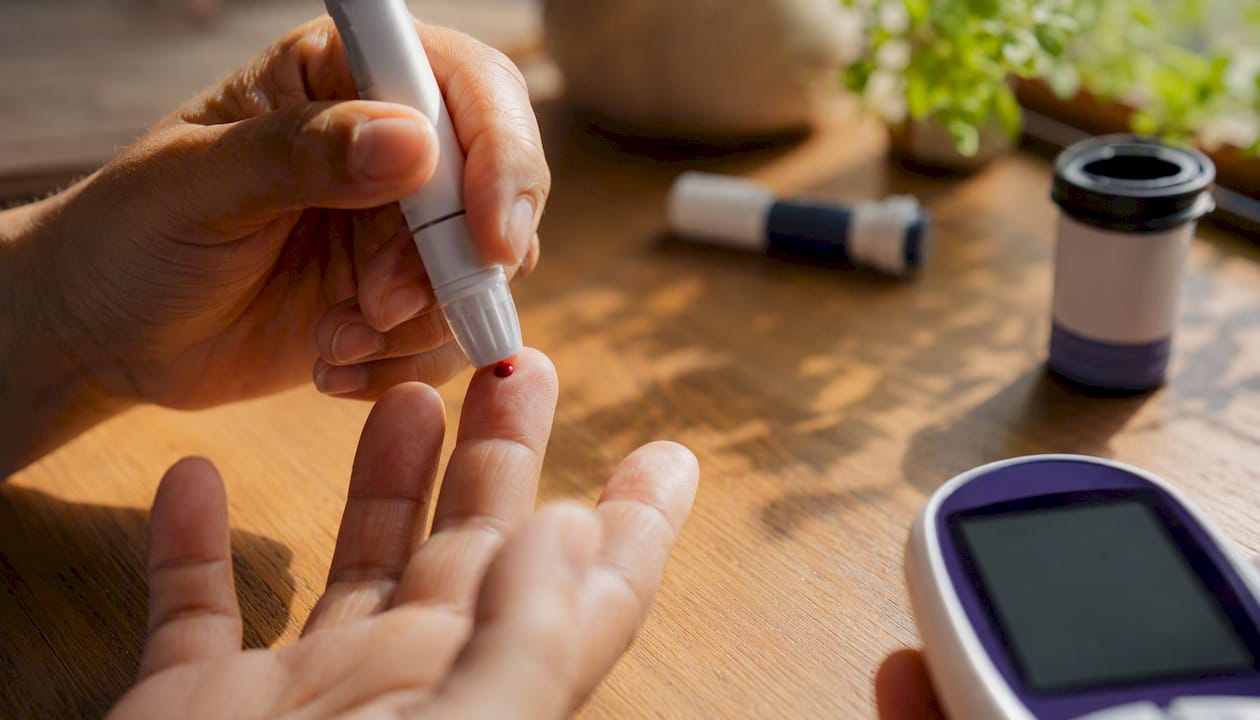
A fingerstick meter measures glucose directly from a blood sample. You get an accurate, real-time reading in seconds, but only at the moment you test. There are no trends, no alarms, and no automatic logging unless you use a Bluetooth-enabled meter. The real role of test strips goes beyond spot-checks: they remain the backup standard for confirming CGM readings before a critical dosing decision, and they are still the primary tool for people who are not on a CGM.
Flash glucose monitoring (FGM)
FGM sensors, most commonly the FreeStyle Libre family from Abbott, sit on the back of your upper arm and measure glucose in the interstitial fluid just below the skin. You wave a reader or your phone over the sensor to get a reading. Current FreeStyle Libre 3 sensors stream data continuously to a smartphone app without requiring a manual scan, though the original Libre required scanning. No fingerstick calibration is needed on current models.
Real-time CGM (rtCGM)
Real-time CGMs like the Dexcom G6 and Dexcom G7 stream glucose readings every five minutes to a receiver or smartphone and trigger alarms when glucose rises or falls past your set thresholds. The Dexcom G7 sensor overlaps with the next sensor during changeover, reducing gaps in monitoring. Neither the G6 nor G7 requires routine fingerstick calibration under normal conditions. For a plain-language overview of how CGM works, this CGM primer covers the basics clearly.

The key practical difference between FGM and rtCGM is the alarm. Current prescribed CGMs provide continuous streams with alarms; OTC CGMs lack alarms and are sold over the counter for non-insulin users who want lifestyle monitoring rather than insulin dosing support. If you are at risk for hypoglycemia, the alarm function is not optional.
Implantable sensors
Eversense (from Senseonics) is the only FDA-cleared implantable CGM available in the United States. A small sensor is inserted under the skin by a clinician and lasts up to 365 days, with a transmitter worn on the skin above it. The long wear time reduces the burden of frequent sensor changes, though the insertion and removal require a clinical procedure.
| Monitoring type | How it measures | Wear time | Alarms | Calibration | Best for |
|---|---|---|---|---|---|
| Fingerstick (SMBG) | Capillary blood | Per test | No | N/A | All types; backup use |
| FGM (e.g., FreeStyle Libre) | Interstitial fluid | Long wear interval | Limited (Libre 3 has some) | None | Non-insulin, MDI users |
| rtCGM (e.g., Dexcom G6/G7) | Interstitial fluid | Typical wear interval varies | Yes, customizable | None (most current models) | Insulin users, hypo risk |
| Implantable (Eversense) | Interstitial fluid | Up to 365 days | Yes | Twice-daily (transmitter) | People wanting long wear |
One practical note: interstitial glucose lags behind blood glucose by roughly 5–15 minutes during rapid changes, like after a meal or during exercise. This lag is why CGM readings and fingerstick readings can differ in the short term. It does not mean the CGM is wrong; it means the two measurements are capturing different moments.
Pro Tip: If your CGM reading and how you feel do not match, use a fingerstick to confirm before making a dosing decision. Most CGM manufacturers recommend this for symptoms of low blood sugar.
Insulin delivery options: from syringes to smart pens and patch pumps
Syringes and vials
Syringes remain the most basic and lowest-cost delivery method. You draw insulin from a vial and inject manually. There is no dose memory, no connectivity, and no automation. Syringes work with any insulin type and require no device training beyond the injection technique itself. They are common for people who are newly diagnosed, uninsured, or managing type 2 diabetes on a simple regimen.
Standard insulin pens
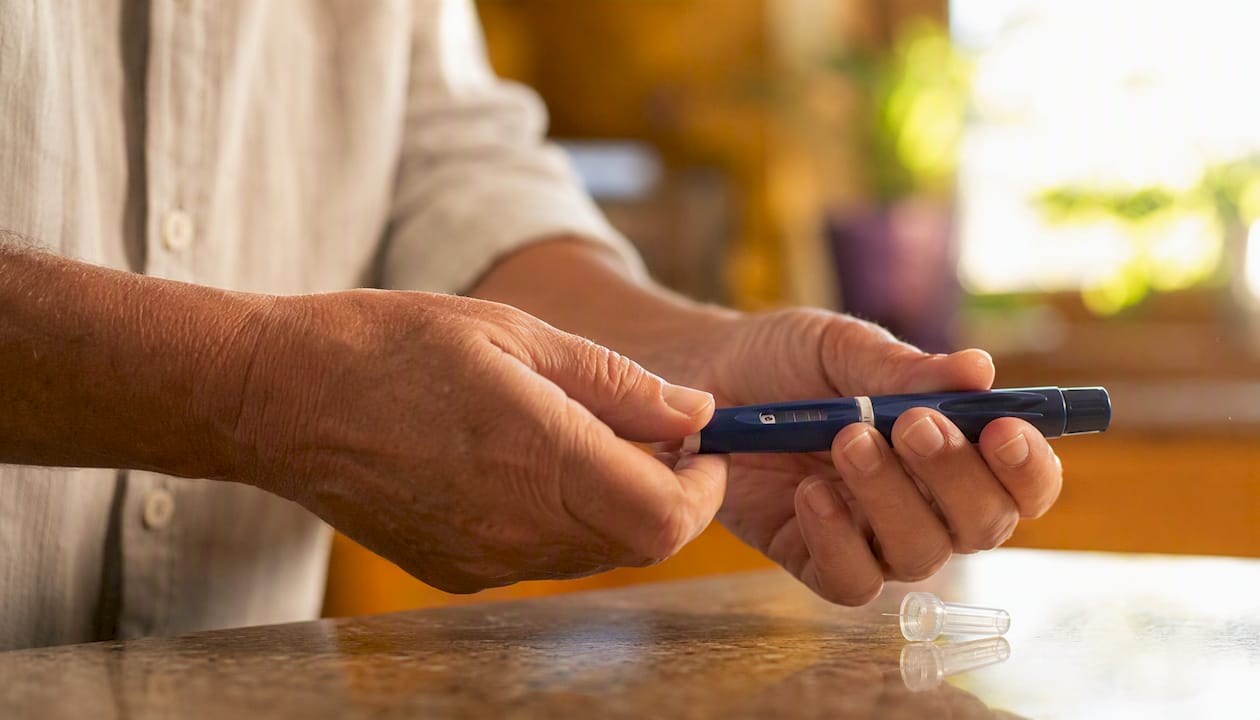
Insulin pens use prefilled cartridges or disposable pen bodies. They are more convenient than syringes for people on multiple daily injections (MDI) because the dose dial is built in and the pen is easy to carry. Disposable pens are discarded when empty; reusable pens accept replacement cartridges. Neither type logs doses automatically.
Connected (smart) insulin pens
Connected pens like the InPen (from Companion Medical, now integrated with Medtronic) add a layer of intelligence to MDI. Smart pens can sync to apps, log dosing history, and provide dose-calculation assistance, including active insulin tracking that helps prevent stacking doses. This makes them a practical bridge for people who are not ready for a pump but want better dose visibility. InPen pairs with compatible CGMs to factor in current glucose trends when calculating a suggested dose.

Pro Tip: If you are on MDI and your care team is discussing a pump, ask about a connected pen first. It gives you dose logging and bolus calculation without the full commitment of pump therapy, and the data it generates can help your clinician fine-tune your regimen before any bigger switch.
Traditional insulin pumps
Pumps like the Medtronic MiniMed series and Tandem t:slim X2 deliver insulin continuously through a thin tube connected to an infusion set placed under the skin. The infusion set is changed every few days as recommended. Pumps allow precise basal rate programming and on-demand bolus delivery. When paired with a compatible CGM, they can display glucose data and, in some configurations, suspend delivery during low glucose events.
The Tandem t:slim X2 features remote software updates that can add new AID features without hardware replacement.
Patch pumps (tubeless)
Omnipod (from Insulet) is a well-known patch pump in the United States. The pod attaches directly to the skin with no tubing and is controlled wirelessly by a handheld device or smartphone. Each pod lasts several days before replacement. The tubeless design appeals to people who want discretion during exercise, swimming, or daily activities where tubing is inconvenient.
Inhaled insulin
Afrezza (from MannKind) is the only FDA-approved inhaled insulin available in the United States. It is a rapid-acting insulin inhaled through a small device at mealtimes. It is not a replacement for basal insulin, so people using Afrezza still need a long-acting injection. It may suit people who prefer to avoid mealtime injections, though it is not compatible with AID systems and requires pulmonary function screening before use.
| Delivery method | Dose accuracy | Discretion | Maintenance | Training needed | Supply needs |
|---|---|---|---|---|---|
| Syringe | Manual, user-dependent | Low | Minimal | Basic injection | Vials, syringes, needles |
| Standard pen | Good (dial-based) | Moderate | Minimal | Basic injection | Pen cartridges, needles |
| Connected pen (InPen) | Good + dose logging | Moderate | App sync | Moderate | Cartridges, needles, app |
| Traditional pump | Precise | Moderate | Infusion set q2–3d | High | Reservoirs, infusion sets |
| Patch pump (Omnipod) | Precise | High | Pod q48h | Moderate | Pods |
| Inhaled (Afrezza) | Dose-cartridge based | High | Inhaler cleaning | Moderate | Cartridges, inhaler |
Pro Tip: Pump infusion sets and Omnipod pods are among the most commonly overstocked supplies. If you switch delivery methods or your prescription changes, sealed, unexpired pods and infusion sets may have real cash value through a local buy-back service.
Automated insulin delivery and hybrid closed-loop systems
AID is the most significant shift in diabetes management technology in the past decade. The concept is straightforward: a pump, a CGM, and a dosing algorithm work together so the system adjusts insulin delivery automatically, without you doing the math every few minutes.
AID systems consist of three components: an insulin pump, a CGM system, and an algorithm that modulates insulin delivery. The algorithm typically runs every five minutes, reading the latest CGM value and adjusting the pump’s basal rate or delivering a small correction microbolus. The algorithm may live in the pump itself (as in Medtronic’s systems), in the pod controller (as in Omnipod 5), or in a smartphone app.
Levels of automation
Not all AID systems work the same way. The spectrum runs from open-loop (pump only, no automatic adjustment) through decision support (alerts and suggestions, but you act on them) to hybrid closed loop (automatic basal and correction adjustments, but you still bolus for meals) to fully closed loop (still largely in clinical trials for most users).
Most commercially available systems in 2026 are hybrid closed loop. You still announce meals and deliver a meal bolus manually, but the system handles the background adjustments that used to require constant attention.
Clinical benefits
CGM and AID use improve Time in Range and reduce hypoglycemia. Clinicians increasingly use TIR as a primary short-term success metric, judging technology adoption by its ability to safely increase TIR and reduce low glucose events.
Studies show CGM and AID use improve TIR and reduce hypoglycemia, and the ADA Standards of Care reflect this evidence by recommending AID for many insulin-dependent people. Time in Range, the percentage of time glucose stays between 70 and 180 mg/dL, has become the day-to-day measure that clinicians watch alongside A1C.
Who typically gets prioritized for AID
People with type 1 diabetes are the primary candidates. Insulin-treated type 2 diabetes is an expanding indication, particularly for people with hypoglycemia unawareness, where the system’s automatic low-glucose suspension can prevent dangerous drops. Children and adolescents with type 1 diabetes have strong clinical evidence supporting AID use.
Compatibility matters here. Certain pumps and sensors have vendor-specific pairings, and interoperability lists change as the FDA clears new integrations. Tandem t:slim X2 pairs with Dexcom G6 and G7. Omnipod 5 pairs with Dexcom G6. Medtronic’s systems use Medtronic’s own CGM sensors. Before committing to a system, confirm the current pairing is FDA-cleared and that your insurer covers both components.
- Type 1 diabetes: AID is the preferred approach, per ADA guidance, for most people who can use it.
- Insulin-treated type 2: AID is appropriate when MDI or open-loop pump therapy is not achieving glucose goals.
- Hypoglycemia unawareness: automatic low-glucose suspend features make AID particularly valuable.
- Children: strong clinical evidence; device selection depends on age and caregiver involvement.
Apps, dosing advisors, and data platforms: making device data useful
Raw glucose numbers are not enough on their own. The software layer is what turns a stream of readings into something you and your clinician can actually use.
Data platforms serve several distinct roles:
- Dose calculation: apps connected to smart pens or pumps suggest bolus doses based on current glucose, carb intake, and active insulin on board.
- Data aggregation: platforms like Dexcom Clarity and FreeStyle LibreLink pull in readings from your device and organize them by time of day, day of week, and glucose pattern.
- Trend reporting: Time in Range (TIR), Glucose Management Indicator (GMI, an estimated A1C from CGM data), and pattern reports show where your glucose control is strong and where it needs work.
- Clinic sharing: most platforms let you share a report link with your care team before or during an appointment, so your clinician arrives with two weeks of data rather than a single A1C number.
- Coaching and alerts: some apps add medication reminders, carb-counting tools, or integration with fitness trackers.
Apps like Dexcom Clarity and FreeStyle LibreLink generate reports used by clinicians to adjust therapy. Failing to sync your device regularly means your clinician is working from outdated data, which can lead to adjustments that do not reflect your current patterns.
Pro Tip: Sync your CGM app the night before every clinic visit and generate a 14-day or 30-day report. Bring it on your phone or print it. Clinicians can make better decisions in a 15-minute appointment when they have a full pattern report rather than just a finger-prick A1C.
Privacy and data security
Before connecting a third-party app to your CGM or pump, ask these questions: Who stores your data, and where? Is the app HIPAA-compliant? Can you delete your data if you switch platforms? Most major manufacturer apps (Dexcom Clarity, LibreLink, Omnipod’s app) have clear privacy policies, but third-party coaching and logging apps vary widely. Check the app’s privacy policy before granting access to your glucose data.
Morning glucose patterns, like the dawn phenomenon, are one example of a pattern that only becomes visible when you review multi-day CGM trend data rather than individual readings.
What clinical guidance says about who should use which technology
The ADA Standards of Care and Endocrine Society guidance provide a practical framework for matching technology to patient profiles. The core principle: the best technology is highly individual, and lifestyle, treatment goals, and ability to use the device matter more than picking the newest model.
The ADA Standards of Care in Diabetes recommend offering CGM to all people with diabetes who use insulin, and AID systems to people with type 1 diabetes who are able to use the technology safely. Education and structured follow-up are prerequisites, not optional add-ons.
Education and training are critical to device effectiveness. A device’s benefit depends on the user’s ability to interpret alerts, respond to data, and integrate the technology into follow-up care. This is not a minor caveat: devices without structured onboarding often underdeliver on their clinical promise.
Technology by patient profile
- Type 1 diabetes: — rtCGM or AID is the standard of care. AID is preferred when the person can manage the learning curve and has access to training.
Minimum training expectations from clinical guidance include: device initiation with a certified diabetes care and education specialist (CDCES), at least one follow-up visit within 4 weeks of starting a new device, and ongoing review of device-generated reports at every clinic visit.
Cost and insurance basics in the United States
Diabetes technology is expensive. Understanding how coverage works helps you avoid surprises and ask the right questions before committing to a device.
How costs are structured
CGMs and pumps are typically covered as durable medical equipment (DME) through Medicare Part B and most private insurance plans, which means they go through a DME supplier rather than a pharmacy. Some CGMs, particularly FreeStyle Libre, are also available through the pharmacy channel, which can mean lower out-of-pocket costs depending on your plan. OTC CGMs like Dexcom Stelo are purchased out of pocket without a prescription.
Prior authorization is standard for most CGMs and all insulin pumps. Your clinician will need to submit documentation of medical necessity, which typically includes your diagnosis, current treatment regimen, and evidence that the device is appropriate for your care plan. Understanding private insurance supply categories can help you navigate what your plan covers and what channel it uses.
Medicare considerations
Medicare Part B covers CGMs for people with diabetes who use insulin or have a history of problematic hypoglycemia, subject to documentation requirements. Insulin pumps are covered under Part B as well, with specific criteria. Medicare Advantage plans may have different formularies and prior auth requirements.
Questions to ask your insurer or DME supplier
- Is this device covered under my medical benefit or pharmacy benefit?
- What is my copay or coinsurance for the device and for ongoing supplies (sensors, pods, infusion sets, test strips)?
- Is prior authorization required, and how long does it take?
- What quantity limits apply per month or per 90 days?
- Does my plan cover the specific CGM model my pump requires for AID compatibility?
- What is the process if I need to switch devices mid-year?
- Is there a trial period or return policy for the pump?
- Does my plan cover a connected pen or only standard pens?
One often-overlooked point: insurance plans frequently ship supplies in 90-day quantities, which means a prescription change or device upgrade can leave you with a full quarter’s worth of sealed, unopened supplies. Those supplies have real value if they are unexpired and in original packaging.
How to pick the right diabetes tech for your situation
No single device is right for everyone. The best choice depends on your treatment goals, how you live day to day, and what your care team can support.
Prioritized selection criteria
- Treatment goal: Are you trying to improve TIR, reduce A1C, prevent hypoglycemia, or reduce the burden of daily management? Different goals point to different categories.
- Insulin regimen: People on MDI have different needs than people on basal-only or no insulin at all.
- Lifestyle and discretion: Patch pumps like Omnipod suit active people or those who want no tubing. Implantable sensors suit people who dislike frequent sensor changes.
- Tech comfort: AID systems have a real learning curve. A connected pen or standalone CGM may be the right starting point.
- Training availability: Ask your care team whether a certified diabetes educator is available for device onboarding. Without it, even the best device underperforms.
- Interoperability: If you want AID, confirm the pump and CGM you are considering are FDA-cleared to work together before you commit. Checking compatibility before switching CGM devices can save you from a costly mismatch.
- Cost and coverage: Verify prior authorization requirements and out-of-pocket costs for both the device and its ongoing supplies.
10 questions to bring to your clinician or DME supplier
- Which CGM is compatible with the pump or AID system you are recommending?
- What training is included, and who provides it?
- What is my backup plan if the device fails or a sensor falls off?
- How long does prior authorization take for this device?
- What are my out-of-pocket costs for the device and for monthly supplies?
- How often will we review my device data together?
- What improvements in TIR or A1C should I realistically expect?
- Is there a trial period before I commit to a pump?
- What happens to my current supplies if I switch devices?
- Are there newer devices or FDA clearances I should know about before deciding?
A practical decision trade-off worth knowing: starting with a CGM-first approach (CGM plus MDI or a connected pen) before moving to a pump gives you time to learn how your glucose responds to food, exercise, and stress. That data makes the eventual pump or AID transition smoother and gives your clinician a stronger baseline.
Pro Tip: Ask your care team for a “device trial” before committing to a pump. Some DME suppliers and clinics offer short-term loaner programs or starter kits that let you wear a device for a few weeks before your insurance is billed for the full system.
Managing extra or unused supplies: storage, resale, and buy-back
Device switches, prescription changes, and 90-day insurance shipments all create the same problem: sealed, unexpired supplies sitting in a drawer. Handling them well protects both your wallet and your health.
Step-by-step checklist for surplus supplies
- Take inventory. List every item: brand, model, quantity, and expiration date. A structured diabetic supply inventory makes this faster and ensures nothing gets missed.
- Check expiration dates and condition. Expired supplies cannot be resold and should be disposed of safely. Supplies must be in original, sealed packaging to have resale value.
- Review your insurance rules. Some plans prohibit reselling insurance-covered supplies. Check your plan documents or call your insurer before selling.
- Consider resale or buy-back. Sealed, unexpired CGM sensors, pods, and test strips from major brands have real cash value. Local same-day buy-back services like Orlando Diabetic Supplies Buyback inspect items in person and pay on the spot for eligible supplies including Dexcom G6 and G7 sensors, FreeStyle Libre, Omnipod pods, and major brand test strips. If you have unused Dexcom G7 sensors, those are among the most commonly accepted items.
- Dispose of expired or opened items safely. Sharps (needles, lancets) go in an FDA-cleared sharps container. Expired sensors and test strips can typically go in household trash in most states, but check your local guidelines.
Pro Tip: Keep supplies in their original boxes, stored at room temperature away from direct sunlight and humidity. Sensors and pods that have been stored correctly and remain sealed in original packaging hold their value far better than items that have been removed from the box.
What to vet before selling
- Does the buyer inspect items in person before paying? In-person inspection protects both parties.
- What payment method does the buyer use? Cash or same-day electronic transfer is standard for reputable local services.
- Does the buyer accept your specific brand and model? Not all buy-back services accept every product.
Never resell opened, used, or expired supplies. This is both a safety issue and, in most cases, a legal one. Only sealed, unexpired, original-packaging items are appropriate for resale.
If you have sealed, unused diabetic supplies in the Orlando area, Orlando Diabetic Supplies Buyback offers same-day cash with in-person inspection and on-the-spot payment. Get cash for your unused supplies and find out which items qualify.
Key Takeaways
Diabetes technology falls into five functional categories, and matching the right category to your treatment goals, lifestyle, and training access matters more than choosing the newest device.
| Point | Details |
|---|---|
| Five core categories | Glucose monitoring, insulin delivery, AID/hybrid closed loop, software platforms, and adjunct devices each solve a different problem. |
| AID is now preferred for many | ADA Standards of Care recommend AID for most insulin-dependent people who can use it safely, with structured training as a prerequisite. |
| Training determines outcomes | A device’s benefit depends on education and follow-up; devices without structured onboarding consistently underdeliver. |
| Interoperability is a real risk | Pumps and CGMs have vendor-specific pairings; confirm FDA-cleared compatibility before committing to a system. |
| Surplus supplies have cash value | Sealed, unexpired sensors, pods, and test strips can be sold through local buy-back services like Orlando Diabetic Supplies Buyback for same-day cash. |
The gap between the newest device and the right device
The diabetes technology space moves fast, and the marketing moves even faster. Every year brings a new sensor generation, a software update, or a clearance for a new AID pairing. It is easy to feel like you are always one device behind.
What the clinical evidence actually shows is more grounding. The biggest predictor of whether a device improves your outcomes is not which brand you chose. It is whether you received proper training, whether you review your data regularly, and whether your care team uses that data to adjust your treatment. A well-used CGM from two generations ago will outperform a brand-new AID system that sits in its box because the onboarding was too complicated.
The other thing worth saying plainly: device switches are normal. Prescriptions change, insurance formularies shift, and better options become available. When that happens, you often end up with a supply of sealed, perfectly good sensors or pods that your new device does not use. That is not waste. It is an asset, and treating it as one, by inventorying it, checking expiration dates, and connecting with a reputable local buy-back service, is just good supply management. Orlando Diabetic Supplies Buyback exists precisely for that moment.
The checklist in this article is a starting point. Bring it to your next clinic visit, ask the questions in the “how to choose” section, and let your care team help you match the technology to your actual life, not the other way around.
Authoritative sources and further reading
These sources provide deeper clinical detail and official guidance on diabetes technology. Sharing relevant reports with your care team is always a good idea.
- Diabetes Technology: Standards of Care in Diabetes — 2026 (PMC/ADA): The ADA’s current clinical standards chapter on diabetes technology, covering CGMs, AID systems, connected pens, and software. The primary reference for clinical recommendations in this article.
- Diabetes Technology: A Primer for Clinicians (Cleveland Clinic Journal of Medicine): A practical, clinician-facing overview of CGM, pumps, AID, and smart pens, with evidence summaries and TIR data.
- Diabetes Technology (Endocrine Society): Patient-facing library page from the Endocrine Society covering device categories and selection principles.
- Diabetes Technology: Tools to Empower Your Management (Beyond Type 1): Community-focused overview of CGMs, pumps, and data apps written for people living with type 1 diabetes.
- Technology in the Management of Type 2 Diabetes (PMC): Peer-reviewed review of how CGM, pumps, and connected devices apply specifically to type 2 diabetes management.
- Daily Diabetes Care Resources (Children’s Hospital of Philadelphia): Practical resources for children and families managing diabetes, including device guidance and monitoring tools.
This article is general information, not medical advice. Confirm current device recommendations, coverage rules, and clinical guidelines with your care team or a certified diabetes care and education specialist.