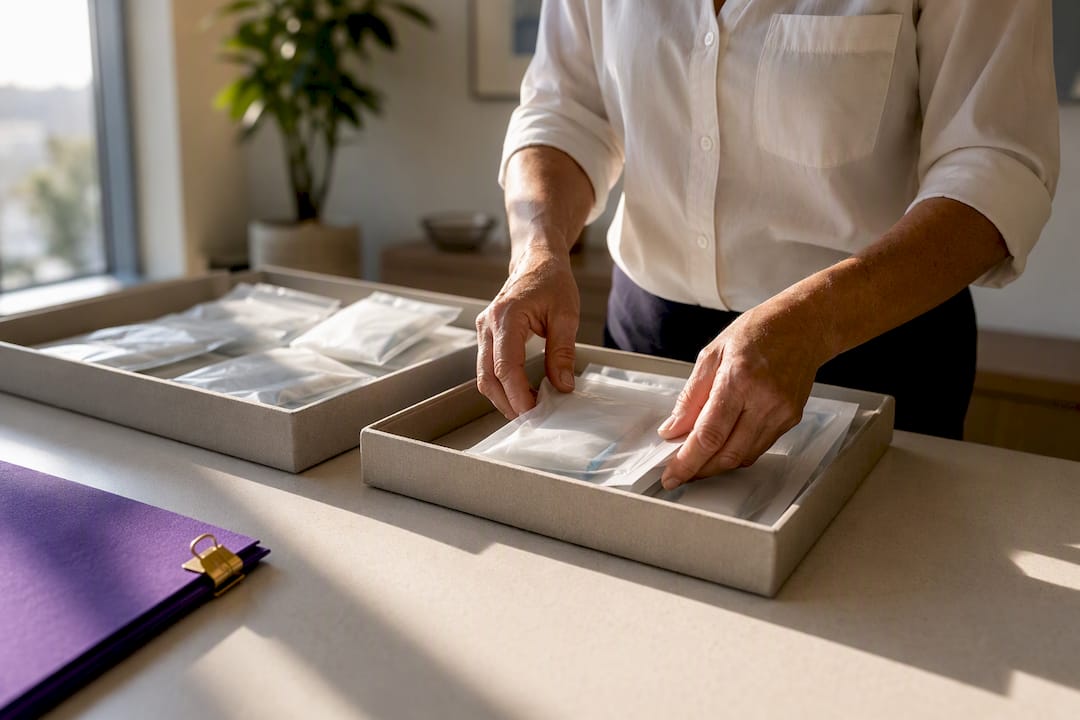
Most buyers will look at a single sealed item, but many prefer a small lot or a minimum dollar amount before making an offer. Your item must be sealed, unexpired, and privately purchased, not billed through Medicare, Medicaid, or TRICARE. For context, sealed Dexcom G7 sensors typically bring $70 to $90 each, so even one or two boxes can be worth a same-day trip.
TL;DR:
- Buyers typically accept sealed, unexpired supplies purchased privately, with a preference for multiple items and several months of shelf life remaining.
- Single Dexcom G7 sensors are often accepted and can fetch $70 to $90 each, but smaller quantities or nearing expiration reduce acceptability and offer value.
- Items billed through government programs like Medicare or Medicaid are off-limits, and expired or opened packages are generally not eligible for resale.
- Grouping supplies by type, expiration date, and proof of private purchase speeds up the selling process and leads to better offers.
- In-person, cash transactions should occur in public locations, with buyers inspecting items on-site and paying immediately to ensure safety and legitimacy.
Table of Contents
- Eligibility checklist sellers must meet before a buyer will accept items
- Why buyers set minimums and how they decide what to accept
- Realistic minimums by item, examples to help you self-assess
- How to prepare and present items so they meet minimums and get top offers
- Safe same-day in-person selling: what to expect and how to stay protected
- A buyer’s perspective on fairness and speed
- How to sell to us today: same-day steps to get started
- Authoritative resources for legal and safety details
- Sources
- FAQ
Eligibility checklist sellers must meet before a buyer will accept items
Before you reach out to any buyer, run through this list. It takes five minutes and saves you a wasted trip.
- The box or vial is factory sealed with the expiration date clearly visible.
- The item was purchased privately, not billed to Medicare, Medicaid, or TRICARE, since those items carry restrictions on resale.
- The item has several months of shelf life left rather than a date that has already passed or is only weeks away.
- The item is one of the commonly accepted types: Dexcom sensors (G6 or G7), FreeStyle Libre sensors, Omnipod pods, or sealed test strips.
- You have a receipt, pharmacy paperwork, or at least the lot and serial numbers ready, since these speed up verification.
Sellers who check eligibility before selling supplies tend to get faster answers and fewer surprises at the meetup. If your item is missing its box, past its date, or has any government program markings, it is not likely to qualify with a reputable buyer, and that is worth knowing before you make plans.
Why buyers set minimums and how they decide what to accept
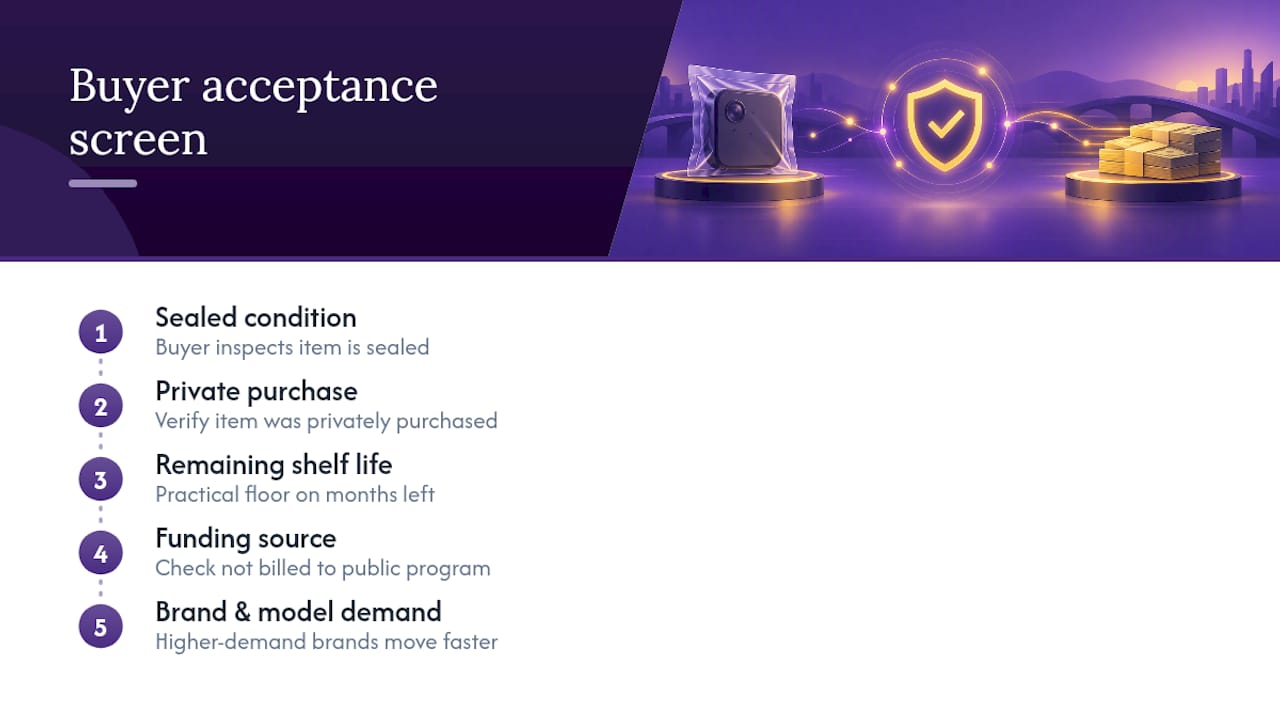
Buybacks work on margin. A buyer has to inspect each item, verify it is sealed and privately purchased, and resell it, and all of that costs time and money. That is why a single loose test strip vial rarely gets the same attention as a sealed box of ten.
Expiration risk plays a role too. An item with only a month of shelf life left is harder to resell before it expires, so buyers often set a practical floor on remaining shelf life rather than accepting anything sealed. The FDA’s guidance on reprocessing single-use medical devices outlines the cleaning, labeling, and functional testing standards that apply to reprocessed devices, which helps explain why careful buyers screen items closely rather than taking anything sealed at face value.
Government-funded supplies add another layer of screening. Verifying that an item was not billed to a public program takes extra time, and that cost gets folded into what a buyer is willing to accept. Brand and model matter as well: a widely used sensor like the Dexcom G7 moves faster than a less common test strip brand, so demand shapes the effective minimum just as much as cost does.
Realistic minimums by item, examples to help you self-assess
Different items carry different practical minimums. Here is what to expect with the categories buyers see most often.
- Dexcom G7 sensors: buyers may take a single sealed sensor, but two or more sweetens the offer, with published pricing around $70 to $90 per sensor.
- FreeStyle Libre sensors: the model and remaining shelf life matter more than count. A sensor with several months left is worth more than one nearing its date, regardless of how many you have.
- Omnipod pods: single loose pods are a tougher sell than a sealed box. Grouping pods by box and expiration date usually gets you a better offer than presenting them one at a time.
- Sealed test strips: full boxes or sealed vials fare far better than loose strips, and expiration window is often the deciding factor on whether a box gets accepted at all.
If you only have one or two items, do not assume you are out of luck. Sellers with a mix of unused device supplies often find that combining categories, say a couple of sensors plus a box of strips, gets them over a buyer’s practical threshold even when no single item would on its own.
How to prepare and present items so they meet minimums and get top offers
A little prep work goes a long way toward a smoother, higher offer. Work through these steps before you contact a buyer.
- Inspect every box and vial, then photograph the packaging, the expiration date, and any lot or serial numbers.
- Group items by type and by expiration date so buyers can quickly see what forms an acceptable lot.
- Gather any receipts or pharmacy paperwork you still have, since proof of private purchase speeds up verification.
- Keep government-labeled items separate from your private purchases. Do not mix them, and do not try to sell the government-funded ones at all.
- Set a fair asking price based on published ranges, and feel free to walk away from a lowball offer rather than accept it on the spot.
Pro Tip: Snap photos of every box before you leave the house. A buyer who can see clear, sealed packaging in advance can often give you a firmer number before you even meet.
Following the step-by-step process for a local sell usually means less back and forth once you arrive.
Safe same-day in-person selling: what to expect and how to stay protected
A same-day cash sale should feel simple and safe, not rushed or sketchy. Keep these practices in mind.
- Meet in a public location, ideally a Police Exchange Zone or another well-lit, monitored spot.
- Bring photo ID and the packaging photos you took ahead of time to speed up inspection.
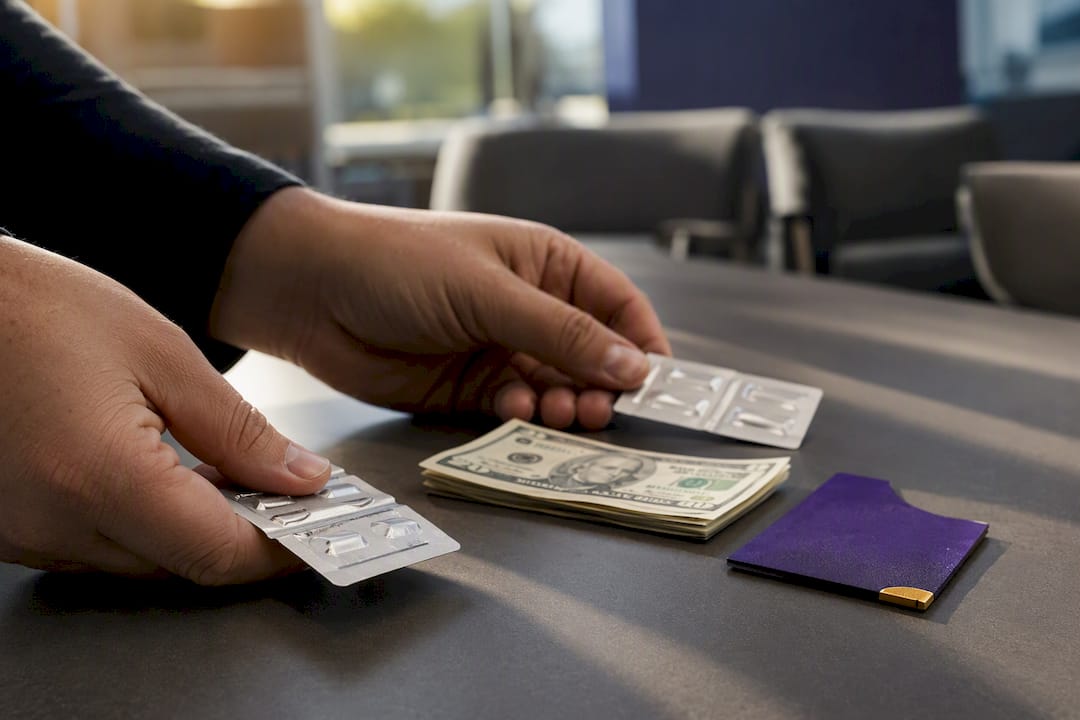
- Expect the buyer to inspect items on the spot and pay immediately, whether in cash or an instant electronic transfer. Ask in advance which payment methods they accept.
- Walk away from any buyer who asks you to include government-labeled items or refuses to meet somewhere public.
- If an item gets rejected, follow your local disposal guidance for it rather than trying to resell it elsewhere. Never attempt to sell anything billed through Medicare, Medicaid, or TRICARE.
Reputable local buyers, including this one, offer same-day cash for sealed Dexcom G6 and G7 sensors, FreeStyle Libre, Omnipod pods, and sealed test strips, with published pricing like the $70 to $90 Dexcom G7 range set up front so there are no surprises at the meetup. As the LegalClarity summary of test strip resale rules points out, selling sealed, unexpired items you purchased yourself is generally legal, but items obtained through a public program are not yours to resell.
A buyer’s perspective on fairness and speed
When your items check out sealed, unexpired, and privately purchased, we move fast and keep the offer straightforward. There is no back and forth over a fair price once the eligibility boxes are checked. We will not take anything billed through Medicare, Medicaid, or TRICARE, and we will tell you plainly if something does not qualify rather than string you along.
— Liliana
How to sell to us today: same-day steps to get started
We buy sealed, unexpired diabetic supplies in person and pay on the spot, no shipping, no waiting for a check in the mail. That includes Dexcom G6 and G7 sensors, FreeStyle Libre, Omnipod pods, and sealed test strips.
Here is what to bring and how the process works:
- Sealed boxes or vials with expiration dates visible, plus any receipts or lot numbers you have on hand.
- Photo ID for the meetup, which we ask everyone to bring.
- A general idea of what you’re holding so we can give you a fair number quickly. For reference, Dexcom G7 sensors typically run $70 to $90 each, and FreeStyle Libre 2 sensors run $15 to $20 each.
Head to our main page to see what we buy, or check our Dexcom G7 buyback page to get a number before you ever leave the house.
Authoritative resources for legal and safety details
For readers who want to dig into the rules behind resale and device handling:
- FDA guidance on reprocessing single-use medical devices, covering safety and labeling standards.
- LegalClarity’s overview of test strip resale law, covering legality and platform rules.
- Omnipod’s manufacturer safety information, covering device handling and replacement guidance.
Sources
- Reprocessing Single-Use Medical Devices: Information for Health Care Facilities | FDA
- Is Selling Diabetic Test Strips Legal? Rules and Exceptions – LegalClarity
FAQ
Does a single sealed sensor ever meet a buyer’s minimum?
Yes, many buyers will take a single sealed sensor, especially a Dexcom G7, which typically brings $70 to $90. Buyers usually prefer two or more items, but one sealed, unexpired sensor is often enough to start a conversation.
What disqualifies diabetic supplies from a buyback regardless of quantity?
Any item billed through Medicare, Medicaid, or TRICARE is off limits no matter how many you have, since reselling those items is prohibited. An opened package or an expired date will also disqualify an item, since buyers need it sealed and unexpired to resell it safely.
How much shelf life should remain for supplies to qualify?
Buyers generally prefer several months of remaining shelf life rather than a date that is weeks away. Items very close to expiration often see lower offers or outright rejection, so it helps to check expiration dates before reaching out.
Are loose test strips accepted, or do they need to be in a box?
Sealed boxes or vials are much easier to sell than loose strips pulled from their original packaging. Buyers rely on that sealed packaging to confirm the item was never opened, so keeping strips in their original box gives you the best shot at an offer.
Is it safe to sell diabetic supplies for cash in person?
Yes, as long as you meet in a public location, such as a Police Exchange Zone, and bring photo ID along with photos of your items. A reputable buyer will inspect items on the spot and pay immediately, and will never ask you to include government-labeled supplies in the sale.