Yes, in many cases you can sell unused, sealed diabetic test strips safely. The key is confirming they were not paid for by Medicare or Medicaid, checking that the box is sealed and unexpired, and choosing a vetted buyer. Your first step is simple: gather photos of the sealed boxes, note the expiration dates, and reach out to a trustworthy local buyer or buyback service before shipping anything.
TL;DR:
- Buyers typically require intact factory seals, visible brand, lot, and UPC details, original boxes, and expiration dates with several months remaining.
- Local same day buybacks allow in person inspection and immediate payment, while vetted online buyers require clear terms before shipping; private sales carry greater risk.
- Send clear photos showing the sealed boxes, brand, lot number, expiration date, and quantity; shipped orders are usually paid after inspection.
- Selling at a loss generally creates no taxable gain, but payment platforms may issue Form 1099-K, so retain purchase and sale records.
- Do not sell strips billed to Medicare or Medicaid, and reject buyers who request Medicare numbers or make unsolicited home visits.
Table of Contents
- What federal guidance says about selling test strips
- Choosing where to sell your test strips
- What buyers expect before they will pay for your strips
- How the typical sale works from quote to payment
- Tax and recordkeeping basics for casual sellers
- Avoiding scams when you sell diabetic supplies
- What sellers get wrong most often
- Our take on selling test strips safely
- How our local buyback makes selling simpler
- FAQ
- Sources
What federal guidance says about selling test strips
The FDA warns against buying or using pre-owned test strips, flagging risks tied to tampering, improper storage, and contamination in opened vials. That warning is aimed mostly at buyers of opened products, which is exactly why sealed, factory-labeled boxes matter so much on the seller’s side too.
Medicare adds a separate layer. If your strips were paid for through Medicare or Medicaid, reselling them raises fraud concerns, and Medicare’s fraud-protection guidance advises beneficiaries to guard their Medicare numbers and watch for suspicious offers tied to them.
A few things to check before listing anything for sale:
- Confirm the strips were purchased out of pocket, not billed to Medicare or Medicaid.
- Keep every box sealed, unopened, and within a reasonable window before expiration.
- Save any receipt or proof of original purchase if you have one.
One safety rule covers most of the FDA’s concerns: never sell or ship an opened vial. That single habit removes most of the tampering and contamination risk the agency describes.
Choosing where to sell your test strips
Not every buyer is equally safe, and the channel you pick affects both your payout speed and your risk.
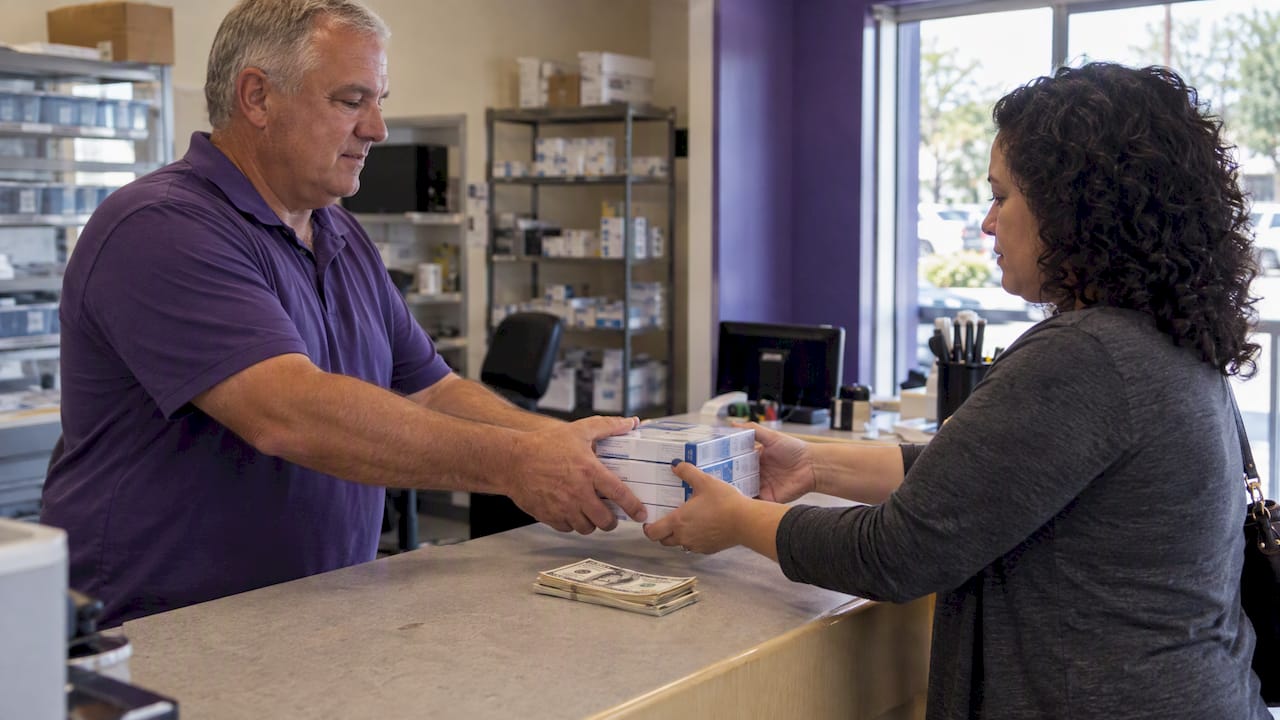
- Local same-day buyback services inspect strips in person and pay on the spot, which limits shipping risk and fraud exposure.
- Vetted online buyers can be convenient, but you should confirm their acceptance criteria, pricing policy, and shipping instructions before sending anything.
- Private person-to-person sales, such as through classifieds, carry the highest risk because there is no accountability if a buyer disputes the condition or disappears after payment.
- Donation to an approved diabetes charity or clinic is a reasonable option when the strips are sealed but you would rather not sell them.
Before trusting any buyer, look for written acceptance criteria, a clear price quote in advance, a public meetup policy or secure shipping instructions, and some proof the buyer runs an actual business rather than an anonymous account.
Pro Tip: For higher-value sensors or larger quantities, an in-person sale with immediate payment avoids the wait and uncertainty of shipping to an unfamiliar buyer.
What buyers expect before they will pay for your strips
Most reputable buyers apply similar standards, and knowing them up front saves you a rejected offer later. Our guide to what counts as unused diabetic supply breaks down eligible items in more detail, but here is the short version for test strips:
- The vial or box must be sealed and unopened, with the factory seal intact.
- The brand, lot number, and UPC should be visible on the packaging.
- The expiration date needs to leave a reasonable shelf life, typically several months out, as explained in our guide to how expiration affects value.
- Original boxes are preferred over loose vials, since they confirm the lot and expiration at a glance.
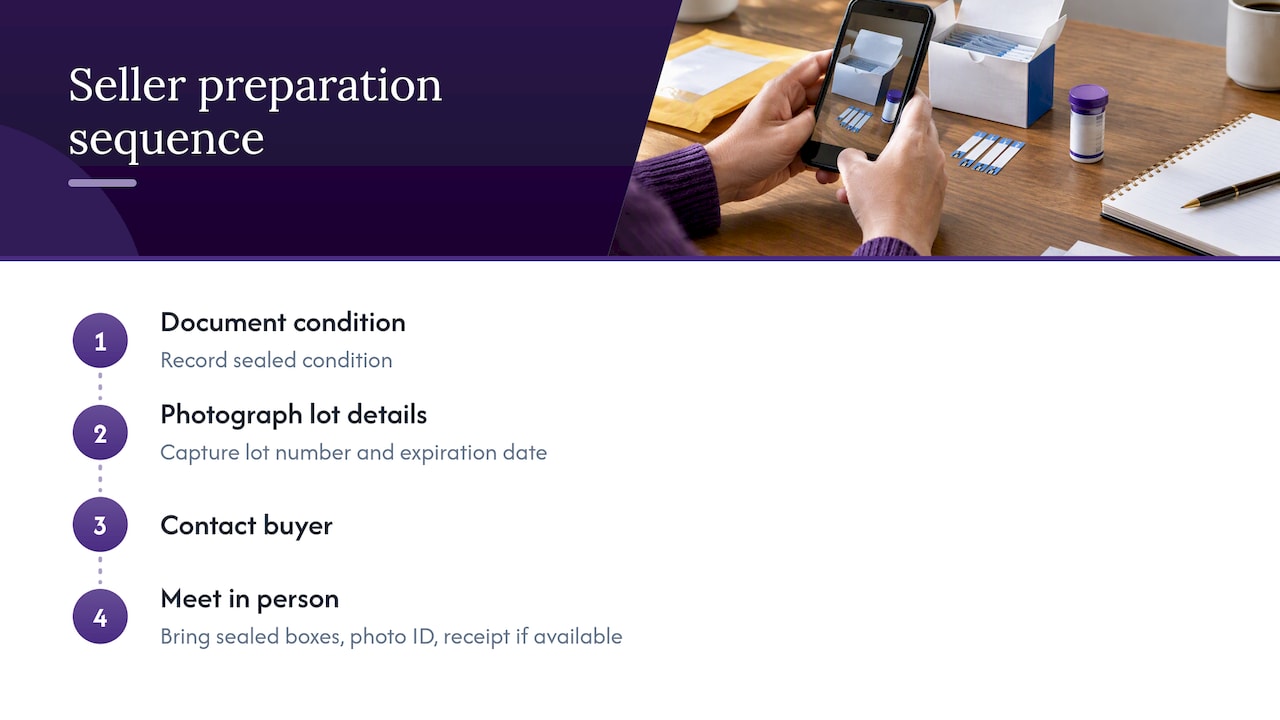
Before you contact a buyer, photograph the sealed boxes, the lot and UPC numbers, and the expiration date clearly. If you still have the original receipt, keep it with those photos. When shipping is involved, pack strips in protective material, label the package as instructed by the buyer, and never include an opened vial in the box. Our storage mistakes guide covers how improper storage at home can quietly make otherwise eligible strips unsellable.
How the typical sale works from quote to payment
The process is fairly consistent across most buyers, whether local or online.
- Request a quote by sending photos of the sealed boxes along with brand, lot number, expiration date, and quantity.
- The buyer reviews your information remotely or asks to inspect the strips in person.
- You either ship the strips with tracking or meet the buyer in a public place for an in-person exchange.
- Payment follows: cash is often immediate for in-person deals, while shipped items typically involve an electronic payment after inspection.
- Delays usually come from blurry photos, opened vials, or missing lot numbers, so clear documentation up front keeps things moving.
Our step-by-step walkthrough covers what to expect at each stage in more detail if you want the fuller picture before you start.
Tax and recordkeeping basics for casual sellers
If you sell test strips for less than you originally paid, there is generally no taxable gain, but that does not mean the sale disappears from view. Payment platforms may still issue a Form 1099-K for amounts they process, and you will want to reconcile that figure against your actual sale price.
- Keep copies of your quote, photos, and payment receipt for every sale.
- Note your original purchase price when you have it, since that is what determines gain or loss.
- If you sell repeatedly, the IRS instructions for Form 8949 explain that recurring activity can be treated as a business rather than a casual sale.
Selling at a loss typically creates no taxable gain, but a 1099-K form from a payment platform should still be reconciled against your records. If you receive one and are not sure how it affects your return, a tax professional can sort it out quickly.
Avoiding scams when you sell diabetic supplies
Fraud protection runs in both directions here: the FDA’s safety rules protect buyers from unsafe products, and Medicare’s fraud guidance protects sellers and beneficiaries from bad actors.
- Never ship or sell an opened vial, and expect legitimate buyers to refuse one if offered.
- Treat unsolicited home visits or offers that ask for your Medicare number as a warning sign, a pattern Medicare’s fraud guidance specifically calls out.
- Be skeptical of any offer that feels too good to be true compared to other quotes you have received.
- Verify the buyer’s business presence, insist on written terms, and keep a record of every transaction.
Pro Tip: Meet in a public place and bring a photo ID when selling in person, and keep a simple log of who you dealt with and when. For broader guidance on protecting yourself or a family member from scams involving medical information, Helping Mom’s scam-prevention guide covers warning signs that apply well beyond test strips.
What sellers get wrong most often
In practice, the mistakes we see are small but costly. Sellers ship opened vials without realizing most buyers will simply refuse the box on arrival. Others skip photos entirely and then struggle to prove the lot number or expiration date once a buyer asks for it.
Bringing sealed boxes, a photo ID, and a receipt if you have one makes an in-person meeting go faster and reduces back-and-forth. Documenting condition before you ever contact a buyer is the single habit that prevents most delays and disputes.
Our take on selling test strips safely
Most advice on this topic treats legality and safety as a formality to skim past on the way to a payout. That gets the order backward. The sellers who run into trouble are almost never the ones who ask too many questions about a buyer. They are the ones who assume any offer is safe because the price sounded fair.
The federal guidance here is not abstract. The FDA’s warning about opened vials and Medicare’s fraud alerts exist because real sellers and buyers have been burned by both unsafe products and bad actors posing as buyers. Treating those warnings as the starting point, not an afterthought, is what separates a clean sale from a headache.
What we would prioritize first is not the price quote. It is confirming your strips were not paid for through a federal program and that every box is still sealed. Everything else, including which channel to sell through, becomes a much easier decision once those two facts are settled.
— Liliana
How our local buyback makes selling simpler
We buy unused, sealed, unexpired diabetic supplies locally and in nearby areas, including test strips and major brands of sensors and pods. Our process is straightforward: we inspect sealed boxes in person and pay on the spot, in a public meetup, with no shipping involved.
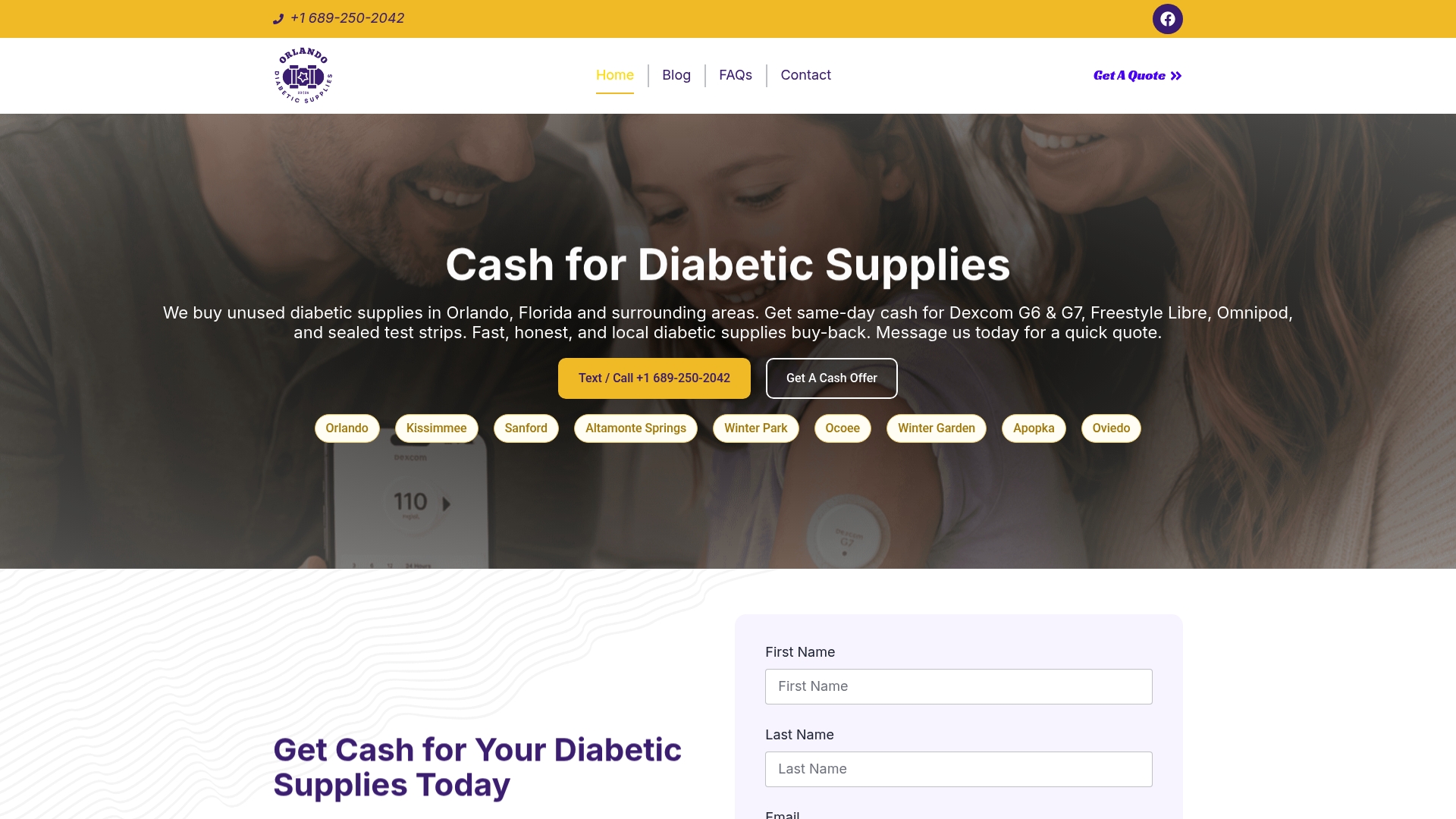
Before reaching out, just confirm your strips are sealed, unexpired, and were not paid for by Medicare or Medicaid. From there, visit our Cash for Diabetic Supplies page to request a quote, or check current pricing on our Dexcom G7 buyback and Freestyle Libre 2 buyback pages if those are among the supplies you have on hand.
This article is general information, not a substitute for advice from a qualified doctor. Consult a qualified healthcare professional about your own circumstances before acting on anything here.
FAQ
What should you do with unused diabetic test strips?
If the boxes are sealed and unexpired, your best options are selling to a vetted buyer or donating to an approved diabetes program. If they are opened or expired, dispose of them following your local medical waste guidelines rather than selling or donating them.
Why would somebody buy diabetic test strips?
Many buyers purchase sealed, unused strips to resell at a lower cost than retail, since test strips can be expensive for people without full insurance coverage. The FDA still advises consumers to buy only new, unopened vials for safety and accuracy.
Where can you sell test strips?
You can sell through a local same-day buyback, a vetted online buyer, or occasionally a pharmacy, though not all pharmacies purchase unused supplies. Local in-person buybacks tend to be the lowest-risk option since they include inspection and immediate payment.
Where should you discard glucometer strips?
Opened or expired strips should go in household trash unless your area has specific medical waste rules, since test strips are not accepted through most medication take-back programs. Check with your local waste authority if you are unsure how your area handles sharps or diabetic supplies.
Sources
- FDA warns about risks using home-use test strips that are pre-owned or not authorized for sale in the U.S.
- Protecting yourself from fraud (Medicare publication)
- What to do with Form 1099-K