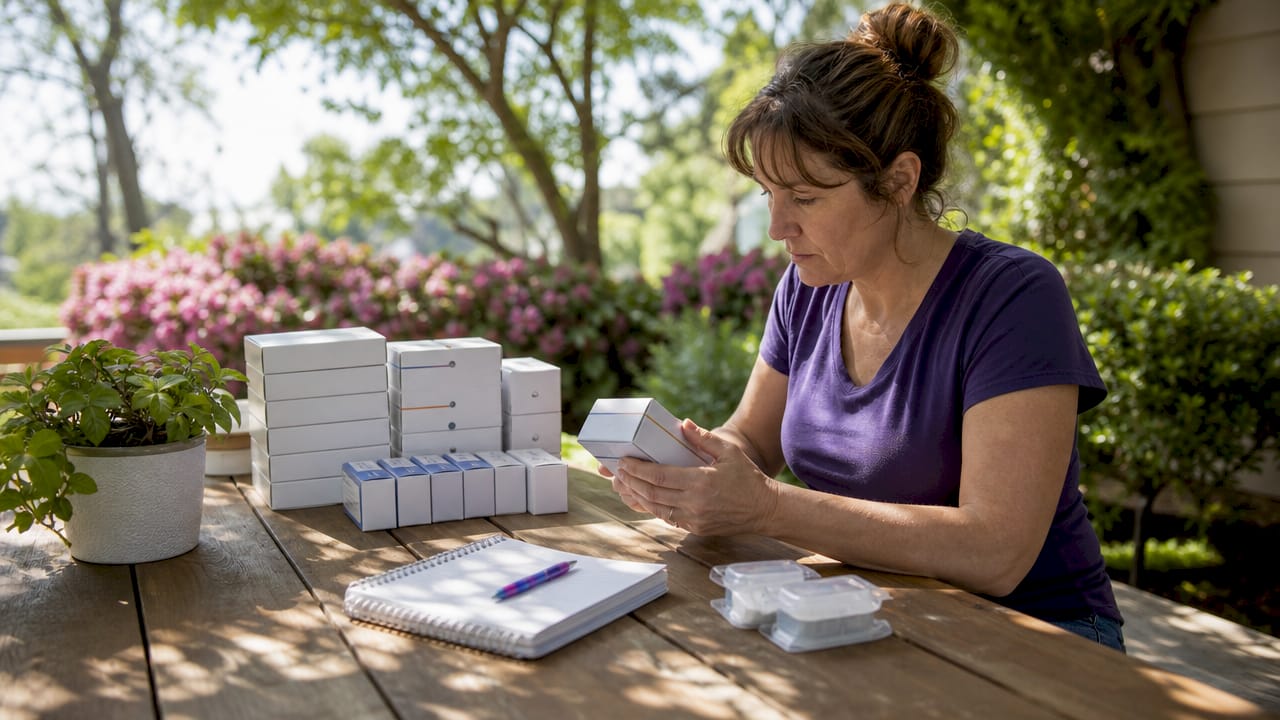
Unused diabetic supplies are defined as unopened, unexpired, and sealed medical items intended for diabetes management that have never been used. This includes insulin vials, insulin pens, syringes, test strips, lancets, and insulin pump accessories. Knowing what counts as an unused diabetic supply matters because it determines whether your surplus items are eligible for donation, resale, or must be disposed of safely. The difference between “unused” and “unusable” often comes down to packaging integrity and expiration status. Getting this right protects you, your community, and anyone who might receive those supplies.
What counts as an unused diabetic supply?
An unused diabetic supply is any diabetes management product that remains factory sealed, unexpired, and in its original undamaged packaging. The term “unused” in this context is the standard industry classification used by donation organizations, buyback programs, and healthcare regulators to distinguish safe, transferable items from those that must be discarded.
The following supply types are commonly accepted as unused and eligible for donation or resale when they meet the criteria above:
- Insulin vials and insulin pens (factory sealed, refrigerated properly, unexpired)
- Syringes and pen needles (sealed in original packaging)
- Blood glucose test strips (sealed box, at least 3 months before expiration)
- Lancets (sealed, unexpired)
- Continuous glucose monitor sensors such as Dexcom G6, Dexcom G7, and Freestyle Libre
- Insulin pump supplies including infusion sets, reservoirs, and Omnipod pods (sealed and unexpired)
- Insulin pump devices that are undamaged and fully functional
What is excluded is equally clear. Opened packaging, expired items, visually damaged supplies, and anything that has been used even once do not qualify. Organizations like Insulin for Life require that donations be factory sealed with several months remaining before expiration. Most programs require a minimum of 3 months before the expiration date, though some set the bar at 6 months.
Pro Tip: Before donating or selling, check the specific program’s requirements. Insulin for Life, local food banks with medical supply arms, and buyback services like Orlando Diabetic Supplies Buyback each have their own eligibility rules.
How do expiration dates affect diabetic supply eligibility?
Expiration dates are not suggestions. They are the hard boundary between a usable supply and one that must be discarded. This applies across every category of diabetic supply, and understanding the rules for each type protects your health and the health of anyone who receives your surplus items.
Test strips degrade chemically after their expiration date. Expired test strips lose accuracy and can produce false glucose readings, which is a direct safety risk. There is no validated grace period beyond the manufacturer’s printed date. Improper storage, such as exposure to heat or humidity, accelerates that degradation even before expiration. If you have excess test strips sitting in a warm bathroom cabinet, they may already be compromised.
Insulin follows a two-phase rule. Unopened insulin stays potent until the manufacturer’s expiration date when stored between 36 and 46 degrees Fahrenheit in a refrigerator. Once opened, most insulin types must be used within 28 days regardless of the printed date. Insulin that has been frozen, exposed to direct sunlight, or stored above room temperature for extended periods may be degraded even if it looks fine. Visual inspection, checking for cloudiness or particles in normally clear insulin, is a basic but important step.
“There is no grace period for expired test strips. Using them past the expiration date increases the risk of inaccurate glucose readings, which can lead to dangerous treatment decisions.” — Sinocare Healthcare
Storage conditions determine whether a supply stays in the “unused and usable” category or crosses into “unused but unusable.” The key rules are:
- Store test strips in a cool, dry location away from direct sunlight
- Keep unopened insulin refrigerated at 36–46°F and never frozen
- Store lancets, syringes, and CGM sensors at room temperature in their sealed packaging
- Avoid leaving supplies in a car, especially in Florida’s heat
A supply can be physically unopened and still be ineligible for donation or resale if it was stored incorrectly. Donation programs and buyback services inspect for signs of heat damage, moisture exposure, and packaging compromise.
How to dispose of diabetic supplies safely
Proper disposal of diabetic supplies is a legal and public health responsibility. The rules differ based on whether a supply is sharp, electronic, or simply packaging.
-
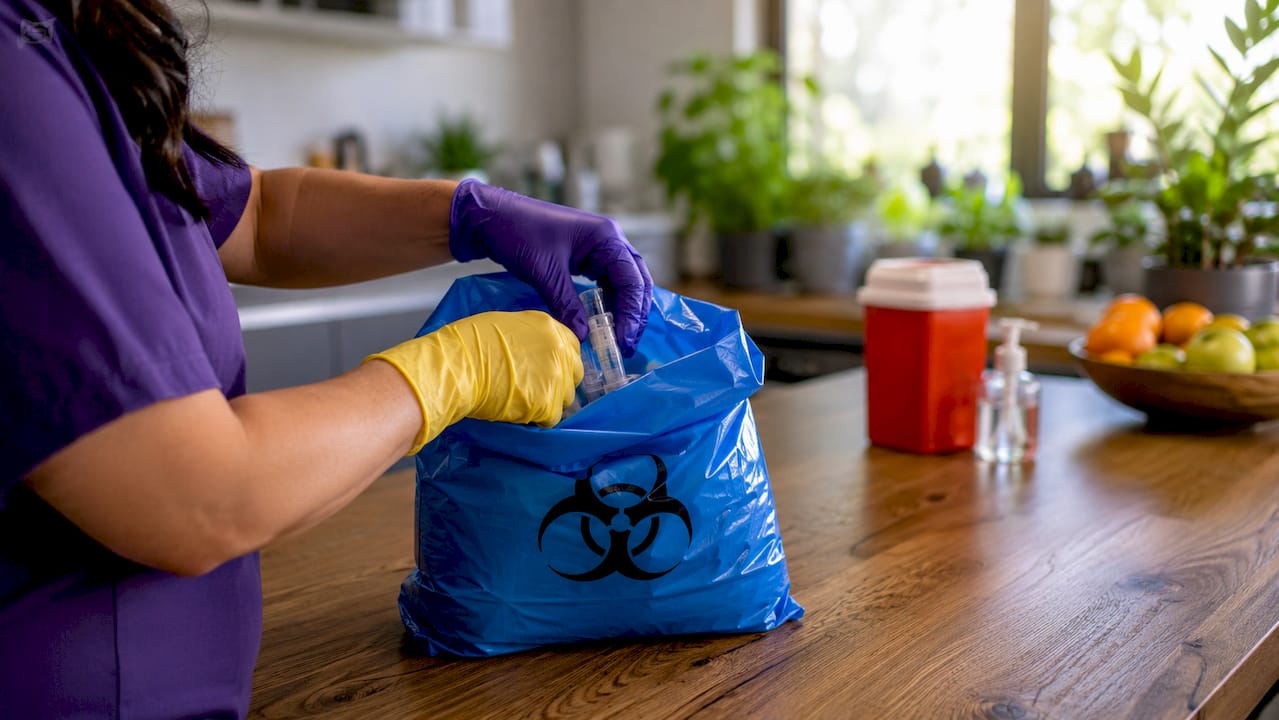
Used sharps go into FDA-cleared sharps containers only. Lancets, syringes, and pen needles must never enter regular trash or recycling bins. Place them in an approved puncture-resistant container filled to no more than 75% capacity before sealing and disposing through a community program or mail-back service.
-
Locate a sharps disposal program near you. Many pharmacies, hospitals, and local health departments in Florida accept sealed sharps containers. Mail-back programs like Sharps Compliance and Stericycle operate nationally and are a reliable option if local drop-off is not convenient.
-
Insulin pen bodies without needles can often be disposed of according to local pharmaceutical waste rules. Pen bodies without needles are not sharps and do not require a sharps container.
-
Recycle what you can. Cardboard boxes, paper inserts, and plastic outer packaging from test strip boxes and sensor kits are recyclable in most curbside programs. The single-use plastic components inside are generally not recyclable.
-
Electronics require special handling. Insulin pumps and CGM transmitters contain electronic components. Contact device manufacturers directly for recycling programs. Dexcom, Insulet (Omnipod), and Medtronic each have device return or recycling options. Do not place these in standard e-waste bins without checking first.
Pro Tip: Set a monthly reminder to check your supply stock and dispose of anything that has crossed into expired or opened territory. Finding a local sharps drop-off location before you need it saves time and reduces the chance of unsafe disposal.
| Supply Type | Disposal Method | Recyclable? |
|---|---|---|
| Used lancets, syringes, needles | FDA-cleared sharps container | No |
| Insulin pen bodies (no needle) | Local pharmaceutical waste rules | No |
| Cardboard and paper packaging | Curbside recycling | Yes |
| Insulin pumps and CGM transmitters | Manufacturer recycling program | Via manufacturer |
| Expired sealed supplies | Local pharmacy or waste program | No |
Donating vs. selling unused diabetic supplies: which is right for you?
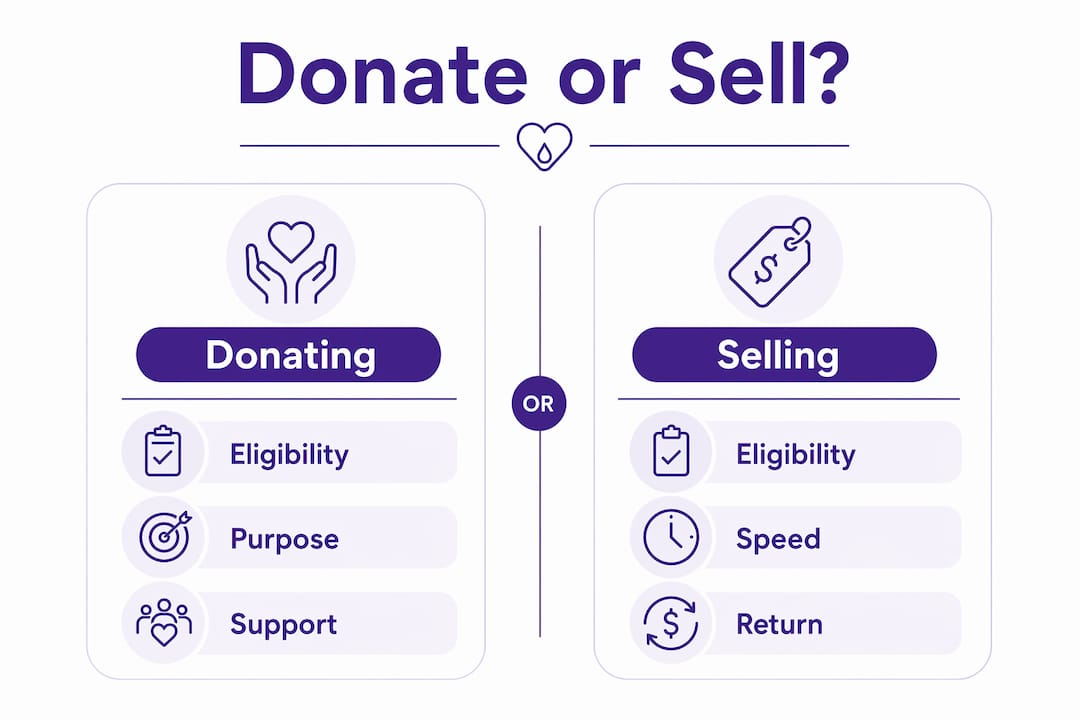
Both options are legitimate, and the right choice depends on your priorities. Selling unused supplies is legally permitted when items are unopened, unexpired, and undamaged. Donating serves a different purpose: getting supplies to patients who cannot afford them.
| Factor | Donating | Selling |
|---|---|---|
| Eligibility | Sealed, unexpired, factory packaged | Sealed, unexpired, undamaged |
| Process | Ship or drop off to organization | Contact buyback service, get paid |
| Primary benefit | Helps patients in need | Immediate cash return |
| Expiration requirement | Typically 3–6 months remaining | Typically 3+ months remaining |
| Best for | Community-minded surplus management | Quick return on unused supplies |
Donation through organizations like Insulin for Life is a strong option when you have a large surplus and want to help patients in developing countries or underserved communities. The donation vs. selling decision often comes down to whether you need cash or prefer a charitable outcome. Both require the same baseline: supplies must be sealed and unexpired.
Selling is often the faster path. Local buyback services like Orlando Diabetic Supplies Buyback offer same-day cash for Dexcom G6, Dexcom G7, Freestyle Libre, Omnipod, and sealed test strips. There is no shipping wait, no donation processing time, and no uncertainty about whether your items will be accepted.
How to organize unused diabetic supplies at home
Good organization is the difference between knowing what you have and discovering expired supplies too late to use or donate. These steps keep your inventory clear and your supplies in the best possible condition.
- Label everything with the expiration date when you bring it home. A simple marker on the outer box takes seconds and saves confusion later.
- Store supplies by expiration date, with the soonest-to-expire items at the front. This rotation method, called first-in-first-out, prevents older supplies from being buried behind newer ones.
- Keep sealed supplies in their original packaging until use. Breaking the seal, even briefly, changes the supply’s status from unused to opened.
- Check your stock monthly. A quick scan of your supply shelf takes five minutes and catches items approaching expiration before they cross the line.
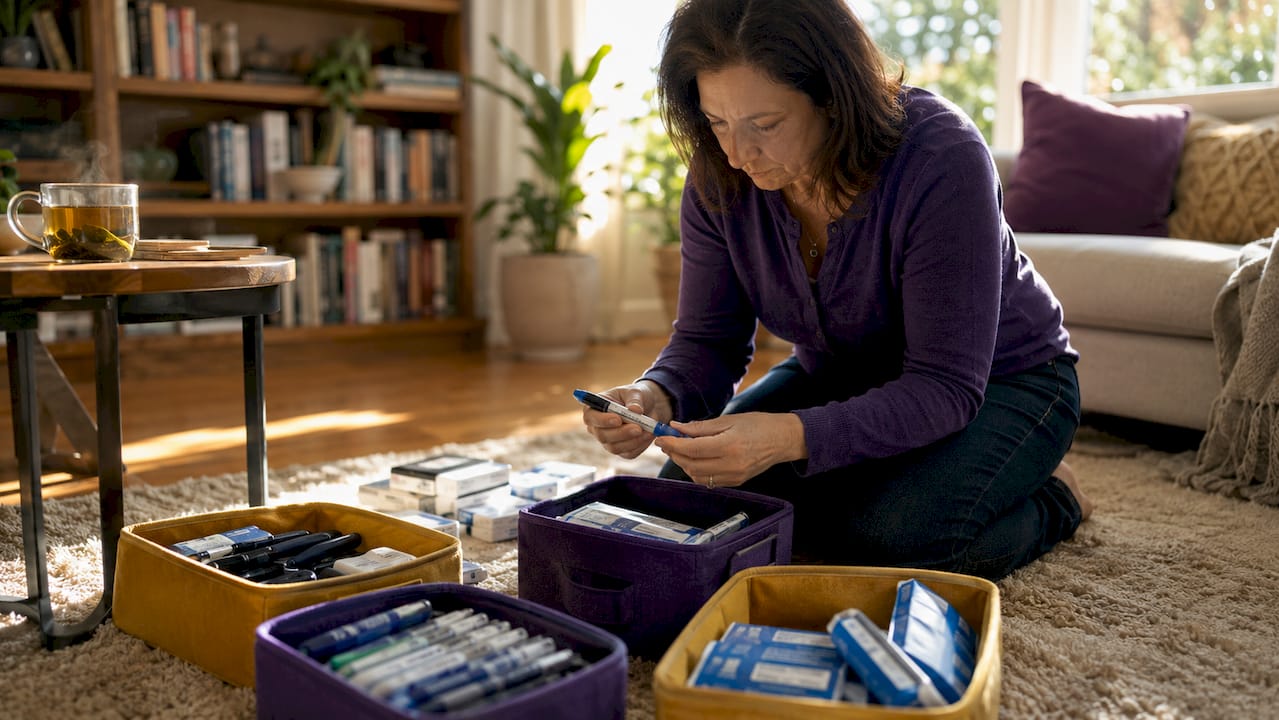
- Separate unused from opened supplies physically. Use labeled bins or a dedicated shelf section so there is never confusion about what is still sealed.
- Prepare supplies for donation or sale by verifying the seal is intact, the expiration date meets the program’s minimum, and the packaging shows no signs of damage or moisture.
Organizing your diabetes equipment at home also helps you identify when you are over-ordering. Many people accumulate surplus supplies because insurance ships automatically. Tracking what you actually use each month helps you adjust orders and reduce waste before it becomes a disposal problem.
Key takeaways
Unused diabetic supplies are defined by three non-negotiable criteria: sealed original packaging, valid expiration date, and no prior use.
| Point | Details |
|---|---|
| Definition of unused | Supplies must be factory sealed, unexpired, and never opened to qualify. |
| Expiration is a hard limit | Test strips and insulin have no grace period; expired supplies cannot be donated or sold. |
| Sharps disposal is regulated | Used lancets and syringes must go into FDA-cleared sharps containers, not regular trash. |
| Donation and selling both require sealed items | Insulin for Life and buyback services like Orlando Diabetic Supplies Buyback require intact packaging. |
| Organization prevents waste | Monthly expiration checks and first-in-first-out storage keep supplies usable and ready for transfer. |
What i’ve learned working with unused diabetic supplies
People are often surprised to learn that “unused” does not automatically mean “usable.” I have seen perfectly sealed boxes of test strips that were stored in a hot car for a summer and were completely degraded by the time someone tried to donate them. The box looked fine. The strips were not.
The most common misconception is that expiration dates on diabetic supplies work like food dates, where a few days or weeks past the date is probably fine. That logic does not apply here. Expired test strips carry real risk because an inaccurate glucose reading can lead to a wrong insulin dose. The stakes are too high for guesswork.
What I find encouraging is how many people want to do the right thing with their surplus supplies. The instinct to donate is good. The instinct to sell rather than throw away is also good. Both outcomes are better than letting supplies expire in a drawer. The key is acting before the expiration date, not after.
Sustainable management of diabetic waste is a real issue. Single-use plastics dominate this category, and most of them cannot be recycled. That makes it even more important to get usable supplies into the hands of people who need them rather than into a landfill. If you have sealed, unexpired supplies sitting unused, the time to act is now, not next month.
— Liliana
Turn your unused supplies into cash with orlando diabetic supplies buyback
If you have sealed, unexpired diabetic supplies taking up space, Orlando Diabetic Supplies Buyback makes it simple to get paid for them the same day.
Orlando Diabetic Supplies Buyback buys Dexcom G6, Dexcom G7, Freestyle Libre, Omnipod, and sealed test strips from individuals across Orlando and surrounding areas. The process is straightforward: your supplies are verified, you get a fair offer, and you walk away with cash. No shipping, no waiting, no hassle. If you are ready to get cash for your supplies, start there. You can also sell previous device supplies if you have switched devices and have leftover accessories.
FAQ
What makes a diabetic supply count as unused?
A diabetic supply is considered unused when it is factory sealed, in its original undamaged packaging, and has not passed its expiration date. Opened or expired items do not qualify, regardless of whether they were physically used.
Can i donate or sell diabetic supplies that expire next month?
Most donation programs and buyback services require at least 3 months remaining before the expiration date. Supplies expiring within 30 days are typically not accepted and should be disposed of through a local pharmacy or waste program.
How should i dispose of used lancets and syringes?
Used sharps must be placed in an FDA-cleared sharps container and disposed of through a community drop-off, pharmacy take-back, or mail-back program. Never place them in regular trash or recycling bins.
Does storage location affect whether insulin counts as unused?
Yes. Unopened insulin must be refrigerated between 36 and 46 degrees Fahrenheit to remain potent until its expiration date. Insulin stored improperly, such as in a hot car or freezer, may be degraded even if the seal is intact.
Can i sell unused dexcom or omnipod supplies?
Selling unopened, unexpired Dexcom G6, Dexcom G7, and Omnipod supplies is legally permitted. Orlando Diabetic Supplies Buyback accepts these items and offers same-day cash for qualifying sealed supplies in the Orlando area.