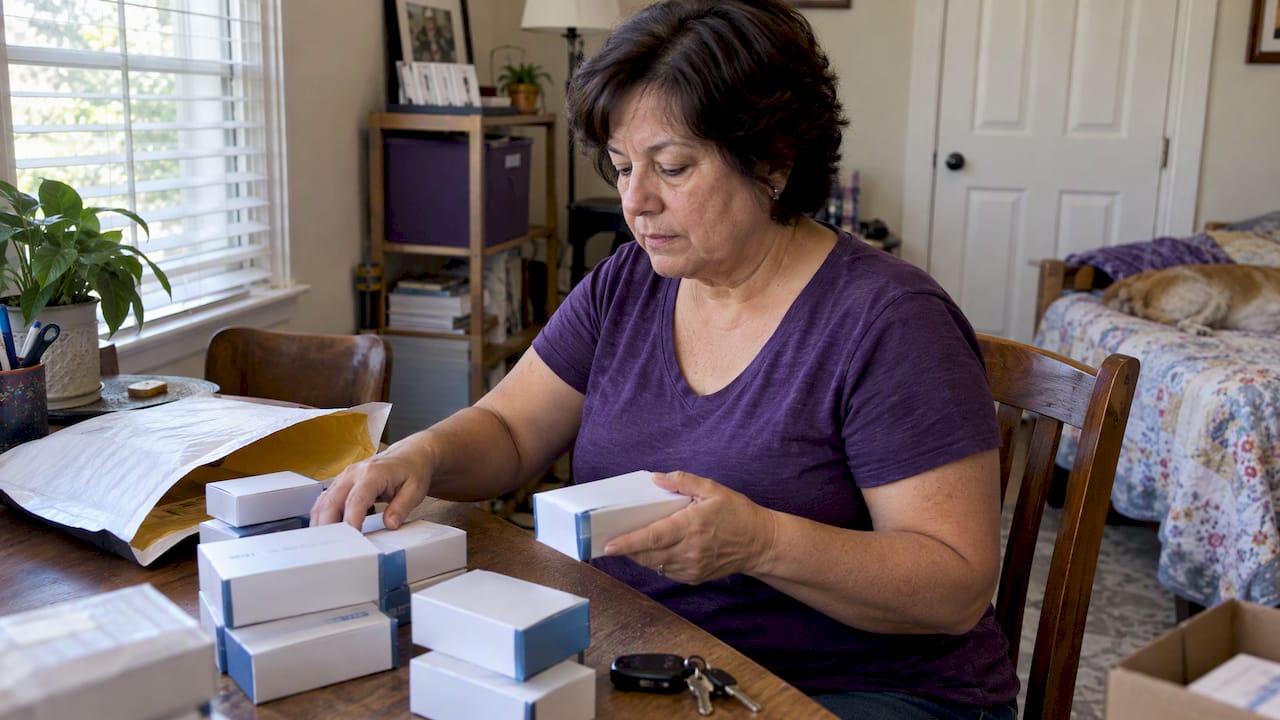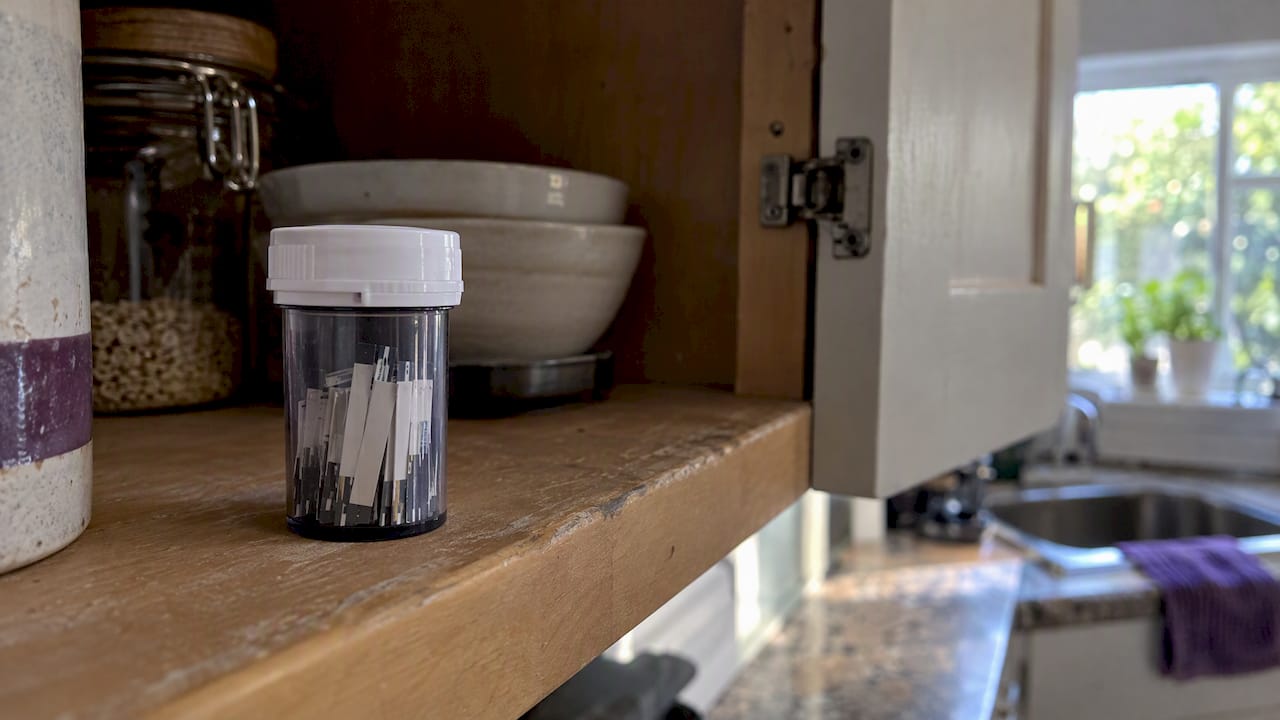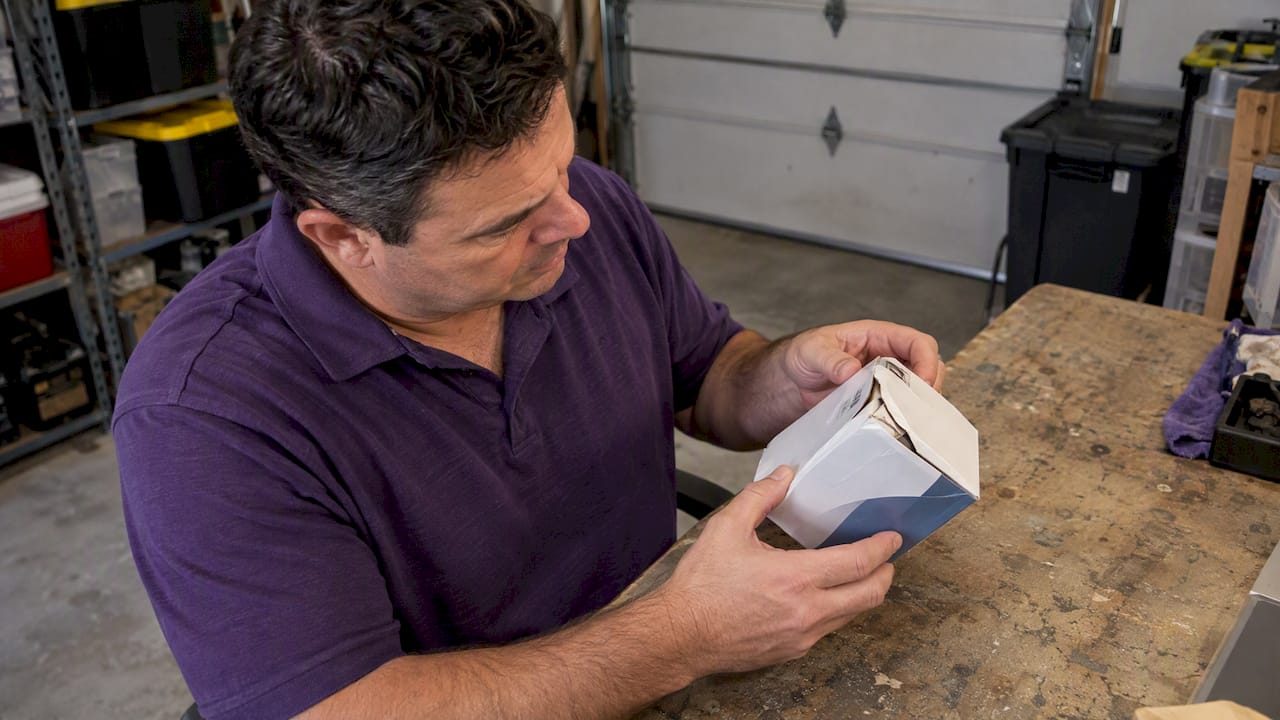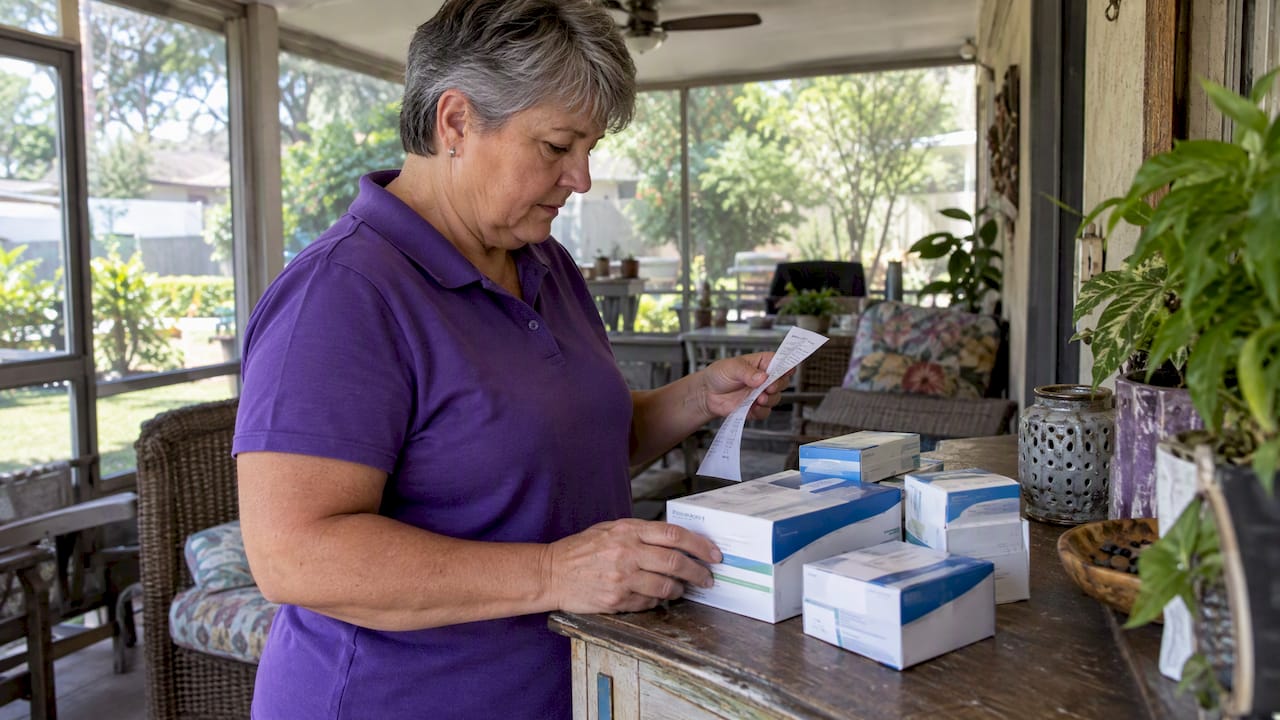

Test strip expiration is the single biggest factor determining both the medical reliability and the resale value of diabetic test strips. The expiration date is a manufacturer’s guarantee of full effectiveness, backed by scientific stability testing. Once that date passes, the chemical reagents inside the strip begin to break down, and the strip’s accuracy and cash value both drop. If you have boxes sitting in a drawer, understanding how test strip expiration affects value could mean the difference between getting paid and getting nothing.
How does the expiration date of test strips affect their accuracy and safety?
The expiration date on a test strip box is not a suggestion. It marks the last day the manufacturer can guarantee that the enzymes inside the strip will react correctly to glucose in your blood. After that date, chemical reagent degradation accelerates, and the strip’s readings become unreliable.
The most dangerous part is the unpredictability. Expired strips can produce false high or false low glucose readings with no consistent pattern. A false low might prompt you to eat sugar you do not need. A false high could lead to an insulin dose that sends your blood sugar dangerously low. Neither outcome is acceptable.
Health professionals warn that expired strips risk false readings that cause dangerous insulin misdosing and serious diabetic complications. There is no safe way to predict which direction the error will go.
Environmental factors speed up the damage. Heat, humidity, and even brief exposure to open air all accelerate enzyme breakdown. A strip stored in a hot car or a humid bathroom loses effectiveness faster than its printed date suggests. The impact of test strip age is not just about the calendar. It is also about how the strips were handled.
Pro Tip: Store your test strips away from bathrooms and kitchens. Heat and steam are the fastest ways to shorten a strip’s usable life before the expiration date even arrives.
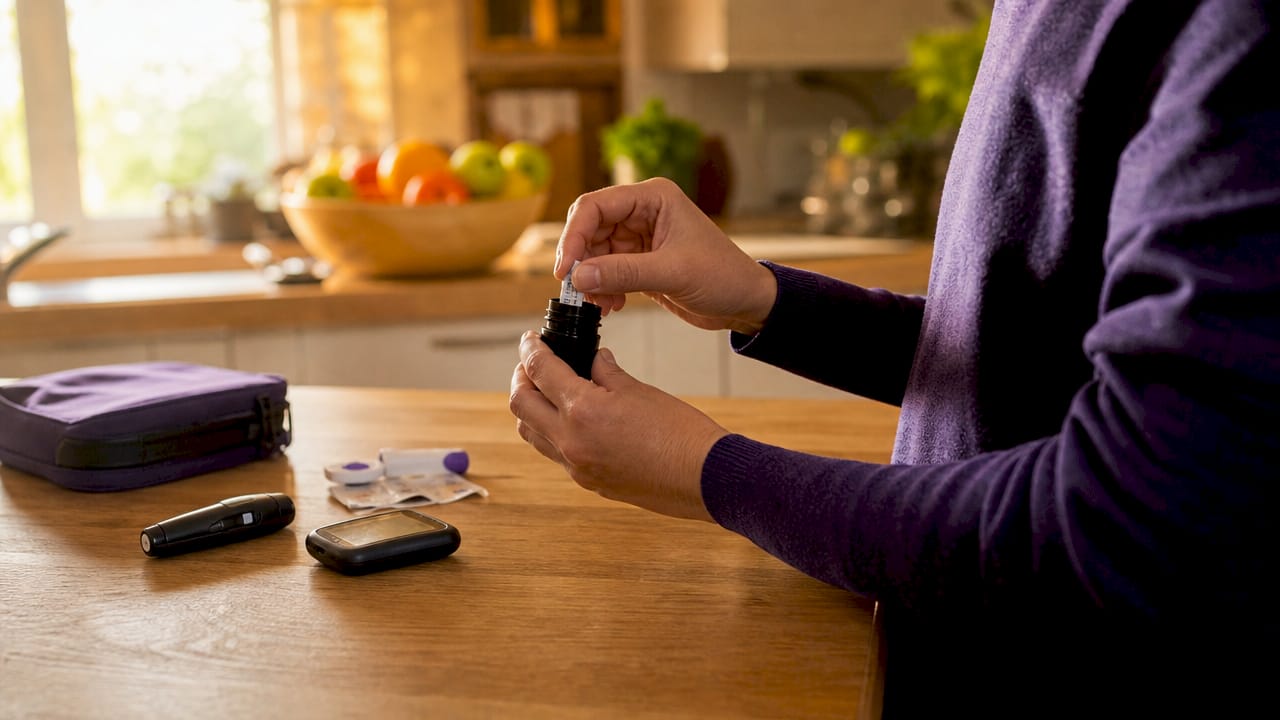
The FDA and medical authorities are clear on this point. No validated grace period exists beyond the printed expiration date. Using strips past that date is a safety risk, not a cost-saving measure. If you want to learn more about what happens when expired supplies are used, the risks of expired supplies are covered in detail in a dedicated safety guide.
What is the typical shelf life for diabetic test strips?
Test strip shelf life depends on two things: whether the vial has been opened, and how the strips are stored. Unopened, sealed boxes typically carry an expiration date set by the manufacturer based on stability testing. Once you open the vial, the clock speeds up significantly.
Manufacturers recommend discarding strips 3–6 months after opening the vial, or upon the printed expiration date, whichever comes first. That is a shorter window than most people expect. Many diabetics assume an open vial is good until the box date. It is not.
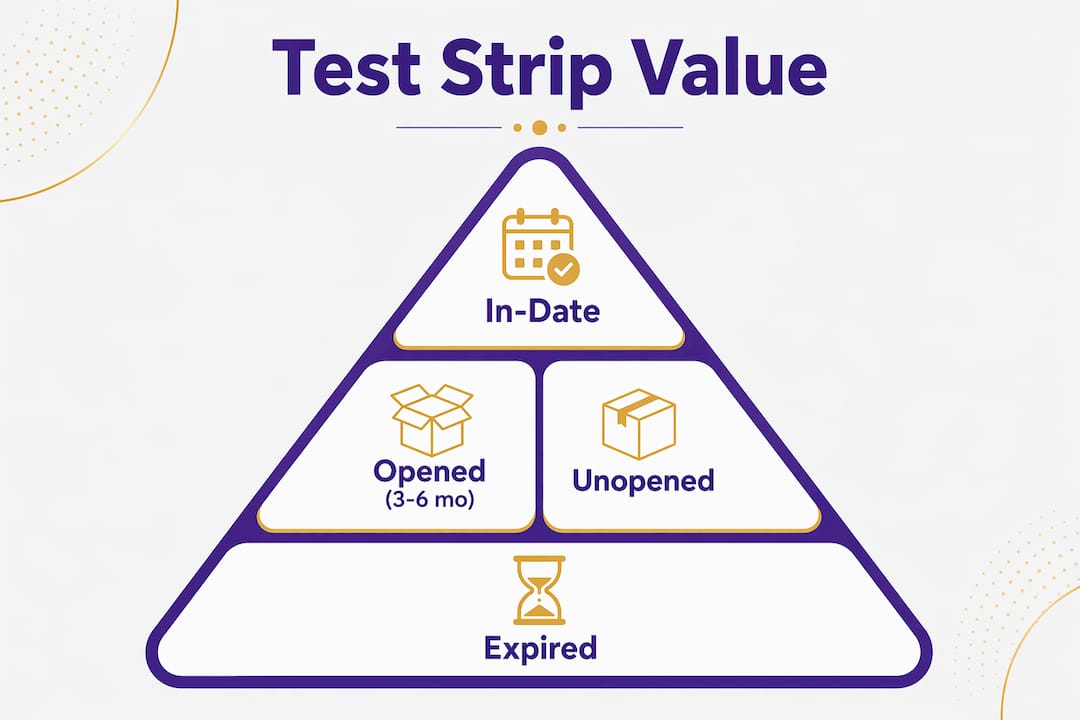
Here is a quick reference for how shelf life breaks down:
| Strip status | Recommended use window |
|---|---|
| Unopened, sealed box | Until printed expiration date |
| Opened vial, proper storage | 3–6 months from opening |
| Opened vial, poor storage | Less than 3 months |
| Past printed expiration | Not recommended for use |
The key factors that shorten shelf life after opening include:
- Exposure to air and moisture, which degrades the enzyme coating on the strip
- High temperatures above 86°F, which accelerate chemical breakdown
- Storing strips outside their original container, which removes the desiccant protection
- Frequent opening and closing of the vial in humid environments
Strips must be stored in their original, sealed containers to maintain both accuracy and resale value. This is one of the most overlooked storage rules. Transferring strips to a different container, even a clean one, removes the moisture-absorbing protection built into the original vial cap.
Pro Tip: Write the date you opened a vial directly on the label with a marker. Most people forget when they opened it, and that date matters more than the box expiration for accuracy.
Avoiding common storage mistakes is one of the simplest ways to protect both your health and the financial value of your supply.
How does test strip expiration influence resale value?
The secondary market for diabetic test strips is real, active, and highly sensitive to expiration dates. Buyers who purchase unused strips from diabetics price every box based on two things: brand popularity and how many months remain before expiration. The closer a box is to its expiration date, the less it is worth.
Secondary market buyers offer between $5 and $30 per unopened box, with the higher end reserved for popular brands with at least several months of shelf life remaining. That $25 spread is entirely driven by the expiration date effect. A box expiring next month and a box expiring in 18 months are not the same product to a buyer.
Here is how expiration timing typically affects pricing in the secondary market:
| Months until expiration | Relative value |
|---|---|
| 12 or more months | Highest value, full price range |
| 6–11 months | Moderate value, mid-range pricing |
| 3–5 months | Low value, minimal offers |
| Under 3 months | Most buyers decline |
| Already expired | No resale value |
Brand matters too. Test strip brand popularity directly affects how much a buyer will pay, because buyers need to resell to other diabetics who use specific meters. A box of strips for a widely used meter commands more interest than a niche brand with a smaller user base.
Key factors buyers evaluate when pricing your strips:
- Sealed, unopened box in original packaging
- Expiration date clearly printed and at least 6 months out
- No damage to the box or vial
- Brand compatibility with high-demand meters
Federal law does not ban the resale of legally obtained, unused test strips, but state laws vary. Always verify local rules before selling. Orlando Diabetic Supplies Buyback operates within all applicable legal requirements and makes the process straightforward for sellers in Florida.
The fair market value for test strips shifts constantly based on demand and expiration proximity. Selling sooner rather than later is always the better financial decision.
What practical steps can diabetics take to preserve value and manage expiration?
Managing your test strip supply well protects both your health and your wallet. The goal is simple: use what you need, store the rest correctly, and sell what you will not use before it loses value.
-
Check expiration dates monthly. Pull out your supply and look at every box. Rotate older boxes to the front so you use them first. This prevents boxes from quietly expiring in the back of a cabinet.
-
Store strips in a cool, dry place. A bedroom drawer or a dedicated supply box away from the kitchen and bathroom is ideal. The target storage temperature for most strips is between 50°F and 86°F.
-
Never open a vial until you need it. Once a vial is open, the 3–6 month countdown begins. Keep backup boxes sealed until your current vial is nearly empty.
-
Track your monthly usage. If your insurance or Medicare sends more strips than you use each month, you will accumulate surplus fast. Knowing your actual usage rate helps you avoid overstock before expiration becomes a problem. Understanding why diabetics accumulate extra supplies is the first step to managing it.
-
Sell surplus strips before they lose value. If you have switched meters, changed your monitoring routine, or simply received more strips than you need, sell them while they still have significant shelf life. Waiting until a box has two months left cuts your payout sharply.
-
Never use expired strips as a cost-saving measure. The risk of a false reading leading to an incorrect insulin dose far outweighs any short-term savings. If cost is a concern, contact your manufacturer about patient assistance programs or ask your doctor about alternatives.
Pro Tip: Set a phone reminder on the first of each month to check your strip supply. A two-minute check now prevents a box of worthless strips three months from now.
What I have learned about expiration and value after years in this market
A local perspective on expiration, safety, and real financial decisions
The most common misunderstanding I see is that diabetics treat the expiration date like a “best by” label on a food package, something approximate and forgiving. It is not. The expiration date on a test strip box is a hard scientific boundary. The manufacturer ran stability tests to determine exactly when the enzyme chemistry stops being reliable. After that date, you are guessing, and guessing with insulin is dangerous.
What surprises people even more is how fast the financial value drops as that date approaches. I have seen diabetics hold onto boxes for months, waiting for the “right time” to sell, only to find that the window for a good offer has closed. The secondary market in Orlando moves quickly. Buyers like Orlando Diabetic Supplies Buyback see a steady flow of supplies, and they prioritize boxes with the most shelf life remaining.
The practical reality for most diabetics is that supply costs are real and the secondary market offers a legitimate way to recover some of that money. But timing is everything. A box worth $25 today might be worth $8 in four months. Selling early is not impatient. It is financially sound.
My honest advice: treat your strip supply like a perishable asset. Check it regularly, store it correctly, and move surplus before the expiration date effect erodes its value. Your health and your finances both benefit from that discipline.
— Liliana
Turn unused test strips into cash before they expire
If you have sealed, in-date test strips sitting unused, Orlando Diabetic Supplies Buyback makes it easy to convert them into same-day cash. The process is local, fast, and straightforward. No shipping, no waiting, no complicated forms.
Orlando Diabetic Supplies Buyback buys sealed test strips, Dexcom G6 and G7 sensors, Freestyle Libre, Omnipod, and more from diabetics across Orlando and surrounding areas. Fair pricing is based on brand and expiration date, so the sooner you reach out, the better your offer. Visit the guide on how to get cash for unused supplies to see exactly how the process works and what supplies qualify. Do not let good strips expire in a drawer when they still have real value today.
FAQ
Do test strips lose accuracy after the expiration date?
Yes. Expired strips cause inaccurate readings that can be falsely high or falsely low, with no predictable pattern. The enzyme degradation that causes this begins immediately after expiration.
How long are test strips good for after opening?
Manufacturers recommend discarding open strips within 3–6 months of opening the vial, regardless of the printed box expiration date. Humidity and heat shorten that window further.
What is the value of expired test strips on the secondary market?
Expired test strips have no resale value. Secondary market buyers pay $5–$30 per box for unopened, in-date strips, with price tied directly to brand and months remaining before expiration.
Is it legal to sell unused test strips?
Federal law permits resale of legally obtained, unused test strips, but state regulations vary. Sellers in Florida should work with a local buyer like Orlando Diabetic Supplies Buyback who understands the applicable rules.
Does storage affect how long test strips stay accurate?
Yes. Heat, humidity, and improper storage accelerate enzyme breakdown and reduce accuracy before the printed expiration date is even reached. Original sealed containers with desiccant caps are the only recommended storage method.
Key Takeaways
The expiration date on diabetic test strips is a hard accuracy limit, not an estimate, and it directly controls both the safety and the resale value of every box you own.
| Point | Details |
|---|---|
| Expiration equals accuracy cutoff | After the printed date, enzyme degradation makes readings unreliable and potentially dangerous. |
| Open vials expire faster | Strips in an opened vial should be discarded within 3–6 months, regardless of the box date. |
| Resale value drops with time | Buyers pay $5–$30 per box, with the highest offers going to sealed strips with 12 or more months remaining. |
| Storage conditions matter | Heat and humidity shorten effective shelf life even before the expiration date arrives. |
| Sell surplus early | Waiting to sell reduces your payout significantly as the expiration date approaches. |