For most sellers, online specialist buyers offer better average payouts and lower safety risk than local sales, because remote transactions skip the stranger-meetup risk and often pay more for sealed, unexpired boxes. A vetted local same-day cash buyer is still a smart choice when you need money today and want in-person inspection. The sections below walk through the trade-offs so you can pick with confidence.
TL;DR:
- Online quotes can change after inspection, especially when boxes are opened, damaged, or near expiration, so photograph packaging and confirm adjustment terms before shipping.
- For local deals, meet publicly in daylight, bring someone if possible, and take cash or verified instant transfers; avoid unknown app payments and overpayment checks.
- Marketplaces may bring higher prices for niche lots, but require more listing and negotiation; specialist buyers simplify sales of common sealed items.
- Only offer unused, unexpired supplies in original sealed US retail packaging; internationally sourced items labeled not for sale in the US can create legal risk.
Table of Contents
- What makes local buyers appealing
- The risks and drawbacks of selling locally
- How online buyers and specialist resale services work
- The real advantages of selling online
- Do general marketplaces work better than specialist buyers?
- How to vet buyers and check reputation before you sell
- How to sell online in 3 practical steps
- Legal considerations and regulations for selling diabetic supplies locally and online
- How to verify the authenticity and expiration dates of test strips before selling
- Environmental impact and disposal options for unsold or expired diabetic supplies
- When a vetted local buyback makes the most sense
- Get same-day cash for your unused diabetic supplies
- FAQ
- Sources
What makes local buyers appealing
Selling close to home has real upsides, especially if speed matters more than squeezing out every last dollar. You skip the shipping line, the waiting, and the uncertainty of an inspection you can’t see.
- You get paid on the spot instead of waiting for a buyer to receive and inspect your package.
- There’s no box to pack, no label to print, and no postage to cover.
- Meeting face to face lets both sides agree on condition before money changes hands, which cuts down on later disputes.
A same-day in-person buyback model, like the one we run for Orlando sellers, shows how a vetted local option can combine that immediacy with a straightforward process instead of a risky stranger meetup.
The risks and drawbacks of selling locally
Meeting a stranger to hand over medical supplies for cash carries real risk, and it’s worth knowing what to watch for before you agree to a time and place.
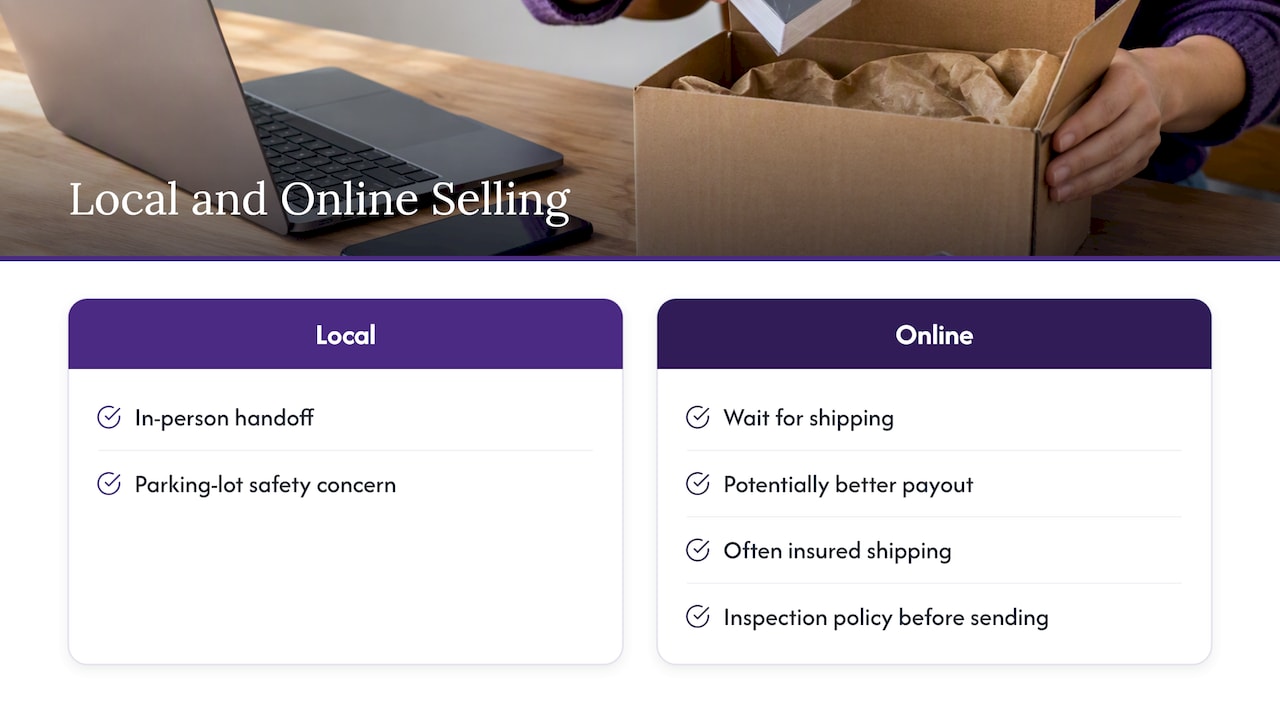
- Personal safety comes first: avoid secluded spots, meet in daylight, and bring someone with you whenever possible.
- Local flippers sometimes lowball sellers so they can resell the same boxes for more elsewhere.
- Some buyers try to pay with mobile payment apps, personal checks, or overpayment schemes. The FTC warns sellers to avoid accepting mobile payments from unknown buyers or depositing checks for more than the agreed price, since these tactics are common in online and in-person scams alike.
- Informal local deals usually come with no seller protections, unlike marketplaces or specialist buyers that publish clear policies.
Pro Tip: Insist on cash or a verified instant transfer before handing over anything, and never agree to a deal that depends on a check clearing later.
For more specific guidance on choosing a safe location and spotting red flags, our meetup safety guide covers what to look for before you agree to meet anyone in person.
How online buyers and specialist resale services work
Online buyers typically follow a predictable path, and knowing the steps ahead of time helps you compare offers accurately.
- Many services start with a photo-based instant quote, while others ask for more detail and respond with a manual quote within a day or two.
- Shipping arrangements vary: some buyers send a prepaid label, others offer free pickup for larger quotes, and some expect you to cover postage yourself.
- Once your package arrives, the buyer inspects it. Damaged packaging, opened boxes, or supplies close to or past their expiration date can lower the final payout from the original quote.
- Payment usually follows within a few business days of inspection, often by ACH transfer or check, depending on the buyer’s standard process.
Because the final number depends on what the buyer finds when the box is opened, it pays to document everything before you ship.
The real advantages of selling online
Many sellers accept the wait that comes with shipping because the trade-off is worth it: better payouts, safer transactions, and a paper trail if something goes wrong.
Documentation matters more than people think. The FTC recommends keeping records of your purchases and communications and knowing the full cost of any transaction, including shipping, which applies just as much to selling as buying. Keeping emails, tracking numbers, and photos of your sealed boxes gives you something to point to if a buyer disputes the condition of your shipment.
Selling online also removes the biggest safety concern of local sales: you’re never standing in a parking lot handing a stranger a bag of medical supplies. The transaction happens through a buyer’s established process, often with insured shipping and a clear inspection policy spelled out before you send anything.
Do general marketplaces work better than specialist buyers?
General marketplaces and specialist resale services solve different problems, and the right pick depends on what you’re selling and how much effort you want to put in.
- Marketplaces can fetch higher prices for niche, collectible, or hard-to-find lots, but you’ll spend more time listing, answering questions, and negotiating.
- Buyer and seller protections vary widely by platform. The FTC notes that marketplaces differ in how much protection they offer and recommends checking each site’s policies before listing or buying anything.
- Specialist buyers simplify the process for common sealed items like test strips and sensors, since they quote a price upfront, but their inspection step can still adjust your final payout.
- If you go the marketplace route, stick to payment methods with built-in recourse, like a credit card, and read the dispute policy before you list anything.
How to vet buyers and check reputation before you sell
A little research before you commit protects both your money and your time.
- Search the company’s name alongside words like “scam” or “fraud.” The FTC specifically recommends this step before engaging with any buyer, since it often surfaces complaints that a buyer’s own website won’t mention.
- Get the quote terms in writing, including the inspection window and when final payment arrives.
- Favor payment methods with recourse, such as a credit card or ACH transfer, when you have the choice. For local deals, insist on cash or a verified instant transfer instead.
- Hold onto photos, lot numbers, and shipping receipts until the money has actually cleared.
Pro Tip: Save screenshots of your quote and any chat conversation with the buyer. If a dispute comes up later, having the original terms in writing settles it fast.
Our guide to spotting test strip scams breaks this checklist down further if you want extra reassurance before shipping anything valuable.
How to sell online in 3 practical steps
Selling online doesn’t have to be complicated once you know the order of operations.
- Prepare your items. Confirm every box is sealed and unexpired, photograph the packaging and lot or serial numbers, and write down your exact counts.
- Compare quotes. Look at the full picture, not just the headline number: factor in who pays shipping and how much the quote might shift after inspection. Buyers with a clearly stated inspection window are easier to trust.
- Ship and get paid. Use tracking and ask for insurance if the buyer offers it. Keep every record until the payment lands, and check the final amount against your original quote in case of inspection adjustments.
A few habits make this smoother:
- Weigh and count your boxes before you pack them so you can catch discrepancies fast.
- Keep your photos and shipping receipt in one folder until funds clear.
Our step-by-step cash guide walks through this same process for sellers who want more detail on getting paid for unused supplies.
Legal considerations and regulations for selling diabetic supplies locally and online
Selling your own unused, sealed diabetic supplies is generally allowed, but a few legal details matter regardless of whether you sell locally or online. Supplies must be unused, unexpired, and in their original sealed packaging. Opened or used items raise both safety and liability concerns for the buyer and shouldn’t be offered for resale.
One issue to watch closely: products labeled “not for sale in the USA” or sourced internationally. The Department of Justice and FDA have prosecuted diversion schemes involving internationally sourced or adulterated test strips, and reselling that kind of product can expose you to legal risk even if you didn’t realize the label mattered. Always check your box for standard US retail packaging before listing or offering it to a buyer.
Prescription-only items also carry restrictions in some cases, so if you’re unsure whether a specific device or supply can legally change hands, a quick call to the buyer or a review of their stated policy clears that up before you commit to anything. Reputable buyers, whether local or online, will tell you upfront what they can and can’t accept. Our guide to selling sealed test strips legally covers this in more detail if your supplies fall into a gray area.
How to verify the authenticity and expiration dates of test strips before selling
Before you request a quote from anyone, take a few minutes to confirm exactly what you’re holding. Check the expiration date printed directly on the box, not just the date on any outer shipping carton, since the two can differ if supplies were repackaged. A box within a few months of its expiration date will typically bring in less than one with a year or more of shelf life remaining.
Next, confirm the seal is intact. A box that’s been opened, resealed, or shows any sign of tampering won’t pass inspection with a legitimate buyer, and offering it anyway can delay or void your payment. Compare the lot number and packaging design against the manufacturer’s official packaging online if anything looks unfamiliar; mismatched fonts, missing lot numbers, or packaging that doesn’t match the brand’s current design are signs worth a second look.
If your supplies came from a pharmacy or mail-order provider, keep that original receipt or packing slip on hand. It helps establish where the box came from and that it hasn’t been altered. Our guide to how expiration affects value explains how shelf life translates into payout differences, and our brand guide covers what buyers typically look for when they inspect packaging.
Environmental impact and disposal options for unsold or expired diabetic supplies
Not every box makes it to a sale. Supplies that are expired, opened, or otherwise ineligible for resale still need a responsible exit, and tossing them in regular household trash isn’t the best option for sharps, sensors, or packaging that contains electronics.
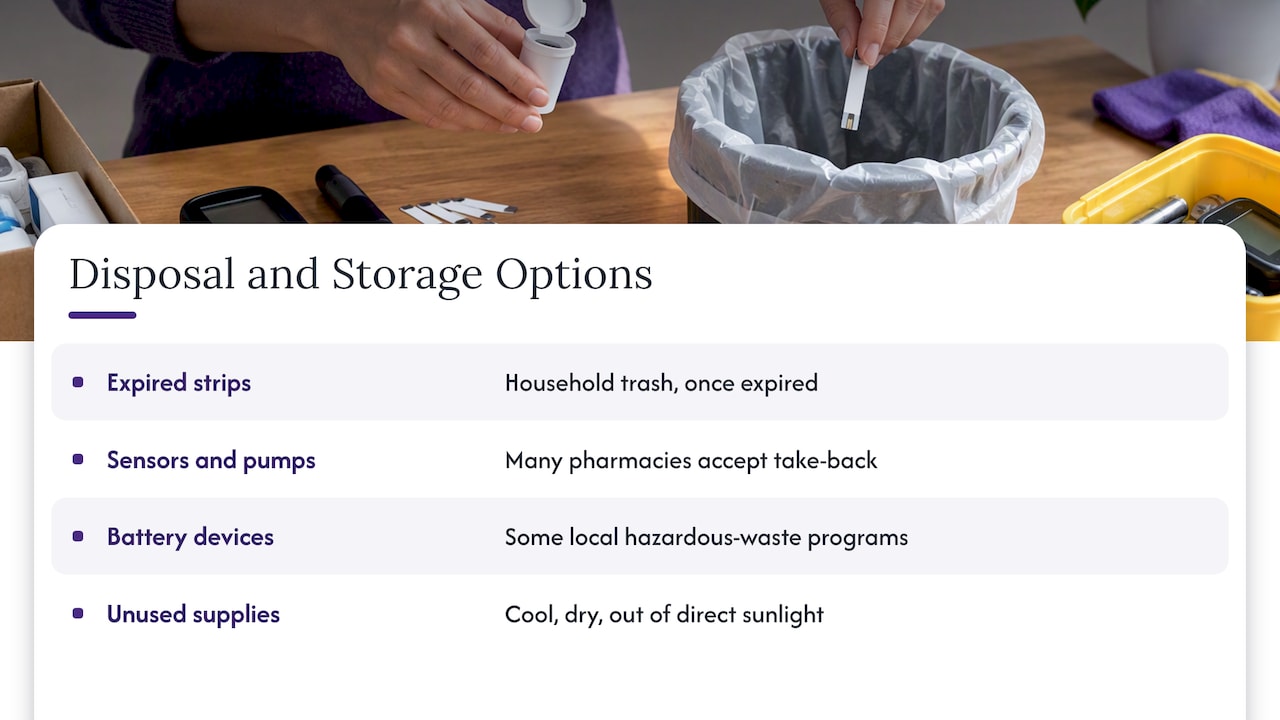
Test strips themselves can typically go in household trash once expired, but sensors, pumps, and any component with a battery should be handled differently. Many pharmacies accept diabetic device take-back for proper disposal, and some local hazardous waste programs take battery-containing medical devices separately from regular trash. Checking with your pharmacy or local waste authority before throwing anything away keeps batteries and electronics out of landfills where they can leak or cause damage over time.
If you’re storing unused supplies while deciding whether to sell, keep them somewhere cool, dry, and out of direct sunlight. That preserves their resale value and sidesteps the need for disposal in the first place. Our guide to common storage mistakes walks through the conditions that shorten shelf life unnecessarily, which is often the easiest way to avoid an unsellable box down the road.
When a vetted local buyback makes the most sense
Online specialists usually win on payout and safety, and that’s the right default for most sellers. But when you need cash today, or you simply want to hand your supplies to someone and watch the inspection happen in person, a vetted local buyback solves a real problem that shipping can’t.
The key word is vetted. A same-day cash model works because it replaces guesswork with a clear, in-person process, not because speed alone makes a buyer trustworthy.
— Liliana
Get same-day cash for your unused diabetic supplies
If immediate payment and a safe, in-person process matter more to you than waiting on a shipment, we buy unused, sealed, and unexpired diabetic supplies locally, including major brands, with payment on the spot once we’ve inspected your items.
- Request a quote through our main buyback page and we’ll confirm what we can offer before you commit to anything.
- Bring your boxes to a safe, public meetup and we inspect everything in person, so there’s no shipping, no waiting, and no guessing about your final payout.
- Keep your receipts and packaging on hand. It speeds up the inspection and helps confirm eligibility right away.
Check our Dexcom G7 buyback page or FreeStyle Libre 2 buyback page for specific pricing on those items, or start with our step-by-step cash guide if you want to know what to expect before you reach out.
FAQ
Is it safer to sell test strips locally or online?
Selling online is generally safer because the transaction is remote and documented, with no in-person meetup involved. Local sales can be just as safe when you work with a vetted buyer who follows a clear, in-person inspection process in a public location.
How much can I get for unused test strips?
Payout depends on the brand, box condition, and how close the strips are to their expiration date, with sealed and unexpired boxes earning more. A vetted buyer will give you a quote upfront so you can compare it against other offers before committing.
What payment methods should I avoid when selling diabetic supplies?
Avoid mobile payment apps from unknown buyers and any arrangement involving a check for more than the agreed price, since the FTC flags both as common scam tactics. Cash, verified instant transfers, and ACH payments from reputable buyers carry far less risk.
Can I sell test strips that are close to their expiration date?
Yes, but buyers typically pay less for strips nearing expiration, and some set a minimum shelf-life requirement before they’ll accept a box at all. Checking the printed expiration date and comparing it against a buyer’s policy before you ship or meet up saves time on both ends.
What should I do with expired or unsellable supplies?
Expired test strips can usually go in regular household trash, but sensors and pumps with batteries often need separate disposal through a pharmacy take-back program or local hazardous waste site. Checking with your local waste authority ensures batteries and electronics don’t end up in a landfill improperly.
Sources
- Selling stuff online? Here’s how to avoid a scam
- Two additional South Florida residents plead guilty to health care fraud charges in diabetic test strip diversion scheme