
Diabetic supply hoarding is defined as the accumulation of excess medical supplies, most often triggered by insurance-mandated 90-day auto-refill cycles that ship fixed quantities regardless of your actual usage. The industry term for this pattern is “supply surplus,” and it affects people with diabetes across every insurance type, from Medicare Part B to private plans. The financial and practical consequences are real. You pay coinsurance on supplies you never use, your storage space fills up, and perfectly good products expire. This guide explains why the surplus builds, how to manage it, and what legal options exist to recover value from what you already have.
How does insurance create excess diabetic supplies?
Insurance auto-refill cycles of 90 days are the primary driver of diabetic supply surplus. Pharmacy benefit managers (PBMs) set these cycles to reduce administrative costs, but the fixed shipment quantity does not adjust when your usage changes. If your doctor switches your meter, changes your insulin dose, or you transition to a continuous glucose monitor, the refills keep arriving.
The core problem is that pharmacies cannot accept returns of unused diabetic supplies due to legal and insurance policies. That means every box of test strips or pack of sensors that arrives after a prescription change has nowhere to go except your closet. The waste cycle is built into the system, not caused by your behavior.
The cost impact compounds this problem. Medicare Part B sets a 2026 deductible of $283, after which beneficiaries pay 20% coinsurance on durable diabetic supplies. You are paying out of pocket for supplies that may never be used. Medicare Part D caps annual out-of-pocket costs at $2,100, but that ceiling still represents real money spent on surplus stock.
Advocacy groups have linked PBM practices to insulin price inflation up to 1,000% over 15 years. That figure reflects how systemic the pricing and supply problem has become. The good news is that the Inflation Reduction Act capped insulin out-of-pocket at $35/month for Medicare beneficiaries since july 2023, reducing one major trigger for hoarding behavior.
- Auto-refill cycles ship fixed 90-day quantities regardless of consumption changes.
- PBM policies prevent pharmacies from accepting unused supply returns.
- Cost-sharing structures mean you pay coinsurance on supplies you may never open.
- Prescription changes leave previous supply types stranded with no legal return path.
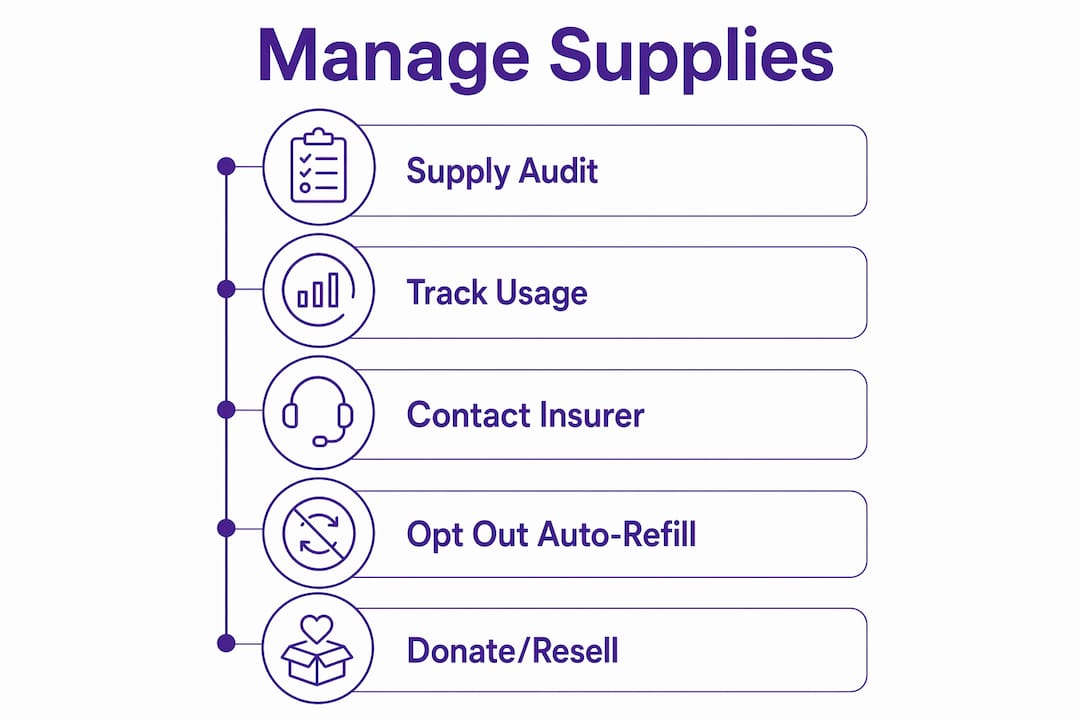
Pro Tip: Contact your insurance plan or PBM directly and ask whether you can opt out of auto-refill for specific supply categories. Many plans allow this with a simple phone call, and it stops new surplus before it starts.
How to organize and track your diabetic supplies
A supply audit is the first step toward real diabetes supply management. Set aside 30 minutes, pull everything out of storage, and sort by product type, brand, and expiration date. You will likely find duplicates, mismatched accessories, and items from prescriptions you no longer use. Knowing exactly what you have is the only way to make good decisions about what to keep, use, or move on.
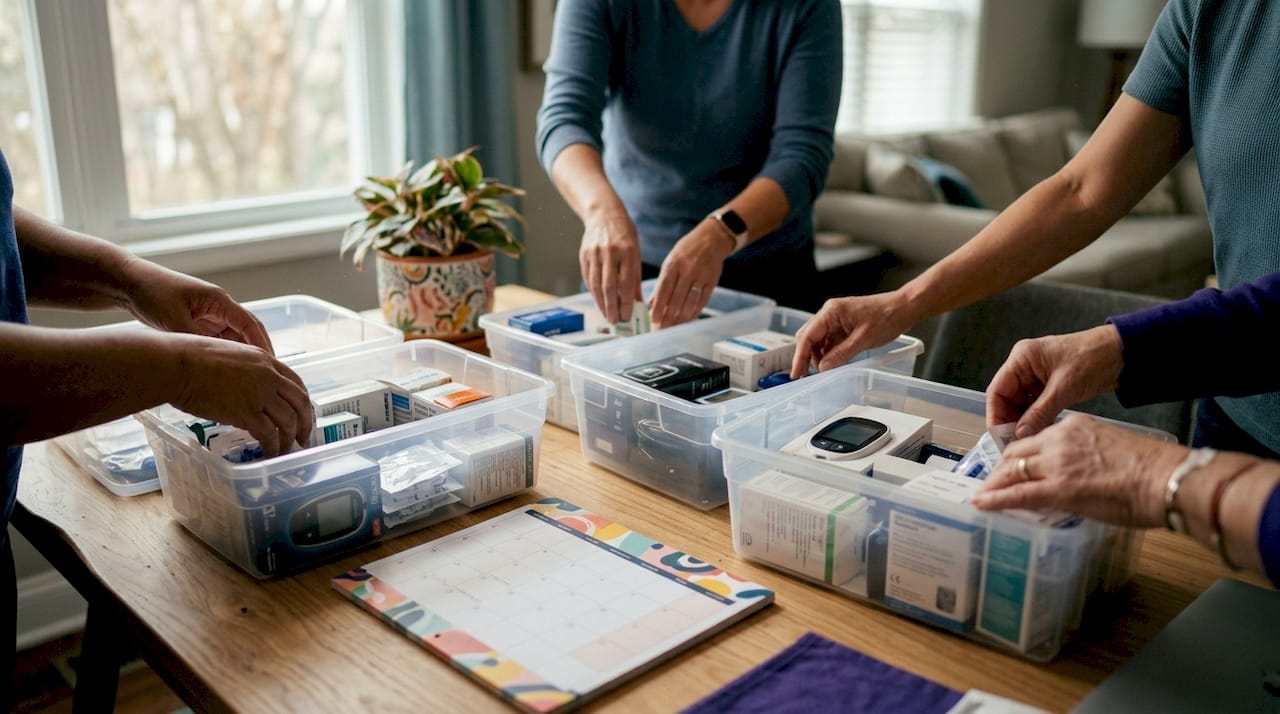
The key distinction in managing diabetic resources is the difference between a buffer stock and hoarding. A small, intentional buffer of one extra sensor or a few weeks of supplies is a recommended practice. It protects you against backorders, shipping delays, and insurance authorization lapses. Hoarding, by contrast, is accumulating months or years of supply with no realistic plan to use it.
Here is a practical system for ongoing tracking:
- Label and date every item when it arrives. Use a permanent marker on the outer box so you always use the oldest stock first.
- Create a simple inventory log in a notes app or a paper notebook. Record product name, quantity, and expiration date. Update it monthly.
- Set a par level for each supply type. A par level is the minimum quantity you want on hand. Anything above two months of actual usage is surplus worth addressing.
- Specify your prescriptions precisely. Exact supply specifications by pen needle gauge and length prevent your doctor from ordering generic “pen needles” that arrive in the wrong size and become unusable stock immediately.
- Review your inventory before every refill. If you have more than a 60-day supply on hand, call your pharmacy and delay the next shipment.
Caregiver support plays a measurable role in supply management. Nearly 63 million family caregivers are frontline diabetes managers, and organized caregiver involvement in inventory tracking prevents both sudden gaps and unnecessary waste. If a family member helps manage your supplies, include them in the monthly inventory review.
Pro Tip: Use the organize unused equipment approach of grouping supplies by device type in labeled bins. This makes it immediately obvious when one category is overstocked.
What are the legal options for reducing surplus supplies?
Resale, donation, and buyback programs are the three main paths for handling surplus diabetic supplies responsibly. Each has different rules, and choosing the right one depends on the supply type, its condition, and your timeline.
Resale is legal for sealed, unexpired supplies in their original packaging. The diabetic supply buyback market exists specifically because pharmacies cannot take returns, creating a secondary market for perfectly usable products. Orlando Diabetic Supplies Buyback purchases unused Dexcom G6 and G7 sensors, Freestyle Libre supplies, Omnipod pods, and sealed test strips directly from people in the Orlando area and surrounding communities.
Donation is an option for some supply types, but it carries limitations. Many donation programs accept only specific items, require supplies to have at least six months before expiration, and cannot accept insulin or prescription-only devices. Check with local diabetes nonprofits or community health clinics before assuming a donation is possible.
| Option | Best for | Key requirement |
|---|---|---|
| Buyback program | Sealed, unexpired CGM sensors and test strips | Original packaging, not expired |
| Donation | Test strips, lancets, general supplies | Minimum 6 months to expiration |
| Pharmacy return | Not available | Pharmacies cannot accept returns by law |
| Disposal | Expired or opened items | Follow local medical waste guidelines |
- Supplies must be in original, sealed packaging for resale or donation.
- Insulin cannot legally be resold in the United States.
- Prescription devices like Omnipod pods can be sold if sealed and unexpired.
- Donation versus selling depends on your timeline and the supply type.
Hoarding diabetic supplies creates a problem beyond your own home. Surplus stock can trigger artificial shortages that affect availability for others who need those same products. Moving surplus through buyback or donation channels puts supplies back into circulation where they are actually needed.
How do you navigate insurance claims to prevent oversupply?
Working with your doctor and insurer before surplus builds is far more effective than managing it after the fact. The strategies below apply whether you have Medicare, Medicaid, or private insurance coverage for diabetic supplies.
- Review your formulary annually. Insurance formularies change every year. A device covered at a low tier in 2025 may shift to a higher cost-sharing tier in 2026, changing your actual out-of-pocket cost per shipment.
- Request a quantity adjustment. If your usage has changed, ask your doctor to update the prescription quantity. Insurers must honor the prescribed amount, and a lower quantity means smaller shipments.
- Understand Medicare caps. Medicare Part B covers durable diabetic supplies at 80% after the deductible. Knowing your exact benefit limits helps you calculate whether a 90-day refill is financially sensible or whether a shorter cycle saves money.
- Ask about assistance programs. Manufacturer patient assistance programs for devices like Dexcom G7 and Freestyle Libre can reduce your cost-sharing, which in turn reduces the financial pressure that leads people to over-order “just in case.”
- Time your refills to actual need. Most insurance plans allow you to delay a refill without penalty. Calling your pharmacy five days before an auto-refill ships gives you time to check your inventory and postpone if needed.
Private insurance supply categories vary significantly by plan. Some plans classify CGM sensors as durable medical equipment, while others treat them as pharmacy benefits. That classification affects your cost-sharing and refill rules. Knowing which category applies to each of your supplies prevents billing surprises and helps you plan quantities accurately.
Lean Six Sigma methodologies, applied to pharmaceutical supply chains, show that stabilizing demand signals at the patient level reduces erratic surpluses throughout the entire chain. The practical takeaway: when you communicate precise, consistent supply needs to your doctor and insurer, you reduce the system-level noise that generates oversupply.
Key Takeaways
Reducing diabetic supply surplus requires addressing the insurance structures that create it, tracking what you have, and using legal channels like buyback programs to recover value from excess stock.
| Point | Details |
|---|---|
| Insurance drives surplus | 90-day auto-refill cycles ship fixed quantities that do not adjust to your actual usage. |
| Buffer stock is not hoarding | Keep one to two months of supplies on hand; anything beyond that is worth addressing. |
| Pharmacies cannot take returns | Legal restrictions mean resale and donation are the only paths for unused sealed supplies. |
| Precise prescriptions prevent waste | Specifying exact pen needle gauge and CGM model stops mismatched supplies from arriving. |
| Buyback programs recover value | Sealed, unexpired supplies can be sold through programs like Orlando Diabetic Supplies Buyback for same-day cash. |
What I’ve learned from years of watching supply surplus pile up
The emotional side of diabetic supply hoarding rarely gets discussed. People hold onto extra supplies because they remember a time when they could not afford them, or because they fear a shortage. That fear is rational. The problem is that hoarding as a response to that fear can actually worsen community-level shortages for others who need the same products right now.
What I have seen work is a shift from reactive stockpiling to proactive communication. People who call their pharmacy before a refill ships, who ask their doctor to update quantities after a device change, and who do a monthly inventory check consistently end up with less waste and lower out-of-pocket costs. The habit takes about 15 minutes a month to maintain.
The resale and donation path surprises most people. They assume surplus supplies have no value once they leave the pharmacy. That is not true. Sealed, unexpired Dexcom G7 sensors, Freestyle Libre readers, and Omnipod pods hold real market value. Selling them through a local buyback program is not a workaround. It is a responsible, legal solution to a problem the insurance system created.
My honest advice: do not aim for zero surplus. A small buffer is genuinely useful. Aim instead for a surplus you can see, track, and manage. When it grows beyond two months of actual use, that is the signal to act, not to wait for expiration.
— Liliana
Turn your unused supplies into same-day cash
If you have sealed, unexpired diabetic supplies sitting in a drawer, Orlando Diabetic Supplies Buyback offers a fast, honest way to recover their value. The process is straightforward: contact the team, get a fair quote, and receive same-day cash for items like Dexcom G6 and G7 sensors, Freestyle Libre supplies, Omnipod pods, and sealed test strips.
Orlando Diabetic Supplies Buyback serves Orlando, Florida and surrounding areas with a local, no-hassle process. There are no shipping delays and no complicated forms. You can learn exactly how to get cash for your unused supplies and see which items qualify. If you have previous device supplies from a meter or CGM you no longer use, the sell previous device supplies page walks you through the steps. Surplus supplies have real value. Put it back in your pocket.
FAQ
What causes diabetic supply hoarding in the first place?
Insurance-mandated 90-day auto-refill cycles ship fixed quantities regardless of changes in your usage or prescription. Pharmacies cannot accept returns by law, so unused supplies accumulate at home with no official return path.
Can I legally sell my unused diabetic supplies?
Yes. Sealed, unexpired supplies in original packaging can be legally resold in the United States. Insulin is the main exception and cannot be resold. Buyback programs like Orlando Diabetic Supplies Buyback purchase qualifying items directly.
How do I stop my insurance from sending too many supplies?
Contact your pharmacy or PBM and request a quantity adjustment or opt out of auto-refill for specific items. Ask your doctor to update your prescription to reflect your actual current usage, which insurers are required to honor.
What is the difference between a buffer stock and hoarding?
A buffer stock is one to two months of supplies kept on hand to cover backorders or shipping delays. Hoarding is accumulating months or years of supply beyond any realistic plan to use it, often triggered by fear of future shortages.
Does Medicare cover diabetic supplies in 2026?
Medicare Part B covers durable diabetic supplies at 80% after the $283 annual deductible, with beneficiaries paying 20% coinsurance. Part D out-of-pocket costs are capped at $2,100 annually, and insulin is capped at $35 per month under the Inflation Reduction Act.