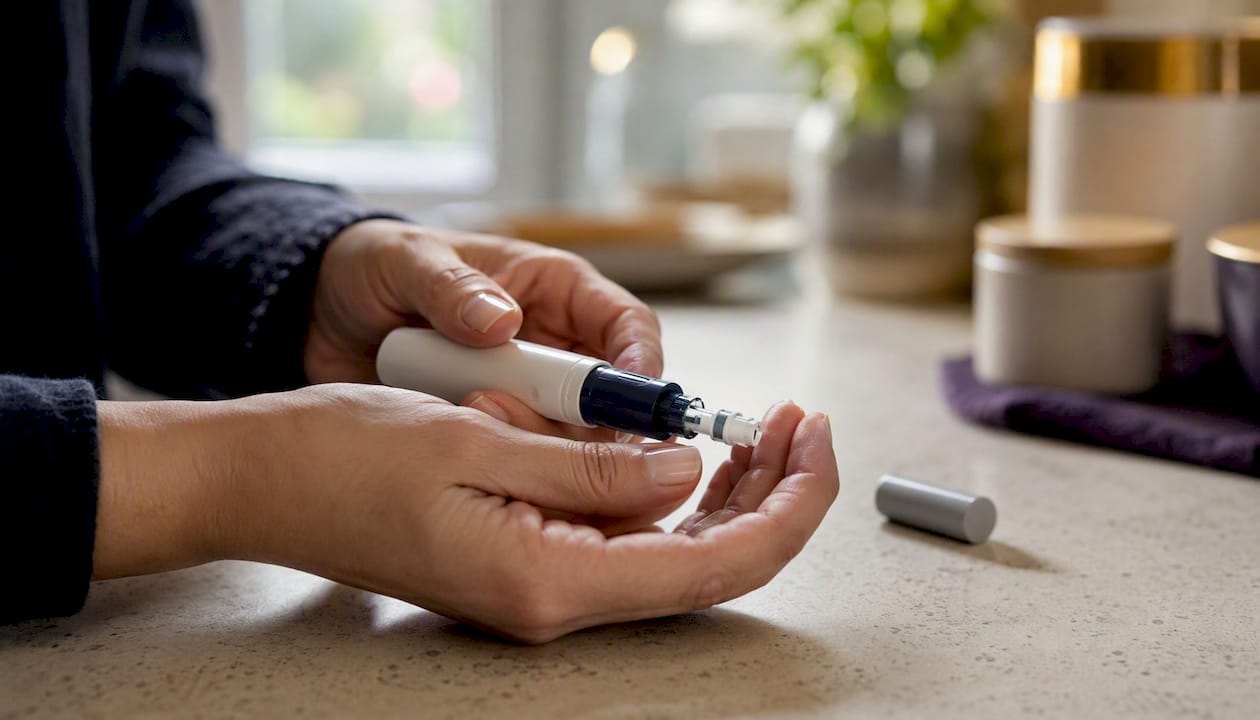
Accu-Chek Multiclix lancets use a proprietary drum system that is now largely discontinued. If you own a Multiclix device, you must use only Multiclix drums. Mixing them with FastClix drums can damage your device. Here is what you need to know right now:
- Multiclix drums are a legacy product. Availability is limited to third-party and specialty sellers. Accu-Chek no longer actively markets the Multiclix line.
- FastClix is the active successor. It uses its own 6-lancet drums, which are not interchangeable with Multiclix drums.
- Compatibility is not optional. Using the wrong drum type in either device risks damaging the advance mechanism. The EMPR compatibility chart confirms that Accu-Chek drum systems are proprietary.
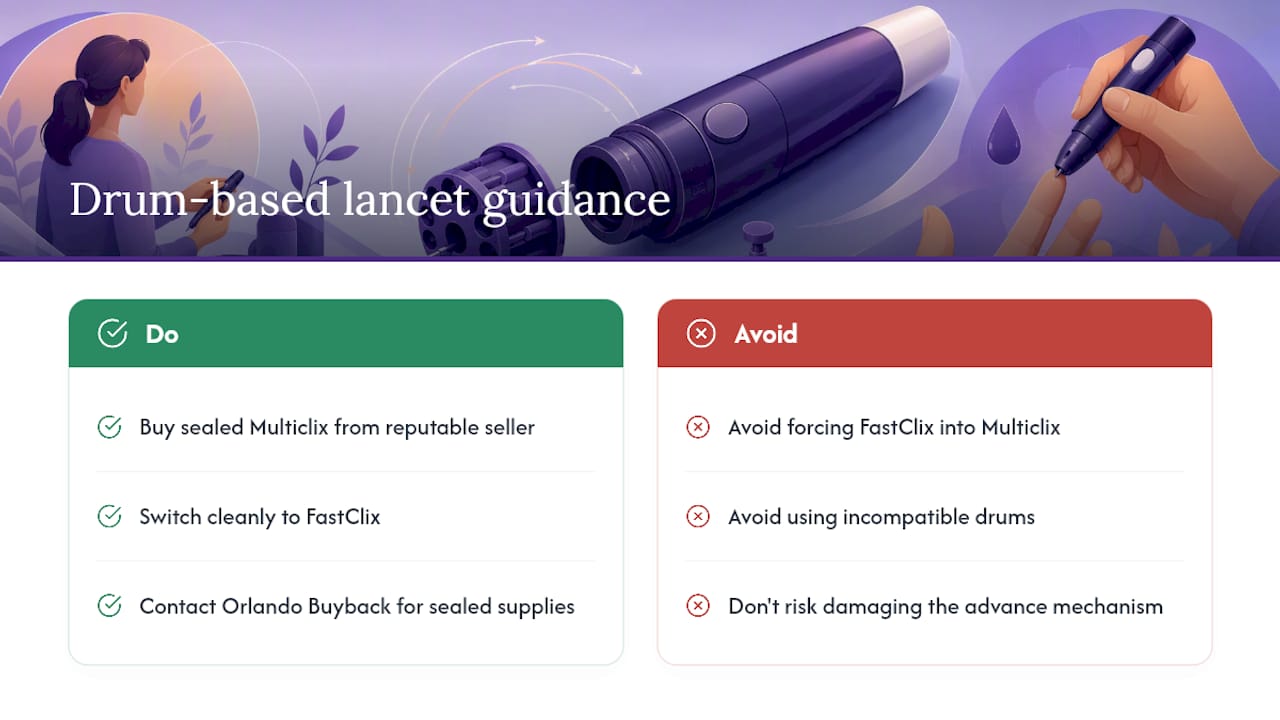
- Your best move: If you still have a Multiclix device, source sealed Multiclix packs from authorized sellers. If supply is running dry, transition to a FastClix device and its matching lancets.
Pro Tip: Before ordering any drum pack online, confirm the product name matches your device exactly. “Multiclix” and “FastClix” look similar in listings but are mechanically incompatible.
Table of Contents
- What is the Accu-Chek Multiclix system, and is it still available?
- Where can you find Multiclix drums in the U.S., and what are the best alternatives?
- Lancet reuse, infection risk, and proper disposal in the United States
- Common device problems and how to reduce pain during testing
- Why Accu-Chek’s drum systems reduce pain and why compatibility matters mechanically
- Key Takeaways
- The part most guides skip about drum-based lancet systems
- Useful sources and further reading
- What to do if you have sealed Multiclix supplies you no longer need
What is the Accu-Chek Multiclix system, and is it still available?
The Accu-Chek Multiclix is a drum-based lancing device designed for people who test their blood sugar regularly. Instead of loading one lancet at a time, you insert a preloaded drum containing six lancets. A lever advances each lancet in sequence, so you never touch a bare needle during normal use. That enclosed design lowers the risk of accidental needle sticks, which matters for people who test multiple times a day.
The Multiclix also featured a Clixmotion-style guided stroke, meaning the lancet moves forward and returns along a controlled path rather than vibrating unpredictably. Multiple depth settings let you adjust penetration based on skin thickness. These features made it a popular choice for people with dexterity challenges or sensitive fingertips.
Key features of the Multiclix system:
- 6-lancet drum: — Preloaded, enclosed, no direct needle handling
The Multiclix is now a legacy product. Accu-Chek’s active drum-based line is the FastClix, which carries 11 depth settings and current manufacturer support. Sealed Multiclix packs, such as the 102-count pack from MedShopExpress, still exist in limited supply through specialty diabetic retailers.
Where can you find Multiclix drums in the U.S., and what are the best alternatives?
Multiclix drums are not sold through standard pharmacy chains anymore. Your sourcing options are narrower than they used to be, so knowing where to look saves time and money.
Where to look for Multiclix packs:
- Specialty diabetic supply retailers such as MedShopExpress carry 102-count Multiclix packs while stock lasts.
- Online marketplaces like Amazon list Multiclix lancets from third-party sellers, though availability fluctuates.
- Specialty sites such as Diabetic Aids carry 200+4 count packs that confirm pack sizes and lot information.
Buying checklist before you order:
- Sealed, original packaging with no signs of tampering
- Visible lot number and expiration date
- Seller with a clear return policy
- Confirmed product name: “Multiclix,” not “FastClix”
If Multiclix drums are unavailable, the cleanest path is to purchase a FastClix device and its matching lancets. FastClix is widely stocked at major pharmacies, diabetic supply retailers, and directly through Accu-Chek. It offers multiple depth settings, current manufacturer support, and a drum system that works similarly to what you are used to.
Pro Tip: Understanding why brand differences matter for diabetic buyers can help you avoid gray-market products that look authentic but may not meet quality standards.
Lancet reuse, infection risk, and proper disposal in the United States
Single-use is the standard. Every lancet in a Multiclix drum is designed for one use per position. Medical guidance from Medical News Today is clear: reusing lancets blunts the tip and creates micro-barbs that tear skin rather than pierce it cleanly. That means more pain, lower-quality blood samples, and a real infection risk from repeated skin trauma.
Why reuse is a problem:
- Blunted tips require more force, which increases bruising
- Micro-barbs cause lateral tearing that slows healing
- Repeated punctures at the same site raise infection risk
- Sample quality drops, which can affect reading accuracy
Disposal guidance for drum systems in the U.S.:
The enclosed drum design is one of the Multiclix’s practical advantages. Because needles stay inside the drum, many users can dispose of a fully used drum in household trash where local rules allow. However, rules vary by municipality.
- Check your city or county waste management website for sharps disposal rules
- If local rules require a sharps container, use one rated for medical waste
- Never place loose or damaged lancets in open trash
- Many pharmacies and community health centers offer free sharps disposal programs
Good diabetic supply management includes tracking your lancet rotation and disposal habits, not just your glucose readings.
Common device problems and how to reduce pain during testing
Most Multiclix issues come down to one of four things: a jammed drum, a failed firing, insufficient blood, or a stuck advance lever.
Quick troubleshooting:
- Jammed drum: Remove the drum, inspect for cracks or misalignment, replace with a fresh drum.
- Lancet fails to fire: Confirm the device is fully cocked. If it still fails, the spring mechanism may be worn. Replace the device.
- Insufficient blood drop: Increase depth by one setting, warm your hand, or try a different finger.
- Stuck advance lever: Do not force it. A stuck lever usually means the drum is damaged or the device has internal wear.
Pain reduction steps, in order of impact:
- Warm your hands before testing. Cold hands restrict blood flow and force you to use a deeper setting.
- Start at the lowest depth setting that gives you enough blood. Going deeper than necessary increases pain without improving sample quality.
- Use the sides of your fingertips, not the pads. Alternate fingers across each session.
- Replace the drum after all six lancets are used. A used lancet position is blunted and causes more discomfort.
- If you consistently need high depth settings, consider whether a thinner-gauge lancet system like the SoftClix might suit your skin better.
When the device itself starts requiring more force to cock, or the advance lever feels loose, it is time to replace the unit. Mechanical wear in drum-based devices is gradual but real.
Why Accu-Chek’s drum systems reduce pain and why compatibility matters mechanically
The Clixmotion technology credited to Accu-Chek’s drum-based devices controls both the forward stroke and the return stroke of the lancet. Most basic lancing devices fire the lancet forward and let it snap back without guidance, which creates vibration and lateral movement. That vibration is a significant part of what you feel during a finger stick.
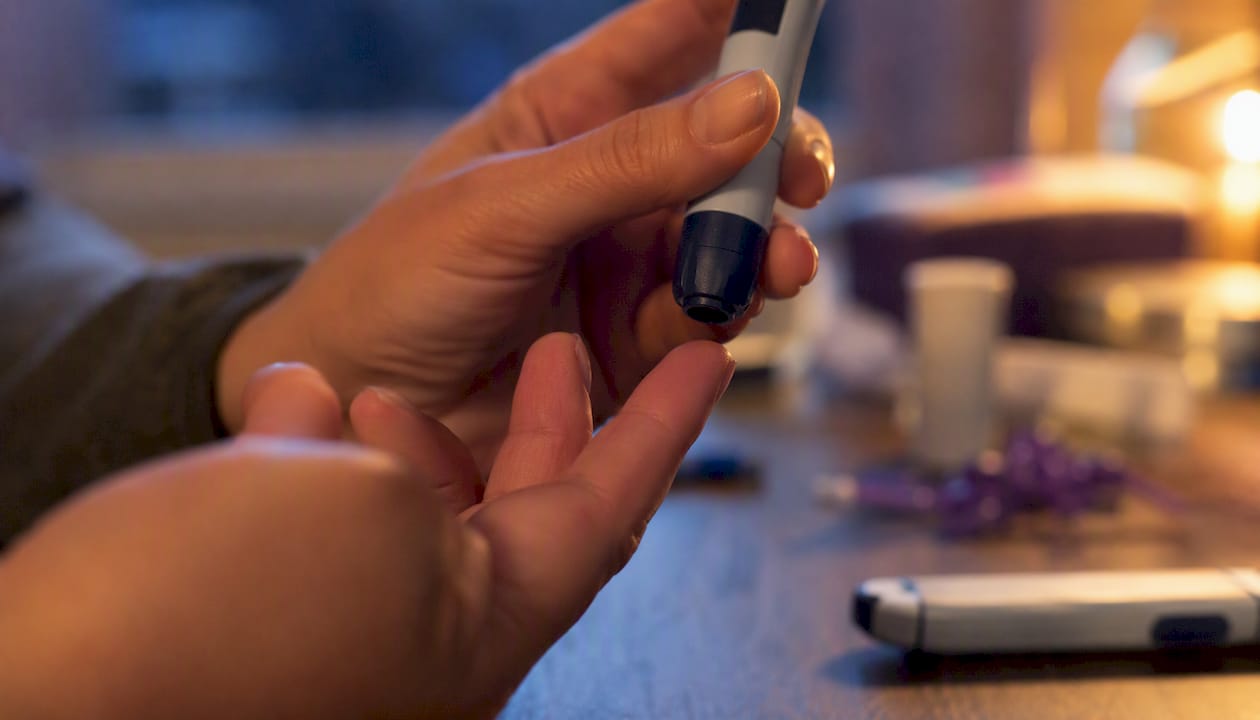
The geometry difference between Multiclix and FastClix drums is not cosmetic. The drum’s engagement points, the tabs that lock it into the advance mechanism, sit at different positions in each device. Forcing a FastClix drum into a Multiclix device misaligns those tabs with the advance pawl, which can crack or strip the plastic catches. Once that happens, the device cannot advance reliably and must be replaced.
| Dimension | Multiclix | FastClix |
|---|---|---|
| Drum engagement tabs | Proprietary position | Different proprietary position |
| Advance mechanism | Lever-driven pawl | Lever-driven pawl (different geometry) |
| Interchangeable? | No | No |
| Damage risk if wrong drum | Cracked advance catches | Cracked advance catches |
The FastClix product page and the EMPR compatibility reference both confirm this. Compatibility misunderstandings are common because the devices look nearly identical from the outside. The difference is entirely internal.
Key Takeaways
Multiclix drums are proprietary and largely discontinued; FastClix is the active successor and the two drum types are not interchangeable, with incompatibility risking permanent device damage.
| Point | Details |
|---|---|
| Multiclix status | Legacy product with limited U.S. availability; source sealed packs from specialty retailers only. |
| Compatibility rule | Multiclix and FastClix drums are not interchangeable; using the wrong drum can crack the advance mechanism. |
| Best upgrade path | Purchase a FastClix device and its matching lancets for current manufacturer support and 11 depth settings. |
| Single-use standard | Reusing lancets blunts tips and creates micro-barbs, which can increase pain and infection risk. |
| Orlando Diabetic Supplies Buyback | If you have sealed, unused Multiclix or other diabetic supplies, Orlando Diabetic Supplies Buyback offers same-day cash for eligible items in the Orlando area. |
The part most guides skip about drum-based lancet systems
There is a gap between what the product marketing says and what actually trips people up in daily use. The compatibility warning is everywhere, but the practical consequence is not: a damaged advance mechanism is not a minor inconvenience. It means your device cannot reliably advance to the next lancet, which means you may be reusing a lancet position without realizing it. That is the real cost of using the wrong drum.
The other thing worth saying plainly: the Multiclix is a well-designed device that many people genuinely prefer. The enclosed drum, the lever advance, the guided stroke. These are real advantages, especially for people who test frequently or have limited hand strength. The frustration of sourcing discontinued drums is legitimate. But the answer is not to force a FastClix drum into a Multiclix device. The answer is to either find sealed Multiclix stock from a reputable seller or make a clean switch to FastClix.
For people who have sealed, unused Multiclix packs sitting in a drawer after switching devices, those supplies have real value. Orlando Diabetic Supplies Buyback works with people in the Orlando area who have leftover lancets and strips they no longer need. Getting accurate compatibility guidance first means you know exactly what you have and whether it qualifies.
Useful sources and further reading
These are the most reliable places to verify product details, compatibility rules, and clinical guidance:
- Accu-Chek FastClix Lancing Device | Accu-Chek
- Blood glucose lancing device and lancets compatibility — EMPR
- Accu-Chek SoftClix
- ACCU-CHEK Multiclix Lancets – 102 EA
- Accu-Chek Multiclix Sterile Lancets (Pack of 200+4)
- Accu,Chek Multiclix Lancets, 102 Count — Amazon listing
- Lancets: 5 to Consider — Medical News Today
For device-specific instructions, always download the official Accu-Chek user guide for your exact model from the manufacturer’s website. Product pages link directly to PDF manuals that cover loading, depth adjustment, and safe disposal for each device.
What to do if you have sealed Multiclix supplies you no longer need
If you have switched to FastClix or a CGM system and have sealed, unexpired Multiclix packs sitting unused, you have options beyond storing them indefinitely.

Orlando Diabetic Supplies Buyback buys unused, sealed diabetic supplies from people in Orlando and the surrounding area. If you have surplus lancet packs, test strips, CGM sensors, or other sealed supplies, you can get same-day cash without the hassle of listing items online or waiting for a buyer. The process is straightforward: bring your sealed supplies in for inspection, get an offer on the spot, and leave with cash.
This is a practical option for anyone who upgraded devices, changed prescriptions, or simply over-ordered. Find out what your supplies are worth and get cash for unused diabetic supplies today. You can also learn more about selling previous diabetes device supplies for same-day payment in Orlando.
This article provides general informational guidance only, not medical or clinical advice. Confirm device compatibility and disposal rules with the manufacturer or a qualified healthcare professional.