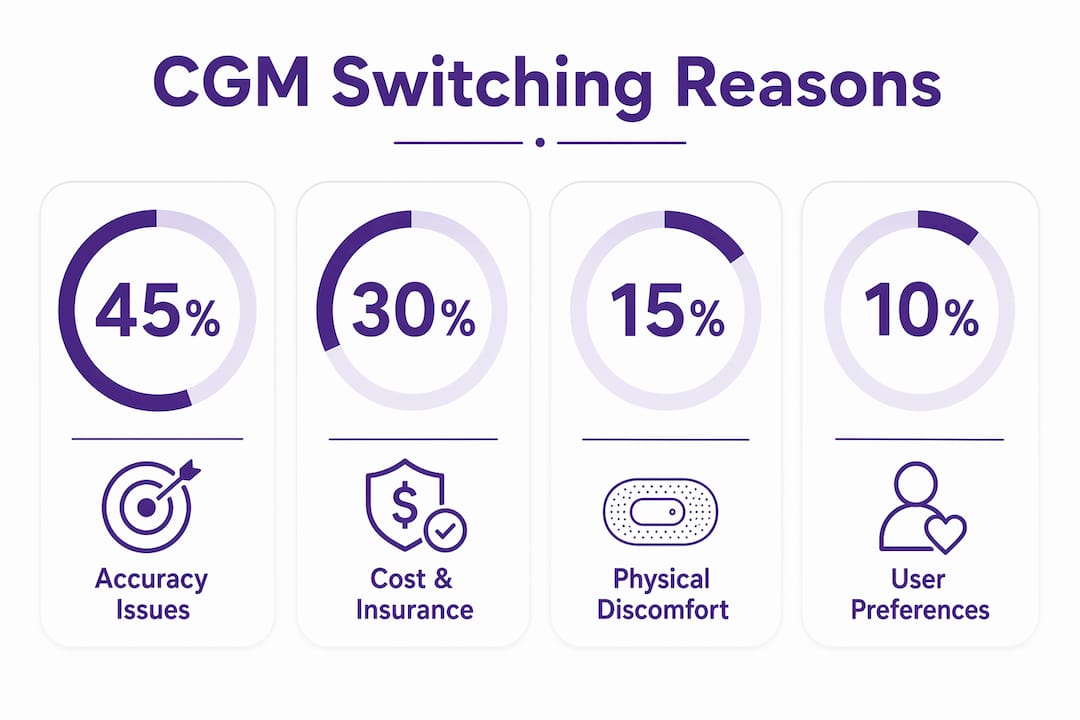
People with diabetes switch continuous glucose monitoring (CGM) devices primarily because of accuracy concerns, physical discomfort, cost pressures, and insurance restrictions. These aren’t minor inconveniences. They directly affect how well you can manage your blood sugar day to day. Here’s a quick look at the core reasons:
- Accuracy concerns: Inaccurate or inconsistent readings erode trust and force patients back to fingerstick testing
- Physical discomfort: Skin irritation, sensor pain, and device bulkiness make long-term wear difficult
- Alarm fatigue: Too many alerts, especially false ones, push patients toward device abandonment
- Cost and insurance: High sensor costs and insurer-mandated brand switches disrupt care plans
- Technical compatibility: Some CGM systems don’t integrate well with certain insulin pumps or smartphones
- Psychological burden: Constantly second-guessing your CGM readings adds stress and reduces the device’s value
Understanding why these switches happen helps you make a smarter choice the next time you evaluate your options.
How CGMs work and why they matter for diabetes control
A CGM tracks glucose levels continuously by reading interstitial fluid through a small sensor inserted under the skin. The sensor transmits readings to a receiver or smartphone app, usually every one to five minutes, giving you a real-time picture of where your glucose is and where it’s heading.
The CDC recognizes CGMs as a key tool for diabetes management, and the American Diabetes Association (ADA) and the Association of Diabetes Care and Education Specialists (ADCES) both support their use for improving glycemic outcomes. The core benefits are real:
- Fewer fingerstick checks required daily
- Early warning alerts for dangerous highs and lows
- Trend arrows showing glucose direction, not just a snapshot
- Improved time-in-range, which reduces long-term complications
- Integration with insulin pumps for automated insulin delivery systems
There are two main CGM types. Real-time CGMs (like the Dexcom G6 and Dexcom G7) send readings automatically and continuously. Intermittently scanned CGMs (like the FreeStyle Libre family) require you to wave a reader or phone over the sensor to get a reading. Switching from an intermittently scanned device to a real-time one tends to improve glycemic control over time, particularly for patients who benefit from passive alerts.
What patients actually like and dislike about CGM devices
Patients who use CGMs consistently report a clear split between what works and what drives them away. Knowing both sides helps you set realistic expectations before committing to a device.
What patients appreciate most:
- Continuous glucose data without constant finger pricks
- Trend arrows that guide meal and insulin decisions
- Longer sensor wear times (10–14 days on newer models)
- Smartphone app integration for easy data sharing with care teams
- Alerts that catch overnight lows before they become dangerous
What patients find frustrating:
- Alarm fatigue from too many alerts, including false ones
- Skin irritation and adhesive reactions at the sensor site
- Sensors falling off prematurely, shortening the expected wear time
- Device bulkiness affecting comfort and body image
- Accuracy that varies from one sensor to the next
Among patients who had temporarily stopped CGM use, inaccurate sensor readings were the top reason, followed by sensors falling off prematurely, cost of sensors, skin irritation, and simply needing a break from wearing a device. A study on CGM barriers found that after cost, the most commonly cited reasons for discontinuing were being bothered by alarms and perceived inaccuracy.
| Factor | Patient Reaction |
|---|---|
| Real-time alerts | Valued for safety, but cause fatigue when excessive |
| Sensor accuracy | Top concern; inconsistency undermines dosing confidence |
| Skin comfort | Many patients with type 1 diabetes report skin complications |
| Wear time | Longer wear preferred; premature failure is a major complaint |
| App integration | Highly valued; poor smartphone compatibility is a dealbreaker |
| Cost | Cited as the single most common barrier to continued use |
Pro Tip: If alarm fatigue is your main frustration, look for CGM systems that let you customize or temporarily disable alerts. Some devices allow you to turn off all alerts except critical low glucose warnings, which can make a significant difference in daily comfort.
How accuracy and trust drive CGM switching decisions
Accuracy is the single biggest factor in whether a patient stays with a CGM or walks away from it. When a device tells you your glucose is 85 mg/dL and a fingerstick says 140 mg/dL, you stop trusting the sensor. And once that trust breaks, the device loses most of its value.
A reported 26.1% premature failure rate with some devices, combined with documented inaccurate readings, creates a real safety concern. Inaccurate alarms compound the problem. Among people with diabetes who discontinued CGM use in one study, common reasons included too many alarms, device inaccuracy, and lack of trust in the device.
The psychological burden is real too. When you’re forced to confirm every CGM reading with a fingerstick, you’re essentially doing double the work the device was supposed to eliminate. Research shows this pattern leads to mistrust and device abandonment, particularly among patients who already feel overwhelmed by diabetes management. People with type 2 diabetes tend to report lower trust in CGM accuracy than those with type 1, with 58% of type 2 respondents feeling that accuracy varies from sensor to sensor, compared to 38% of type 1 respondents.
Drug interactions add another layer of complexity. Substances including acetaminophen, ascorbic acid, and certain antibiotics can interfere with sensor readings. A majority of CGM users were aware that substances can affect accuracy, though less than half were unconcerned about the impact of common medications on their sensor readings.
How costs and insurance coverage push patients to switch
Cost is the number one barrier to CGM use, and it’s also the most common reason patients discontinue. Sensors are a recurring expense, and without solid insurance coverage, the monthly cost can become unmanageable.
- High out-of-pocket costs: Sensor supplies alone can run into hundreds of dollars per month without coverage
- Insurance-mandated switching: Insurers sometimes require patients to use a specific CGM brand, regardless of what their doctor prescribed or what has been working
- Coverage gaps: Some plans cover the CGM device but limit the number of sensors per month, forcing patients to ration supplies
- Prior authorization delays: Paperwork and approval processes can leave patients without sensors for days or weeks
- Pump compatibility restrictions: Some payers restrict CGM access based on which insulin pump brand a patient uses, limiting choice
An Alliance for Patient Access study of 800 patients found that 73% had disrupted care plans and 60% experienced complications from insurer-forced device switching. Non-medical switching, where an insurer changes your device for cost reasons rather than clinical ones, can also disrupt your historical glucose data trends, making it harder for your care team to spot patterns and adjust your treatment.
Providers feel this pressure too. A qualitative study found that system-level barriers including insurance bureaucracy, durable medical equipment company requirements, and prior authorization burdens were the top prescribing obstacles cited by providers. When your doctor faces hours of paperwork just to get you a CGM, some simply avoid prescribing certain systems altogether.
Strategies patients use to manage costs include shopping through pharmacy benefit channels instead of durable medical equipment suppliers, asking about manufacturer patient assistance programs, and budgeting for diabetes supplies proactively each year.
How to choose and switch CGM devices without losing ground
Switching CGM devices doesn’t have to mean starting from scratch. A structured approach keeps your diabetes management on track through the transition.
- Assess your current pain points. Write down exactly what’s bothering you about your current device. Is it accuracy? Alarms? Skin reactions? Knowing the specific problem helps you evaluate whether a new device actually solves it.
- Talk to your care team first. Your endocrinologist or diabetes educator can review your glucose data, identify patterns, and recommend devices that fit your clinical needs. Research shows that better outcomes follow when patients have ongoing support during device transitions.
- Check insurance coverage before you commit. Confirm that your plan covers the new device and its sensors. Ask specifically about sensor quantity limits and whether prior authorization is required.
- Request a trial period. Some manufacturers offer trial sensors or starter kits. Wearing a device for two to four weeks gives you real data on comfort, accuracy, and usability before you fully commit.
- Verify smartphone and pump compatibility. Not every CGM works with every phone operating system or insulin pump. Check the manufacturer’s compatibility list against your specific devices before switching.
- Plan for a learning curve. New CGM platforms have different alarm defaults, app layouts, and calibration requirements. Give yourself two to four weeks to adjust settings and interpret the data correctly.
- Export your historical data. Before switching, download your glucose reports from your current device. Continuity of data helps your care team track trends across the transition.
Pro Tip: When you start a new CGM, disable all non-critical alarms for the first one to two weeks. This lets you get comfortable with the device without being overwhelmed by alerts. Add alerts back gradually, starting with the low glucose threshold that matters most for your safety.
What to do with unused CGM supplies after you switch
Switching devices almost always leaves you with leftover supplies. A box of Dexcom G6 sensors, FreeStyle Libre readers, or Omnipod pods sitting in a drawer isn’t just clutter. It’s money you already spent.
- Unused sensors and pods accumulate fast. When you switch mid-supply cycle, you may have weeks or months of supplies that no longer match your new device
- Selling is often the best option. Sealed, unexpired supplies have real cash value, and selling them recovers some of what you paid
- Donation is another path. Some nonprofit organizations accept unopened diabetic supplies for distribution to patients who can’t afford them
- Disposal matters. Expired or opened supplies should be disposed of properly. Check your local guidelines for medical waste disposal
- Local buyback services make selling easy. Orlando Diabetic Supplies Buyback offers same-day cash for unused supplies including Dexcom G6 and G7 sensors, FreeStyle Libre, Omnipod, and sealed test strips
Understanding your options for unused diabetic items before you switch can help you plan the transition more efficiently and reduce financial waste.
Orlando Diabetic Supplies Buyback buys your unused CGM supplies directly, with same-day cash offers and no hassle. If you’re in Orlando or the surrounding area and you’ve just switched devices, don’t let those supplies go to waste. Sell your previous device supplies and put that money toward your new setup.
How popular CGM brands compare for real-world use
The four devices that dominate the U.S. CGM market each have a distinct profile. Here’s how they stack up on the factors that matter most when you’re deciding whether to stay or switch.
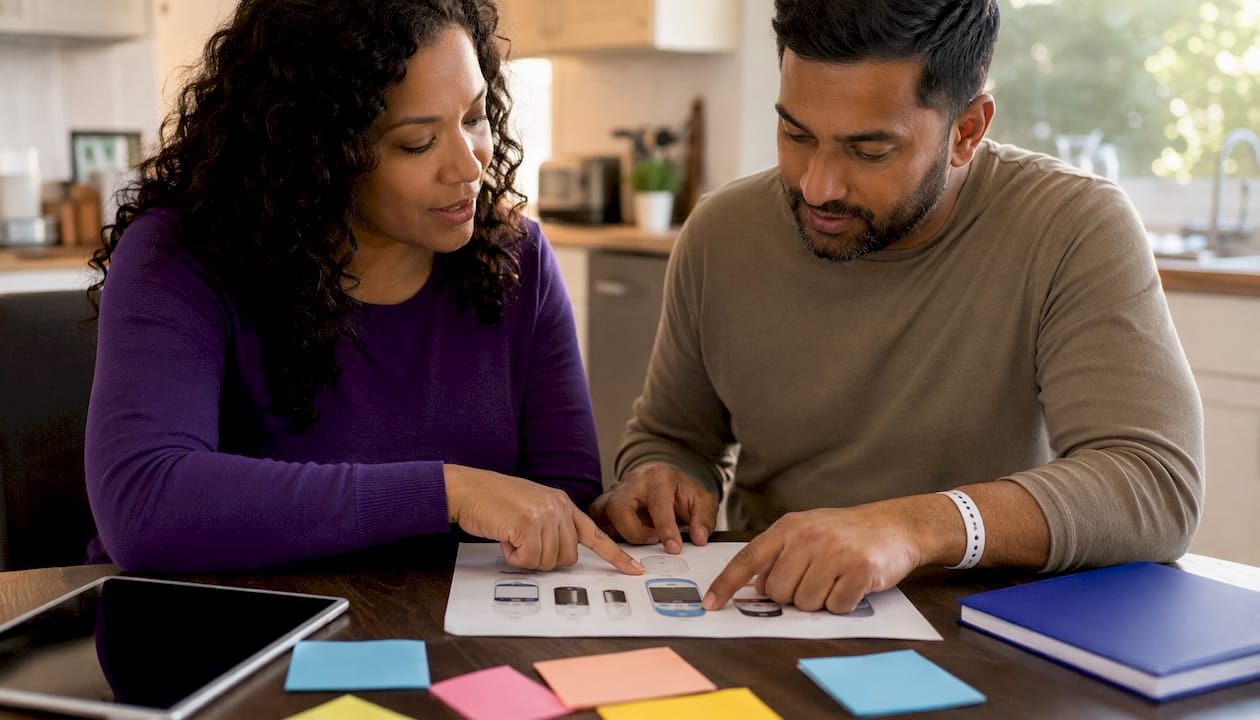
Dexcom G6 remains the most widely used CGM among adults with type 1 diabetes. In the T1D Exchange survey, 69% of type 1 respondents used the G6. It’s factory calibrated, integrates with most major insulin pumps, and has a strong track record for accuracy. Users of older Dexcom systems (G4/G5) reported significantly more concern about medication interference and inaccurate alarms than G6 users, suggesting meaningful generational improvement.
Dexcom G7 is the current flagship, with a smaller sensor profile and a 30-minute warm-up time versus the G6’s two-hour warm-up. Clinical data shows that over 25% of G7 sensors did not achieve a Mean Absolute Relative Difference (MARD) below 10%, which is the recognized threshold for safe insulin dosing. That figure is worth knowing before you upgrade.
FreeStyle Libre (including Libre 2 and Libre 3) is the dominant choice among type 2 patients, with 35% of type 2 respondents in the T1D Exchange survey using it. The Libre 3 delivers real-time readings and optional alarms, closing the gap with Dexcom. One analysis found low concordance between paired blood glucose meter readings and FreeStyle Libre readings at very low glucose values, which is a caution worth discussing with your doctor if hypoglycemia is a concern for you.
Omnipod is technically an insulin delivery system, not a CGM, but it’s deeply relevant here because CGM-pump compatibility directly drives switching decisions. Omnipod 5 integrates with the Dexcom G6 for automated insulin delivery, and some insurers restrict CGM access based on which pump a patient uses. If you’re on Omnipod, your CGM options may be narrower than you expect.
How FDA approvals and device updates affect your choices
Regulatory status shapes which CGM devices you can actually access, and FDA decisions in recent years have meaningfully expanded patient options.
The FDA has cleared several CGMs for non-adjunctive use, meaning you can make insulin dosing decisions based on the CGM reading alone without a confirmatory fingerstick. This clearance is significant because it changes how insurers and providers view the device’s clinical role. Devices without this clearance technically require fingerstick confirmation for dosing, which undermines one of the main reasons to use a CGM.
The FDA also approves CGMs for specific age groups and clinical populations. Some devices are cleared for pediatric use; others are approved only for adults. Approval for use with specific insulin pumps is a separate clearance, and not all CGM-pump pairings are FDA approved for automated insulin delivery. Before switching, confirm that your intended CGM-pump combination has the clearance your care team needs to support it.
Device recalls are another factor. When a CGM model is recalled or a firmware update changes alarm behavior, patients often switch rather than wait for a fix. Staying current with FDA MedWatch alerts for your device is a practical habit that most patients overlook.
How customer support and provider resources differ across CGM companies
The quality of support you get after you buy a CGM varies considerably, and it affects whether you stick with the device long-term. Lack of standardized education and support during CGM adoption is a documented contributor to device discontinuation. Patients who receive ongoing support, including follow-up visits, alarm setting reviews, and data downloads, are more likely to keep using their device successfully.
Manufacturer support programs differ in a few key ways. Some companies offer 24/7 phone support for sensor failures and technical issues. Others rely primarily on online resources and chat. Sensor replacement policies also vary. If a sensor fails before its wear period ends, some manufacturers replace it automatically; others require you to submit a claim.
On the provider side, a qualitative study found that administrative burdens tied to specific CGM systems, including insurance eligibility checks and electronic health record limitations, lead some providers to steer patients toward devices that are easier to prescribe, regardless of clinical fit. That’s a system-level problem that affects your choices even before you walk into a pharmacy.
When evaluating CGM options, ask your care team specifically about which devices their practice has the most experience supporting. A device your endocrinologist uses regularly and can troubleshoot confidently is often a better fit than the newest model with a steeper learning curve for everyone involved.
Key Takeaways
Accuracy concerns, physical discomfort, cost pressures, and insurer-mandated switching are the four primary reasons diabetics switch CGM devices, and addressing them requires both clinical guidance and practical planning.
| Point | Details |
|---|---|
| Accuracy drives trust | Inaccuracy is a leading reason for discontinuing CGMs; loss of trust in the device also commonly leads to discontinuation. |
| Alarm fatigue is real | 32.1% of patients who stopped CGM use listed too many alarms as the reason. |
| Cost is the top barrier | Cost of supplies is the most commonly cited reason for CGM discontinuation across multiple studies. |
| Insurer switching causes harm | 73% of patients in one study had disrupted care plans from insurer-forced device changes. |
| Unused supplies have cash value | Sealed, unexpired CGM supplies can be sold locally for same-day cash after a device switch. |