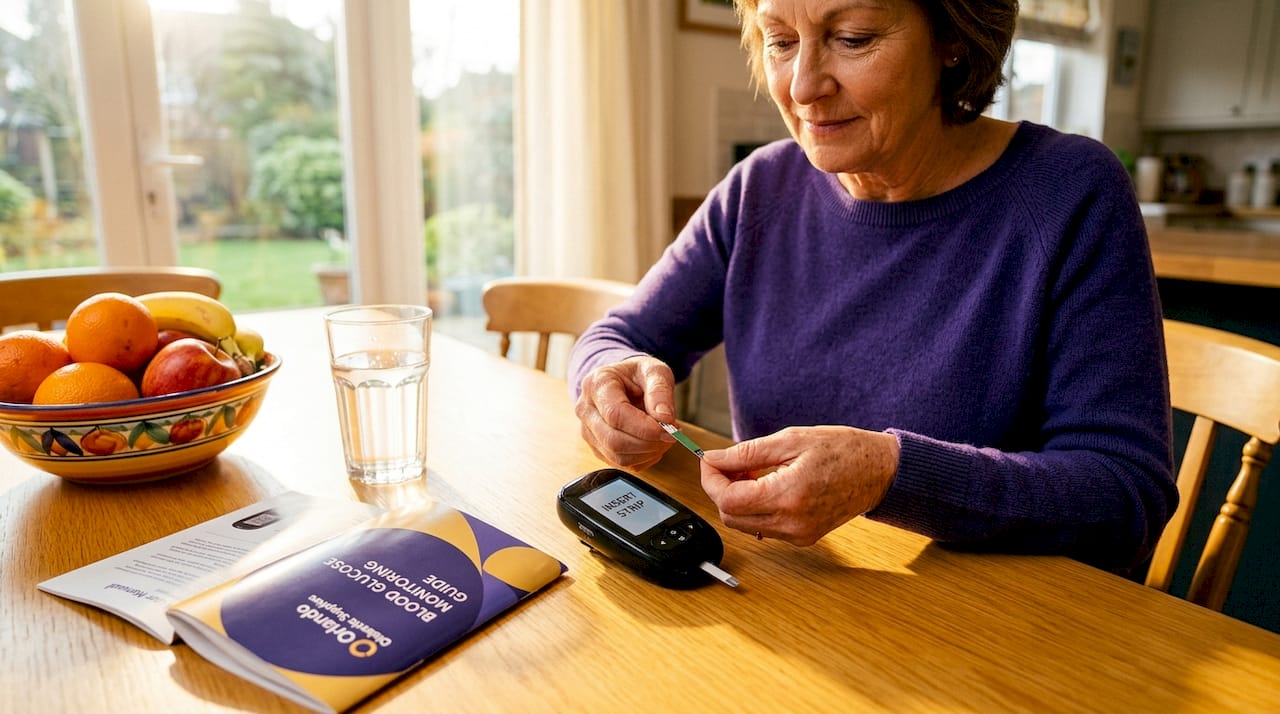
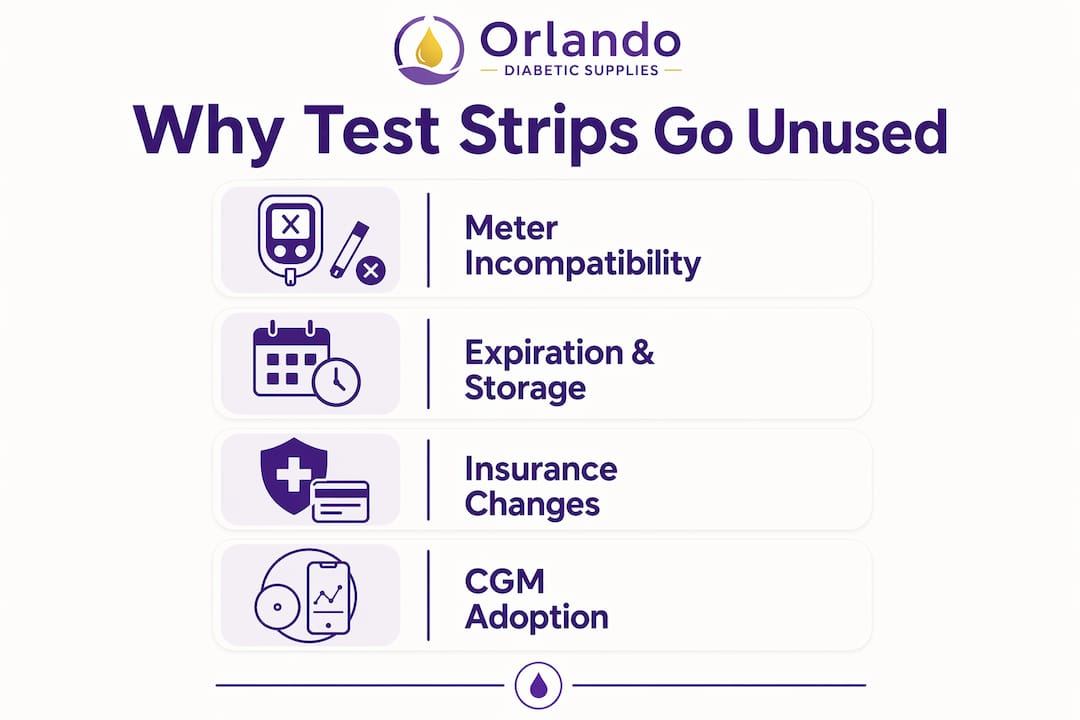
Test strips become unused after a switch primarily because of meter incompatibility, reagent expiration, insurance formulary changes, and the growing adoption of continuous glucose monitors (CGMs). These are the four core reasons why test strips become unused after switch events, and each one creates a different kind of waste problem for diabetics and caregivers. Understanding which factor is driving your surplus is the first step toward fixing it. Brands like Contour, Freestyle, and Accu-Chek all use proprietary strip chemistries, meaning a box of strips from one system is simply useless in another.
Why test strips become unused after switch: meter incompatibility
The most common cause of unused test strips is a direct technical mismatch between the strip and the meter. Meters require specific strip chemistry and format, and using the wrong strips produces error codes rather than glucose readings. This is a manufacturer design choice, not a user error. The strips physically fit the port but the meter’s software rejects them because the calibration codes do not match.
A real-world example makes this concrete. Original Bayer Contour meters only work with 7080G classic strips. If you upgrade to a Contour Next meter, those classic strips trigger an E-1 error and cannot register a glucose reading. The entire remaining supply becomes unusable overnight, with no warning from the pharmacy or prescriber.
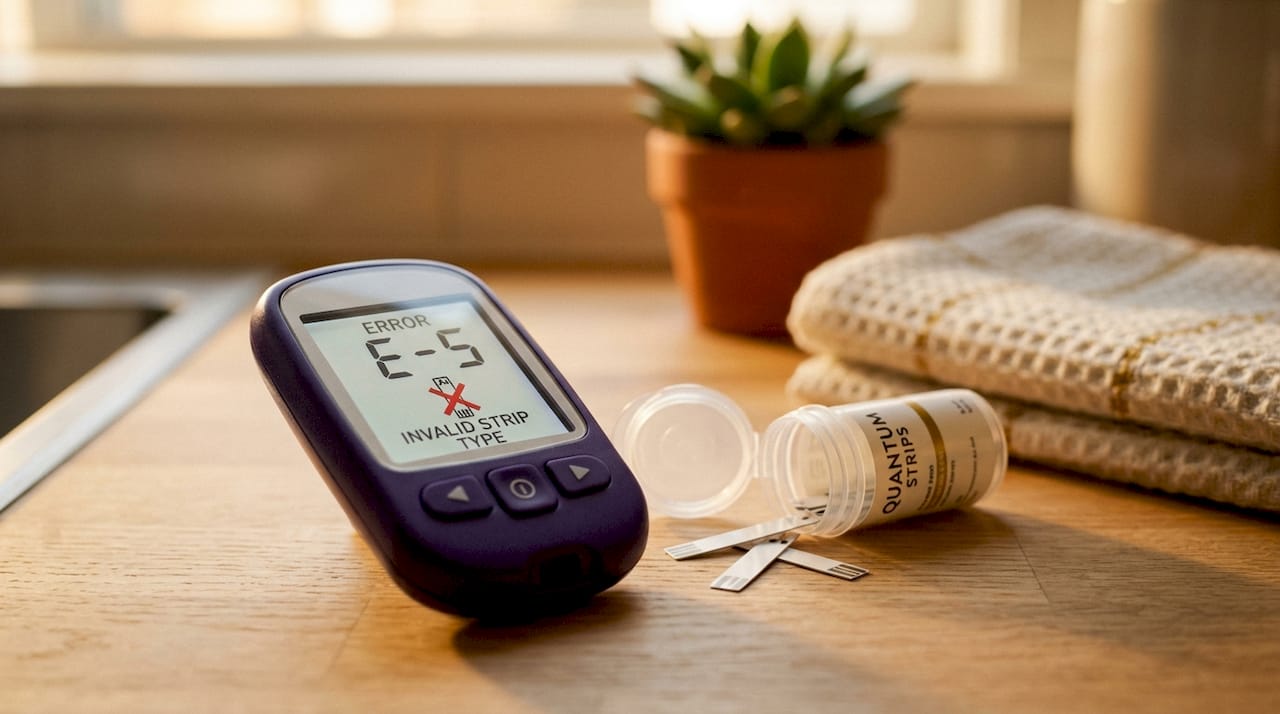
This system lock-in is not unique to Contour. Freestyle Libre sensors, Dexcom G6 and G7, and Accu-Chek meters each require their own matched consumables. Switching any one of these systems mid-supply cycle almost always leaves leftover strips behind.
Here is what to check before you switch meters:
- Confirm the exact strip model number required by the new meter, not just the brand name
- Check whether your current strips share any compatibility with the new device
- Ask your pharmacist to verify the strip-meter pairing before filling a new prescription
- Do not order a bulk supply of new strips until you have tested the new meter at home
Pro Tip: The E-1 error code on most meters signals a strip compatibility problem, not a broken meter. Before assuming your device is faulty, try a fresh strip from the correct compatible box.
How expiration and storage turn strips into waste
Expired or improperly stored strips are a major but often overlooked source of test strip waste. Enzymes and reagents inside strips degrade naturally over time, and heat, humidity, and exposure to air accelerate that breakdown well before the printed expiration date. A strip that looks fine can still produce a false reading, which is more dangerous than no reading at all.
Storage conditions are not optional. Storing strips outside manufacturer recommendations drastically reduces their effective life and measurement reliability. This matters most during a switch because strips often sit unused for weeks or months while the new supply arrives and gets established. That waiting period is exactly when degradation accelerates.
Follow these steps to protect strip accuracy and reduce waste:
- Store all strips in their original vial with the lid tightly closed after each use
- Keep strips at room temperature, away from bathrooms, car gloveboxes, and windowsills
- Check the expiration date on every new box before filling a prescription
- Note the open-vial date on the container when you first open a new box
- Discard any strips exposed to direct sunlight, high humidity, or temperatures above 86°F (30°C)
Manufacturer stability studies define both the printed expiration date and the open-vial limit, which is often 90 days regardless of the printed date. Many caregivers miss this second deadline entirely. A box opened in January and still in use in May may already be producing unreliable readings, even if the printed date shows December.
Oxidative stress on the strip’s enzyme layer is the chemical process behind this degradation. Oxidative stress in diabetes is already a concern for patients, and the same oxidative chemistry that affects the body also degrades the glucose oxidase enzyme in test strips when they are exposed to air and heat.
How insurance and formulary changes create strip surplus
Insurance formulary changes are a structural cause of unused test strips that most patients do not anticipate. When your plan updates its preferred brand list, your old strips may no longer be covered, and your new prescription automatically shifts to a different product. Formulary updates at Express Scripts and CVS Caremark in 2025 led to preference changes that created surplus from old strip brands across thousands of patients. The patient did nothing wrong. The plan simply changed.
Insurance formulary and plan design frequently creates surplus due to delayed supply switches or unintended coverage overlaps. You may receive a 90-day mail-order supply of your old strips just days before a formulary change takes effect. That is three months of strips your new meter cannot use. Understanding how insurance categories work for diabetic supplies helps you anticipate these transitions before they create waste.
| Situation | Result |
|---|---|
| Formulary switches preferred brand mid-cycle | Old strips become non-covered; new strips required |
| Mail-order delivers 90-day supply before switch | Surplus of incompatible strips accumulates |
| New plan requires a different meter brand | Entire existing strip inventory becomes unusable |
| Coverage limits create overstock | Strips expire before use due to quantity caps |
The practical fix is to contact your pharmacy benefits manager before any plan renewal date. Ask specifically whether your current meter and strip brand remain on the preferred formulary. If a change is coming, delay your next refill until the new strips are confirmed and in hand.
Does switching to a CGM leave test strips unused?
CGM adoption is a growing but underappreciated factor in test strip waste. CGM use changes glucose monitoring habits, reducing or eliminating the need for daily fingerstick testing. When a patient transitions from a traditional meter to a Dexcom G7 or Freestyle Libre 3, their existing test strip supply becomes largely redundant. The strips do not expire immediately, but they go unused long enough that expiration becomes the next problem.
Cost and access barriers mean this transition rarely happens cleanly. Many patients keep their meter as a backup while starting a CGM, which creates a period of overlapping supplies. During that overlap, test strips accumulate faster than they are used. Mail-order pharmacies often continue auto-shipping strips even after a CGM prescription is active, because the two prescriptions are managed separately.
Pro Tip: If you switch to a CGM like Dexcom G7 or Freestyle Libre 3, contact your pharmacy immediately to pause or reduce your test strip auto-refill. Mail-order auto-refills are one of the most common causes of unintentional strip stockpiling.
Balancing CGM and strip supplies requires a deliberate inventory check every 90 days. Count what you have, estimate what you actually use, and adjust your prescription quantities accordingly.
Practical tips to reduce unused test strip waste after switching
Managing your strip supply through a switch takes a few deliberate steps, but it prevents most of the waste described above.
- Verify strip-meter compatibility before switching. Call the meter manufacturer’s support line with your exact strip model number and confirm they work together.
- Check expiration dates on all current stock before ordering new strips. Discard anything past its open-vial limit.
- Coordinate with your insurance or pharmacy benefits manager at least 30 days before a plan renewal to confirm which strips remain covered.
- Order new strips only after confirming compatibility and supply arrival, not in advance of the switch.
- Avoid stockpiling two different strip chemistries at the same time. Mixed inventory leads to confusion and accelerated expiration waste.
- If you have sealed, unexpired surplus strips, consider selling them to a reputable local buyback service. Selling unused strips is legal when the boxes are sealed, unexpired, and obtained through a valid prescription.
- Before donating or selling leftover strips, verify expiry and open-vial status to avoid passing on strips that will produce unreliable readings.
These steps apply equally to caregivers managing supplies for a family member. Caregivers should synchronize new strip orders only after confirming the new meter compatibility and supply arrival to prevent duplicative unused inventory.
Key takeaways
Unused test strips after a switch are caused by four specific, preventable factors: meter incompatibility, reagent degradation, insurance formulary changes, and CGM adoption.
| Point | Details |
|---|---|
| Meter incompatibility is the top cause | Wrong strip chemistry triggers error codes; always confirm strip-meter pairing before switching. |
| Storage conditions determine strip life | Heat, humidity, and open vials degrade strips before expiration; store in original vials at room temperature. |
| Formulary changes create unplanned surplus | Insurance plan updates can make existing strips non-covered overnight; check formulary status 30 days before renewal. |
| CGM adoption leaves strips redundant | Switching to Dexcom G7 or Freestyle Libre 3 reduces fingerstick needs; pause auto-refills immediately. |
| Sealed surplus strips have real value | Unexpired, sealed strips can be legally sold to a local buyback service to recover some cost. |
What I have learned from working with diabetics managing supply transitions
Working with diabetics and caregivers in Orlando, I see the same pattern repeat constantly. Someone upgrades their meter, or their insurance switches them to a new brand, and they end up with two or three months of strips they cannot use. The strips are not defective. They are simply locked out by a system that was never designed with the patient’s inventory in mind.
The mistake I see most often is not the switch itself. It is the timing. People order a 90-day supply of new strips before they have confirmed the new meter is working correctly at home. Then the old strips expire while the new ones pile up. The fix is simple: use what you have, confirm the new system works, then refill.
Storage mistakes are the second most common issue. I have seen strips stored in bathroom medicine cabinets, car consoles, and kitchen windowsills. All of those locations expose strips to humidity and heat that degrade the reagent layer within weeks. The strip looks fine. The reading is not.
My strongest advice for caregivers is to treat a supply switch like a medication change. Slow down, confirm each step, and do not order in bulk until the new system is stable. And if you end up with sealed, unexpired surplus anyway, do not throw it away. There are honest, local options to recover value from it. Check your diabetic supply inventory regularly so you always know exactly what you have and when it expires.
— Liliana
Turn your unused test strips into same-day cash
If you have gone through a meter switch, an insurance change, or a CGM upgrade and ended up with sealed, unexpired test strips, you do not have to let them expire in a drawer.
Orlando Diabetic Supplies Buyback pays fair cash for sealed, unexpired diabetic supplies in Orlando and surrounding areas. That includes test strips from Freestyle, Contour, Accu-Chek, and other major brands, as well as Dexcom G6 and G7 sensors, Freestyle Libre, and Omnipod supplies. The process is fast, honest, and local. Visit our page on how to get cash for unused diabetic supplies to see exactly how it works and what we accept. Same-day payment, no hassle, and a straightforward process designed for people who just want a fair deal.
FAQ
Why do test strips become unusable after switching meters?
Test strips are chemically matched to specific meters; using a strip with the wrong meter produces error codes and no valid glucose reading. The strips are not broken, they are simply incompatible with the new device.
Can expired test strips still give accurate readings?
Expired strips can produce false or inconsistent glucose readings because the enzyme layer degrades over time. Readings from expired strips are unreliable and should not be used for treatment decisions.
How do insurance formulary changes cause unused strip surplus?
When a plan updates its preferred brand list, your current strips may become non-covered and a new brand gets prescribed. If you received a 90-day mail-order supply just before the change, that entire supply may be incompatible with your new meter.
Does switching to a CGM mean my test strips go to waste?
Switching to a CGM like Dexcom G7 or Freestyle Libre 3 significantly reduces fingerstick testing, which leaves existing strip supplies unused. Pausing your test strip auto-refill as soon as your CGM prescription is active prevents further accumulation.
Can I sell sealed, unused test strips I no longer need?
Yes. Sealed, unexpired test strips obtained through a valid prescription can be legally sold to a reputable buyback service. Always verify the expiration date and confirm the box is unopened before selling.
Recommended
- Best Place to Sell Test Strips Near Me – Orlando Diabetic Supplies
- Cash for Test Strips in Orlando: Sell Unused Diabetic Supplies for Same-Day Payment – Orlando Diabetic Supplies
- Cash for Test Strips Near Me in Orlando: Get Paid Instantly – Orlando Diabetic Supplies
- Selling Sealed Test Strips Legally: Your 2026 Guide