

A diabetic supply formulary is a curated list of diabetes management products that an insurance plan covers, designed to balance cost control with clinically appropriate care. If you use a Dexcom G7, Freestyle Libre, Omnipod, or standard test strips, your formulary determines what you pay and what your plan pays. Understanding what is diabetic supply formulary means understanding the rules that govern your access to supplies. Get this wrong and you face denied claims, surprise bills, or gaps in your diabetes care.
What is a diabetic supply formulary and why does it matter?
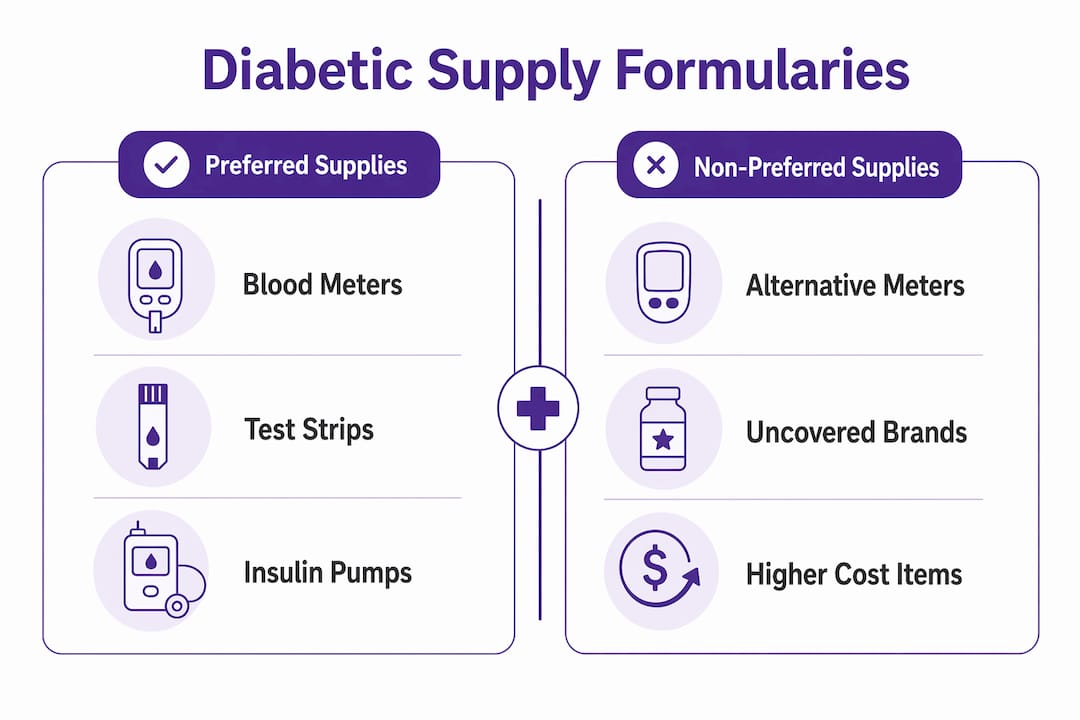
A diabetic supply formulary is a predefined list of preferred and covered diabetes products approved by your insurance plan. The industry term for this concept is a “preferred diabetic supply list,” and health plans use it to direct patients toward cost-effective, clinically approved products. Your formulary controls which blood glucose meters, test strips, continuous glucose monitors (CGMs), insulin pumps, and lancets your plan will pay for. Products not on the list may still be available, but you will pay significantly more out of pocket.
Formularies exist because insurers need a way to manage costs across thousands of patients. Health plans use tiered formulary structures that favor generics and preferred brands first. A preferred product typically costs you less at the pharmacy or through your durable medical equipment (DME) supplier. A non-preferred product may require prior authorization or a higher cost share before coverage kicks in.

The practical impact is real. If your plan’s formulary lists the Contour Next One meter as preferred but you order a different brand, your claim may be denied or processed at a higher cost tier. Knowing your formulary before you order is the single most effective way to avoid unexpected bills.
What items are typically on a diabetic supply formulary?
Common diabetic supplies covered by formularies include blood glucose meters, test strips, lancets, CGMs, insulin pumps, and insulin delivery devices. These products form the core diabetic supply list that most insurance plans organize into categories. The specific brands and models covered vary by plan, but the categories stay consistent across Medicare, Medicaid, and private insurance.
A standard diabetic products formulary covers:
- Blood glucose meters such as the Contour Plus Blue, OneTouch Verio, and FreeStyle Precision Neo
- Test strips matched to covered meters (strips and meters must be compatible)
- Lancets and lancing devices for daily blood sampling
- Continuous glucose monitors including Dexcom G6, Dexcom G7, and Freestyle Libre 2 and 3
- Insulin pumps such as Omnipod 5 and Medtronic MiniMed systems
- Insulin pen needles and syringes for manual injection
- Control solutions used to verify meter accuracy
- Sharps containers for safe disposal
Classification matters as much as the product itself. Insulin pumps and related supplies fall under Medicare Part B as Durable Medical Equipment, while insulin pens typically fall under Part D as prescription drugs. This split means two different deductibles, two different cost-sharing structures, and two different sets of approved suppliers. Many patients are surprised to learn their pump and their insulin are billed through entirely separate channels.
Pro Tip: Keep an updated diabetic supply list that notes each product’s coverage category. Write down whether each item is covered under DME or prescription drug benefits. This one step prevents billing confusion and helps you catch errors on your Explanation of Benefits.
How does insurance coverage work with diabetic supply formularies?
Insurance coverage for diabetic supplies follows different rules depending on which part of your plan applies. Medicare Part B covers diabetes supplies like monitors, test strips, and pumps as Durable Medical Equipment, with 20% coinsurance after your deductible. That means Medicare pays 80% and you pay 20%, but only when you use a plan-approved supplier and a formulary-approved product. Using an out-of-network supplier or a non-preferred product can shift the entire cost to you.
Here is how the coverage process typically works:
- Confirm your formulary. Check your plan’s preferred diabetic supply list at the start of each plan year. Plans update their formularies annually, and a product covered last year may be non-preferred this year.
- Use a plan-approved supplier. Medicare and most private plans require you to order from an approved DME supplier. Ordering from a non-approved source results in a denied claim.
- Get the right prescription. Your doctor must write a prescription that matches the formulary-approved product. If the preferred product changes, you need a new prescription.
- Understand quantity limits. Formularies set quantity limits such as up to 300 test strips and lancets per 3 months for insulin users. Exceeding these limits without prior authorization leads to claim denials.
- Request prior authorization when needed. Non-preferred products or quantities above the standard limit require prior authorization from your plan before your supplier ships the order.
Private insurance plans follow similar structures. Understanding private insurance supply categories helps you see how your specific plan organizes coverage tiers and what documentation you need to access preferred pricing.
Pro Tip: Call your insurance plan every january before reordering supplies. Ask specifically which products are on the preferred list for the new plan year. A five-minute call can save you hundreds of dollars in unexpected cost sharing.
Diabetes supply coverage also varies by state for Medicaid recipients. Some states cover CGMs like the Dexcom G7 under their preferred supply list, while others require prior authorization or restrict coverage to patients meeting specific clinical criteria.
What nuances and updates should patients know about formularies?
Formularies change frequently, and those changes directly affect what you pay and what you can order. Insurers update diabetic supply formularies in response to supply shortages, manufacturer pricing changes, and new product approvals. When a preferred product changes, patients must obtain a new prescription to continue receiving coverage at the preferred cost tier.
A real example: in 2026, some plans restored preferred status to Contour Plus Blue meters after supply shortages were resolved. Patients who had switched to a different meter during the shortage needed new prescriptions to return to the preferred product and lower cost share. This kind of shift happens more often than most patients realize.
The table below shows how preferred versus non-preferred status affects your out-of-pocket costs and access:
| Factor | Preferred product | Non-preferred product |
|---|---|---|
| Cost share | Lower copay or coinsurance | Higher copay or full cost in some cases |
| Prior authorization | Usually not required | Often required |
| Supplier access | Broad network of approved suppliers | May be limited or unavailable |
| Prescription requirement | Standard prescription | May need updated or specific prescription |
| Clinical exception | Not applicable | Available with documented medical necessity |
Common misconceptions also create problems. Many patients assume all CGM sensors are covered the same way. They are not. Coverage varies by product classification and brand, so a Dexcom G7 sensor may be covered under Part B as a DME item while a different CGM brand falls under Part D. The billing path changes your cost share entirely.
Key nuances to watch for include:
- CGM coverage rules differ between Medicare, Medicaid, and private plans
- Insulin types (rapid-acting, long-acting, biosimilars) each have separate formulary tiers
- Brand differences in diabetic supplies affect both formulary placement and clinical outcomes
- Clinical exceptions allow non-preferred products when medical necessity is documented by your provider
Formularies guide clinicians toward cost-effective choices while still permitting exceptions based on medical necessity. If your doctor believes a non-preferred product is clinically necessary for you, they can submit documentation to support a formulary exception request.
How can you manage diabetic supplies efficiently using formulary knowledge?
Knowing your formulary is only useful if you act on that knowledge. Maintaining an organized diabetic supply kit improves daily self-management and keeps you prepared for emergencies. The goal is to stay stocked without accumulating excess supplies that expire or go to waste.
Practical steps for efficient supply management:
- Audit your current stock. Check expiration dates on test strips, lancets, and CGM sensors every 90 days. Expired supplies give inaccurate readings and cannot be used safely.
- Track quantity limits. Know your plan’s approved quantities before reordering. Ordering above your limit without prior authorization delays shipment and creates billing problems.
- Keep a 90-day supply on hand. A 90-day supply of core consumables like test strips and lancets protects you from shipping delays and supply disruptions.
- Store supplies correctly. Heat, humidity, and direct sunlight degrade test strips and CGM sensors faster than most people expect. A cool, dry location extends their usable life.
- Review your supply list with your provider annually. Your clinical needs change. Your formulary changes. Aligning both at the same time prevents gaps in coverage.
- Plan for emergencies. Keep a small backup kit with a manual glucose meter, extra strips, and lancets even if you primarily use a CGM. Power outages and sensor failures happen.
Building a diabetic supply inventory that reflects your formulary rules reduces waste and keeps your costs predictable. When you know exactly what is covered and in what quantities, reordering becomes straightforward rather than stressful.
Key Takeaways
A diabetic supply formulary is the single most important document controlling your diabetes supply costs, and reviewing it annually is the most effective way to avoid denied claims and unexpected bills.
| Point | Details |
|---|---|
| Formulary definition | A preferred diabetic supply list that determines which products your plan covers and at what cost. |
| Coverage categories matter | Insulin pumps fall under Medicare Part B (DME) while insulin pens fall under Part D, creating separate cost-sharing rules. |
| Formularies change annually | Plans update preferred products each year; always confirm your formulary before reordering supplies. |
| Quantity limits are enforced | Most plans cap supplies like test strips at 300 per 3 months; exceeding limits without authorization causes claim denials. |
| Clinical exceptions exist | Non-preferred products can be covered with documented medical necessity submitted by your provider. |
My take on navigating formularies as part of daily life
The biggest mistake I see patients make is treating their formulary as a one-time thing they checked when they first got diagnosed. Formularies are living documents. They shift every plan year, sometimes mid-year when supply shortages hit. The Contour Plus Blue situation in 2026 is a perfect example. Patients who stayed on top of their plan’s updates avoided the scramble for new prescriptions. Patients who did not ended up paying more or waiting longer for supplies.
The second mistake is assuming your doctor knows your formulary. They do not. Your provider knows clinical best practices. Your insurer knows the preferred supply list. You are the one who has to connect those two worlds. Bring your formulary to your next appointment. Ask your provider to confirm that your current prescriptions match your plan’s preferred products. That conversation takes ten minutes and can prevent months of billing headaches.
The flexibility built into formularies through clinical exceptions is genuinely underused. If a non-preferred product works better for you clinically, your doctor can document that and request an exception. Plans approve these more often than patients expect. The process is not as difficult as it sounds, and the cost savings from getting a preferred tier exception are real.
Proactive communication with your healthcare team and your insurer is the most reliable way to keep your supply costs manageable. No app or shortcut replaces that direct conversation.
— Liliana
Unused supplies? Orlando Diabetic Supplies Buyback can help
If you have reviewed your formulary and realized you are sitting on supplies you no longer need, you have options. Formulary changes, meter switches, and CGM upgrades all create surplus stock that most people do not know what to do with.
Orlando Diabetic Supplies Buyback buys unused diabetic supplies in Orlando, Florida and surrounding areas. We pay same-day cash for sealed Dexcom G6 and G7 sensors, Freestyle Libre, Omnipod, and test strips. If a formulary update left you with supplies that no longer fit your plan, get cash for unused supplies instead of letting them expire in a drawer. The process is fast, local, and straightforward. Reach out to Orlando Diabetic Supplies Buyback today to get a fair quote.
FAQ
What is a diabetic supply formulary?
A diabetic supply formulary is a list of preferred diabetes products that an insurance plan covers, used to direct patients toward cost-effective, clinically approved supplies. Products on the list receive lower cost sharing, while non-preferred items may require prior authorization or higher out-of-pocket payments.
Does Medicare cover diabetic supplies through a formulary?
Medicare Part B covers diabetes supplies like blood glucose monitors, test strips, and insulin pumps as Durable Medical Equipment with 20% coinsurance after the deductible. Insulin pens and related drugs fall under Part D, which has a separate formulary and cost-sharing structure.
How often do diabetic supply formularies change?
Formularies change at least annually at the start of each plan year, and some plans update them mid-year in response to supply shortages or cost changes. Patients should confirm their preferred supply list every january and whenever they switch plans or receive a formulary change notice.
What happens if my supply is not on the formulary?
A non-formulary supply may be covered at a higher cost tier or denied entirely. Your provider can submit a clinical exception request with documentation of medical necessity, and plans approve these requests when the clinical case is clear.
Can I sell diabetic supplies I no longer need?
Unused, sealed diabetic supplies can often be sold to local buyback services. Orlando Diabetic Supplies Buyback purchases items like Dexcom G7 sensors, Freestyle Libre, Omnipod, and sealed test strips, offering same-day cash for supplies that no longer fit your formulary or treatment plan.