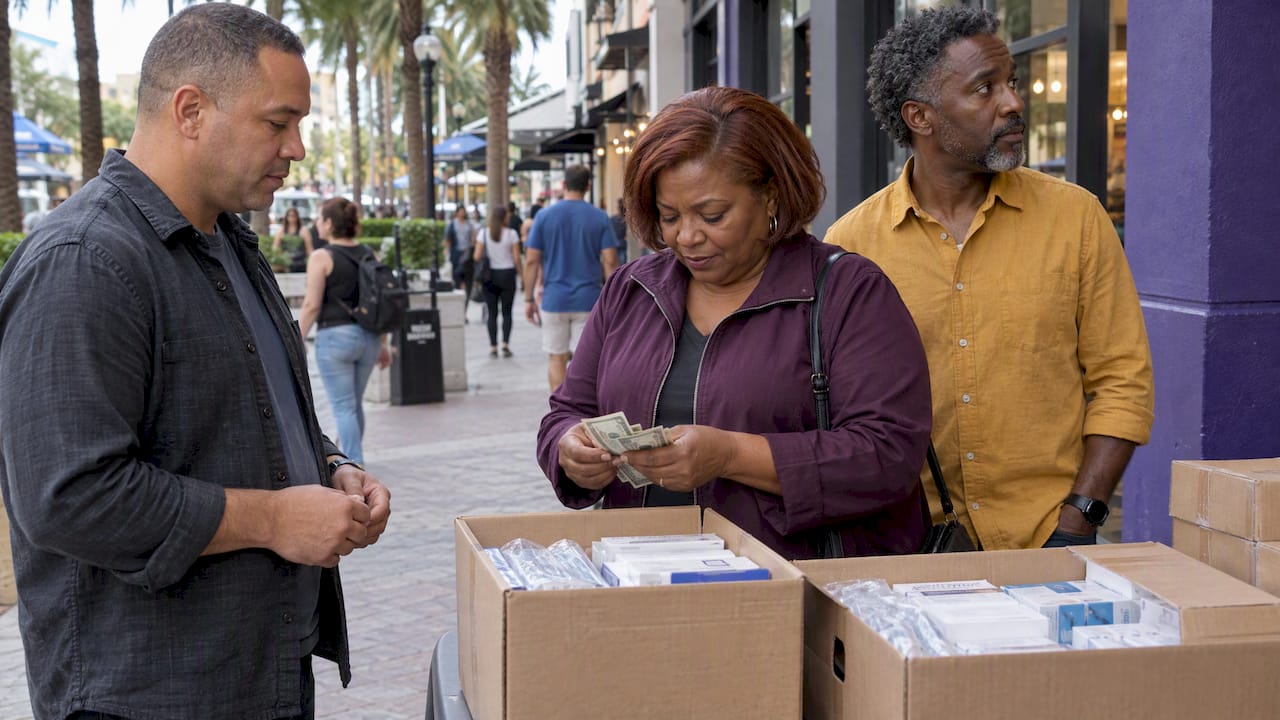
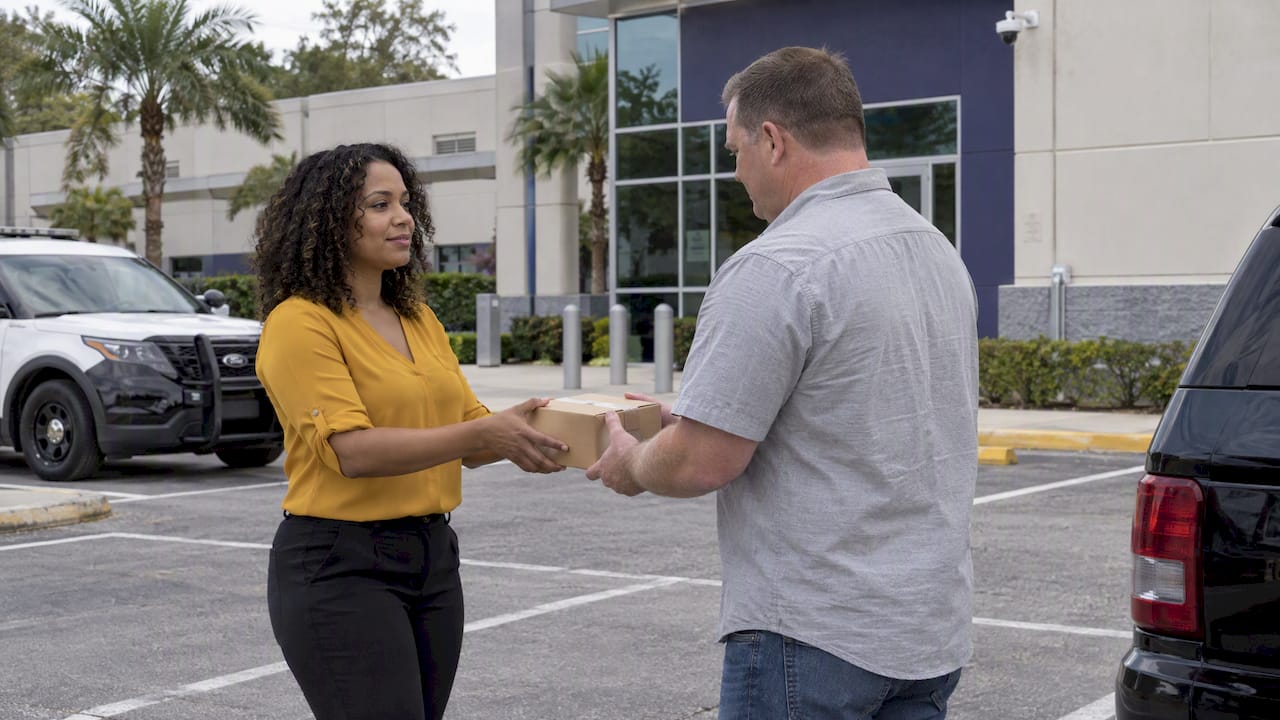
A police station exchange is a meetup between a buyer and a seller in a designated spot at a police department, usually a visitor parking lot or lobby. Many departments, including Orlando’s, point people there for online sales. The spot is public and video monitored. But officers do not watch your deal, verify the item or guarantee anything. It lowers your risk. It does not remove it.
If you have unused diabetic supplies to sell, that distinction matters. Below is what these zones are, what the rules say, how to prepare, and how it fits with selling sealed sensors, pods and test strips in the Orlando area.
TL;DR
- A police station exchange zone is a public, video-monitored spot, often a parking lot, where buyers and sellers meet for in-person deals.
- Orlando’s policy says its visitor lot is available for this, but the department makes no safety guarantee and does not send staff to witness deals.
- Hours differ by city. Orlando encourages exchanges from 8:00 a.m. to 5:00 p.m., Monday through Friday, excluding holidays.
- Police cannot check that supplies are real, sealed, unexpired or legal to sell. You still need to inspect and agree on terms yourself.
- Selling diabetic supplies locally for same-day cash lets you skip shipping and meet in a safe public place.
Table of Contents
- What a police station exchange zone is
- What a police station exchange does not do
- Hours, rules and what to expect
- Safety steps before you meet anyone
- Selling diabetic supplies: where a police lot helps and where it doesn’t
- Perspective: why the place matters less than the process
- What a local same-day buyer does differently
- Get same-day cash for unused supplies in Orlando
- A simple plan for any in-person sale
- FAQ
- Sources
What a police station exchange zone is
People buy and sell a lot through classifieds and social apps. Many of those deals end with a stranger asking for your address, or asking you to come to theirs. Police departments across the country responded with a simple idea: offer a place that is already public, well lit and covered by cameras.
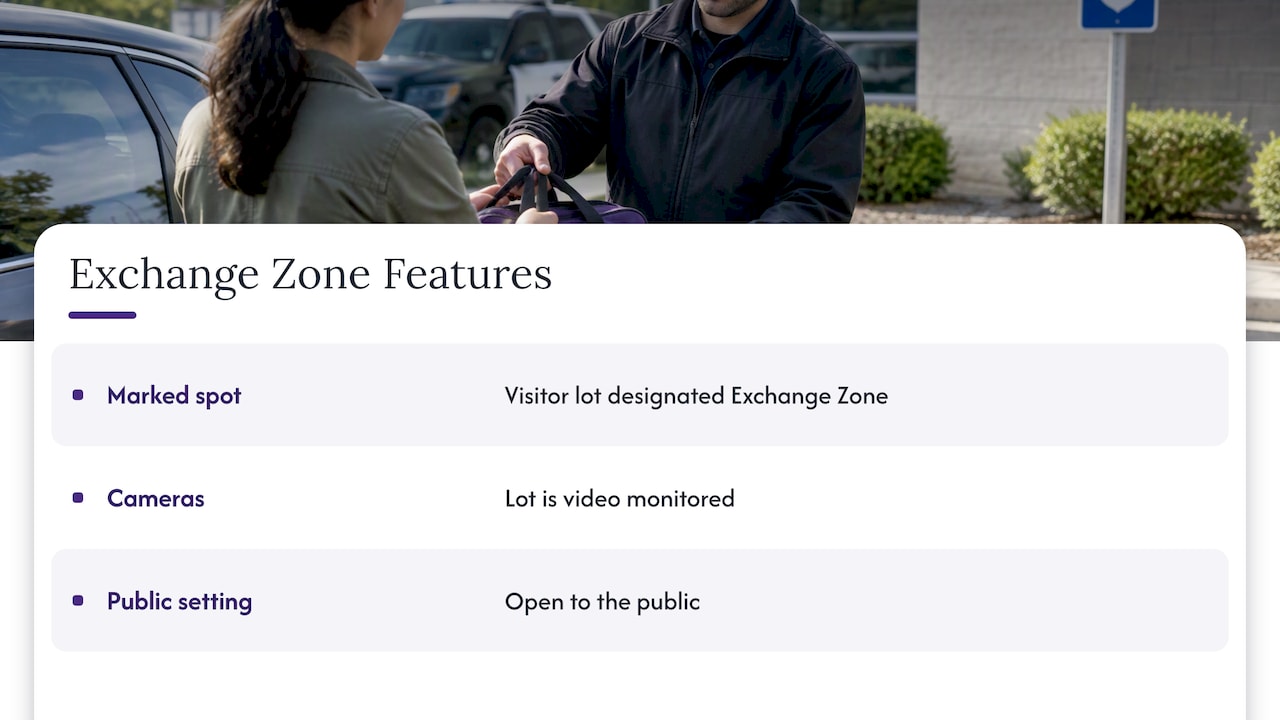
In Orlando, the police department’s written policy defines its visitor parking lot as an “Exchange Zone” for transfers between buyers and sellers in internet-based or other in-person transactions. The lot is video monitored and open to the public.
The name changes from city to city. You will see Safe Exchange Zone, Exchange Zone, Safe Trade Station and similar labels. The idea is the same everywhere: a marked spot, cameras, and a public setting that makes a bad actor think twice.
Is a police station a public place?
The parts of a station that are open to visitors, such as the visitor lot or lobby, are public in practice. That is why departments use them. Orlando’s policy describes the lot as open and available for public use as an exchange zone. Not every part of the building is open, though. Stay in the marked area or the lobby if your city uses one.
What a police station exchange does not do
This is the part people miss. A police station does not act as a middleman. Look at what departments say about their own programs:
- Orlando says it does not intend to provide police personnel to witness transactions in person. Its personnel are not authorized to validate a transaction’s legitimacy, the item for sale, the integrity of goods or the legality of a sale. It makes no safety or security guarantees.
- Charleston, SC says its employees cannot act as official witnesses, give legal advice or settle civil disputes, and that the city is not responsible for the value, authenticity or legitimacy of what is exchanged.
- Montgomery County, MD says its program aims to reduce and deter theft, robbery and fraud, but employees will not participate in transactions or act as witnesses.
- Fremont, CA says exchanges are first come, first served with no reservations, officers will not be present, and video is not always monitored in real time.
In plain terms: the cameras and the setting are the protection. Nobody at the desk will check a box of sensors for you or step in if you disagree on price.
Hours, rules and what to expect
Rules vary, so check your local department’s page before you go. A few examples show the range:
| City | What the department says |
|---|---|
| Orlando, FL | Encourages exchanges 8:00 a.m. to 5:00 p.m., Monday through Friday, excluding holidays, when the department is open |
| Fremont, CA | Video recorded 24 hours a day; recommends Monday through Friday, 7:30 a.m. to 5:30 p.m.; lobby closed on city-observed holidays |
| Charleston, SC | Marked parking spaces under 24-hour video surveillance; one location is not staffed around the clock |
| Lake Orion, MI | Designated lot available 24/7, free of charge, clearly marked, under 24-hour video; officers do not actively monitor every exchange |
| Montgomery County, MD | Lobbies and parking lots at six district stations; at the Second District, only the lobby is open to the public |
Sources for the table: the Orlando policy, Fremont Police, Charleston, Lake Orion Police and Montgomery County Police.
Some practical takeaways:
- Daytime is the safe default. Even where a lot is open all day, staffed hours are when someone inside can hear you if something goes wrong.
- Holidays count. Plan around city-observed holidays when lobbies close.
- No reservations. A zone may be busy. Have a backup time.
- Policies get updated. Check the department’s current page for hours and the exact location before you drive over.
Safety steps before you meet anyone
Police guidance on online sales is consistent. Here is the short version, based on advice from the DC Metropolitan Police, Montgomery County, Charleston and Kansas City.
- Pick the zone, and hold to it. Kansas City Police advises using a designated exchange zone and treats a buyer or seller’s refusal to meet there as a red flag.
- Refuse last-second location changes. The same advisory warns against accepting them.
- Keep messages on the platform. DC’s Metropolitan Police advises keeping communication on the marketplace, checking the other person’s profile and watching for new or generic accounts.
- Tell someone. Let a friend or family member know where you are and when. Montgomery County Police also suggests bringing a friend and not sharing personal or financial information.
- Go in daylight with your phone. Charleston Police advises daytime meetings and carrying a cell phone.
- Inspect before you pay or hand over. The DC guidance says to check the item first, avoid advance payment and risky methods such as wire transfers and gift cards, and leave if you feel uncomfortable.
- Call 911 if a crime happens. Montgomery County Police encourages exactly that.
Also note that Lake Orion Police prohibits firearms, narcotics and illegal items at its zone. Don’t bring anything you would not want an officer to see.
Selling diabetic supplies: where a police lot helps and where it doesn’t
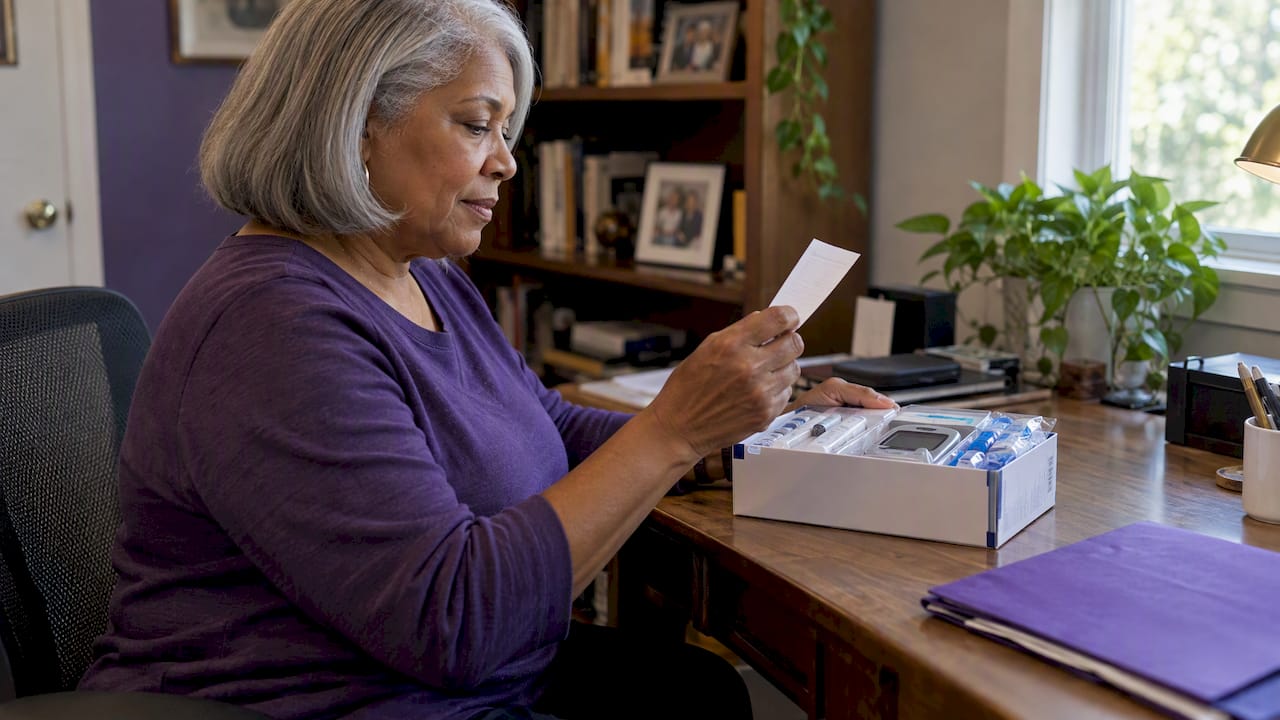
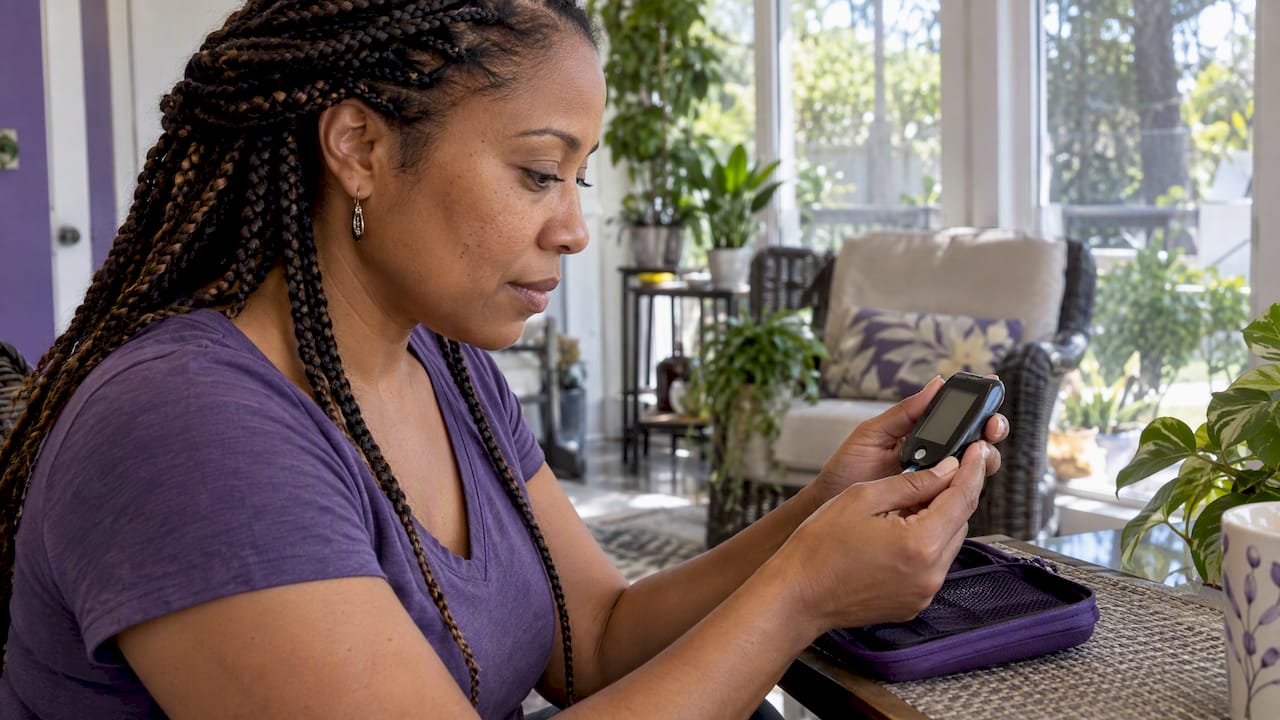
Unused diabetic supplies are a common thing to sell. Insurance sometimes sends more than you use. A prescription changes. You switch from one CGM to another, or move from test strips to a sensor. You end up with sealed boxes you will not open.
Selling to a stranger from a classified ad is where problems start. Typical issues:
- A buyer who offers a high price, then lowers it when you arrive.
- A request to ship first and be paid later.
- Payment apps with reversals or fake confirmations.
- A stranger who wants to come to your home.
A police lot fixes the last one and discourages some of the others. It cannot fix the rest. Nobody there will confirm that the boxes are sealed and unexpired, that the price is fair, or that the sale is legal. Orlando’s policy says so directly. Those checks are yours, or your buyer’s.
It also helps to know the legal side before you list anything. We cover it in our guide on selling sealed diabetic supplies in Florida and avoiding Medicaid fraud risk.
Prepare your supplies before the meetup
- Check that every box is sealed, undamaged and unexpired.
- Keep original packaging. Loose or repackaged items are hard to sell.
- Count what you have, by product and quantity.
- Know which brand and model it is. A Dexcom G6 and a G7 are not priced the same.
- Have your ID ready. Our page on what ID to bring explains what we ask for.
Our guide to common mistakes when selling diabetic supplies covers the errors that cost sellers money and time.
Watch for scams
Test strips are a favorite target for fraud, both counterfeit strips and buyers who never pay. Read how to avoid test strip scams before you agree to any sale. A safe location does not protect you from a bad price, a fake payment or a buyer who wastes your afternoon.
Perspective: why the place matters less than the process
We talk with people every week who have a drawer full of unopened sensors or pods and no idea what to do with them. Most are nervous about one thing: meeting a stranger and being paid fairly. That is a reasonable worry.
A police station lot is a good idea for a first-time online seller. It is public, it has cameras, and it makes many bad actors walk away. But we have seen that the setting is only part of it. The rest is who you are dealing with and how clearly the terms are set before anyone drives anywhere.
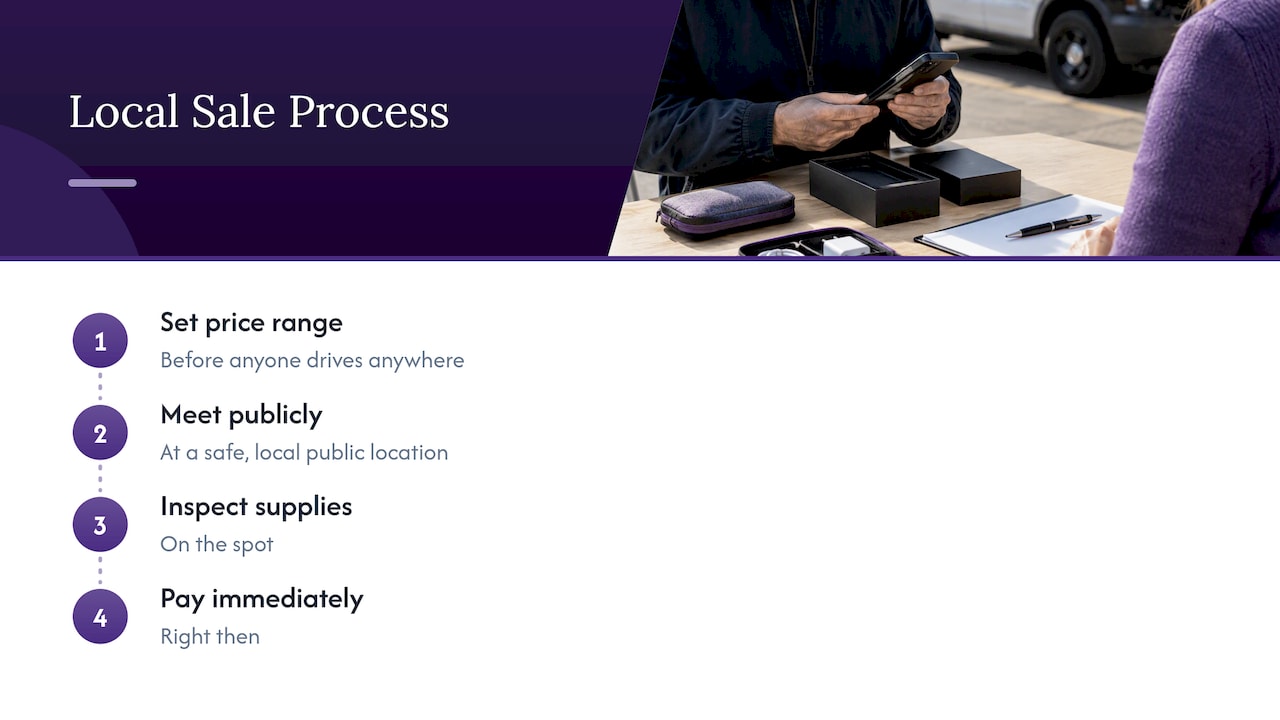
Our approach is simple. We state a price range up front, we meet in safe, local public locations, we inspect the supplies on the spot, and we pay right then. There is no shipping, no waiting for a check, and no surprise renegotiation by text. If supplies are not eligible, we tell you why.
If you do use a police exchange zone for any sale, treat it as one layer of protection. Keep messages on the platform, tell someone where you are going, and do not hand over supplies until you have the payment in hand. Those habits protect you wherever you meet.
— Liliana
What a local same-day buyer does differently
Selling to an online stranger and selling to a local buyer are not the same thing. The table compares the common routes by type.
| Classified or social app buyer | Mail-in buyer | Local same-day buyer | |
|---|---|---|---|
| Where you meet | You and the buyer decide, often a police lot | No meeting; you ship | Safe, local public location |
| When you are paid | At handoff, if the buyer is honest | After they receive and inspect | On the spot after inspection |
| Price certainty | Often negotiated at the meetup | Can change after inspection | Stated range before you meet |
| Main risk | Scams, no-shows, payment fraud | Lost packages, delays, reduced offers | Items must be sealed and eligible |
The delays of shipping are real. If you want to see what a faster route looks like, read our page on selling diabetic supplies in person without shipping, or our tips for meeting, inspecting and getting paid safely.
If you usually sell through social marketplaces, see how it works for Facebook sellers of diabetic supplies.
Get same-day cash for unused supplies in Orlando
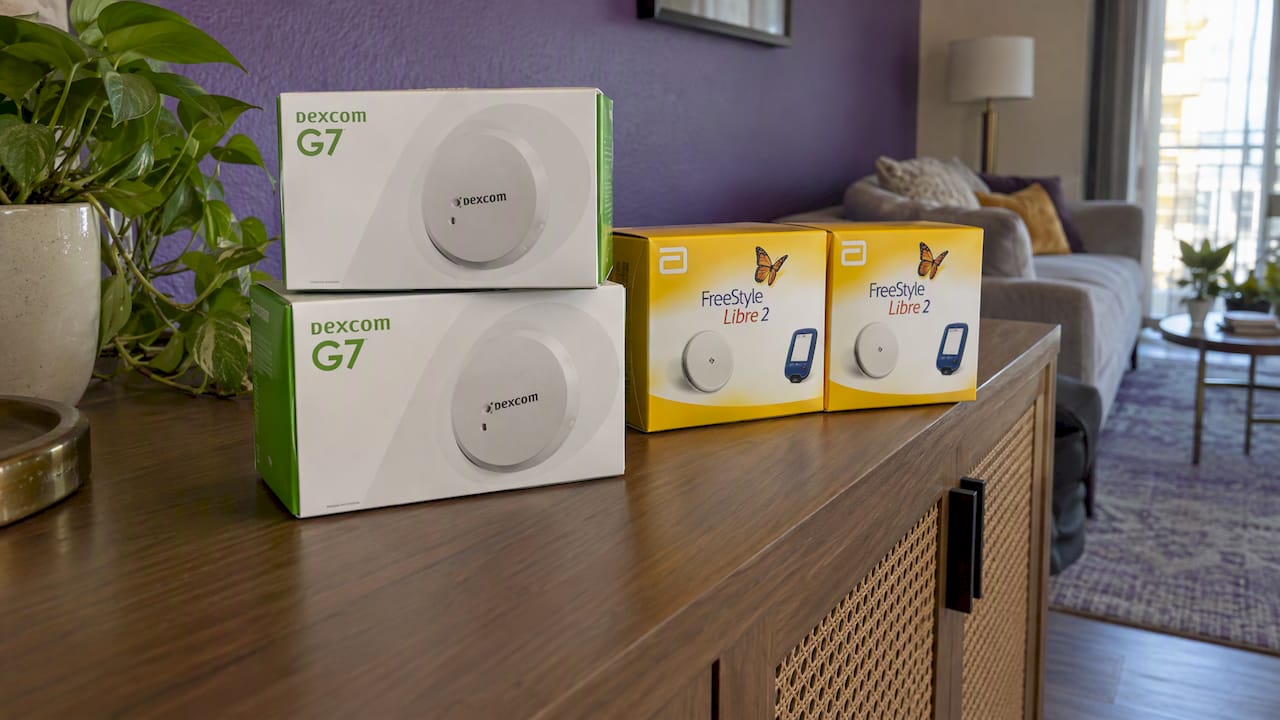
We buy unused, sealed, unexpired diabetic supplies in Orlando and the surrounding area. That includes Dexcom G6 and G7 sensors, FreeStyle Libre sensors, Omnipod pods and major brand test strips. We inspect in person and pay on the spot for eligible items.
Here is what our pages currently list:
- Dexcom G7: $70 to $90 per pack.
- FreeStyle Libre 2: $15 to $20 per sensor.
For other items, including test strips, CGMs, pumps and pods, start on our main page and tell us what you have. Our guide on how to get cash for unused diabetic supplies walks through each step.
A simple plan for any in-person sale
Whether you use a police exchange zone or another public place, this routine keeps things calm:
- Agree on price in writing before you go. Screenshots of the message thread help if the buyer changes the number later.
- Confirm what you are selling. Brand, model, quantity, expiration dates.
- Choose a daytime slot in a public place. If you pick a police lot, check the hours first.
- Bring a friend if you can. Or at least tell someone your timing.
- Inspect, then exchange. The buyer checks the supplies; you check the payment.
- Leave if something feels off. No sale is worth it.
- Keep a record. Note the date, what you sold and what you were paid.
If you switched devices and are wondering what to do with what is left, selling previous diabetes device supplies is a good place to start. And if you are stuck waiting on a slow sale, we have tips on avoiding delays when selling diabetes supplies.
FAQ
Is a police station considered a public place?
The visitor areas, such as the front lot or lobby, are open to the public, and that is why departments use them for exchanges. Orlando’s policy describes its visitor lot as open for public use. Restricted areas of the building are not public, so stay in the marked zone.
What does a safe exchange zone mean?
It means a designated, usually video-monitored spot where buyers and sellers can meet. It does not mean officers supervise or guarantee the deal. Orlando, Charleston and Montgomery County all say staff do not witness transactions or verify the goods.
Can police verify that my diabetic supplies are real or legal to sell?
No. Orlando says its personnel are not authorized to validate a transaction’s legitimacy, the item for sale, the integrity of goods or the legality of a sale. You or your buyer must check that boxes are sealed, unexpired and eligible.
What should I do if something goes wrong at an exchange?
Leave the situation if you feel unsafe, and call 911 if a crime occurs. Montgomery County Police encourages that. For a payment dispute, police generally cannot settle civil matters, so keep your messages and receipts.
Do I need to use a police station to sell my diabetic supplies?
No. It is one option for a public meetup. If you sell to a local buyer who meets in a safe public place, inspects on the spot and pays immediately, you also avoid shipping and delays. Whatever you choose, agree on terms before you meet.
Sources
- Orlando Police Department policy 2402.0, Commercial and Custody Exchange Zone
- Montgomery County Police Department, Online Exchange Zone
- Fremont Police Department, Exchange Zone
- City of Charleston, Safe Exchange Zones
- Lake Orion Police Department, Safe Exchange Zone
- Metropolitan Police Department (DC), Online Purchases
- Kansas City Police, caution after robberies from online sales