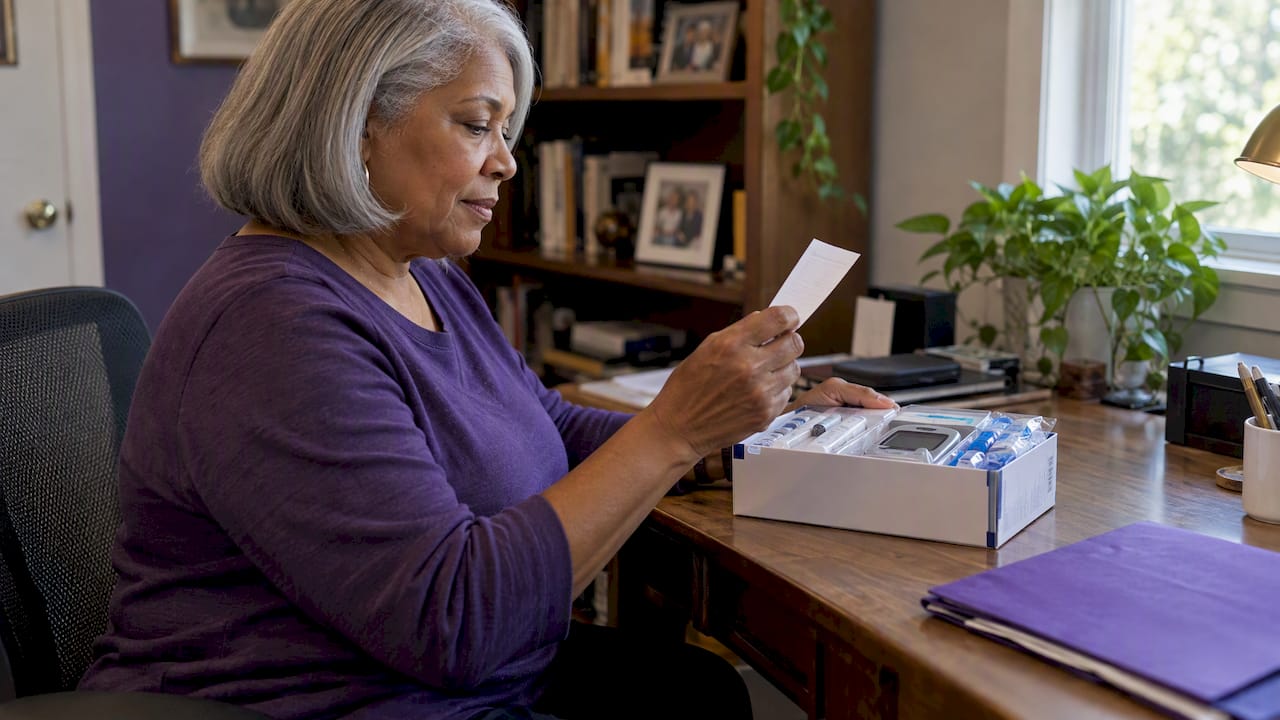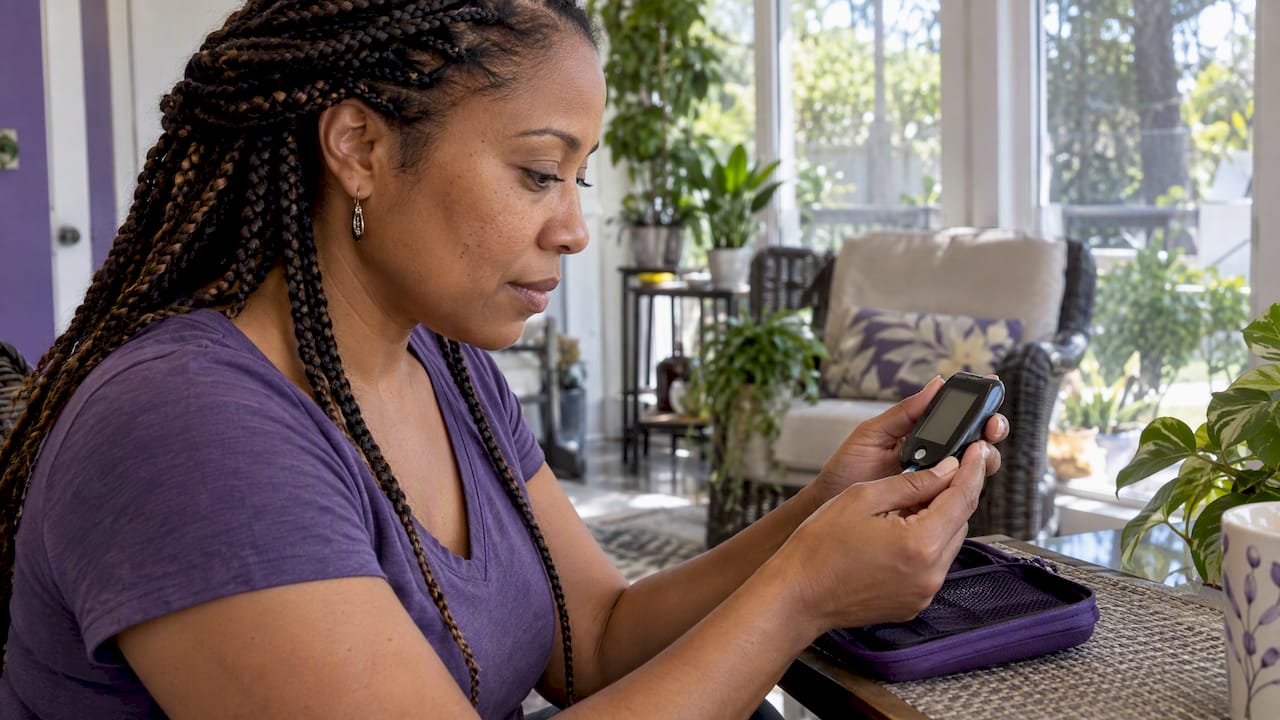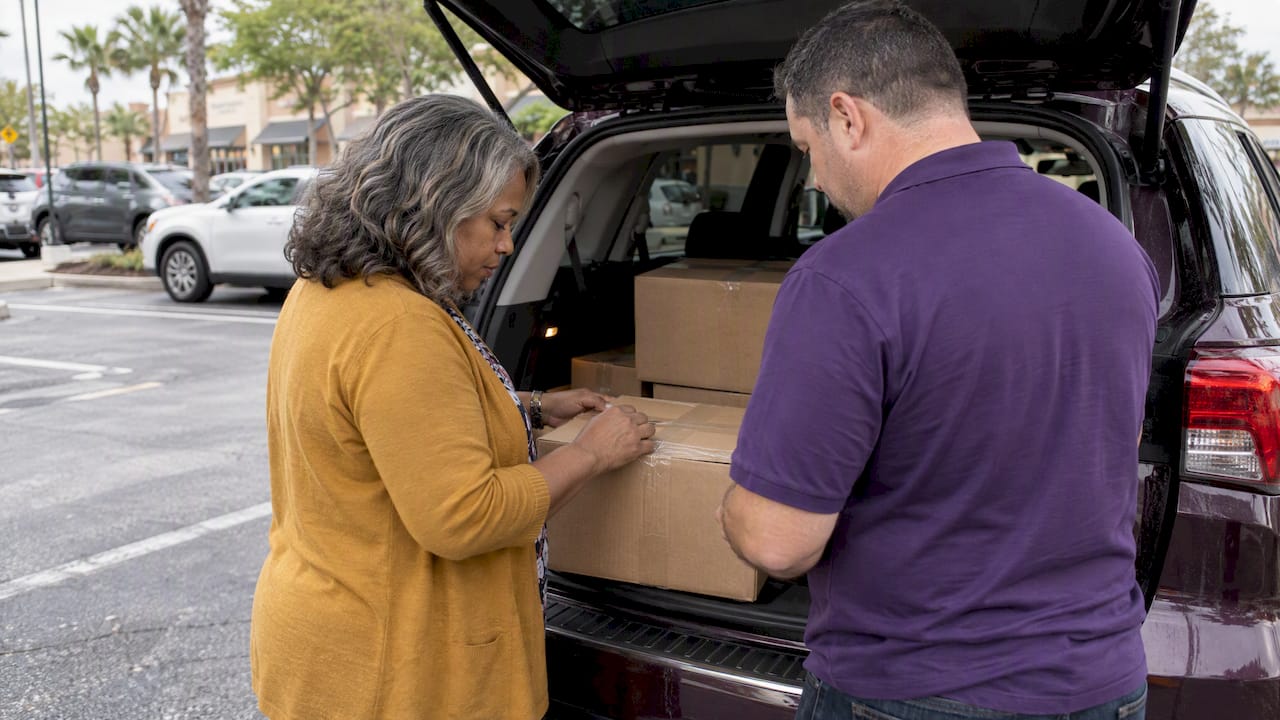
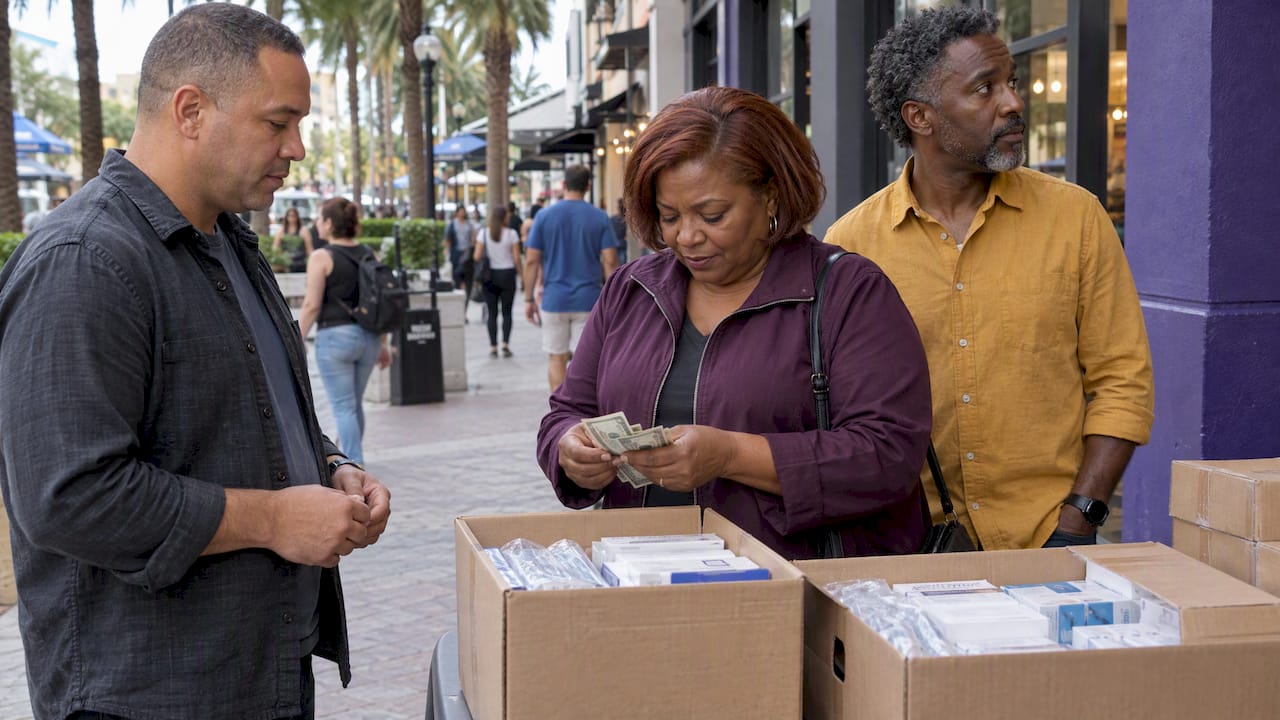
You can sell unused diabetic supplies in person safely if you follow a few habits: meet in a busy public place during the day, bring someone with you, accept only payment you can verify on the spot, and share as little personal information as possible. Selling face to face avoids shipping delays and lost packages. It also means you are standing next to a stranger with cash, so a little planning matters.
This guide walks through the whole process for sellers in Orlando and across Florida: before the meetup, at the meetup, how to handle payment, what to keep private, and how to prepare your supplies.
TL;DR
- Meet in a public, well-lit place with foot or vehicle traffic, during business hours. Do not meet at your home or after dark.
- Bring a friend or family member. If you must go alone, tell someone the exact address and share your phone location.
- Take cash you can inspect. Be wary of mobile payments, overpayment checks and anyone asking for a verification code.
- Keep your driver’s license, card numbers, insurance details and medical history to yourself. A buyer of sealed supplies does not need them.
- Check expiration dates and packaging before you leave home, so the sale is quick and nobody feels rushed.
Table of Contents
- Why safety matters when you sell supplies in person
- Before the meetup: check the buyer and set the terms
- Where and when to meet
- Bring a second person
- Payment: how to get paid without getting scammed
- What to keep private
- Prepare your supplies first
- Rules to know in Florida
- Our perspective on in-person sales
- Selling to us in Orlando
- A seller’s safety checklist
- FAQ
- Sources
Why safety matters when you sell supplies in person
Most people who sell extra sensors, pods or test strips are not looking for a side business. They changed devices, their prescription changed, or their insurance sent more than they can use. They want a simple, fair sale.
That is also why in-person sales are attractive to scammers and thieves. Sellers often have boxes worth real money, and the buyer is a stranger. The Houston Police Department’s guidance on safe transactions with strangers frames the risk as two problems at once: property crime and identity theft. Public daytime meetings, a companion and minimal disclosure reduce both.
None of this should scare you off. Face-to-face selling is common, and with a short checklist it is routine. The sections below turn that checklist into steps.
Before the meetup: check the buyer and set the terms
Most problems can be prevented before you leave the house. Spend ten minutes on these points.
Confirm who you are dealing with
Ask the buyer plain questions in writing, by text or message:
- What is the business or person’s name?
- Which items do they buy, and what do they pay for each?
- Where and when will you meet?
- How will they pay?
A real buyer answers without fuss. Be cautious if someone avoids a price, changes the terms, or pushes you to decide quickly. Guidance from OfferUp’s safety tips says to refuse last-minute requests to move the meeting to a different place. That is a good rule for any sale.
Get the price in writing
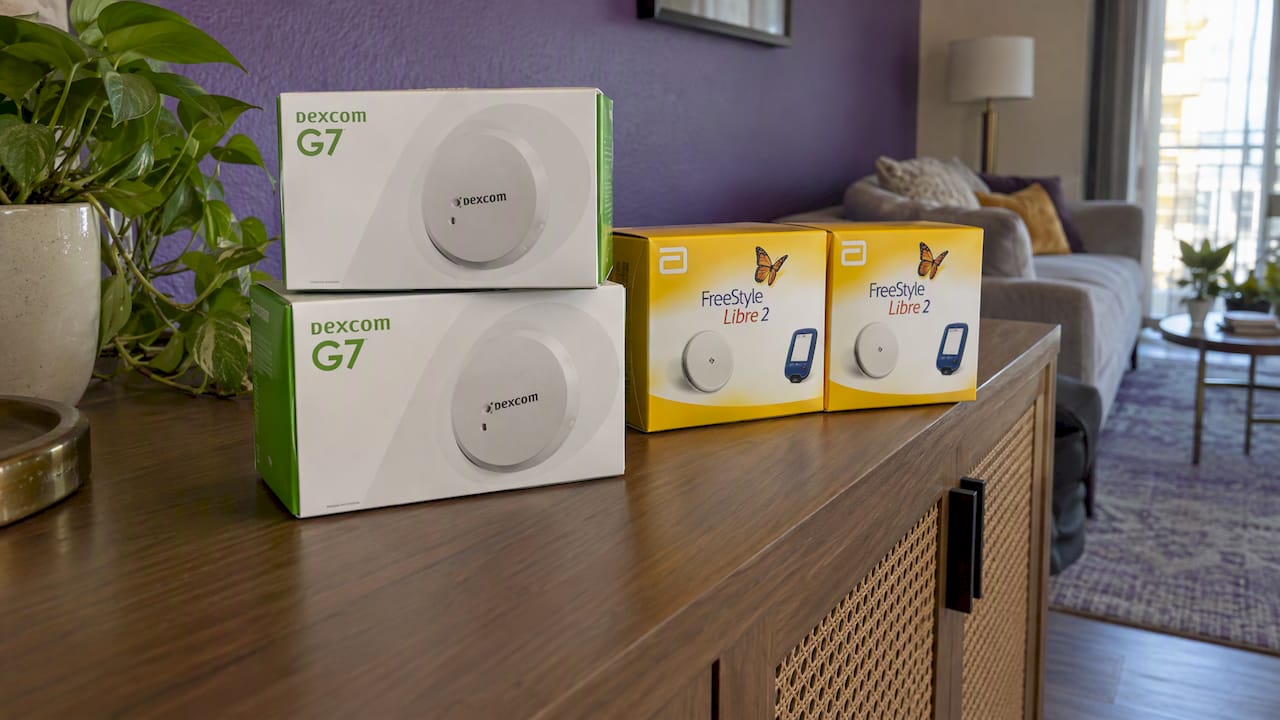
A published price range protects you from a lowball offer at the table. Our own pages list what we pay for common items: Dexcom G7 sensors at $70 to $90 per pack and FreeStyle Libre 2 sensors at $15 to $20 per sensor. Final amounts depend on the item’s condition and expiration, which we confirm at inspection. Whoever you sell to, ask for the same clarity before you go.
Tell someone your plan
Give a friend or relative the time, the place, the buyer’s name or number, and what you are selling. OfferUp advises sellers not to go alone. If you cannot avoid it, tell a trusted person the exact address and share your phone’s location before you leave.
Where and when to meet
The place you pick does most of the safety work for you.
| Good choice | Poor choice |
|---|---|
| Busy, well-lit public place with people around | Your home or the buyer’s home |
| Spot with security cameras | Empty parking lot or side street |
| Business hours or daylight | After dark |
| Location you chose | A new location suggested at the last minute |
The Houston police guidance recommends a public place with substantial pedestrian or vehicle traffic, preferably during business hours, and advises against meeting at home or at night. OfferUp adds a preference for places with cameras and says to avoid home meetings.
Some sellers choose a police station lobby or parking lot, since many departments invite online-sale exchanges there. Policies differ by department, so call the non-emergency number first. We cover this in more detail in our guide to safe places to sell in person.
A practical meetup checklist
- Arrive a few minutes early and park near the entrance.
- Keep your phone charged and in your hand or pocket.
- Note where the exits are.
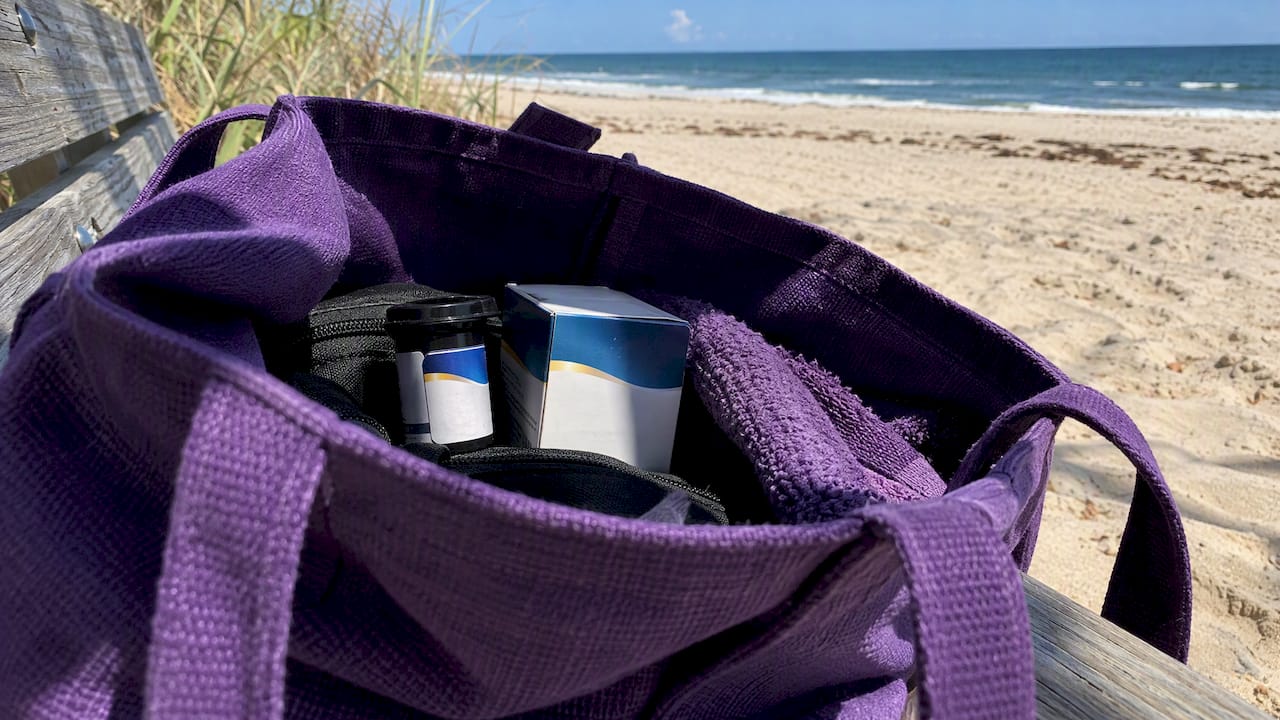
- Bring your supplies in a bag, not loose.
- Leave if anything feels wrong. You do not owe anyone an explanation.
If the buyer changes the plan, adds pressure, or shows up with a different person than expected, cancel. Another buyer will come along.
Bring a second person
A companion helps in three ways. They make a robbery less likely, they notice details you miss, and they take pressure off you in the moment. Police guidance reported by KOLO 8 News in Reno points out that having another person present means distractions and pressure do not stop you from inspecting payment carefully.
Your companion does not need to say anything. They stand nearby, watch the surroundings, and count the cash with you.
Payment: how to get paid without getting scammed
Cash in hand is the simplest payment to verify. Anything else deserves a pause.
Why cash is the safest choice
With cash you can count, inspect and leave. There is no pending status, no chargeback and no account to reach into. A same-day cash sale for sealed supplies is exactly what in-person selling is good for.
Mobile payments and checks
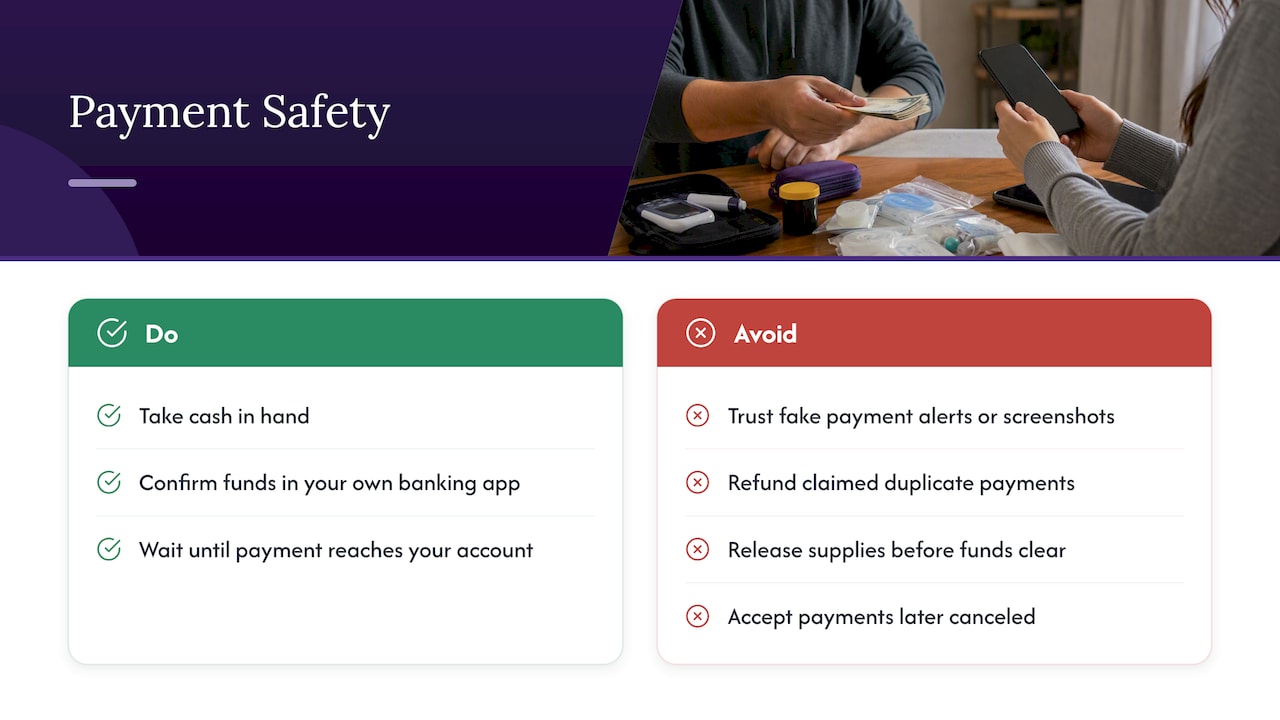
The Federal Trade Commission’s advice for people selling items online is direct: do not accept mobile payments from someone you do not know, never deposit a check for more than the selling price, and do not share verification codes with someone you do not know. The same page describes two common tricks: a fake payment notification meant to make you hand over the item, and a claim that the buyer paid twice, followed by a request that you refund one payment.
The Consumer Financial Protection Bureau explains that mobile payment services work best with people you know and trust, and that a scammer may appear to pay and then cancel the payment before it reaches your bank.
The rule that follows: do not hand over supplies until the money is in your hand or fully in your account, confirmed by your own banking app and not by a screenshot the buyer shows you.
Verification codes
If a buyer asks you to read back a code that arrives by text, stop. The FTC’s warning about the Google Voice verification code scam says a code sent to you that someone else asks for is a scam. A legitimate buyer of sealed diabetic supplies never needs one.
Checking cash
Counterfeit bills are uncommon, but a quick look takes seconds. Reno police recommend checking for a watermark and a proper feel, using a counterfeit-detection pen, and refusing checks. Count the money slowly, in the open, with your companion. If the buyer rushes you, that is the signal to slow down further.
What to keep private
A sale of sealed boxes needs a price, an item list and a handshake. It does not need your identity documents.
- Driver’s license and card numbers. The Houston police guidance warns to be careful sharing credit-card or driver’s-license details, which criminals can use for identity theft and other financial crimes.
- Insurance details. Your member ID and plan number are not part of a cash sale. Cross them off the labels or leave the original pharmacy bag at home if it shows personal information.
- Medical history. Nobody buying sealed supplies needs to know your diagnosis, your A1C or your doctor.
- Your home address. Use a public meeting place and never share where you live.
- Bank login or codes. Never, for any reason.
Pharmacy labels and outer boxes sometimes carry your name. Peel or cover them if you can do so without damaging the sealed product packaging, and ask the buyer what they need to see.
Prepare your supplies first
A well-prepared seller finishes faster and spends less time standing in public.
Check packaging and dates
Buyers of unused supplies generally need items that are sealed, unexpired and stored properly. Before you go:
- Look for the expiration date on every box. For help locating it on Dexcom boxes, see our page on finding the Dexcom expiration date.
- Check that seals are intact and boxes are not crushed, wet or sun-damaged.
- Group items by type and count them.
- Write down the lot or box counts so your list matches what you hand over.
Why storage matters
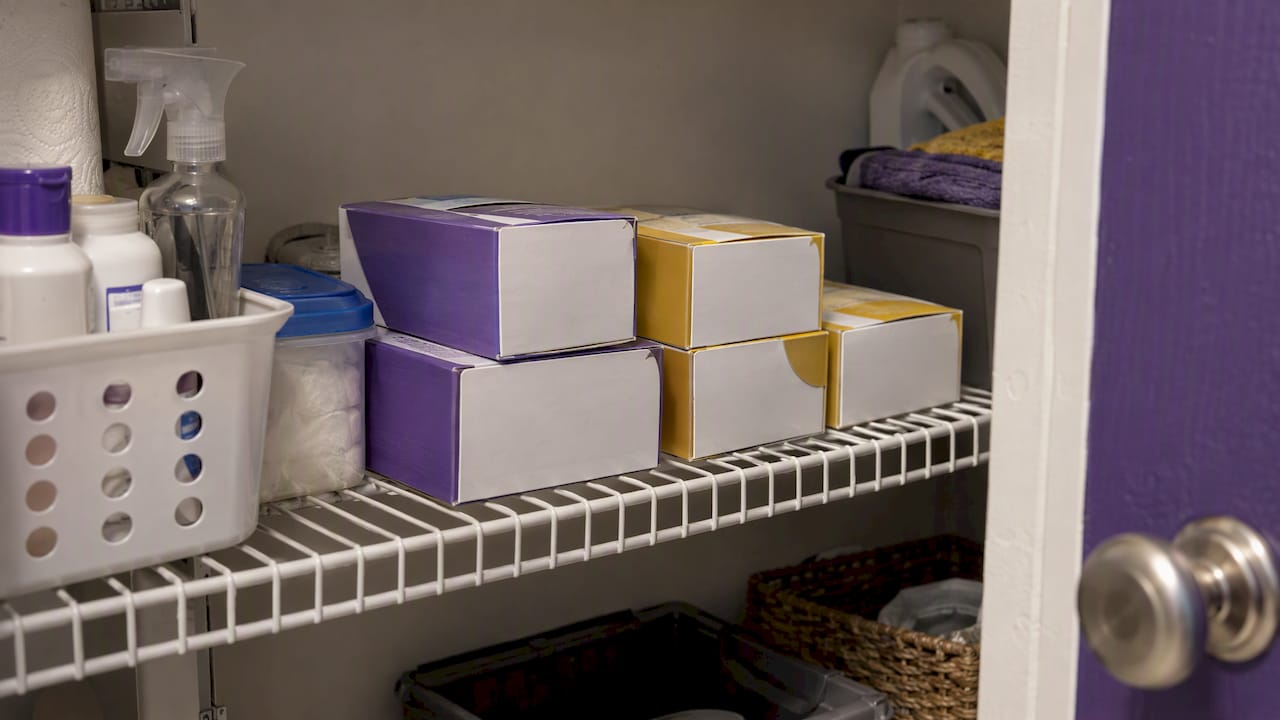
Heat, humidity and handling affect supplies. Reporting on the resale market in the Chicago Sun-Times notes that the FDA and the American Diabetes Association warn that resold test strips can be unsafe once they leave an accredited pharmacy supply chain, because they may be stored at the wrong temperature, tampered with or replaced by counterfeits. Improper handling can make strips malfunction even before their expiration date.
That is useful for you in two directions. Store your own surplus in a cool, dry place in its original packaging. And if you are ever on the buying side, be skeptical of strips from anonymous sellers. Our guides on common mistakes storing excess test strips and spotting counterfeit test strips go deeper.
Watch for recalls
Device recalls do happen. The FDA’s database lists a Class 1 recall of specific Insulet OmniPod lots because the pods had a higher failure rate that could prevent insulin delivery. If you are holding pods, check the lot number against current FDA recall notices, and do not use or pass along anything under an active recall.
Rules to know in Florida
Selling your own unused, sealed supplies is different from billing an insurer for items nobody needs. Federal regulators are actively going after the second kind. CMS announced it is barring 11 medical-supply companies tied to more than $3.4 billion in suspected fraudulent billing in 2025 and 2026, including billing for deceased beneficiaries and equipment people never requested or received.
The practical lesson for you: do not reorder supplies you do not need just to sell them, and do not let anyone talk you into doing so. Medicare rules in particular have their own limits, which we explain in Florida’s legal line for sealed Medicare supplies. If you have a question about your own coverage, call your insurer or your pharmacist before you sell.
Our perspective on in-person sales
We buy unused diabetic supplies in Orlando and nearby areas, and we built the service around meetups because we think shipping is the riskier option for most sellers. Packages get lost or delayed, and you wait for payment. In person, you see the buyer, the inspection happens in front of you, and payment is immediate for eligible items.
Our approach is simple. We meet in safe, local public places. We state our pricing policy plainly. We inspect items on the spot, and we pay on the spot when they qualify. If something does not qualify, for example because of the expiration date or damaged packaging, we tell you why and you walk away with your supplies.
Our advice to any seller, whether you sell to us or someone else: choose the buyer who answers your questions clearly, never makes you hurry, and is happy for you to bring a friend. If a buyer is uncomfortable with any of that, the sale is not worth making.
— Liliana
Selling to us in Orlando
If you have unused Dexcom G6 or G7 sensors, FreeStyle Libre sensors, Omnipod pods or sealed test strips, we can inspect them in person and pay the same day for eligible items. You choose a public meeting place, bring a companion if you like, and we confirm the price before anything changes hands.
Start on our Orlando diabetic supplies buyback page, or read how the process works so you know what to expect at the meetup.
A seller’s safety checklist
Print this or save it on your phone.
Before
- Price and payment method agreed in writing
- Public, daytime, camera-covered meeting place chosen
- A friend knows the time, place and buyer’s name
- Supplies counted, dates checked, seals intact
During
- Companion with you, phone charged
- Personal documents stay in your bag or at home
- Cash counted and checked before you hand over anything
- No codes, no overpayment checks, no payment apps from strangers
After
- Text your contact that you are finished
- Keep a record of the date, items and amount
- Report anything suspicious to local police and the platform where you found the buyer
FAQ
Is it legal to sell unused diabetic supplies in person?
Selling your own sealed, unexpired supplies is generally something people do, but rules differ by item and by who paid for it, especially with Medicare. Read our page on Medicare test strip resale in Florida, and ask your insurer or pharmacist if you are unsure about your own plan.
Where is the safest place to meet a buyer?
Choose a busy, well-lit public place with cameras, during business hours. Houston police and OfferUp both advise against meeting at home or at night. Some police departments also offer exchange areas, so call yours to ask.
What payment should I accept?
Cash you can count and check on the spot is the simplest option. The FTC advises against accepting mobile payments from people you do not know and against depositing checks for more than the sale price. Never share a verification code.
Should I bring someone with me?
Yes, whenever you can. A companion deters trouble and helps you stay calm while you inspect payment. If you must go alone, tell a trusted person the exact address and share your location.
Do I need to show ID or insurance information?
For a cash sale of sealed supplies, you should not need to hand over your license, card numbers or insurance details. Police guidance warns that sharing them can lead to identity theft, so ask why before you agree.
Sources
- Advice To Citizens Regarding Safe Transactions, Houston Police Department
- Safety tips for meeting up, OfferUp Support
- Selling stuff online? Here’s how to avoid a scam, FTC Consumer Advice
- Helpful tips for using mobile payment services, CFPB
- The Google Voice scam, FTC Consumer Advice
- How to spot fake money when selling at garage sales or online, KOLO 8 News
- Diabetic test strips: A booming unregulated market, Chicago Sun-Times
- Class 1 Device Recall Insulet OmniPod, FDA
- CMS Cracks Down on Massive $3.4 Billion Medical Equipment Supplier Fraud Scheme