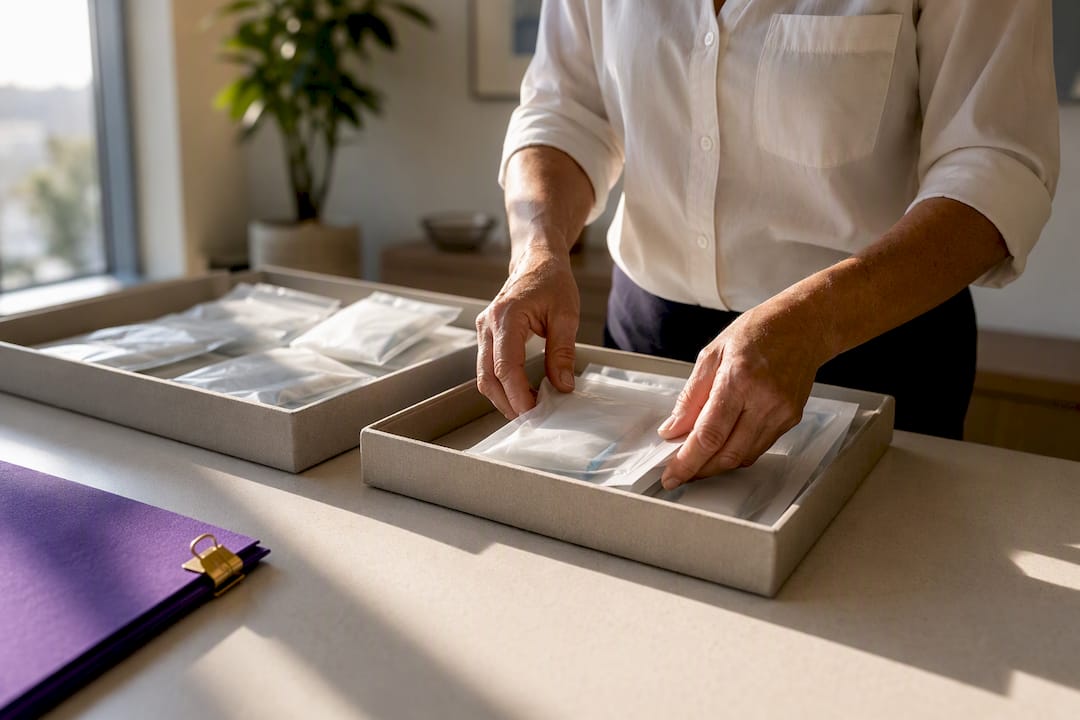

Overshipped diabetic supplies are defined as sealed, unused products delivered in quantities that exceed a patient’s actual consumption, typically driven by insurance auto-refill schedules, pharmacy dispensing practices, and device transitions. The most common types of overshipped diabetic supply items include blood glucose test strips, continuous glucose monitor (CGM) sensors, insulin pump pods, lancets, and emergency kits like glucagon. Understanding these diabetes supply categories is the first step toward reducing waste, cutting costs, and making smart decisions about what to do with your excess stock.
1. What are the most common types of overshipped diabetic supply items?
Overshipped diabetic supplies cluster into two main groups: low-cost testing consumables and high-cost technology accessories. Both categories pile up for different reasons, but the result is the same. You end up with sealed boxes you cannot use fast enough.
Here is a breakdown of the most frequently oversupplied categories:
- Blood glucose meters and test strips: Auto-refill programs send new boxes on a fixed schedule regardless of how many you have left. Unopened boxes of strips from brands like Accu-Chek, OneTouch, and Contour are among the most common overshipped medical items.
- Lancets and lancing devices: These are inexpensive and ordered in bulk. Most people use far fewer lancet changes than recommended, so boxes accumulate quickly.
- Insulin syringes and pens: CVS pharmacies over-dispensed insulin pens due to early refills and misreported days of supply from 2010 to 2020, resulting in a $38 million settlement. That case illustrates how pharmacy dispensing errors alone can create significant excess insulin pen inventory.
- Insulin pump pods and infusion sets: Omnipod pods and infusion sets for pumps like Medtronic and Tandem are ordered monthly. When patients switch systems or take pump breaks, sealed pods pile up fast.
- CGM sensors: Dexcom G6, Dexcom G7, and Freestyle Libre sensors arrive on fixed delivery cycles. If your wear time changes or you switch brands, CGM sensor oversupply builds up within a few months.
- Emergency supplies: Glucose tablets, ketone test strips, and glucagon kits like Baqsimi or Gvoke are often ordered as precautions and rarely used. They expire while sitting in a drawer.
- Pump accessories: Reservoirs, cartridges, and insertion devices are ordered in sets. When a pump is upgraded or recalled, the accessories for the old model become excess diabetic products with no use.
Pro Tip: Sort your supplies by category and expiration date right now. Knowing exactly what you have prevents duplicate orders and helps you decide what to sell, donate, or keep.
2. How insurance and auto-refills drive diabetic supply overshipping
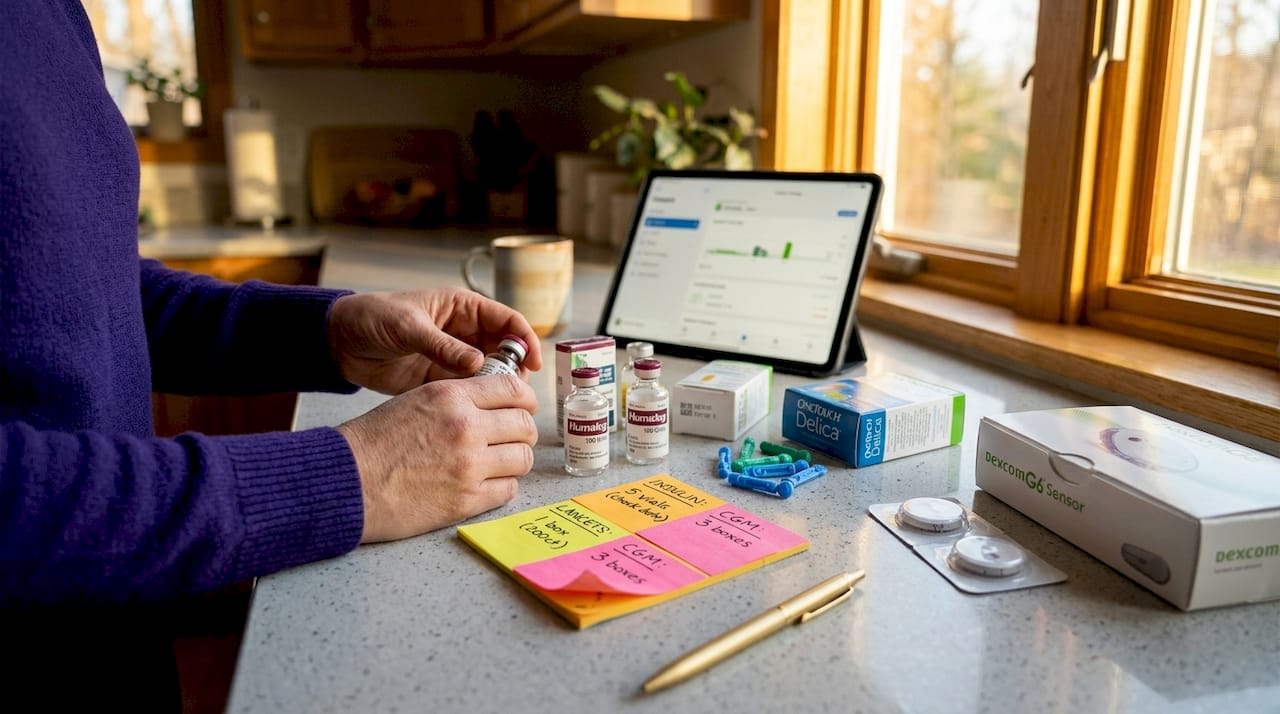
Insurance-driven auto-refill patterns cause oversupply more often than patient usage patterns do. This is the structural root of the problem, and most people do not realize it until their closet is full.
Here is how the cycle works:
- Fixed refill windows: Insurance plans like Medicare Part B and TRICARE authorize refills on a set schedule, often every 30 or 90 days. The schedule does not adjust for how many supplies you actually used.
- Early refill approvals: Pharmacies and mail-order suppliers often ship as early as allowed, sometimes before you have used your current supply. This creates a rolling surplus that compounds month over month.
- Coverage maximums encourage over-ordering: Some plans cover a maximum quantity per period. Patients order up to the limit to avoid losing the benefit, even when they do not need that much.
- Device or brand switches mid-cycle: When you switch from a Dexcom G6 to a Dexcom G7, or from Omnipod DASH to Omnipod 5, your old supplies become incompatible. New supplies arrive on schedule while the old ones sit unused.
- TRICARE coverage cycles: TRICARE covers CGMs and insulin pumps as durable medical equipment with prior authorization, and repeat refills under these programs contribute directly to overshipped inventory cycles.
“The mismatch between fixed delivery intervals and actual usage is the single biggest driver of diabetic supply inventory issues. Patients are not over-ordering by choice. The system is built that way.”
Understanding why mail order creates surplus is key to breaking the cycle. You can request delivery holds, adjust refill quantities, or contact your insurer to pause shipments when your supply is adequate.
3. What supply categories are most affected by the 2026 Omnipod recall?
In May 2026, Insulet issued a voluntary correction affecting approximately 7 million Omnipod pods globally across the Omnipod 5, DASH, and Eros systems. The defect causes insulin under-delivery, which is a serious safety risk. Affected pods must be identified by lot number, discontinued, and returned for replacement at no cost.
This recall adds a new layer to diabetic supply inventory issues. If you have a stockpile of Omnipod pods, some of those units may now be unusable. Checking lot numbers before assuming your excess pods are sellable or donatable is not optional. It is a safety requirement.
| Supply category | Recall impact | Action required |
|---|---|---|
| Omnipod 5 pods | High: affected lots must be removed | Verify lot number, return affected pods |
| Omnipod DASH pods | High: same manufacturing defect | Check Insulet’s lot lookup tool immediately |
| Omnipod Eros pods | High: included in correction scope | Do not use until lot is verified |
| Infusion sets (other brands) | Low: not part of this correction | Standard expiration checks apply |
| CGM sensors (Dexcom, Libre) | None: separate supply category | Manage via expiration date only |
Device corrections like this one turn what looked like sellable excess inventory into unusable stock overnight. This is why lot verification is now a required step in any supply management process.
Pro Tip: Before selling or donating any Omnipod pods, visit Insulet’s official website and use their lot number lookup tool. Selling recalled pods, even unknowingly, creates liability and safety risks.
4. Practical steps to manage your excess diabetic supplies
Managing overshipped supplies does not require a complicated system. A few organized steps protect your health, your wallet, and your options.
- Inventory everything first. Pull out all your supplies and group them by category: test strips, CGM sensors, pump pods, lancets, and emergency kits. Note the expiration date on each box. The ADA Consumer Guide identifies categorization as the foundation of preventing unnecessary oversupply.
- Check for recalls before anything else. Any Omnipod pods in your stockpile need lot verification before you use, sell, or donate them. Do not skip this step.
- Store supplies correctly. Heat and humidity degrade test strips, CGM sensors, and insulin faster than expiration dates suggest. Keep supplies in a cool, dry location away from direct sunlight. Improper storage conditions can compromise efficacy even in sealed, unexpired products.
- Donate sealed, unexpired supplies. Organizations like Mutual Aid Diabetes and local free clinics accept sealed diabetic supplies. Check their specific acceptance policies, as not all accept CGM sensors or pump pods.
- Sell through legitimate channels. Selling sealed, unexpired diabetic supplies is legal in most states when done through proper channels. Review what qualifies for payment in Florida before listing anything.
- Pause or adjust your refill schedule. Contact your pharmacy or mail-order supplier and request a delivery hold. Most insurance plans allow this without penalty.
Pro Tip: Compare your donation versus selling options before committing. Some supply types, like Dexcom G7 sensors, hold strong resale value. Others, like lancets, are better donated since the cash return is minimal.
5. Comparing overshipped diabetic supply types by cost, shelf life, and usability
Not all excess diabetic products are equal. Some hold resale value well. Others expire quickly or become obsolete when technology changes. This comparison helps you prioritize which supplies to act on first.
| Supply type | Typical shelf life | Cost per unit | Resale value | Donation suitability |
|---|---|---|---|---|
| Test strips (Accu-Chek, OneTouch) | 12 to 18 months | Low ($0.25 to $1.00) | Moderate | High |
| Lancets | 12 to 24 months | Very low | Low | High |
| CGM sensors (Dexcom G7, Libre 3) | 12 months | High ($30 to $90) | High | Moderate |
| Omnipod pods (unaffected lots) | 18 months | High ($20 to $35) | High | Moderate |
| Glucagon kits (Baqsimi, Gvoke) | 12 to 24 months | Very high ($150+) | High | Low (check policies) |
| Insulin syringes and pens | 12 to 24 months | Low to moderate | Low | Moderate |
Pump consumables require compatibility verification when switching devices. Unused supplies may become obsolete even if they are sealed and unexpired. This is especially true for Tandem cartridges and Medtronic reservoirs, which are not interchangeable across pump generations.
CGM sensors carry the highest resale value because demand is consistent and unit costs are high. Test strips are the most common overshipped item but return less per box. Prioritize selling CGM sensors and pump pods first, then test strips. Donate lancets and syringes rather than spending time trying to sell them.
Key takeaways
Managing overshipped diabetic supplies requires identifying the right categories, verifying recall status, and choosing the best redistribution path based on shelf life and resale value.
| Point | Details |
|---|---|
| Most common overshipped items | Test strips, CGM sensors, Omnipod pods, lancets, and emergency kits top the list. |
| Insurance drives oversupply | Auto-refill schedules and coverage maximums create excess regardless of actual usage. |
| 2026 Omnipod recall matters | Verify all Omnipod pod lot numbers before using, selling, or donating any units. |
| Prioritize by value | Sell CGM sensors and pump pods first; donate lancets and syringes for better returns. |
| Storage affects usability | Improper storage degrades sealed supplies before expiration dates are reached. |
What I have learned from years of watching supplies pile up
When I first started working with people managing diabetic supply inventory issues, the most surprising thing was not how much excess stock people had. It was how little they knew about why it kept happening. Most assumed they had made ordering mistakes. The reality is that the system is designed to deliver at maximum coverage intervals, not at actual usage rates.
The 2026 Omnipod correction changed how I think about overshipped pump supplies entirely. Before that recall, a sealed box of pods was a straightforward asset. Now, lot verification is a non-negotiable first step. I have seen people try to sell or donate pods without checking, and that creates real risk for both the seller and the recipient. Staying current on brand differences and corrections is not optional anymore.
The most effective thing you can do right now is spend 20 minutes categorizing what you have. Separate by type, check expiration dates, and flag anything that needs a recall check. That single step changes a stressful closet full of supplies into a manageable inventory with clear options. You are not stuck with excess supplies. You have choices.
— Liliana
Turn your unused supplies into cash with Orlando Diabetic Supplies Buyback
If you have sealed, unexpired diabetic supplies sitting unused, Orlando Diabetic Supplies Buyback offers a fast, honest way to get cash for them the same day.
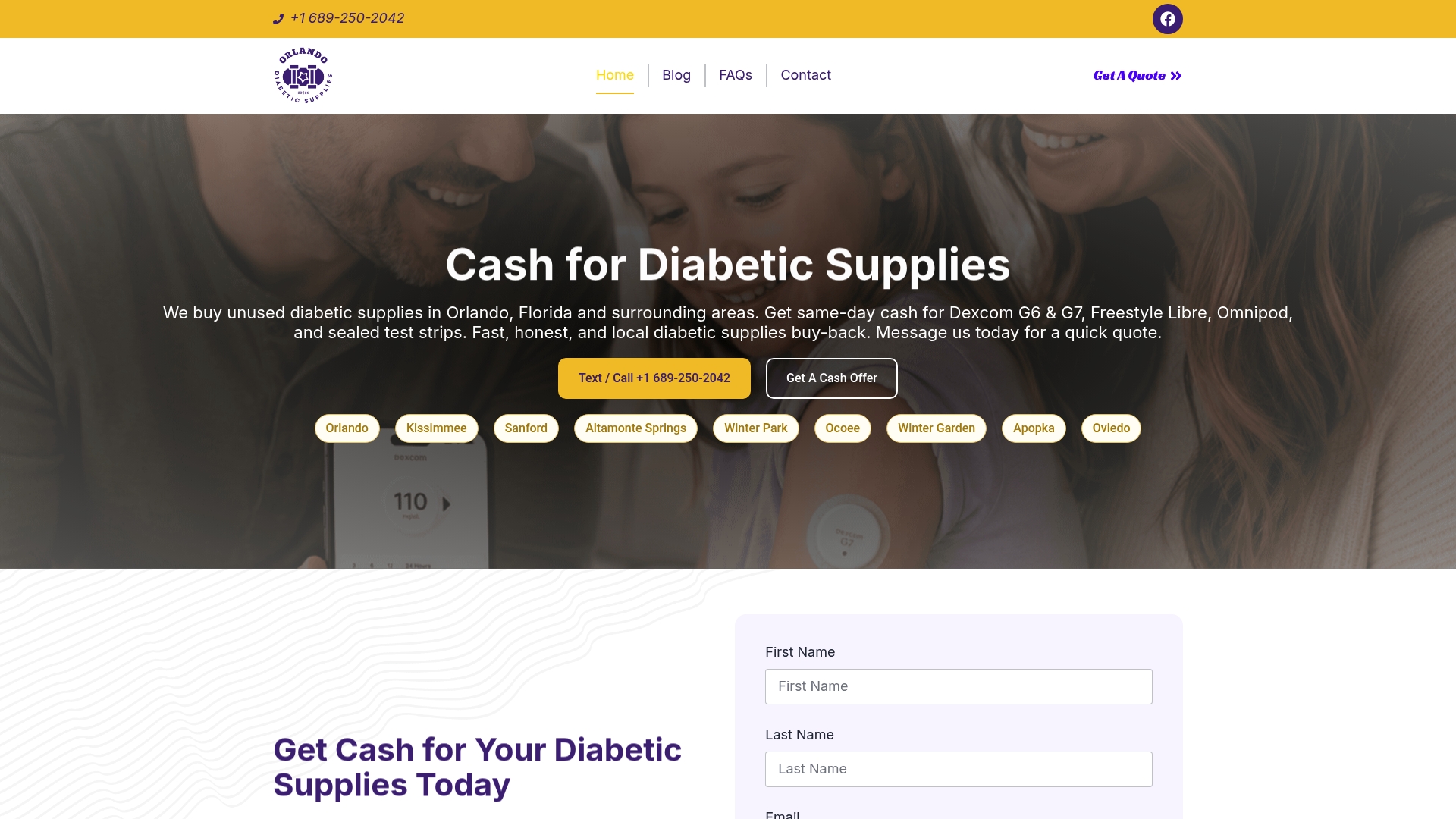
Orlando Diabetic Supplies Buyback buys Dexcom G6 and G7 sensors, Freestyle Libre, Omnipod pods (unaffected lots only), and sealed test strips from individuals in Orlando and surrounding areas. The process is straightforward: you bring your supplies, they verify condition and lot status, and you walk away with cash. No complicated paperwork and no waiting. Learn exactly how the process works and get cash for your supplies today. All transactions follow FDA safety guidelines and Florida state regulations.
FAQ
What diabetic supplies are most commonly overshipped?
Test strips, CGM sensors like Dexcom G7 and Freestyle Libre 3, Omnipod pods, lancets, and glucagon emergency kits are the most frequently overshipped diabetic supply items. Auto-refill schedules and insurance coverage maximums are the primary cause.
Can I sell my unused diabetic supplies legally?
Selling sealed, unexpired diabetic supplies is legal in most U.S. states, including Florida, when done through legitimate channels. Always verify that supplies are not subject to active recalls before selling.
How does the 2026 Omnipod recall affect my excess pods?
The May 2026 Insulet voluntary correction affects certain Omnipod 5, DASH, and Eros pod lots due to a manufacturing defect causing insulin under-delivery. You must verify lot numbers on Insulet’s official site before using, donating, or selling any Omnipod pods.
How do I stop receiving more supplies than I need?
Contact your pharmacy or mail-order supplier and request a delivery hold or quantity adjustment. Most Medicare, TRICARE, and private insurance plans allow this without affecting your coverage.
Are expired diabetic supplies safe to use or donate?
Expired test strips and CGM sensors may give inaccurate readings, and expired emergency supplies like glucagon may lose potency. Most donation organizations and buyback programs only accept supplies with at least 6 months of shelf life remaining.