Selling unopened, lawfully purchased diabetic supplies is generally legal, and it will not turn into a felony as long as you stay clear of three specific dealbreakers. You can sell sealed, unexpired supplies you actually own without breaking any law.
Here’s what would cross the line into criminal territory:
- Federal program origin — supplies paid for by Medicare, Medicaid, or TRICARE cannot legally be resold, even if they’re sealed and unexpired.
- Knowingly moving bad goods — selling recalled, adulterated, or counterfeit items after you know or should have known the truth.
- Unlicensed high-volume dealing — buying and reselling at a scale that makes you an unlicensed distributor under your state’s rules.
Your next move is simple: check ownership, check the seal, check the program source, then get your items in front of a reputable local buyer who knows how to verify all three.
TL;DR:
- Selling sealed, unexpired diabetic supplies is generally legal if they are privately owned and not purchased through federal programs like Medicare or Medicaid.
- Resale becomes illegal if the supplies are bought with federal program funds, are recalled or counterfeit, or if sold in high volumes indicating unlicensed distribution.
- Preparing for a same-day sale requires verifying ownership with receipts, checking seals, expiration dates, lot numbers, and avoiding federal program markings.
- Marketplace platforms often impose restrictions, and frequent or high-volume sales may require state licensing, making in-person verification safer and more compliant.
- Warning signs of illegal sales include incomplete documentation, suspiciously large quantities, missing physical addresses, and buyers asking invasive questions or avoiding proof of ownership.
Table of Contents
- Who Can Legally Sell Diabetic Supplies for Cash?
- How to Prepare Your Diabetic Supplies for a Same-Day Sale
- Where Does Selling Supplies Turn Into a Felony?
- Warning Signs a Diabetic Supply Sale Might Be Illegal
- Completing a Safe, Legal Sale Step by Step
- What the Conventional Advice Gets Wrong About Selling Supplies
- Get Same-Day Cash for Your Unused Diabetic Supplies
- Key Takeaways
- Sources
Who Can Legally Sell Diabetic Supplies for Cash?
Ownership is the first test, and it’s simpler than most people think. If you paid out of pocket, or your private insurance covered the item and you’re not required to return unused stock under that plan’s terms, you almost certainly own it outright. The gray area shows up when Medicare, Medicaid, or TRICARE footed the bill. Items purchased through those programs are off-limits for resale, no exceptions, because the government retains an interest in how that equipment moves.
Condition matters just as much as origin. Follow this checklist before you consider anything sellable:
- Confirm you paid for it — not a federal healthcare program, and not a free sample from a manufacturer trial.
- Check the seal — the box or pouch must be factory sealed, never opened or repackaged.
- Check the date — unexpired supplies with the original lot number intact and legible.
- Check the device type — sealed test strips, Dexcom G6 and G7 sensors, Freestyle Libre sensors, and Omnipod pods are typically fine to resell. Prescription-only devices like CPAP machines fall under stricter FDA distribution rules and usually require a licensed refurbisher, not a casual seller.
- Check your volume — selling a handful of boxes once is personal resale; selling dozens of boxes every month starts to look like distribution, which can require a state license.
Pro Tip: Keep any original pharmacy receipt or insurance explanation of benefits, even a photo of it on your phone. It’s the fastest way to prove ownership if a buyer or regulator ever asks.
How to Prepare Your Diabetic Supplies for a Same-Day Sale
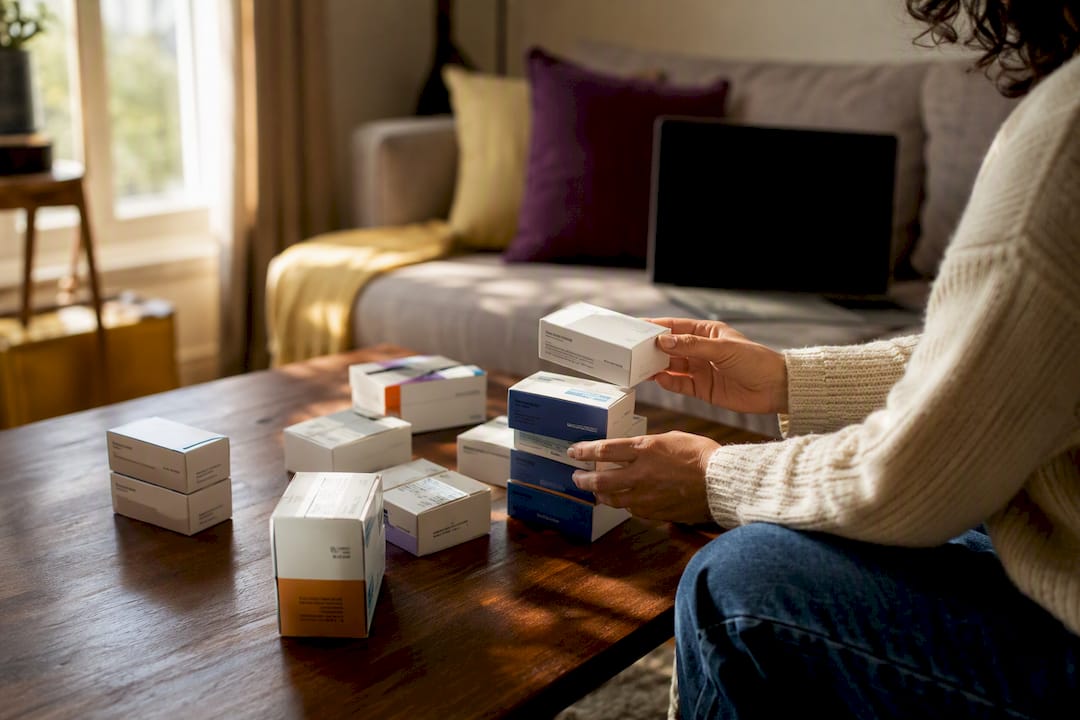
Getting paid on the spot depends on how ready your supplies are when you walk in. Buyers move fast when they can verify everything in under a minute, and slow down (or walk away) when something looks incomplete.
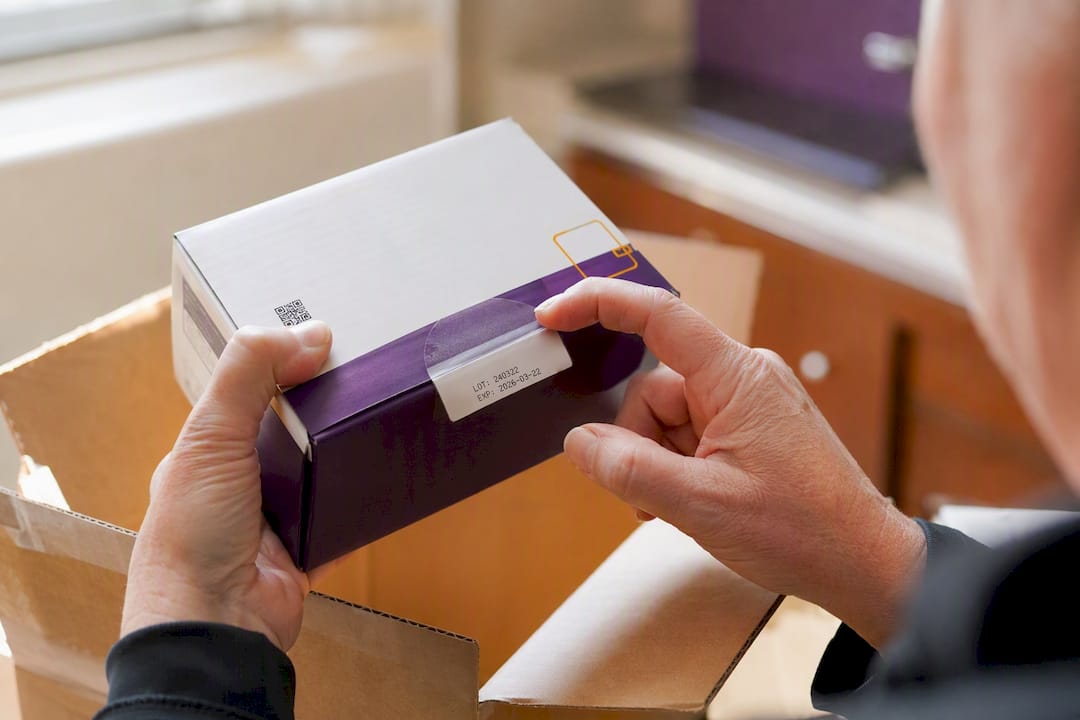
Build a simple inventory before you go anywhere. For each box or device, note the brand and model, the lot number, the expiration date, and whether the seal is fully intact. This takes ten minutes and it’s the single biggest factor in how quickly a buyer can quote you a price.
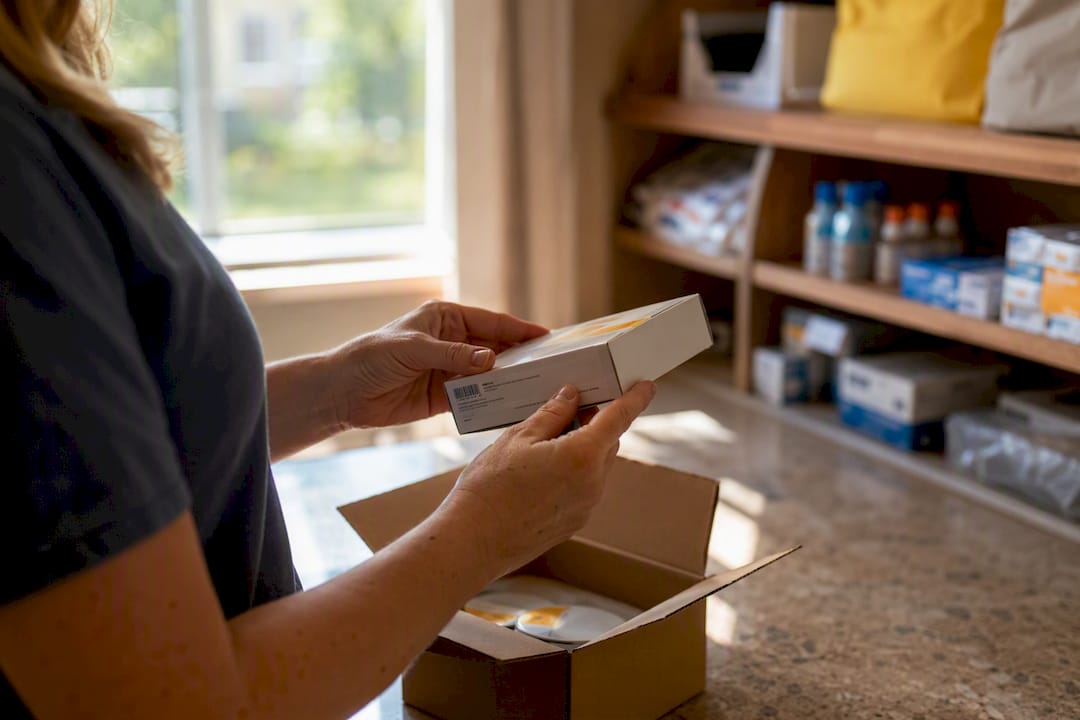
Photos help even more, especially if you’re arranging a sale ahead of time. Clear, well-lit shots of the expiration date, the lot number, and the unbroken seal let a buyer pre-screen your items before you ever leave the house. A quantity shot showing everything laid out together speeds things up too.
Bring your receipt or insurance paperwork if you have it. Leave behind anything stamped with a federal program marking, a Medicare or Medicaid label on the box is an automatic disqualifier, and no legitimate buyer will touch it.
| What to Bring | Why It Matters |
|---|---|
| Original receipt or EOB | Proves ownership and purchase date |
| Sealed, unopened packaging | Confirms the item hasn’t been tampered with |
| Visible lot number and expiration date | Lets the buyer verify authenticity on the spot |
| Full inventory list | Speeds up quoting and reduces back-and-forth |
| Items without federal program labels | Avoids automatic rejection |
Buyers who specialize in this category, like those covering how to prepare diabetic supplies for sale, typically check seal integrity, match lot numbers against the packaging, confirm the expiration date, and reject anything carrying a government program marking before they’ll offer a dime.
Where Does Selling Supplies Turn Into a Felony?
The line between a legal private sale and a criminal act comes down to three federal and state pressure points, and it’s worth understanding all three before you commit to regular resale.
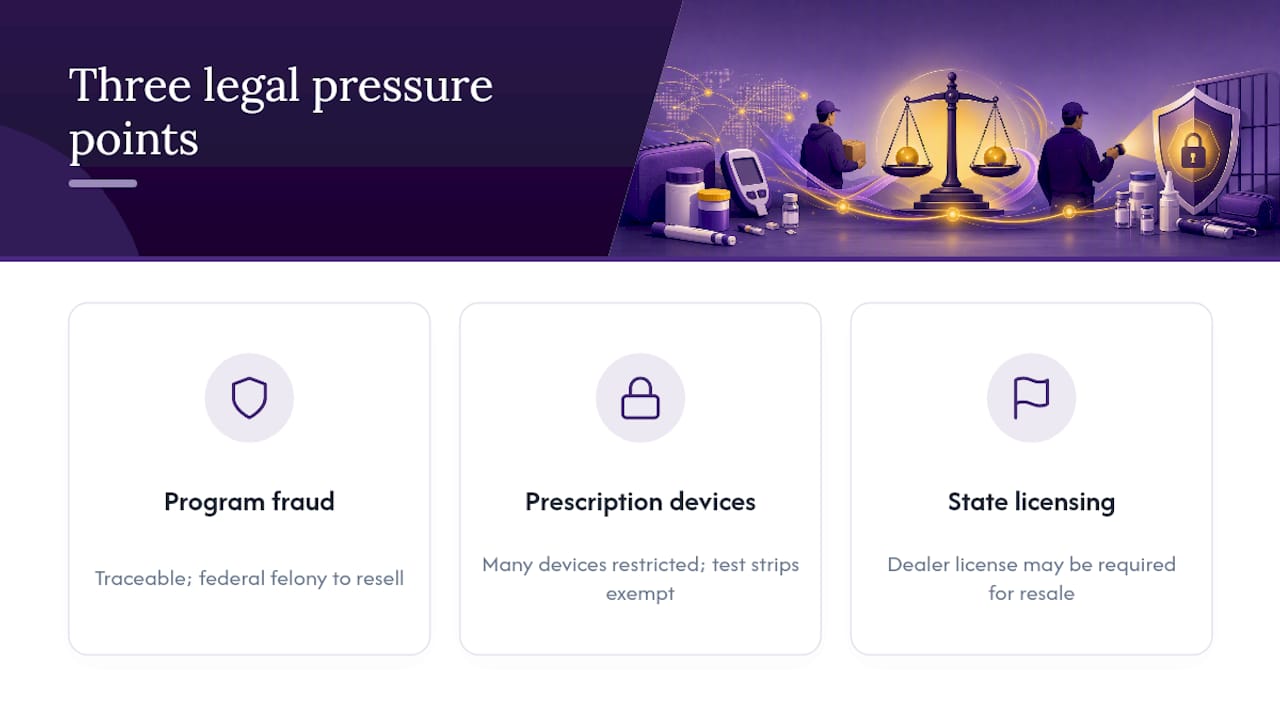
Medicare, Medicaid, and TRICARE fraud sits at the top. Supplies purchased through these programs carry billing codes and shipment records that make them traceable back to the original recipient. Reselling them isn’t a gray area, it’s a federal offense, and enforcement agencies actively monitor the gray market for exactly this pattern.
Prescription devices are the second pressure point. CPAPs, infusion pumps, and similar equipment fall under FDA rules that restrict resale to licensed distributors or practitioners in most cases. Test strips and CGM sensors don’t carry the same restriction for individual sellers, which is why they’re the backbone of the legitimate resale market.
State licensing is the third, and it’s the one people underestimate most. If you start buying supplies specifically to resell them, or you’re moving volume that looks commercial, you may need a state distributor or dealer license, and operating without one can carry civil and criminal penalties depending on your state’s definition of a dealer.
Marketplace platforms add another layer. eBay allows test strip sales under specific conditions, like clearly marked expiration dates and shipping before that date, but most platforms flatly ban prescription device listings. Violating platform policy won’t send you to court, but it can get your account suspended and your inventory frozen.
One more thing worth flagging: proceeds from occasional personal sales are usually not something the IRS expects you to report as business income, but if you’re selling with any regularity, that changes, and it’s worth checking your state’s rules on medical equipment resale before you treat it as a repeatable side income.
Warning Signs a Diabetic Supply Sale Might Be Illegal
Most sellers never encounter a problem, but knowing the warning signs protects you on both ends of a transaction, whether you’re the one selling or vetting a buyer.
Watch for these red flags before you finalize any deal:
- A buyer who won’t ask for ID or a receipt. Legitimate buyers want proof of ownership. If nobody asks, that’s backwards, not convenient.
- Pressure to sell items still marked with a Medicare or Medicaid label. Any buyer who says “don’t worry about that” is asking you to commit fraud alongside them.
- Packaging that looks resealed, relabeled, or mismatched. Repackaged goods are a known gray market problem, and they put both the buyer and seller at risk.
- A seller offering a suspiciously large quantity with no explanation. If someone shows up with hundreds of boxes and no coherent story about where they came from, that’s a sign of diverted goods, not personal excess.
- Buyers who ask invasive questions about your prescription or diagnosis. A legitimate buyer needs to verify the product, not interrogate your medical history.
- No physical address or walk-in location. Anonymous online forums and cash apps with no storefront make it nearly impossible to resolve a dispute or prove the transaction happened the way you say it did.
If any of these show up, walk away. A rushed sale isn’t worth the legal exposure.
Completing a Safe, Legal Sale Step by Step
Preparation gets you to the door. Completing the sale correctly is what keeps you clean afterward, and it only takes a few extra minutes.
Start by verifying the buyer’s legitimacy before you hand anything over. A real local buyer operates from a fixed business address, has a phone number that a real person answers, and will explain their inspection process without hesitation. If a “buyer” only communicates through a marketplace app and refuses to meet in person, that’s your answer.
Walk through the inspection with the buyer rather than just dropping off a bag. Watch them check the seal, compare the lot number to the packaging, and confirm the expiration date. This isn’t just about speed, it’s your chance to confirm they’re actually verifying provenance the way a reputable buyer should.
Get a written receipt before you leave, one that lists the specific items, quantities, and the payment amount and method. This protects you if any question about the sale ever comes up later, and any buyer who refuses to provide one isn’t someone you want to do business with.
Finally, confirm payment on the spot. Same-day cash means the transaction is done when you walk out, not “we’ll mail you a check” or “we’ll transfer it later.” If a buyer stalls on payment after inspection, that’s a signal to reconsider the whole transaction.
What the Conventional Advice Gets Wrong About Selling Supplies
Most articles on this topic bury the actual answer under pages of hedging, as if selling a box of unopened test strips is legally murky. It isn’t. The real risk isn’t the sale itself, it’s the three specific things that turn a private transaction into fraud: federal program origin, knowingly moving bad goods, and unlicensed commercial-scale dealing. Everything else is noise.
Where conventional advice really falls short is the online marketplace obsession. Guides push readers toward eBay listings and Facebook groups without mentioning that anonymous online resale is exactly where the gray market problems actually cluster. Shipping a sealed box to a stranger and hoping for the best carries more practical risk than walking it into a local buyer who checks your seal and lot number in front of you.
If you have excess supplies sitting in a drawer, prioritize provenance and documentation first, then speed. A buyer who inspects carefully and pays cash on the spot solves both problems at once.
— Liliana
Get Same-Day Cash for Your Unused Diabetic Supplies
Orlando Diabetic Supplies Buyback skips the marketplace guesswork entirely: no shipping to strangers, no waiting days for a buyer to “verify” anything online, just an in-person inspection and cash before you walk out the door. If you’re in Orlando or the surrounding area, you can bring in sealed, unexpired Dexcom G6 or G7 sensors, Freestyle Libre sensors, Omnipod pods, or sealed test strips and get an on-the-spot offer.
The process mirrors what any careful buyer should do: check the seal, match the lot number, confirm the expiration date, and reject anything carrying a federal program marking. Bring your inventory list and receipt if you have one, and the inspection moves fast. For a full rundown of what to gather beforehand, the step-by-step prep guide covers exactly what speeds up an offer, and the legal breakdown on selling sealed test strips answers any lingering compliance questions.
If your supplies check the ownership, seal, and expiration boxes, start the process here and find out what your unused boxes are worth today.
Key Takeaways
Selling sealed, unexpired diabetic supplies you legitimately own is legal in almost every case, and it only becomes a felony risk through federal program fraud, knowingly moving bad goods, or unlicensed commercial-scale dealing.
| Point | Details |
|---|---|
| Ownership is the core test | You must have paid for the item yourself, not through Medicare, Medicaid, or TRICARE. |
| Condition determines eligibility | Items need an intact seal, a visible lot number, and an unexpired date to sell safely. |
| Volume changes the legal picture | Regular high-quantity resale can require state distributor licensing, unlike occasional personal sales. |
| Anonymous marketplaces carry more risk | In-person inspection by a vetted buyer reduces both fraud exposure and legal uncertainty. |
| Orlando Diabetic Supplies Buyback offers a safe route | The service inspects seals, lot numbers, and expiration dates in person and pays same-day cash for eligible Dexcom G6/G7, Freestyle Libre, Omnipod, and sealed test strips. |
This article is general information, not a substitute for advice from a qualified lawyer. Consult a qualified legal professional about your own circumstances before acting on anything here.
Sources
- Is Selling Diabetic Test Strips Legal? Rules and Exceptions – LegalClarity
- Grey market for diabetic test strips elicits fraud concerns – FierceHealthcare
- Do I need a license to sell medical equipment? – Wolters Kluwer