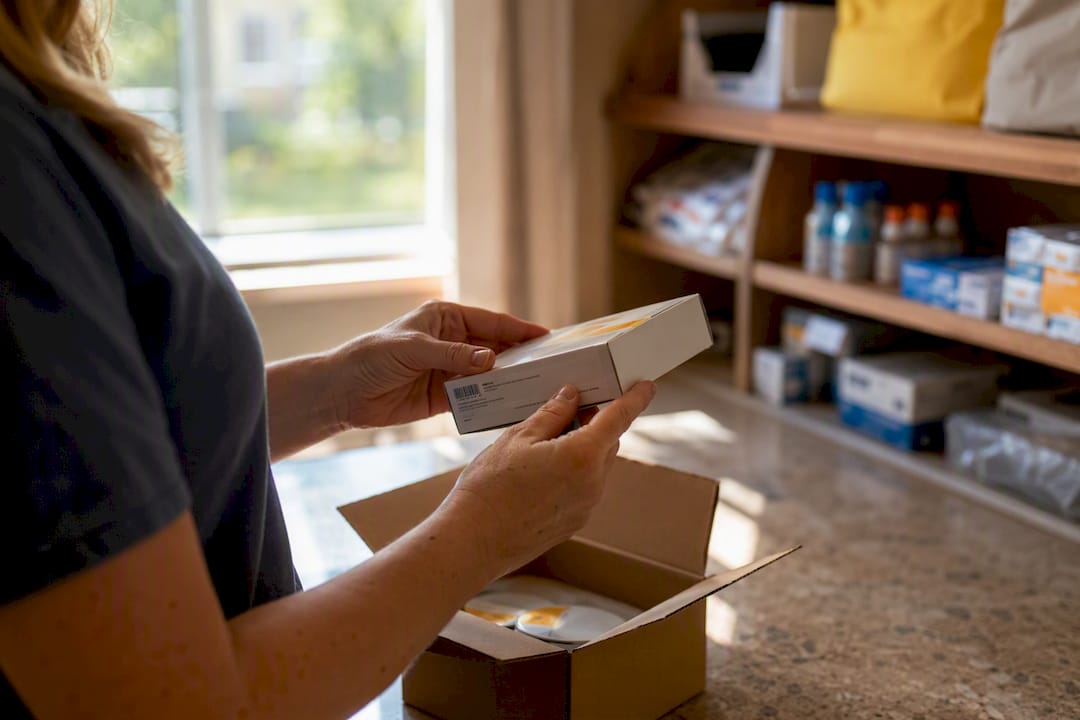
Yes. If your diabetic supplies are sealed, unused, and unexpired, you can sell them locally for cash the same day. The fastest way to start is simple: text or call a local buyer with a clear photo of the box front, showing the brand, count, and expiration date, and ask for a firm quote. Once your quote is locked to that photo, you bring your matching sealed boxes and a photo ID to a pickup spot, and you get paid on the spot.
Here’s what to have ready before you reach out:
- Sealed, unopened boxes with visible expiration dates
- A photo ID for verification at pickup
- A preference for cash, Cash App, Venmo, or instant bank transfer
Pro Tip: Take your photo in daylight near a window. Glare from overhead lights is the number one reason a quote gets delayed while a buyer asks for a clearer image.
Key Takeaways
Selling sealed, unused, unexpired diabetic supplies for same-day cash works best when a clear photo, matched shelf life, and in-person verification back up the transaction.
| Point | Details |
|---|---|
| Text a photo first | A clear box-front photo showing brand, count, and expiration gets you a firm quote within about an hour. |
| Check shelf life before contacting | CGM sensors typically need seven or more months left, test strips closer to nine, for full-price offers. |
| Keep boxes sealed and clean | No broken seals, blood, moisture, or damage larger than a quarter, or the box gets rejected. |
| Vet the buyer, not just the price | Favor local, in-person buyers who lock quotes to photos over anonymous online offers. |
| Orlando Diabetic Supplies Buyback pays same day | Sends a photo-verified quote in about an hour, then pays cash or instant transfer at local pickup. |
This article is general information, not a substitute for advice from a qualified doctor. Consult a qualified healthcare professional about your own circumstances before acting on anything here.
Table of Contents
- Which sealed diabetic supplies qualify to sell for cash
- How much are opened diabetic supplies worth to sell?
- How do you get a firm quote fast?
- What happens at pickup and payment?
- Are there safety and legal issues with selling diabetic supplies?
- How to prepare your supplies before you sell
- What local rules apply to selling medical supplies?
- Where can you sell diabetic supplies locally?
- How do you verify a buyer is legitimate before you meet up?
- What if no local buyer can pay you the same day?
- What actually matters when you sell diabetic supplies
- How Orlando Diabetic Supplies Buyback gets you paid today
- Sources
Which sealed diabetic supplies qualify to sell for cash
Not everything in your medicine cabinet is sellable, but the list of what qualifies is broader than most people expect. Buyers focused on this niche accept sealed CGM sensors like Dexcom G6 & G7 and Freestyle Libre, sealed Omnipod pods, and sealed brand-name test strips from major manufacturers.
The condition rules matter more than the brand. An accepted box needs:
- An intact factory seal with no signs of tampering
- A clearly visible, unexpired date
- No blood, moisture, or staining anywhere on the packaging
- No box damage larger than about a quarter
Items that typically get turned away include anything with a broken seal, expired stock, and most generic store-brand strips, since lancets and ketone strips rarely have enough resale demand to justify an offer. If you’re not sure whether your box qualifies, a quick photo comparison against these rules saves you a wasted trip.
How much are opened diabetic supplies worth to sell?
Despite what the phrase implies, the honest answer is that opened boxes aren’t worth much to a reputable local buyer. Value depends almost entirely on how much shelf life is left and whether the seal is intact, not on the brand name alone.
Reputable buyers apply tiered pricing based on expiration date, and the tiers follow a predictable pattern. CGM sensors typically need around seven or more months of remaining shelf life to earn full price. Test strips often need closer to nine months. Boxes that fall short of those windows still get offers, just at a reduced rate.
A few things push your number up or down:
- Brand recognition: Well-known names like Dexcom, Freestyle Libre, and Omnipod tend to fetch stronger offers than lesser-known brands.
- Full box counts: A complete, unopened count sells better than a partial or resealed box.
- Near-expiry deductions: Boxes within a few weeks of expiring usually get a lower offer or a pass entirely.
- Damage deductions: Even minor box damage or a torn corner can shave dollars off the number.
Curious what your specific stash might bring in? Check out what your leftover diabetic supplies are worth before you contact a buyer, so the number you hear back matches what you expected going in.
How do you get a firm quote fast?
Getting a locked price takes minutes if you send the right photo the first time. Here’s the workflow that works:
- Photograph the box front. Capture the brand name, the box count, and the printed expiration date in one shot.
- Check for glare and clutter. Shoot against a plain background with even lighting so every number is legible.
- Include the UPC or lot number if visible. It’s not always required, but it speeds up verification on items with unusual packaging.
- Text the photo during business hours. Most buyers respond with a quote within about an hour.
- Confirm payment method and pickup zone before you commit. Ask directly, don’t assume.
Photos matter because they’re the record both sides use at pickup. A photo-verified quote is typically honored exactly as quoted, as long as the box you hand over matches the image you sent.
Pro Tip: Snap one photo per box, not one photo of a whole pile. Buyers move faster, and price faster, when each item is easy to identify on its own.
What happens at pickup and payment?
The in-person meeting is short, and knowing what to expect keeps it that way. The buyer’s first move is to compare your physical boxes against the photos you sent. If everything matches, brand, count, expiration, and condition, the quoted price holds without renegotiation.
Payment at pickup usually comes down to a short list of options: cash on hand, or an instant transfer through Cash App, Venmo, or a bank app. It’s worth confirming which method your buyer uses before you drive over, since not every buyer offers every option.
Bring these two things without exception:
- Your matching sealed boxes, exactly as photographed
- A government-issued photo ID
The buyer holds onto the box only until payment clears, then the exchange is done. No paperwork, no waiting period, no follow-up calls.
Are there safety and legal issues with selling diabetic supplies?
Storage integrity is the real risk here, not legality. Independent reporting on the secondary market for diabetic test strips notes that products stored improperly, exposed to heat, humidity, or long periods on a shelf, can lose reliability even while sealed. Buyers who inspect items in person before paying are the best safeguard against that risk, since they can catch damage or tampering a photo alone might miss.
The FDA’s position, as reported by industry coverage, is that reselling unexpired test strips is legal as long as they weren’t obtained fraudulently. That said, a reputable buyer will never accept boxes with blood, moisture, or a broken seal, no exceptions.
If you have specific questions about how selling supplies might interact with your insurance coverage, that’s a conversation for your insurer or a qualified advisor. This article covers general practice, not personalized legal or insurance guidance.
How to prepare your supplies before you sell
A little organization up front turns a slow inspection into a five-minute handoff. Start by sorting everything into three piles: sealed and qualifying, near-expiry, and non-qualifying. Set the third pile aside entirely.
- List your inventory. Write down brand, box count, and expiration date for each item on one simple sheet.
- Label each box. A sticky note with the expiration date on the outside saves the buyer from digging through packaging.
- Photograph everything at once. One clear photo per item, staged the way you’d hand it over, speeds up the quote.
- Pick a meeting spot. Have a safe, well-lit location ready so pickup doesn’t stall on logistics.
Following an organization checklist before you ever send a text means your quote request looks professional, and professional-looking sellers tend to get faster responses.
Pro Tip: Store boxes upright in a cool, dry spot until pickup. Heat and humidity are the fastest way to knock a near-expiry box out of full-price range.
What local rules apply to selling medical supplies?
Selling your own unused diabetic supplies as an individual is different, legally, from running a resale business. Federal guidance treats individual resale of unexpired, legitimately obtained supplies as legal, but the picture changes once volume or intent shifts toward commercial activity. A person clearing out a drawer of extra test strips is not the same, in the eyes of regulators, as someone systematically acquiring supplies to flip for profit.
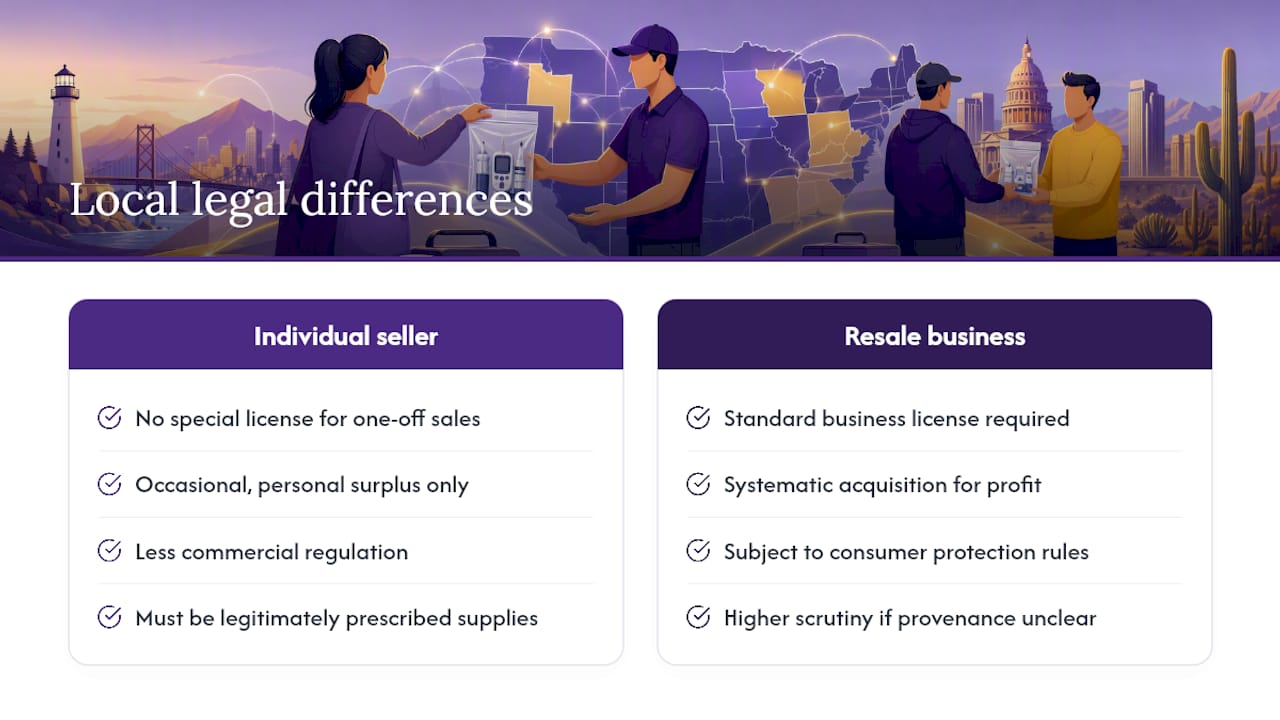
Florida doesn’t require an individual seller to hold a special license to sell personal medical supplies in a one-off, occasional transaction. Businesses that buy and resell diabetic supplies, on the other hand, typically operate under standard business licensing and consumer protection rules, the same framework that governs any local buy-and-resell operation, medical or otherwise.
The biggest legal gray area isn’t the sale itself, it’s provenance. Supplies obtained through insurance fraud, or supplies that were never legitimately prescribed to the seller, fall outside the legal protection that covers a genuine surplus sale. If your boxes came from your own prescription, and you simply ended up with more than you need after a device switch or a dosage change, you’re on solid ground. If you’re at all unsure how local rules might apply to your specific situation, a quick check with a legal professional or your state’s pharmacy board is worth the ten minutes it takes.
Where can you sell diabetic supplies locally?
You have more options than just a buyback service, though not all of them move at the same speed. Independent pharmacies occasionally take donated or resold supplies, though most decline outright purchases due to liability concerns around resale. Medical supply stores sometimes buy overstock, but their offers tend to run lower since they’re pricing for wholesale resale, not consumer resale.
Community exchanges, church supply closets, and diabetes support groups are worth knowing about, but they’re built for donation, not cash. If your goal is a same-day payout rather than a tax-deductible gesture, they won’t get you there.
A dedicated local buyback service built specifically around diabetic supplies tends to move faster than any of these general options, because that’s the entire business, not a side function. The turnaround on a quote and pickup is measured in hours, not days, which matters if you’re trying to clear space or need the cash quickly. For sellers weighing where to start, checking a dedicated test strip buyer near you is usually the quickest way to compare what’s realistically available in your area.
How do you verify a buyer is legitimate before you meet up?
A little vetting before you hand over sealed boxes protects you from a wasted afternoon or worse. Independent reporting on the secondary diabetic supply market has documented complaint clusters tied to certain online buyers, often buyers with no physical presence and vague payment promises.
A few checks before you commit to a meeting:
- Look for a real local address or service area, not just a phone number and a P.O. box.
- Ask for the payment method up front, and be wary of any buyer who insists on a method you can’t verify instantly, like a personal check.
- Confirm the quote is locked to your photo, not a vague “we’ll see when we get there” answer.
- Meet in a public, well-lit location for the exchange, especially the first time you work with a given buyer.
- Trust a fast, specific response. Buyers who take days to reply or dodge direct questions about pricing structure are a signal to look elsewhere.
An established local buyer who inspects items in person and pays on the spot removes most of the risk that comes with anonymous online transactions.
What if no local buyer can pay you the same day?
Same-day local cash isn’t available everywhere, and if you strike out locally, you still have workable paths forward. National online resale marketplaces exist for sealed diabetic supplies, though payment usually takes days rather than hours, since it typically routes through a shipping and verification process before funds clear.
Diabetes-focused online forums and regional Facebook groups sometimes connect sellers directly with self-pay buyers or people between insurance cycles, which is part of the reason a functioning secondary market exists at all. These channels can work, but they require more legwork, more back-and-forth on price, and none of the in-person inspection that protects both sides in a local sale.
If speed matters and a local option genuinely isn’t available where you are, expanding your search radius before defaulting to a slower online option is usually worth the extra few miles. A short drive that gets you paid today typically beats a week of waiting on a shipped transaction.
What actually matters when you sell diabetic supplies
The conventional advice you’ll find on this topic spends too much time on brand names and not enough on the two things that actually determine whether you get paid today: photo quality and shelf life. Most guides list which devices sell, Dexcom, Libre, Omnipod, and stop there, as if qualifying is the hard part. It isn’t. The hard part is presenting your boxes so a buyer can verify them remotely in under a minute.
Here’s what I’d tell anyone sitting on a drawer of extra supplies: don’t wait for the “perfect” moment to photograph everything at once. Do it today, while the expiration dates are still comfortably in the safe zone. Every week closer to expiration is a week closer to a lower tier of payout.
The other overlooked point is that legitimacy cuts both ways. Sellers worry about scam buyers, and rightly so, but buyers who inspect in person and lock quotes to photos exist precisely because that friction protects everyone. Prioritize that verification step over chasing a marginally higher number from an unknown source.
— Liliana
How Orlando Diabetic Supplies Buyback gets you paid today
Skip the pharmacy that won’t take your boxes and the online marketplace that pays in a week. Orlando Diabetic Supplies Buyback is the local alternative that turns a drawer of sealed supplies into same-day cash, no shipping, no waiting on a middleman to verify anything.
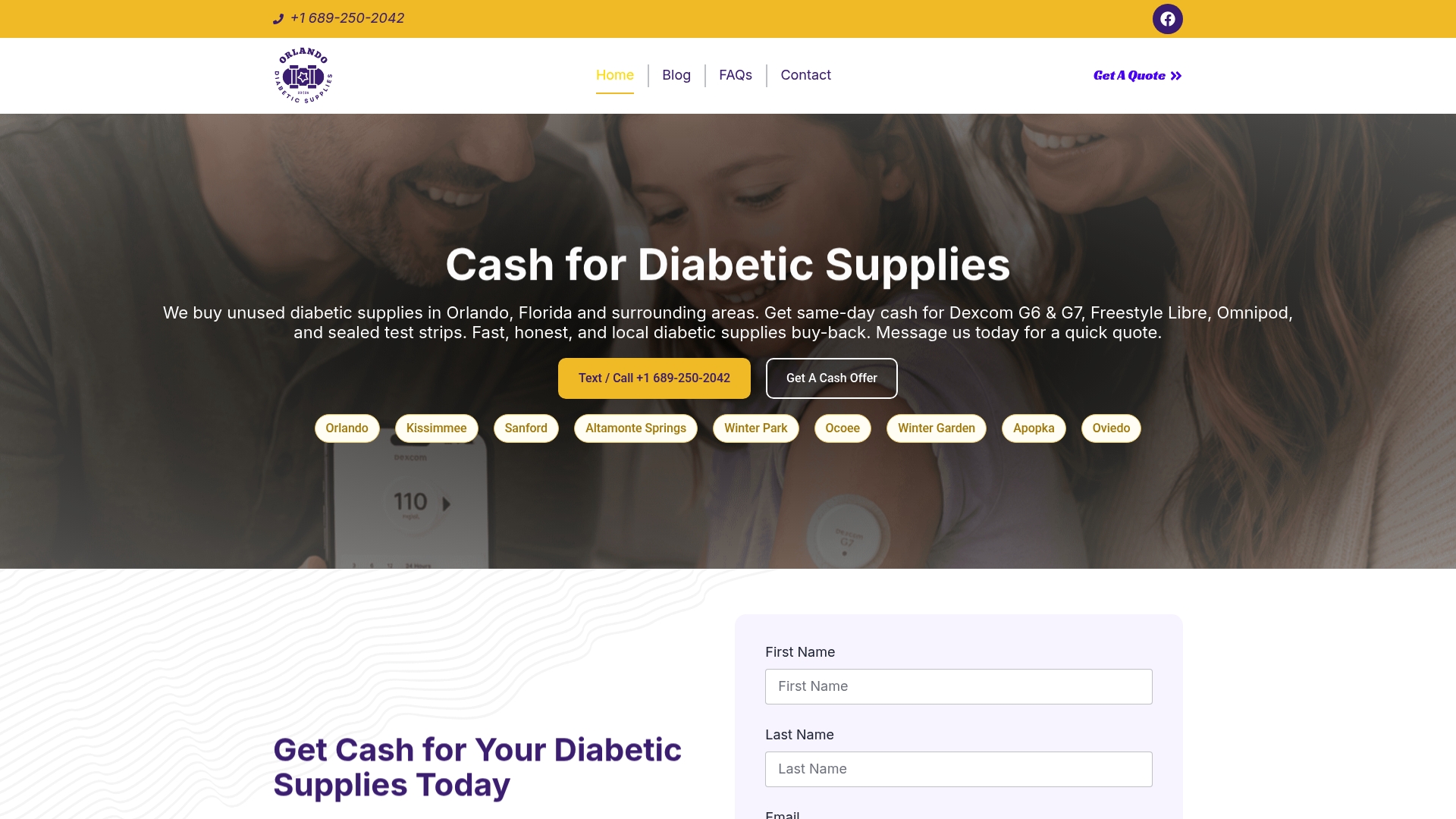
We buy sealed, unexpired Dexcom G6 & G7, Freestyle Libre, Omnipod pods, and sealed test strips from major brands, and we pay on the spot once your boxes match your photos. Getting started takes one text: send us a clear photo of your box front showing the brand, count, and expiration date, and you’ll typically hear back with a firm quote within about an hour. From there, pickup and payment usually happen the same day.
Ready to see what your supplies are worth? Visit our step-by-step guide to getting cash for unused diabetic supplies and send your first photo today.