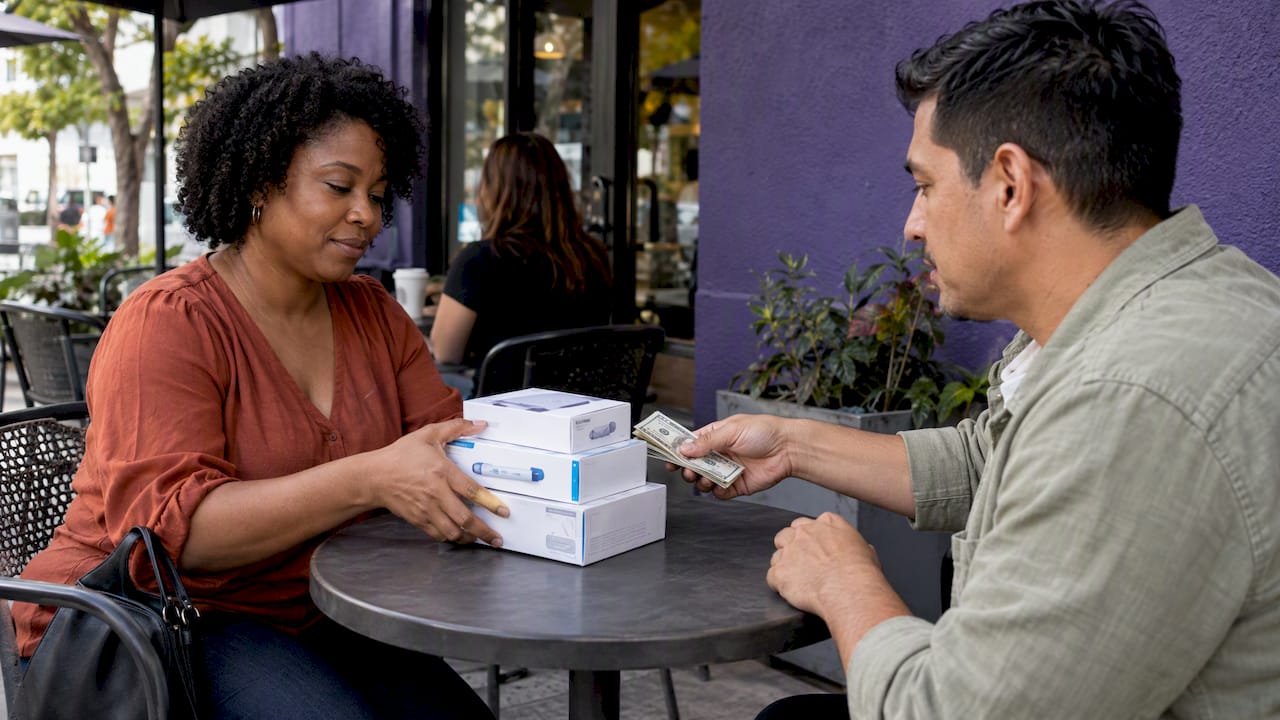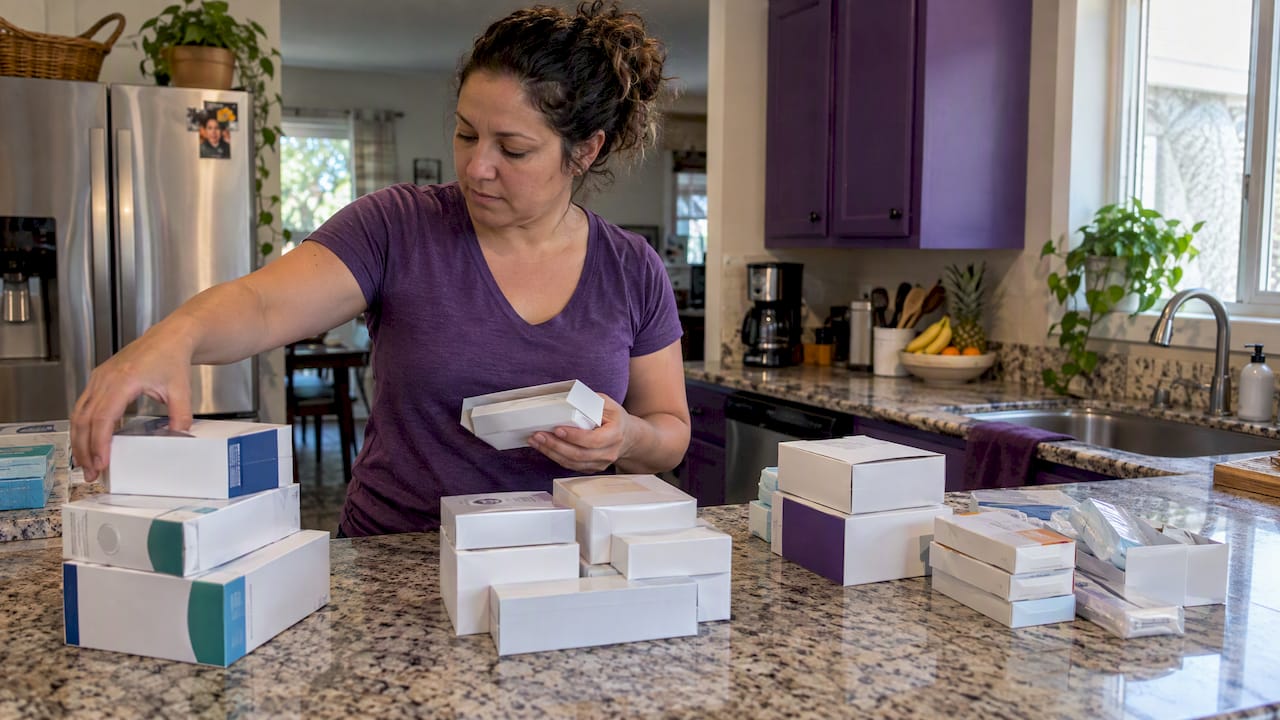
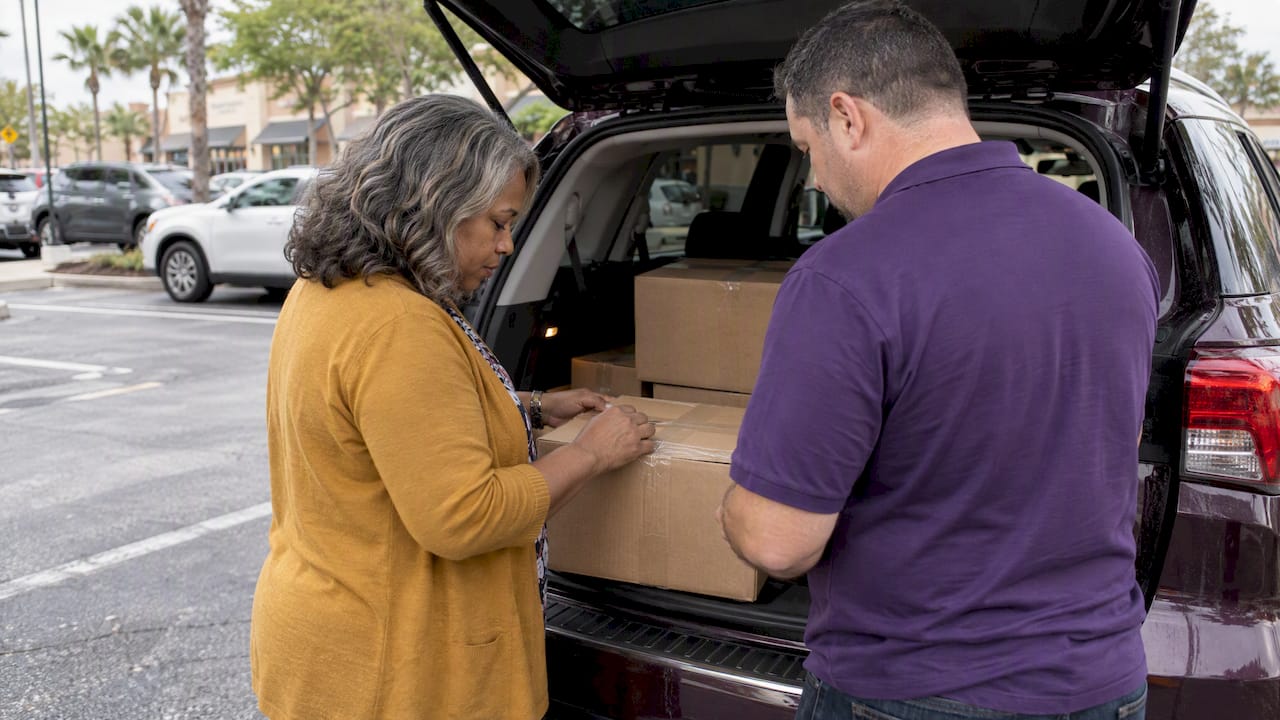
If you have unused diabetic supplies and want them gone for cash, the simplest route in Orlando is a local handoff. You text or call, we agree on a time, and we meet you at a safe public spot near you. We inspect the supplies on the spot and pay you right there. There is no box to ship and no waiting on a check.
One point up front: we do not come into your home. We meet in public, well-lit places around Orlando and the surrounding area. That protects you and us, and it is how the pickup stays fast.
TL;DR
- We buy sealed, unexpired Dexcom G6 and G7 sensors, FreeStyle Libre sensors, Omnipod pods and major-brand test strips.
- You schedule a handoff, we meet at a public location near you, we inspect the items and pay on the spot.
- Published offer pages list $70 to $90 per pack for Dexcom G7 and $15 to $20 per sensor for FreeStyle Libre 2.
- Items must be unopened, unexpired and not recalled. Check lot numbers before you sell.
- If supplies are expired or unusable, disposal or donation is the better path, not resale.
Table of Contents
- What a local pickup looks like
- What we buy and what we pay
- Get your supplies ready before the handoff
- Where the extra supplies come from
- What not to sell
- How to spot a bad buyer
- Our perspective
- Ready to schedule a handoff?
- Tips for a smooth meetup
- FAQ
- Sources
What a local pickup looks like
People search for “home pickup” because they want the easy version of selling: no trips across town, no packaging, no strangers at the door. Here is what we offer instead, and why we think it is the better deal.
- You reach out. Send us a message with what you have: brand, item, quantity and expiration dates. Photos of the boxes help.
- We give you a clear quote. Our pricing policy is plain. You hear the number before anyone drives anywhere.
- We pick a public spot. Somewhere familiar, in daylight where possible, close to where you live or work.
- We inspect in person. We check seals, expiration dates and condition right in front of you.
- You get paid on the spot. Eligible items are paid for at the handoff, by cash or electronic transfer.
The whole thing is usually short. Most of the time is the inspection, and that takes minutes when your boxes are organized. Our buyback timeline from quote to cash walks through each stage in more detail.
Why we meet in public instead of at your door
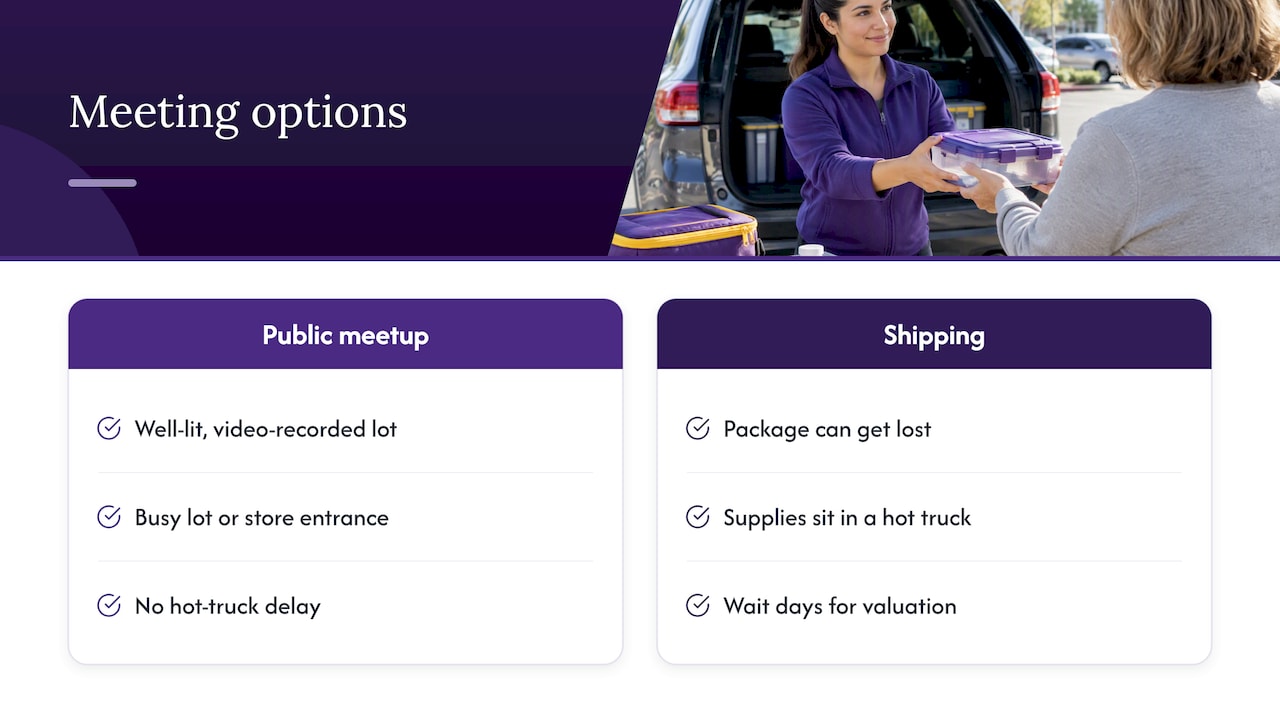
Selling supplies means one stranger handing medical products and money to another. A public spot keeps both sides comfortable. The City of Orlando’s own police policy on exchange zones says members of the public benefit from private sales in a well-lit, video-recorded public parking lot. We follow the same idea. Choose a busy lot, a store entrance in daylight, or another place where you feel at ease.
Public meetups also remove what makes shipping stressful. Nothing gets lost, nothing sits in a hot truck, and you do not wait days for someone to open a package and decide what it is worth.
Curbside handoffs
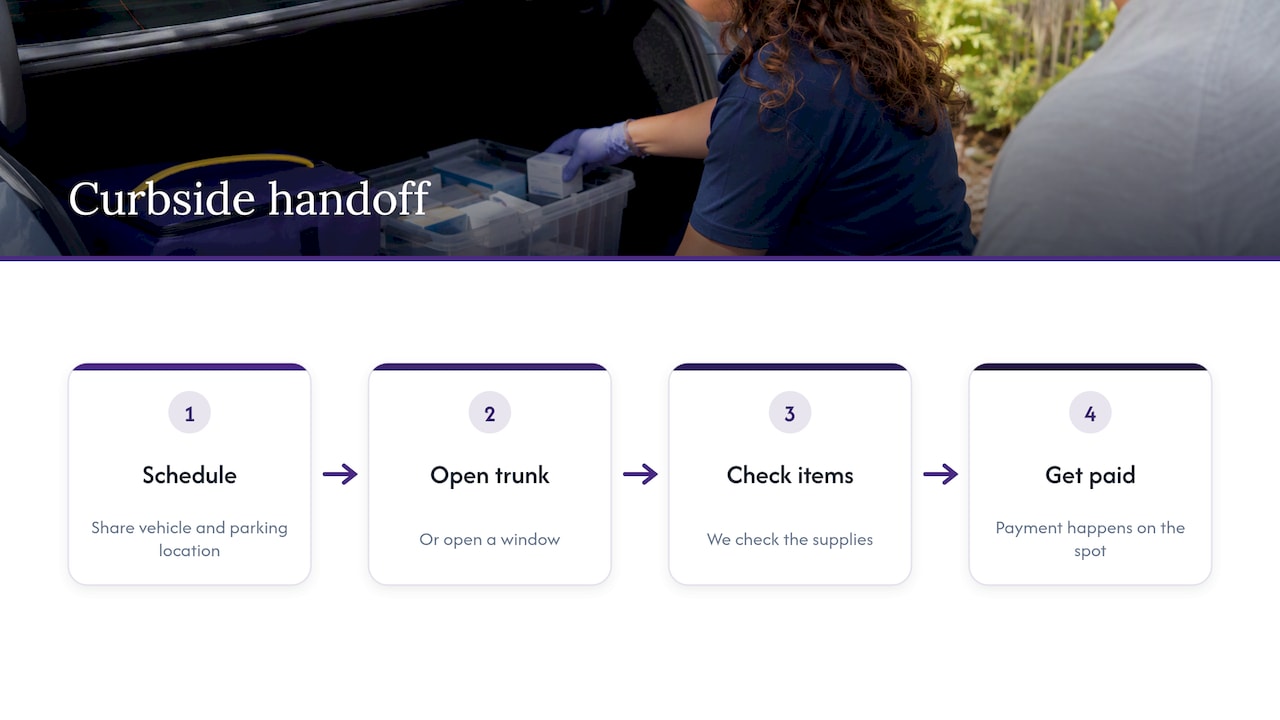
If you would rather not get out of your car, say so when you schedule. A curbside-style handoff in a public parking area works for many sellers: you open the trunk or window, we check the items, and payment happens right there. Tell us your vehicle and where you will be parked so we find you quickly.
What we buy and what we pay
We buy unused, sealed, unexpired supplies. That covers:
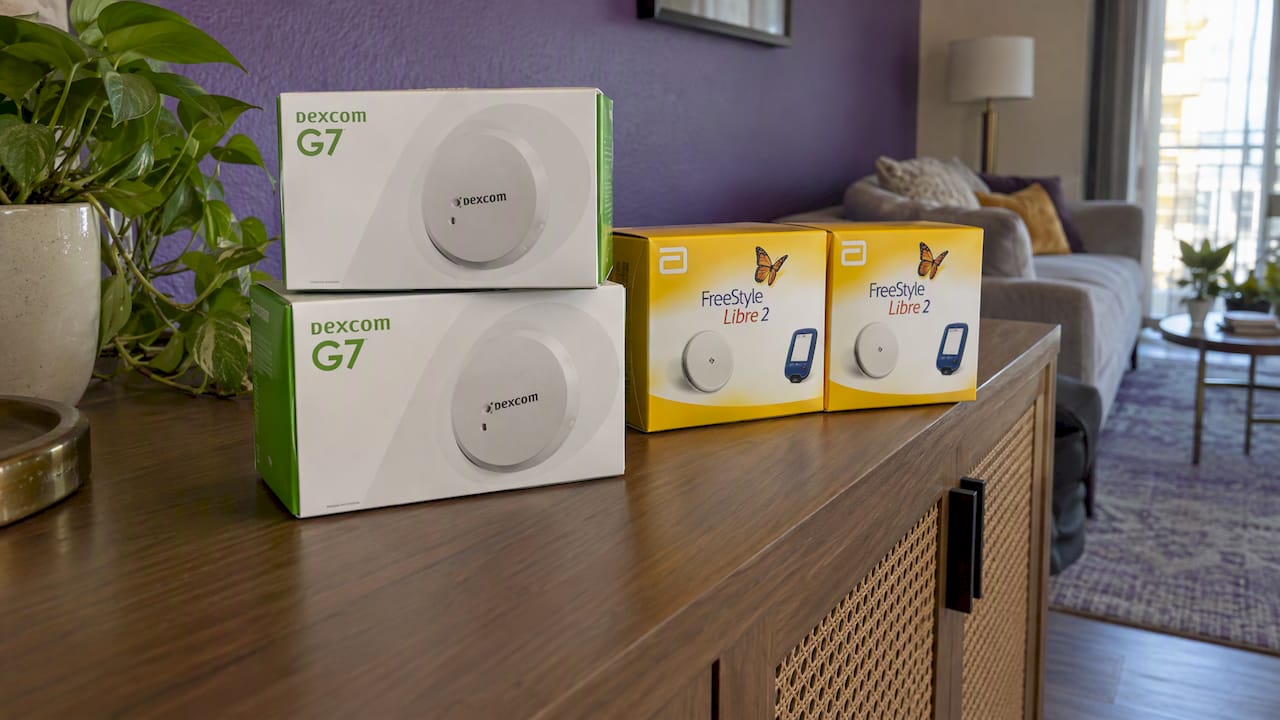
- CGM sensors: Dexcom G6 and G7, FreeStyle Libre
- Pump supplies: Omnipod pods
- Test strips: sealed boxes from major brands
Two of our offer pages publish ranges:
| Item | Published range | Offer page |
|---|---|---|
| Dexcom G7 | $70 to $90 per pack | Dexcom G7 buyback |
| FreeStyle Libre 2 | $15 to $20 per sensor | FreeStyle Libre 2 buyback |
Where you land in a range depends on condition, expiration dates and the box. We do not publish prices for test strips, other CGMs or pods, so you get a quote for those after you tell us what you have. For a wider look at what drives value, read what your leftover supplies are worth in Orlando.
Get your supplies ready before the handoff
A little prep gets you the top of the range and a faster meetup.
Check each item
- Sealed: original packaging closed, no tears, no tape.
- Unexpired: read the date on every box. Short-dated items may be worth less.
- Stored well: kept away from heat and moisture. Test strips in particular suffer from humidity, so our six-step moisture check for test strips is worth a few minutes.
- Complete: keep boxes together, with inserts and labels.
Sort and count
Put each brand in its own pile and write down quantities. If your cabinet is a mess, our guide to organizing unused diabetes equipment at home shows a simple system.
Check lot numbers
This step matters for your safety and for ours. The FDA’s database lists a Class 2 recall of the Dexcom G7 system, initiated May 27, 2026 and posted June 24, 2026. A recalled product should not be sold or used. If you are unsure about a lot, check it through the manufacturer before you schedule. We also explain how we handle this in verifying lots on leftover Dexcom sensors.
Where the extra supplies come from
Most of our sellers are not doing anything unusual. They are people whose situation changed.
- You switched devices. A new CGM or pump leaves a drawer full of the old one. See why people switch CGMs and our device switch checklist.
- Your prescription changed. A dose or testing frequency changed, but a refill was already filled.
- Your meter changed. The old strips no longer fit. We cover that in why test strips go unused after a meter switch.
- Your plan ships more than you use. Automatic refills pile up.
That last one deserves a closer look. Medicare’s coverage booklet says Medicare does not pay for supplies you did not request or that are sent automatically, and it tells people to report suspected fraud to 1-800-MEDICARE. If boxes keep arriving that you never ordered, talk to your prescriber and your plan about matching the order to what you actually use. Fixing the source is better than selling the surplus again and again.
What not to sell
We say no to some items, and you should say no to any buyer who does not.
- Expired products. They are not safe to resell.
- Opened or damaged boxes. If the seal is broken, it is out.
- Recalled or suspect lots. The FDA has flagged cases of improperly handled sensor lots reaching the secondary market, and a recall is a clear stop sign.
- Anything you are unsure about. Ask first.
For expired or unusable items, the American Diabetes Association guidance on discarding sharps and unwanted supplies points to proper disposal, such as take-back programs, rather than the trash or the toilet. If you are weighing donation against a sale for items that are still good, our comparison of donating versus selling diabetic supplies lays out both sides. Both are fine choices. Which one fits depends on whether you want cash or want the supplies to go to someone in need.
How to spot a bad buyer
Sellers sometimes get burned, and the signs are usually the same. Be careful when a buyer:
- asks you to ship first and promises payment later
- will not name a price until after they have your box
- wants to meet somewhere private or isolated
- pushes you to hand over expired or opened products
- cannot say how they check lots and dates
A legitimate buyer quotes clearly, meets in public, inspects in front of you and pays at the handoff. Paying attention to your health matters beyond supplies too. If you live with diabetes, regular checks on your feet are part of staying well, and these diabetic foot ulcer checks are a good reminder of what to look for.
Our perspective
We started this service because we saw how much good product sits unused in Orlando homes. A box of sensors that expires in a closet helps nobody. A box that goes to a legitimate buyer puts a bit of cash back in your pocket.
We also know that selling medical supplies makes some people nervous, and that is reasonable. So we keep the process short and visible. You see the quote first. You see us check every box. You get paid before we leave. We do not ask you to ship anything or to trust us for later.
We turn away items that should not be resold. That costs us a deal now and then, and it is the right call. If we are not sure about a lot, we do not buy it. If your supplies are expired, we will say so and point you to disposal.
And one more thing we tell everyone: if you keep ending up with extra, talk to your care team. The best outcome is getting exactly the supplies you need. We are here for what is left over.
— Liliana
Ready to schedule a handoff?
If you have sealed, unexpired Dexcom, Libre, Omnipod or test strip supplies, we can usually arrange same-day cash at a public meetup near you. Start at Orlando Diabetic Supplies Buyback and tell us what you have. Prefer to see numbers first? Check the Dexcom G7 price page or the FreeStyle Libre 2 page. If you want the full walkthrough, see how to get cash for unused diabetic supplies.
Tips for a smooth meetup
- Pick a time when you will not be rushed, and arrive a few minutes early.
- Bring everything in one bag or box, grouped by brand.
- Keep your phone handy so we can find each other.
- Tell a family member or friend where you are going.
- Count the payment before you leave, as you would at any sale.
- If anything feels off, you can walk away. There is no obligation.
We adapt to your schedule where we can. Weekday evenings and weekend mornings are common requests, so message early if you want a specific slot.
FAQ
Can I schedule a diabetic supply pickup at my house?
We meet at safe public locations in Orlando and nearby areas rather than at homes. It keeps both sides secure and keeps the process quick. Tell us your neighborhood and we will suggest a convenient spot.
How fast do I get paid?
Payment happens at the handoff. After we inspect your sealed, unexpired items, eligible supplies are paid for on the spot in cash or by electronic transfer.
Can I sell Dexcom G7 sensors?
Yes, if they are sealed, unexpired and not part of a recall. Our published range is $70 to $90 per pack. Check your lot numbers first, and read our page on selling Dexcom G7 sensors for details.
What should I do with expired supplies?
Do not sell them. Follow ADA guidance on disposal, which favors take-back programs over the trash or toilet. Ask your pharmacy or local drop-off site what they accept.
Where can I get diabetic supplies if I am running low?
Start with your prescriber and your insurance plan, which decide what is covered. Medicare Part B covers meters, test strips, lancets and CGMs for eligible people with a prescription, according to Medicare’s diabetes coverage guide.
Sources
- Orlando Police Department: Commercial and Custody Exchange Zone policy
- FDA: Class 2 Device Recall, Dexcom G7 Continuous Glucose Monitoring System
- Medicare: Coverage of Diabetes Supplies, Services & Prevention Programs
- American Diabetes Association: Discarding Sharps
- Stride Foot & Ankle: Diabetic Foot Ulcers