The safest places to meet buyers are police-designated safe-exchange zones or busy, well-lit public locations. Meet in daylight, bring a friend for anything valuable, and verify payment before you hand over the item. If you’re selling niche medical supplies like diabetic devices, a licensed local buyback removes the stranger-meetup risk entirely.
TL;DR:
- Using police safe-exchange zones is ideal for high-value items due to their CCTV coverage and deterrent effect, but they do not facilitate item verification.
- Confirm the existence and hours of a local police exchange zone before visiting, and avoid meeting for transactions involving weapons or after dark.
- Verifying buyer identity through ID and consistent communication reduces scam risk, and waiting for confirmed payment before handing over items is essential.
- Shipping valuable items requires secure packaging, tracking, and waiting for confirmed payment, with signature confirmation recommended for high-value shipments.
- For diabetic supplies, licensed local buyback services offer a safer, faster cash option without the risks associated with stranger meetups.
Table of Contents
- Safe Places to Sell Items in Person: Your Best Options
- What Police Safe Exchange Zones Are (And How to Confirm One Near You)
- Your Step-by-Step Safe Meeting and Payment Checklist
- Red Flags That Mean You Should Cancel the Meeting
- How to Package and Ship Items Safely When You Can’t Meet in Person
- Guidelines for Verifying Buyer Identity Securely
- What to Do If You Spot a Scam or Suspicious Activity
- Choosing a Reputable Online Marketplace for Selling
- Why a Licensed Local Buyback Beats a Stranger Meetup for Medical Supplies
- Get Same-Day Cash Without the Stranger Meetup
- Sources
Safe Places to Sell Items in Person: Your Best Options
Not every public spot offers the same protection, so it helps to rank your options before you agree to meet anyone. Some locations come with cameras and signage built for this exact purpose. Others just happen to be crowded enough to discourage bad behavior.
Here’s how the most common choices stack up:
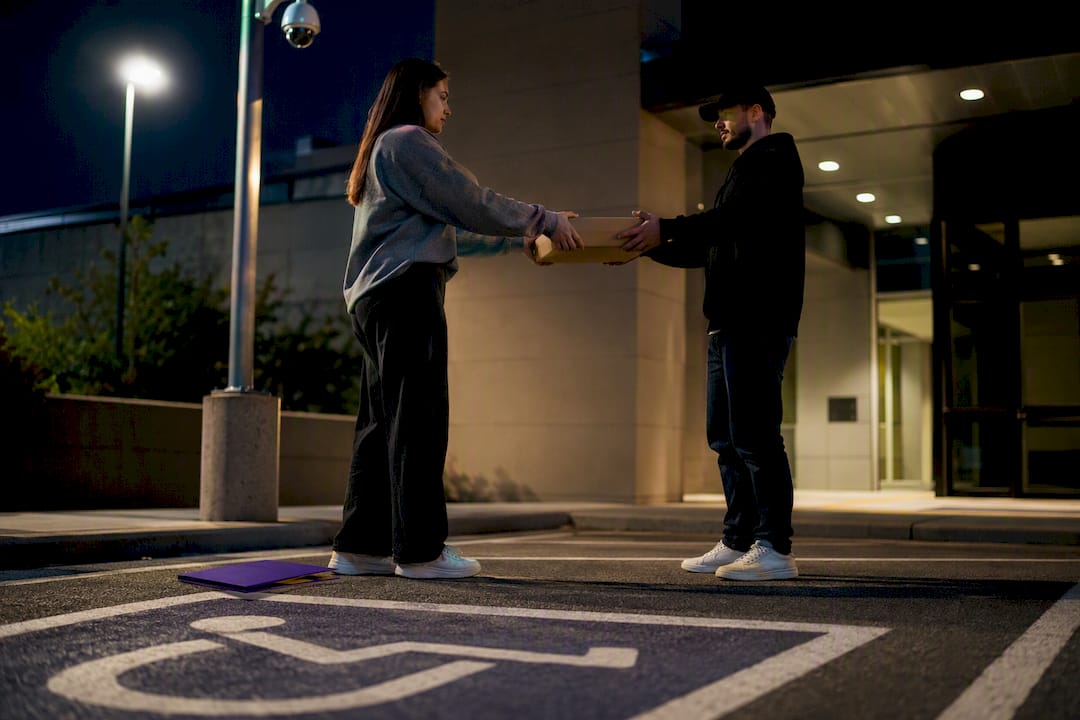
- Police safe-exchange zones: Marked parking spots with 24/7 CCTV coverage, built specifically to deter crime during buyer-seller meetups. These are your top pick for high-value items when your local department offers one.
- Bank parking lots or lobbies: Useful when a buyer needs to pull cash from an ATM or teller window. You can wait inside where staff and cameras are watching.
- Busy retail parking lots: Target, Walmart, and similar big-box stores during daylight hours give you witnesses, lighting, and easy access to store staff if something feels off.
- Public buildings: Libraries and community centers are staffed, monitored, and rarely empty, which makes them solid backups when a police zone isn’t nearby.
- Municipal exchange zones: Some cities map out official meeting points separate from police lots, often listed on city or county websites.
- Licensed buyback services or pawn shops: When you need cash today and don’t want to coordinate a meetup with a stranger at all, a local buyer who inspects and pays on the spot skips the risk entirely.
Consumer guides on where to sell items online for free consistently point to this same shortlist: banks, police lots, busy retail, and libraries. That consensus exists because these spots share three traits: witnesses, cameras, and predictable foot traffic. A quiet side street checks none of those boxes, no matter how convenient it seems.
What Police Safe Exchange Zones Are (And How to Confirm One Near You)
A police safe-exchange zone is typically a marked parking space at or near a police station, watched by 24/7 video surveillance and lit well enough to see clearly at any hour. The idea is deterrence, not mediation. Officers aren’t going to referee your transaction or verify that the item works as described.
That distinction trips people up. Departments provide the space and the cameras; you still handle the negotiation, the inspection, and the payment yourself. SafeTradeStations confirms these zones are free to use and exist purely to discourage crime, not to supervise sales.
Rules vary by department, so don’t assume anything. Some locations require appointments. Others restrict certain items or limit hours to daytime only.
Before you head out, take a few minutes to check:
- Call the department’s non-emergency line and ask if a safe-exchange zone exists and what hours it operates.
- Search the SafeTradeStations locator or your local police department’s website for a mapped location.
- Ask about item restrictions. Some departments won’t allow certain goods (weapons, for example) at their exchange zones.
- Confirm whether the space is monitored around the clock or only during specific shifts.
Pro Tip: Screenshot the exchange zone’s address and posted hours before you leave home. Cell signal near some municipal buildings is spotty, and you don’t want to be stuck without confirmation.
Your Step-by-Step Safe Meeting and Payment Checklist
A safe sale isn’t luck. It’s a sequence of small decisions that stack the odds in your favor.
- Pick a daylight time slot. Morning or early afternoon beats evening every time, even at a well-lit location.
- Tell someone your plans. Share the buyer’s contact info, the meeting spot, and your expected return time with a friend or family member.
- Bring a companion for high-value items. A second set of eyes changes the dynamic and gives you a witness.
- Confirm the location’s setup before you leave. Check that the spot has visible cameras or heavy foot traffic, and note any posted rules if it’s an official exchange zone.
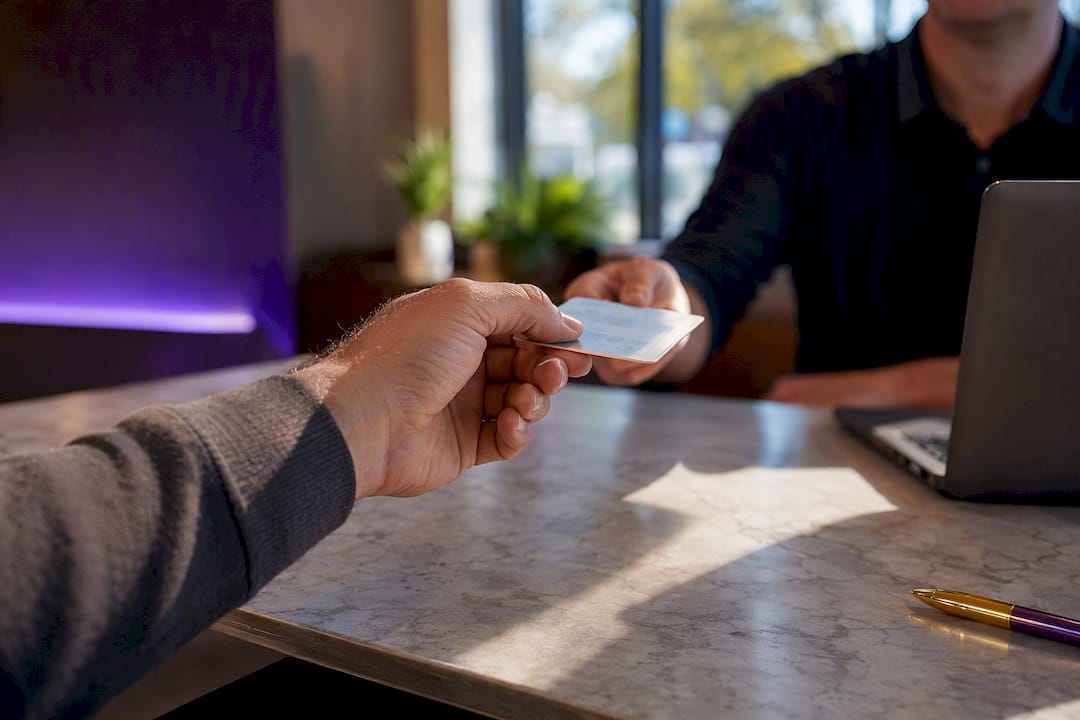
- Verify payment before the item changes hands. Cash is easiest to confirm on the spot. If the buyer wants to send a digital transfer, wait for an actual bank confirmation or app notification, not just a screenshot.
- If the buyer needs to grab cash, wait somewhere visible. Stay inside the bank lobby or in view of the entrance until they return with funds.
- Secure payment discreetly after the exchange. Don’t count cash in the open. Put it away before you walk to your car.
- Vary your route home if the meeting felt at all unusual, and report anything suspicious to local police.
Scam attempts tied to online marketplace transactions climbed sharply in 2024, with BBB’s Scam Tracker reporting a 42% year-over-year jump in marketplace-related complaints. That trend is exactly why payment verification belongs at the top of your checklist, not as an afterthought once the buyer is already holding your item.
Waiting inside a bank while a buyer withdraws cash isn’t overkill. It’s the same logic as meeting at a police lot: you’re putting a witness and a camera between yourself and a stranger.
Red Flags That Mean You Should Cancel the Meeting
Some warning signs show up before you even leave the house, and they’re worth taking seriously.
- A buyer who insists on meeting after dark or at a private address instead of a public spot.
- Pressure to accept an unusual payment method, or an offer to overpay “by mistake” and ask for the difference back.
- Vague or shifting contact details, especially if their name or number changes between messages.
- Last-minute changes to the meeting location, particularly a switch toward somewhere more isolated.
- Refusal to show basic ID when you ask, especially for a big-ticket item.
None of these guarantee trouble, but stacked together, they’re a pattern worth walking away from.
Pro Tip: If your gut says something’s off, cancel and reschedule at a police-monitored location instead. Losing one sale costs you nothing compared to what a bad meetup could cost.
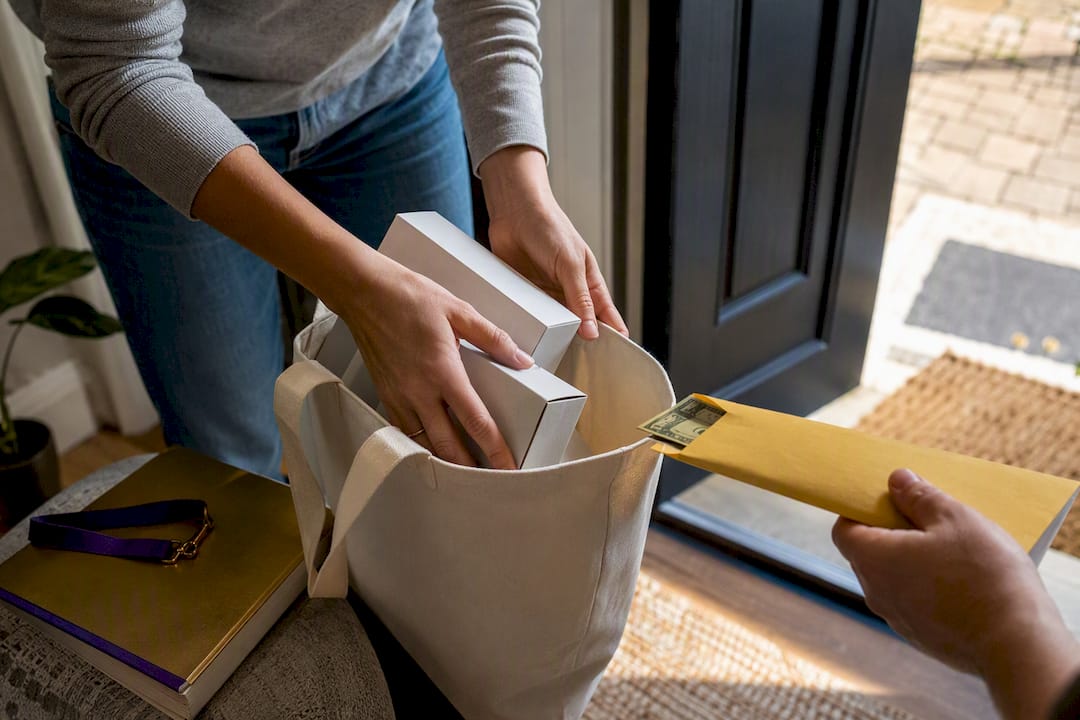
Per Houston Police’s guidance on safe transactions, choosing a spot near active entrances and cameras, and steering clear of isolated corners of a lot, cuts risk substantially. That same guidance is blunt about one thing: never invite a buyer to your home, no matter how convincing they sound.
How to Package and Ship Items Safely When You Can’t Meet in Person
Sometimes an in-person meetup isn’t practical, especially for buyers outside your area. Shipping introduces a different set of risks, but a few habits keep most of them in check.
Package items securely enough to survive handling, and photograph the item and its condition before you seal the box. That photo becomes your evidence if a buyer later claims the item arrived damaged or different from what you listed. Use tracked shipping every time, never an untracked option, even if it costs a little more. Tracking numbers protect you from “it never arrived” disputes, which are one of the most common post-sale scams.
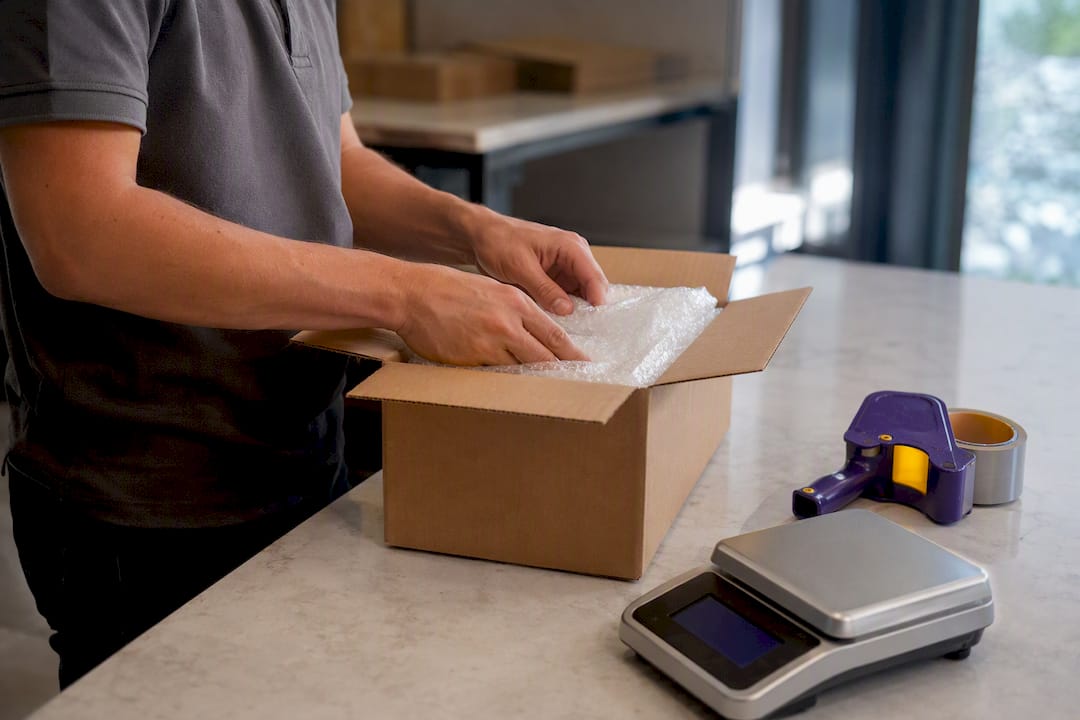
Wait for cleared payment before you ship. A pending transfer or a check that hasn’t cleared isn’t payment yet, no matter how legitimate it looks on screen. If a buyer pressures you to ship before payment clears, that pressure is itself a red flag.
For anything valuable, consider requiring signature confirmation on delivery, and keep your shipping receipt until the buyer confirms the item arrived in good condition. Insure high-value shipments separately if your carrier’s default coverage falls short of the item’s worth.
Guidelines for Verifying Buyer Identity Securely
You don’t need a background check to protect yourself. You need a few consistent habits that make it harder for someone to hide who they are.
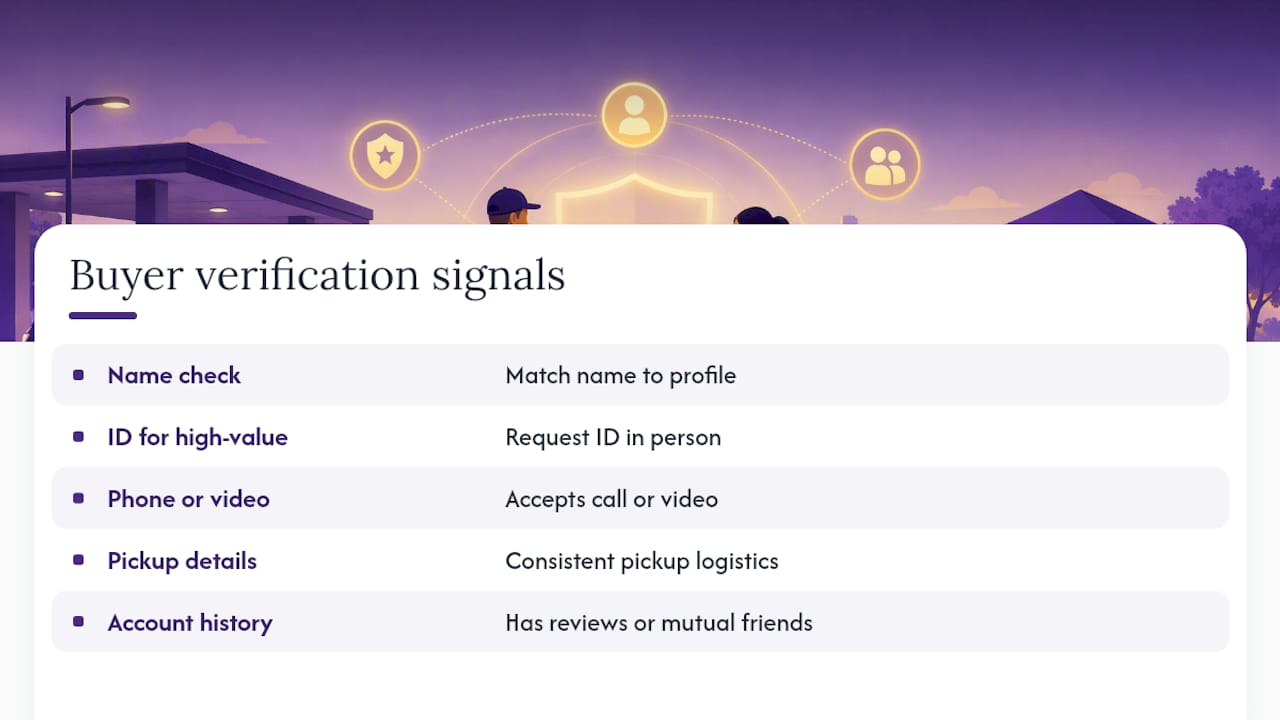
Ask for a first and last name early in the conversation, and see whether it matches the name on their payment app profile or messaging account. A mismatch isn’t automatically a scam, but it’s worth a follow-up question. For higher-value items, request that the buyer show ID in person before the exchange, and don’t feel awkward about it. Legitimate buyers rarely object.
Pay attention to how they communicate. A buyer who avoids phone calls, refuses to show their face on video, or gives inconsistent details about pickup logistics is telling you something. Cross-reference their phone number or social profile if the platform allows it. A profile created days ago with no history is a weaker signal than an established account with reviews or friends in common.
None of this needs to feel like an interrogation. A few casual questions, asked before you commit to a meeting spot and time, filter out most bad actors before they ever show up.
What to Do If You Spot a Scam or Suspicious Activity
If a deal goes sideways, report it immediately rather than writing it off as a bad experience. Start with the platform you used to list the item. Most marketplaces have a reporting tool that flags the buyer’s account for review, which helps protect the next seller from the same person.
If money changed hands and something felt fraudulent, contact your bank or payment app’s fraud department right away. Speed matters here. Zelle and similar instant transfers are difficult to reverse once processed, so the sooner you report it, the better your odds of any recovery.
For anything involving a physical threat, theft, or an in-person incident, contact your local police department’s non-emergency line and file a report, even if nothing was stolen. A documented report creates a paper trail that helps if the same buyer targets someone else. You can also file a complaint with the Better Business Bureau’s Scam Tracker, which aggregates reports and helps identify patterns across multiple victims.
Don’t let embarrassment stop you from reporting. Scammers rely on victims staying quiet.
Choosing a Reputable Online Marketplace for Selling
Where you list an item shapes how safe the eventual sale turns out to be. Some platforms build in buyer and seller protections, escrow-style payment holds, or verified profiles. Others are essentially open bulletin boards with no oversight at all.
Facebook Marketplace offers strong local reach and makes in-person meetups easy to arrange, but it also carries a higher volume of scam reports than more structured platforms, according to Forbes Advisor’s comparison of selling platforms. Specialty resale sites and local buyback services tend to trade some of that reach for tighter structure and faster payment.
Before you list anything, check whether the platform verifies buyer or seller identity, offers a dispute resolution process, and lets you review a buyer’s history or ratings. Instant local cash from a buyer or buyback service also sidesteps the processing delays and chargeback risk that come with some online payment methods, which matters if you need money the same day rather than waiting on a platform’s payout schedule.
Why a Licensed Local Buyback Beats a Stranger Meetup for Medical Supplies
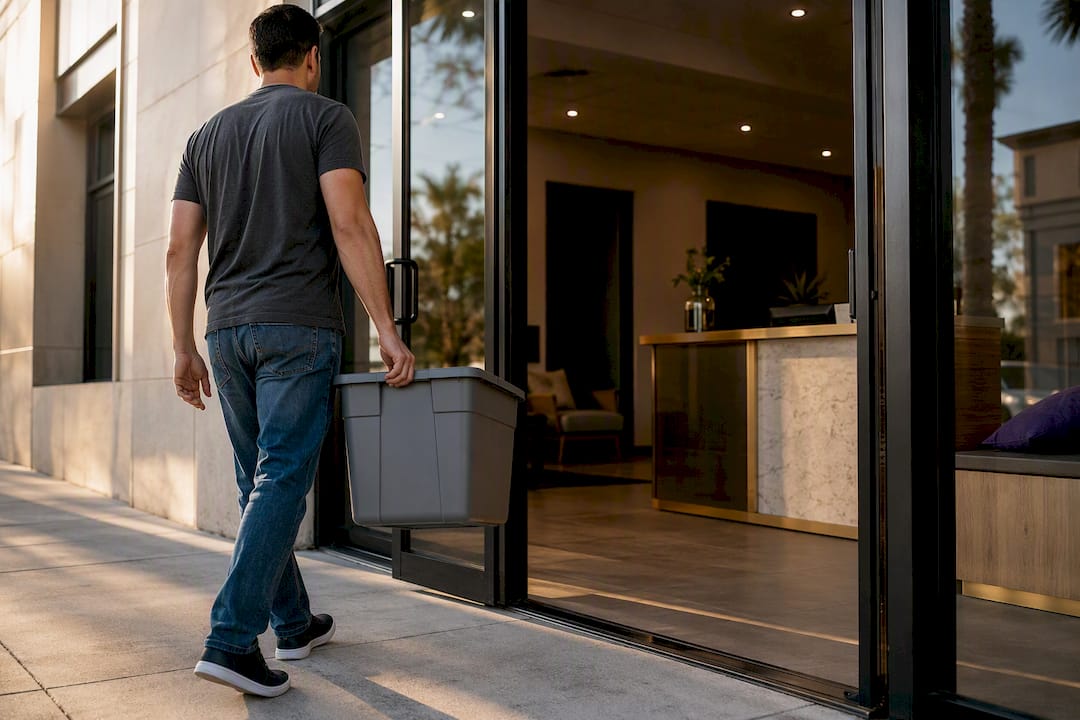
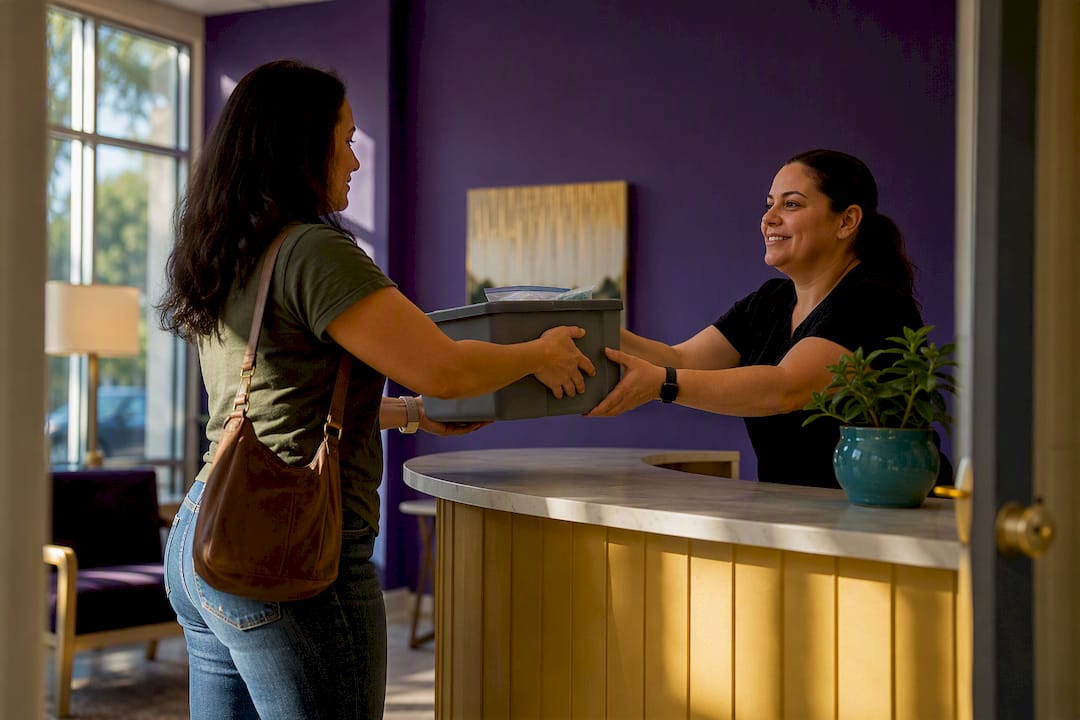
Selling a Dexcom sensor or a box of test strips to a stranger you met online means walking a buyer through the same safety checklist as selling a bike. It’s overkill for what should be a simple transaction. Orlando Diabetic Supplies buys sealed, unused diabetic supplies directly, with inspection and payment handled on the spot.
That setup skips the coordination risk entirely. There’s no stranger to vet, no payment app to verify, no waiting in a parking lot after dark. For health-related items especially, a documented, on-site inspection gives you a clear chain of custody that a casual buyer never can. If you’ve got leftover CGMs or pods sitting in a drawer, a licensed local buyer is a safer route than a marketplace listing, not just a more convenient one.
— Liliana
Get Same-Day Cash Without the Stranger Meetup
Orlando Diabetic Supplies Buyback gives you a way to turn unused diabetic supplies into cash today, without ever coordinating a meetup with someone you found online. The service buys sealed, unexpired Dexcom G6 and G7 sensors, Freestyle Libre, Omnipod pods, and major-brand test strips, with inspection and payment happening in one visit.
Getting ready is simple. Keep supplies in their original sealed packaging, note the expiration dates, and set aside anything you no longer need after a prescription or device change. Police safe-exchange zones and busy retail lots remain your best bet for casual marketplace sales of general items, but for diabetic supplies specifically, there’s no reason to arrange a meetup with a stranger when a local, transparent option already exists. Visit the guide to getting cash for unused diabetic supplies to check what qualifies and schedule your same-day appointment.
Sources
- SafeTrade Stations | Where to Trade
- Where to sell stuff online — NerdWallet
- Advice To Citizens Regarding Safe Transactions — Houston Police