Florida Medicaid covers diabetic supplies through the pharmacy benefit. That includes meters, test strips, lancets, syringes, pen needles, insulin pump supplies and continuous glucose monitors (CGMs). You need a valid prescription from an enrolled practitioner, and the product has to be on the state’s Preferred Product List (PPL) or be prior authorized. Quantity limits apply to nearly every item. This guide explains how the policy works, what each item requires and what to do if a request is denied.
TL;DR
- Florida Medicaid covers PPL diabetic supplies by prescription from an enrolled practitioner, filled at an enrolled pharmacy.
- CGMs (Dexcom and FreeStyle Libre) and Omnipod pods are covered, with criteria and monthly limits.
- Products not on the PPL need prior authorization from the pharmacy benefits manager or your health plan.
- If a plan denies a supply, you appeal to the plan first, then you can request a Medicaid Fair Hearing.
- If you end up with sealed supplies you no longer use, read our guide to Florida resale rules before you decide what to do with them.
Table of Contents
- What Florida Medicaid covers
- Who qualifies and what the prescription must say
- How you get your supplies
- CGM coverage rules
- Quantity limits and refills
- If a request is denied
- Rule changes to watch
- What if you have more supplies than you use?
- Sell unused supplies in Orlando
- Frequently asked questions
- Sources
What Florida Medicaid covers
The Agency for Health Care Administration (AHCA) publishes the list of covered products. According to the Diabetic Supplies Preferred Product List effective October 1, 2026, covered categories include:
- Traditional blood glucose meters (Contour and True Metrix)
- Blood glucose test strips (Contour and True Metrix)
- Continuous glucose monitors: Dexcom receiver, sensor and transmitter, and FreeStyle Libre reader, sensor and Sensor Plus
- Insulin pen needles and insulin syringes
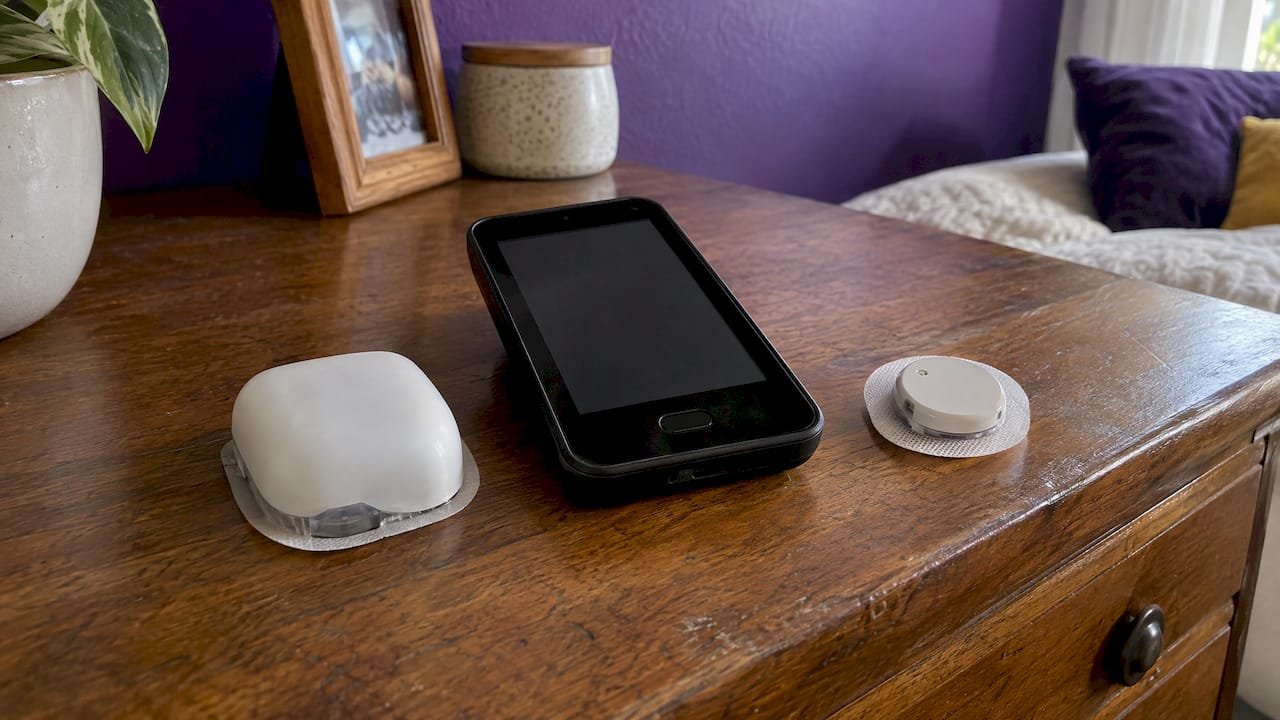
- Insulin pumps and patches, including the Omnipod Intro Kit and Omnipod pods, and the CeQur Simplicity patch
- Ketone strips, lancets and lancing devices
- Alcohol swabs and calibration control solution
AHCA’s DME and medical supplies policy page also names meters, test strips, syringes and lancets as examples of reimbursable supplies. Medically necessary supplies are available to Medicaid recipients within the coverage and limitation rules.
The list is updated from time to time, so brands and models change. Always check the current PPL on AHCA’s site, or ask your pharmacist which products are preferred today.
Who qualifies and what the prescription must say
The governing rule is Rule 59G-4.252, the Diabetic Supply Services Coverage Policy. Under the September 2024 coverage policy, three things must be true:
- You are a Medicaid recipient with diabetes.
- The supplies are prescribed by an enrolled Florida Medicaid practitioner licensed under Chapter 458, 459 or 464 of the Florida Statutes. That covers physicians, osteopathic physicians and advanced practice nurses.
- The prescription documents the type, quantity and frequency of need.
Hard copy prescriptions must be written on a counterfeit-proof prescription pad from an AHCA-approved vendor. Most prescribers now send prescriptions electronically to the pharmacy, so ask your office how they handle it.
A practical tip: ask your prescriber to write the actual testing or sensor-change frequency you need. A prescription that states your real usage makes it easier for the pharmacy to fill the full amount and for a prior authorization to go through.
How you get your supplies
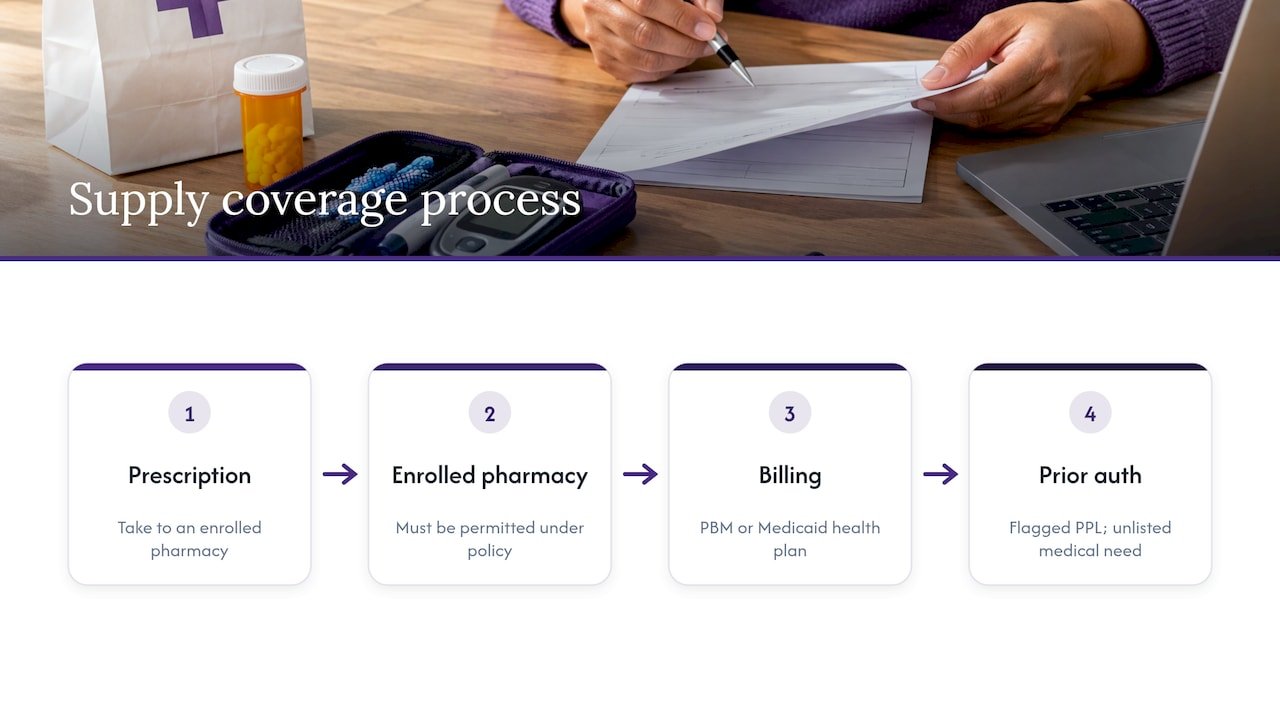
You take your prescription to an enrolled pharmacy. The coverage policy says diabetic supply services must come from pharmacies permitted under Chapter 465 or from practitioners licensed under Chapters 465, 458 or 459 (policy section 3.2).
The pharmacy bills the pharmacy benefits manager (PBM) or your Medicaid health plan. Prior authorization is needed when the PPL flags it, or when a product is medically necessary but not on the list (coverage policy section 7.2).
The move from DME to the pharmacy benefit
This changed recently. AHCA’s Policy Transmittal 2024-11 says managed care plans had to make diabetic supplies available through the pharmacy benefit from October 1, 2024. From January 1, 2025, enrollees could no longer get them through the durable medical equipment (DME) benefit, apart from the exceptions in the rule. Enrollees eligible for both Medicare and Medicaid continue to receive supplies through DME providers.
If you have both coverages, how Medicare handles equipment matters too. This overview of Medicare durable medical equipment coverage explains the basics of the DME side.
CGM coverage rules
Continuous glucose monitors have their own criteria. Two sources apply.
State law. Under Florida Statute 409.9063, and subject to available funds and appropriations, Medicaid must cover a CGM under the pharmacy benefit for recipients who have diabetes, are prescribed insulin and are prescribed a CGM to help manage the condition. To keep coverage, you must have follow-up care with your treating practitioner, in person or by telehealth:
- at least once every 6 months during the first 18 months after your first CGM prescription
- at least once every 12 months after that
AHCA’s coverage criteria. The Diabetic Supply Coverage Criteria (October 30, 2024) add clinical requirements:
- You need a qualifying diagnosis.
- Preferred CGM products require insulin use within the past 90 days.
- Non-preferred products require that, plus a trial and failure of preferred products, clinical justification or an insulin pump that is not compatible with the preferred product.
- The criteria also describe hypoglycemia history. For preferred products, that means documented recurrent level 2 events (glucose below 54 mg/dL) that continue despite multiple medication adjustments, or one level 3 event that needed another person’s help. Non-preferred products also require a documented trial and failure of all preferred products.
Because criteria can be updated, ask your prescriber’s office to check the current version before they submit a request.
Quantity limits and refills
The PPL sets monthly or yearly caps. These are the ones listed on the October 1, 2026 PPL:
| Item | Listed limit |
|---|---|
| Blood glucose meters | 1 per year |
| Test strips | 200 per month |
| Lancets | 200 per month |
| Dexcom sensors | 2 to 3 per 30 days, depending on the label |
| FreeStyle Libre sensors | 2 per 28 days |
| FreeStyle Libre Sensor Plus | 2 per 30 days |
| Omnipod pods | 15 per 30 days |
Other supplies have their own limits on the list. If your doctor says you need more than a limit allows, the prescriber can request prior authorization with documented medical necessity.
Monthly limits are one reason many people are prescribed supplies every month. Our guide to how insurance quantity limits work and our explanation of why diabetic supplies are prescribed monthly cover this in plain terms.
If a request is denied
A denial is not the end of the road. If you are enrolled in a Medicaid health plan and a service is denied, reduced or stopped, the plan sends a Notice of Adverse Benefit Determination. It explains how to ask for an appeal.
The steps, from AHCA’s Medicaid Fair Hearings page:
- Use your plan’s appeal process first.
- If the plan’s decision still goes against you, request a Medicaid Fair Hearing through the Medicaid Helpline or in writing to AHCA’s Medicaid Hearing Unit.
The Florida Health Justice Center’s grievance and appeal notes say an appeal can be filed within 60 calendar days of the adverse determination. The plan must resolve it within 30 days of receiving it. A fair hearing can only be requested after the plan upholds its decision.
Also keep in mind that a denial is often a paperwork gap. A missing diagnosis code, a quantity above the limit or a non-preferred brand without justification are common causes. Ask your prescriber to fix the documentation and resubmit while you appeal.
Rule changes to watch
The rule is being updated. A notice in the Florida Administrative Register shows a proposed amendment to Rule 59G-4.252. It would clarify policy language, define Maximum Allowable Cost, revise the PPL and remove the sunset provision under Chapter 2025-189, Laws of Florida. For you, the practical effect is that the PPL can change, so confirm the current list at each new prescription.
What if you have more supplies than you use?
This happens often. A device switch, a dose change or a delivery that overlaps with a refill can leave you with sealed boxes. AHCA’s coverage policy does not explicitly address recipients returning, transferring or reselling unused supplies. It does exclude replacement for lost shipments or provider error, and it requires providers to keep purchase records for five years (coverage policy).
Because the rules around Medicaid-paid supplies are specific, we wrote separate guides. See what qualifies for diabetic supply payment in Florida and our overview of Florida diabetic supply programs. If you are switching devices, our device switch checklist helps you plan the change so you don’t end up with duplicate supplies.
Our perspective
We talk with people in Orlando every week who have unused sensors, pods or strips. Most didn’t plan to have extras. A prescription changed, a new device arrived early or a plan’s limits didn’t match their real needs.
Our view is simple: be clear before you act. Know which coverage paid for your supplies, keep your boxes sealed and unexpired, and read the rules that apply to you. We buy eligible, unopened supplies and pay on the spot, and we explain our process openly so you can decide with confidence.
We meet in safe public locations in the Orlando area. That means no shipping delays and no waiting on a check. If you aren’t sure whether your supplies qualify, ask us first.
Liliana
Sell unused supplies in Orlando
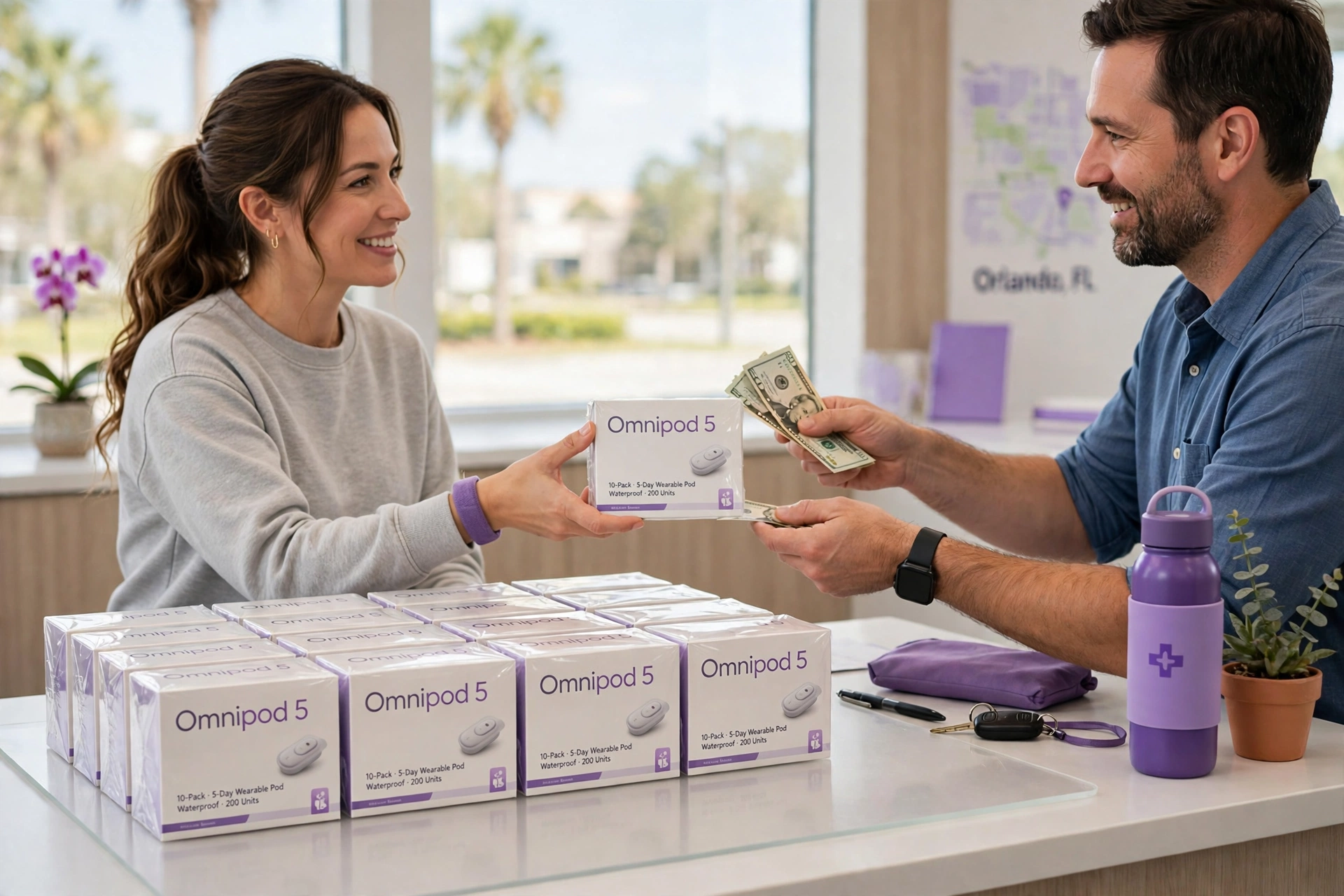
If you have sealed, unexpired Dexcom, FreeStyle Libre, Omnipod or test strip supplies you no longer need, we can look at them in person and pay the same day. Our published ranges are $70 to $90 per pack for Dexcom G7 and $15 to $20 per sensor for FreeStyle Libre 2. The final offer depends on the item and its condition.
Start on our Orlando buyback page, or check pricing for Dexcom G7 and FreeStyle Libre 2.
Frequently asked questions
Does Florida Medicaid cover Dexcom and FreeStyle Libre?
Yes. Both brands are on the current PPL, with limits on sensors per period. You need a diagnosis, a prescription and insulin use within the past 90 days for preferred products. Florida law also requires follow-up visits to keep coverage.
Do I need prior authorization for diabetic supplies?
Only when the PPL flags it, or when the product you need is medically necessary but not on the list. Your prescriber or pharmacy handles the request with the PBM or your health plan.
Where do I get my supplies if I have Medicaid?
From an enrolled pharmacy, using a prescription from an enrolled practitioner. If you have both Medicare and Medicaid, you continue to get supplies through DME providers.
What if my plan denies my supply?
File an appeal with your health plan first. The notice you receive explains how, and the deadline is 60 calendar days from the determination. If the denial is upheld, you can request a Medicaid Fair Hearing through the Medicaid Helpline.
Can I sell extra supplies I got through Medicaid?
The coverage policy does not explicitly address it, and the rules around Medicaid-paid supplies are specific. Read our guide on Florida resale laws and Medicaid fraud risk, then contact us with questions about your situation.
Sources
- Diabetic Supplies Preferred Product List (AHCA)
- Diabetic Supply Services Coverage Policy, Rule 59G-4.252 (AHCA)
- Diabetic Supply Services Coverage Policy, section 3.2
- Durable Medical Equipment and Medical Supplies (AHCA)
- SMMC Policy Transmittal 2024-11
- Florida Statutes 409.9063
- Diabetic Supply Coverage Criteria (AHCA)
- Medicaid Fair Hearings (AHCA)
- Grievance and Internal Appeal Notes (Florida Health Justice Center)
- Florida Administrative Register notice on Rule 59G-4.252
- Medicare durable medical equipment coverage