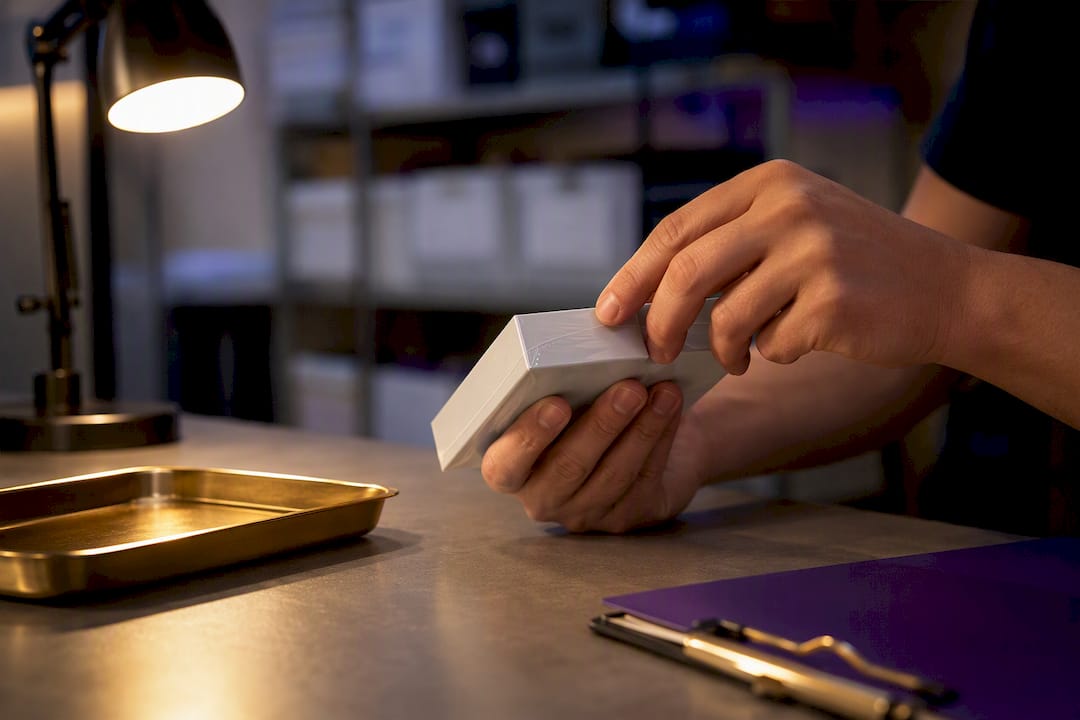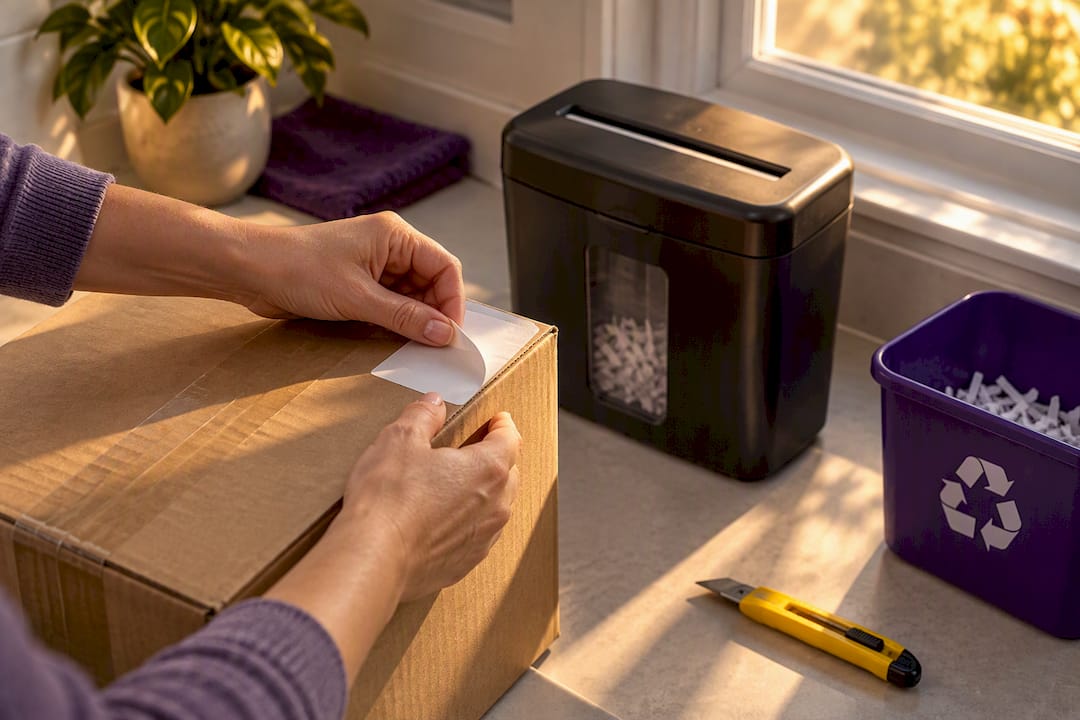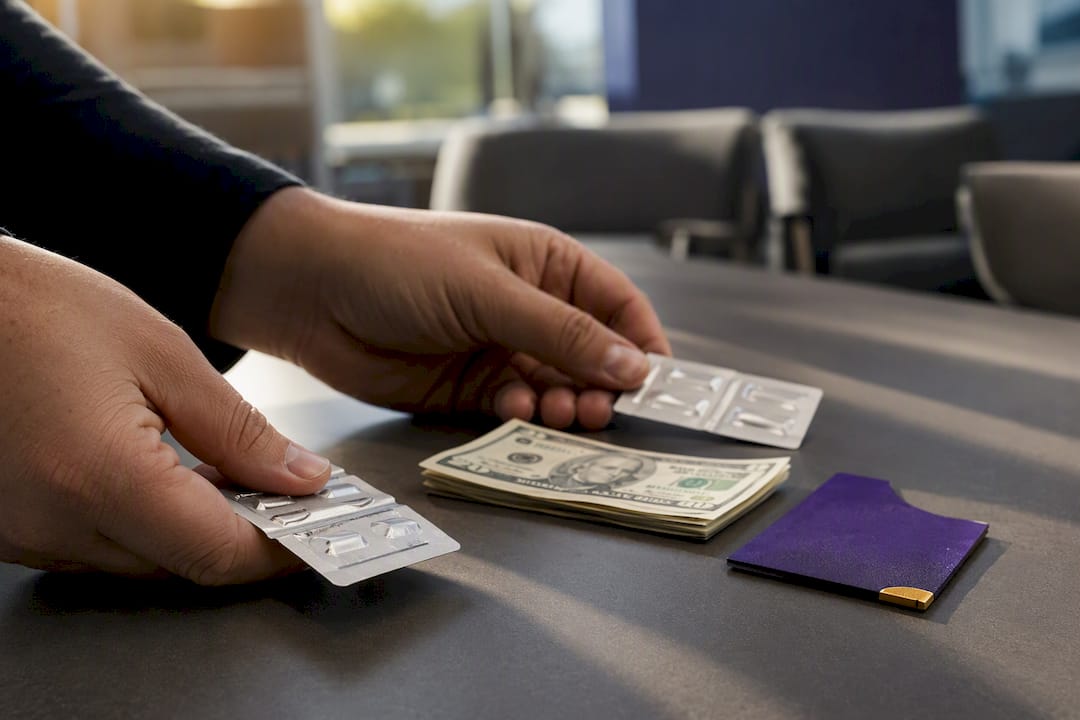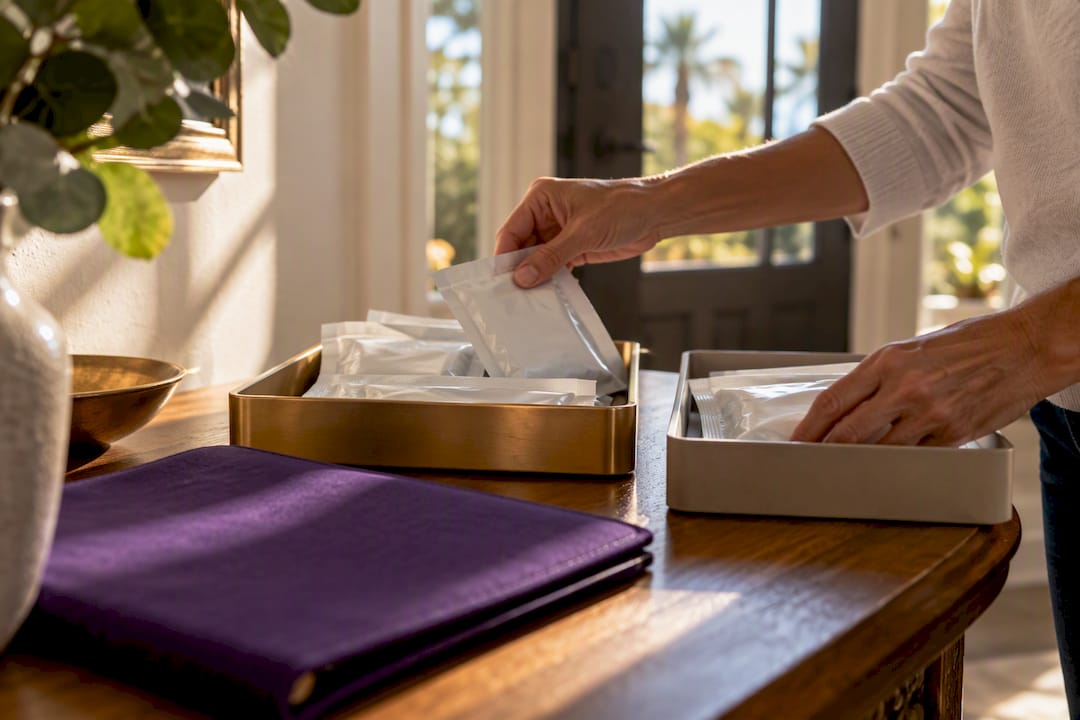
Switching your CGM, insulin pump, or prescription almost always leaves you holding sealed supplies you can’t use anymore. This happens because refill cycles, 90-day fills, and multi-vendor shipping schedules keep moving even after your decision to switch is made. Your old supplies arrive on their own timeline, not yours.
Here’s what usually drives it: a 90-day fill ships before your switch takes effect, your CGM and pump vendors run on different authorization calendars, and about 45% of adults with type 1 diabetes report early sensor failures, which pushes people to keep backup stock in the first place. When the switch happens, that backup stock becomes surplus overnight.
Three things to do right now:
- Inventory everything sealed. Count what you have by brand and model.
- Check expiration dates and packaging. Anything opened, expired, or missing its box likely can’t be sold or donated.
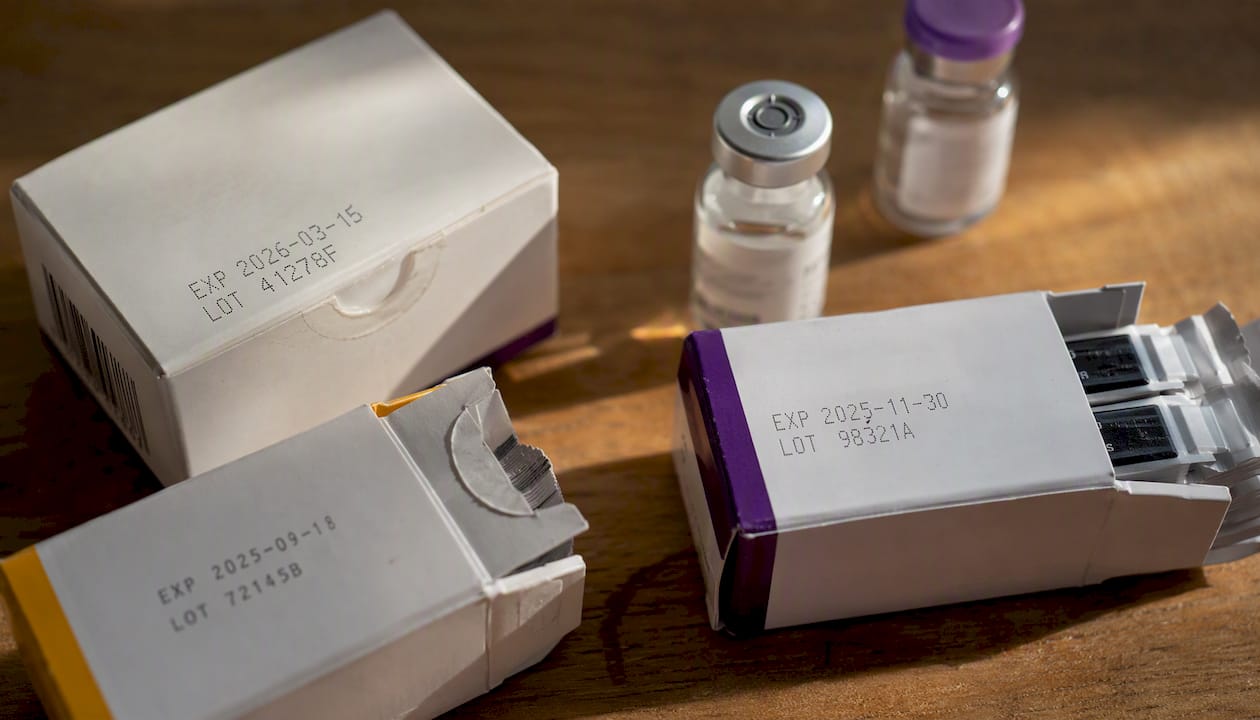
- Photograph each item with the lot number and expiry date visible, before you decide whether to sell, donate, or dispose of it.
The rest of this guide walks through exactly how the buildup happens, what you’re most likely sitting on, and the fastest ways to turn it into cash, a donation, or a safe exit.
Key Takeaways
Surplus after a device or prescription switch forms mainly from 90-day fill timing, insurer authorization delays, and safety stock built up against early device failures.
| Point | Details |
|---|---|
| Inventory first | Count sealed items by brand and model before deciding what to sell, donate, or dispose of. |
| Check eligibility carefully | Only sealed, unexpired items with visible lot numbers and original packaging qualify for resale or donation. |
| Coordinate insurance timing | Call your insurer or DME supplier before switching to pause auto-refills and avoid future surplus. |
| Match the route to your priority | Donation suits patience and social impact; local buy-back suits speed and same-day cash needs. |
| Orlando Diabetic Supplies Buyback for speed | Offers same-day, in-person cash for sealed, unexpired Dexcom, Libre, OmniPod, and test strip supplies in Orlando. |
Table of Contents
- How Supply Surplus Builds After a Switch
- Which Diabetic Supplies Are Most Often Left Over
- How Surplus Piles Up: Three Real Timelines
- Risks of Holding On to Surplus Supplies
- How to Tell If an Item Can Be Sold or Donated
- Should You Donate, Sell, or Dispose of Your Surplus?
- Your Step-by-Step Plan for Today
- How Insurance Rules Quietly Cause the Surplus
- What I Hear From Sellers Every Week
- Get Same-Day Cash for Your Sealed Supplies in Orlando
- Where to Check First
- Frequently Asked Questions
- Sources
How Supply Surplus Builds After a Switch
Five forces create most of the leftover pile: 90-day fills that ship before a switch takes effect, insurance prior authorization delays, mismatched vendor calendars for sensors versus pumps versus insulin, early device failures that push people to stockpile, and plain old habit. Each one alone is manageable. Stacked together, they turn a single decision into boxes of unopened supplies.
The 90-day fill is the biggest single culprit. If your pharmacy or durable medical equipment (DME) supplier ships a quarterly batch of sensors or insulin pens two weeks before you switch devices, that entire batch is now obsolete. You paid for it, your insurance covered it, and none of it fits your new setup.
Vendor fragmentation makes it worse. CGM sensors typically get replaced every 10 to 14 days, transmitters roughly every 90 days, and infusion sets every 2 to 3 days, according to industry coverage of resupply models for diabetes care. Each of those runs on its own reorder clock with its own supplier. A single device switch can leave you with three or four different incompatible items shipped on three or four different schedules.
Statistic Callout: Nearly half of surveyed adults with type 1 diabetes, about 45%, reported early CGM sensor failures, and 48% reported early pump cannula failures, according to a 2024 T1D Exchange survey of 2,151 adults. That failure rate is a big reason people keep extra sensors and cannulas on hand, stock that becomes dead weight the moment they switch systems.
A few real-world patterns show up again and again:
- Your insurer auto-refills a 90-day supply right after your doctor approves a new device, so the old order ships anyway.
- Your DME supplier fulfills a pending order before your prior authorization for the new device clears.
- You built a safety buffer of extra sensors because of past failures, and the whole buffer becomes obsolete after the switch.
Which Diabetic Supplies Are Most Often Left Over
The leftover pile tends to look the same across households: sensors and transmitters, pump consumables, unopened insulin, and test strips. Knowing which category you’re holding determines who will take it off your hands.
- CGM sensors and transmitters (Dexcom G6, Dexcom G7, FreeStyle Libre): These are the most commonly leftover items because they ship on tight 10 to 14 day cycles. Buyers and donors both want them sealed, with the box intact and the lot number visible.
- Pump pods and infusion sets (OmniPod pods, other brand infusion sets): High resale interest exists here, but compatibility matters enormously. A pod that fits one pump model is useless to someone on a different system.
- Insulin vials, pens, and cartridges: Donation groups are especially interested in these, but they must be unopened and unexpired. Opened insulin, even if never used, generally cannot be donated or resold.
- Test strips and lancets: These have long shelf lives and broad compatibility, making them some of the easiest items to sell or donate, provided the box is sealed.
Insulin for Life U.S.A. and similar groups routinely accept sealed insulin, pens, and select CGM or pump supplies, while nonprofit donation guides note that Integrated Diabetes Services and CR3 Diabetes Association take specific pump and CGM items under their own rules. Always confirm before shipping.
Pro Tip: Take one photo per item that clearly shows the brand, the lot number, and the expiration date in the same frame. Buyers and donation coordinators move faster when they don’t have to ask for a second picture.
How Surplus Piles Up: Three Real Timelines
Surplus builds fastest when a switch lands close to a shipment date. A few quick scenarios show how the math works.
- The 7-day scenario: A 90-day CGM shipment arrives, and you switch devices a week later. You’re left with roughly 83 days of sensors, which at one sensor per 10 to 14 days could mean six to eight unopened sensors sitting unused.
- The denied authorization scenario: Your new device gets approved, but the auto-refill for your old supplies had already cleared insurance weeks earlier. The old shipment arrives after your switch is final, and there’s no way to stop it retroactively.
- The safety-buffer scenario: A caregiver, worried about the sensor failure rates mentioned above, keeps two extra boxes on hand at all times. After a device change, that buffer of two boxes becomes immediate surplus with no clear use.
Run the same math on your own stock: take units on hand, multiply by days of use per unit, and you’ll know exactly how many days of coverage just became irrelevant. If the number is high, you’re a strong candidate for either the buy-back route or a donation contact today. For a closer look at how this plays out in practice, real supply waste scenarios can help you map your own situation.
Risks of Holding On to Surplus Supplies
Keeping a large, unmanaged stockpile creates more risk than most people expect. Expired insulin loses potency, mismatched test strips can produce inaccurate readings, and confusion between old and new supplies raises the odds of a mistake during an already stressful transition.
Research on medication oversupply shows that excess stock can complicate a patient’s regimen and has been linked in some studies to adverse outcomes and patient confusion from medication interactions when patients lose track of what they’re actually supposed to be using. That’s not a reason to panic, but it is a reason to sort your surplus rather than let it sit in a drawer.
There’s a financial cost too. Insulin, sensors, and test strips all have shelf lives, and once they pass, their resale and donation value drops to zero. Every month of delay is money quietly disappearing.
Environmental concerns matter as well. Sharps like lancets and used infusion set needles require proper disposal, never regular trash, while sealed and unused boxes should go to someone who can still use them rather than a landfill.
Statistic Callout: The same 45% early sensor failure rate that drives people to overstock in the first place is exactly why so many households end up with more surplus than they realize. Protective stocking behavior and post-switch leftovers are two sides of the same coin.
Pro Tip: Store sealed supplies at room temperature, away from direct sunlight, and never remove the original box. Buyers and donation coordinators can usually verify eligibility just from an intact package and a visible lot number.
- Confusion between old and new supplies increases medication error risk.
- Expired stock loses all resale and donation value.
- Sharps and used disposables need proper disposal, not household trash.
How to Tell If an Item Can Be Sold or Donated
Eligibility comes down to a short list of conditions, and most sealed items either clear all of them or none of them. The core rule: only sealed, unopened, unexpired items in their original packaging with a visible lot number and expiration date are usually eligible.
- Sealed and unopened, with the manufacturer’s box intact.
- Unexpired, with enough shelf life remaining that a buyer or donor can actually use it.
- Original packaging, not repackaged or relabeled.
- Matching model or part number for pump pods and infusion sets, since compatibility isn’t universal.
- Lot number and expiry clearly visible, ideally in one photo.
- Proof of purchase, while not always required, speeds up the process with most buyers.
Some organizations make exceptions. A few will consider open-box pump supplies if they’re clearly unused and clean, but that’s the exception, not the rule. Always check a group’s specific policy before shipping anything.
Pro Tip: When you photograph an item, lay it flat, angle the camera so there’s no glare, and get the expiration date and lot number in the same shot as the brand name. One clean photo beats three blurry ones.
Should You Donate, Sell, or Dispose of Your Surplus?
Each route serves a different priority. Donation does the most social good but moves slower and comes with stricter rules. Selling gets you cash fastest, especially through a local buy-back. Disposal is the only responsible choice for anything that fails the eligibility check.
Donation: Insulin for Life U.S.A. accepts sealed, unexpired insulin, pens, and select CGM or pump supplies. Project CURE takes broader medical donations, including some diabetic supplies, for international relief. Integrated Diabetes Services and CR3 Diabetes Association both accept specific pump and CGM items under their own posted rules. All of them require you to confirm acceptance before shipping.
Selling: A local buy-back service inspects items in person and pays cash the same day for eligible sealed stock. Specialized buy-back services online typically require photo verification and mailing before payment clears. General marketplaces offer the widest reach but the least protection, since buyers can dispute condition after the fact.
Disposal: Sharps go into an approved sharps container, never loose in the trash. Pharmacies and municipal take-back programs handle unused medication safely. Non-sharp items that fail eligibility, like opened test strip boxes, can go in regular trash once sealed in a bag.
| Factor | Donate | Sell (local buy-back) |
|---|---|---|
| Acceptance criteria | Strict, org-specific, unopened/unexpired only | Sealed, unexpired, verified on the spot |
| Payment | None, tax-deductible in some cases | Same-day cash |
| Speed | Days to weeks | Minutes to same day |
| Effort | Contact org, ship or drop off | In-person inspection, immediate payoff |
Your Step-by-Step Plan for Today
The fastest path from surplus to resolution follows six steps: inventory, photograph, check eligibility, contact donation groups first, get cash offers locally, then dispose of anything that doesn’t qualify.
- Gather every sealed item and count it by brand and model.
- Photograph each item with the expiry date and lot number visible.
- Run each item through the eligibility checklist above.
- Contact donation organizations first if giving back matters to you, then reach out to a local buy-back for a cash offer.
- If selling online, insist on in-person or verified payment methods rather than shipping first and hoping for payment later.
- Dispose of anything ineligible using a sharps container or your pharmacy’s take-back program.
A short message works fine when reaching out: “I have [item, brand, model], sealed and unexpired, expiring [date]. Do you accept this, and what’s the next step?” Donation groups usually take longer to respond and process. A local buy-back can often turn eligible items into cash the same day you show up.
How Insurance Rules Quietly Cause the Surplus
Insurer policy is the systemic engine behind most surplus, more than any individual habit. Ninety-day fills, prior authorization windows, and auto-refill defaults all run independently of your decision to switch, which is exactly why the timing so often goes wrong.
Prior authorization is the single biggest friction point. One 2024 survey found that adults with type 1 diabetes averaged 1.8 supply access interruptions per year, with required prior authorization cited as the leading cause in 36% of cases. That approval process runs on its own clock, separate from your device switch, which is exactly how a shipment ends up arriving after you’ve already moved on.
Before switching, run through this coordination checklist:
- Call your insurer and DME supplier before finalizing the switch, not after.
- Ask them to pause or cancel any pending auto-refill tied to your old device.
- Get the next authorized refill date in writing so you know what’s still coming.
- Confirm whether a partially shipped order can be returned or credited.
Pro Tip: Most DME suppliers can hold or cancel a shipment if you call before it leaves the warehouse, but almost none can reverse it once it ships. Timing your call matters more than the content of the call. For a deeper walkthrough, the device switch transition checklist breaks down exactly when to make that call.
What I Hear From Sellers Every Week
People show up with sealed boxes and almost always the same three surprises: they didn’t realize the lot number mattered, they assumed an unopened sensor with a slightly worn box wouldn’t count, and they had no idea their supplies were already close to expiring.
The pattern that stands out most is how often the surplus wasn’t a mistake at all. It was a reasonable safety buffer that made total sense before the switch and stopped making sense the day after. Nobody over-ordered because they were careless. They over-ordered because sensor and cannula failure rates gave them good reason to.
When speed matters more than maximizing every last dollar, a local buy-back with in-person inspection and same-day payment for eligible sealed items solves the problem fastest. Donation is worth pursuing when you have time to spare and want the supplies to help someone directly, but for sellers who need resolution now, immediate cash for eligible stock is usually the more practical answer.
Get Same-Day Cash for Your Sealed Supplies in Orlando
If you’re holding sealed, unexpired Dexcom G6 or G7 sensors, FreeStyle Libre sensors, OmniPod pods, or major-brand test strips, Orlando Diabetic Supplies Buyback pays cash on the spot instead of making you wait weeks for a donation group to respond.
Eligibility is simple: items need to be sealed, unexpired, in original packaging, with the lot number and expiration date visible. Controlled substances and opened sharps aren’t accepted, for safety reasons that apply to any buyer or donor. If your stock clears that bar, in-person inspection and payment usually take just a few minutes.
Start by checking your exact eligibility and next steps on the primary cash page for unused diabetic supplies, then bring your sealed items in for an on-the-spot offer.
Where to Check First
- Insulin for Life U.S.A. donation guide: Explains what sealed, unexpired insulin and supplies are accepted and how to confirm before shipping.
- Type1Strong donation resource list: Covers Integrated Diabetes Services and CR3 Diabetes Association acceptance rules for pump and CGM items.
- Medication oversupply study: Peer-reviewed look at how excess medication stock complicates regimens and raises costs.
- T1D Exchange supply access survey: Source of the 1.8 annual interruption average and the 45% early sensor failure figure.
- Resupply model coverage for diabetes care: Details the replacement cadence behind CGM and pump shipment timing.
Frequently Asked Questions
Why do I have leftover diabetic supplies after switching devices?
Surplus usually happens because a 90-day fill, insurance auto-refill, or pending shipment ships around the same time as your switch, leaving you with sealed items that no longer match your new device or prescription.
Can I sell opened or expired diabetic supplies?
Generally no. Most buyers and donation organizations require sealed, unopened, unexpired items with the original packaging intact.
Which diabetic supplies are easiest to sell or donate?
Sealed CGM sensors, unopened test strips, and unexpired insulin vials or pens tend to have the broadest acceptance among both buyers and donation groups.
How fast can I get cash for unused supplies?
A local buy-back with in-person inspection can pay the same day for eligible items, while donation processing through organizations like Insulin for Life typically takes longer.
How do I stop future surplus from building up?
Call your insurer or DME supplier before any device switch to pause auto-refills, and confirm your next authorized refill date in writing so nothing ships unexpectedly.
This article is general information, not a substitute for advice from a qualified doctor. Consult a qualified healthcare professional about your own circumstances before acting on anything here.
Sources
- Medication oversupply in patients with diabetes – PMC
- 1936-LB: The Challenge of Obtaining Diabetes Technology Supplies in Adults with Type 1 Diabetes
- T1D Exchange registry survey results
- Want To Donate Your Unused Diabetes Supplies? – Diatribe
- What to do with extra diabetes supplies – Type1Strong
- How to establish a scalable resupply model for diabetes care – HomeCare Magazine