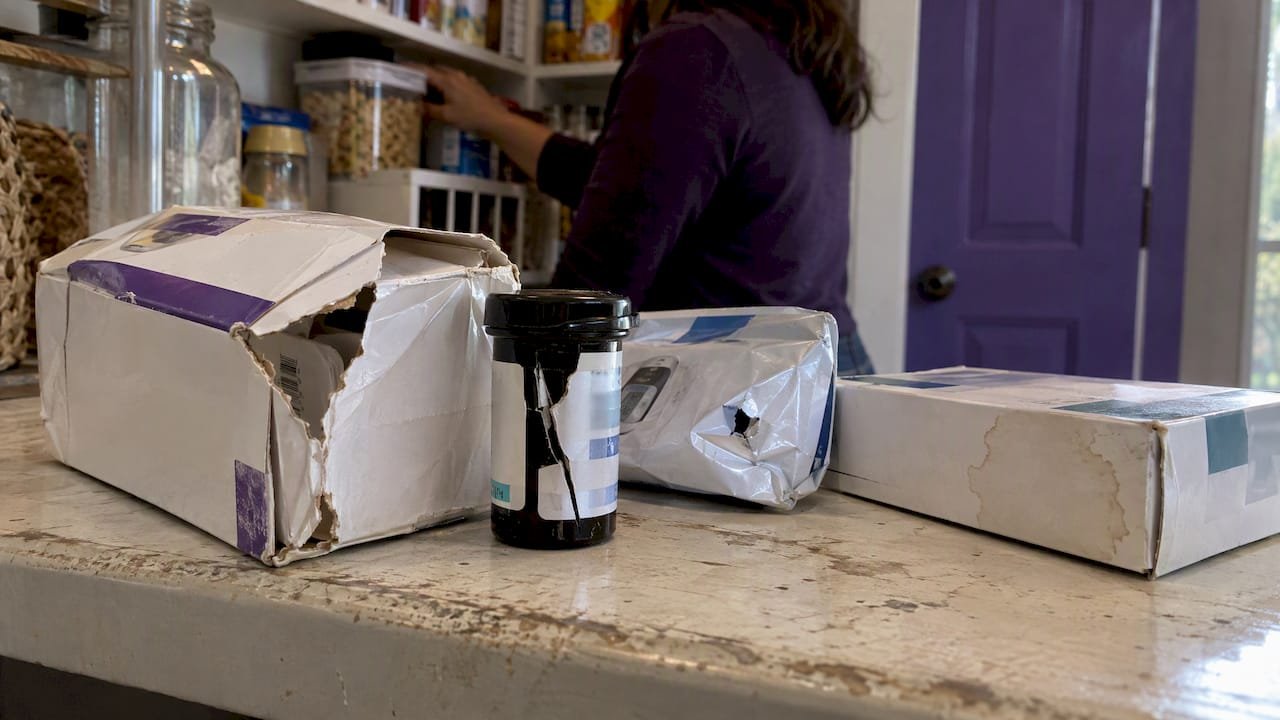
Buyers reject diabetic supplies that are expired, opened, damaged, tampered with, or labeled as free samples. They also reject anything that is a medication rather than a device or strip. If your items are sealed, in the original packaging and well within their dates, they are usually the kind of supplies that can be sold. Below is how to tell which group yours fall into before you spend time on a meetup.
TL;DR
- Expired, opened, water-damaged, cracked or visibly tampered-with supplies are the most common rejects, and the FDA gives safety reasons for each.
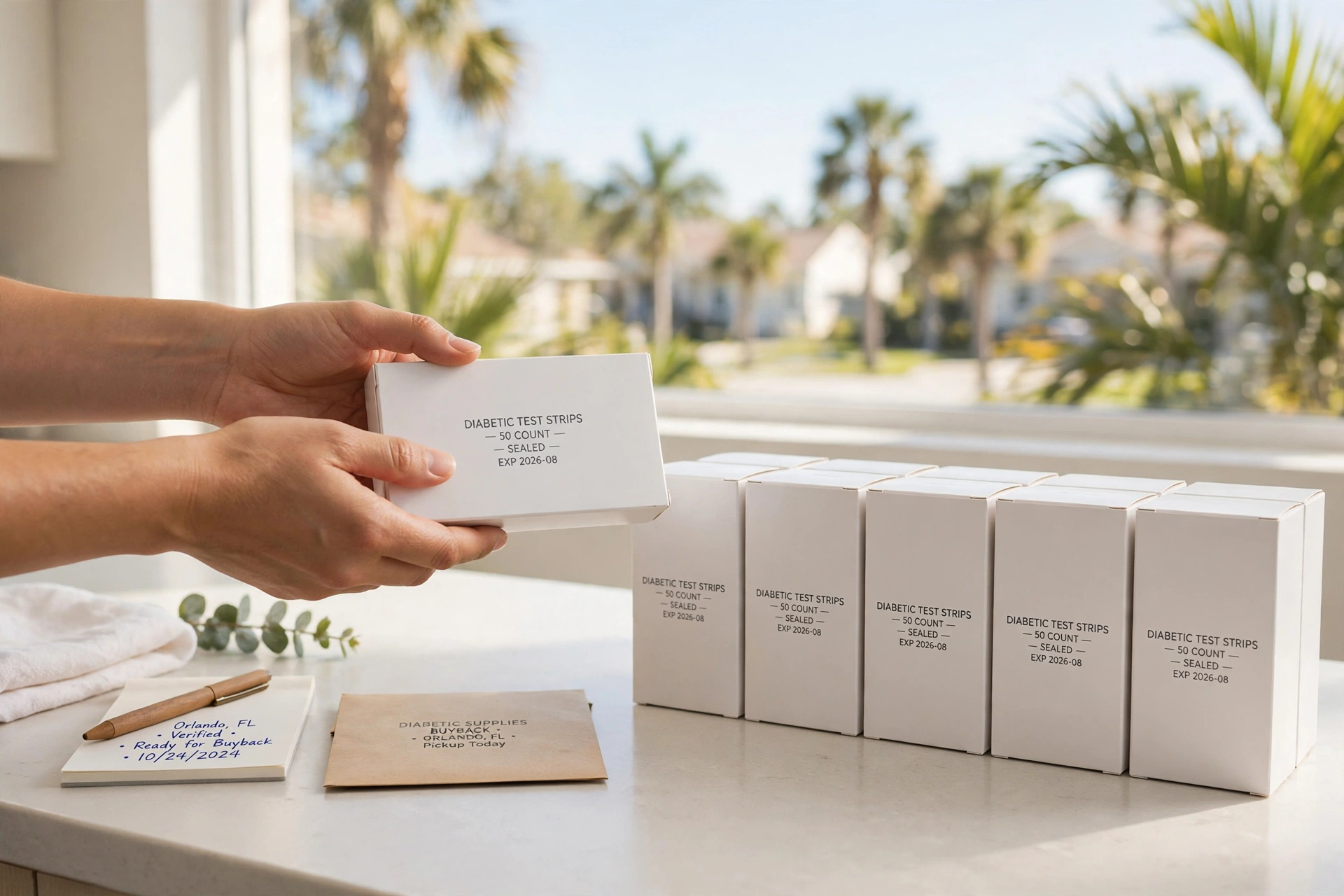
- Sealed, unexpired boxes in original retail packaging are what we look at. Check the date printed on the box first.
- Free samples and “not for resale” items are a gray area at best. Florida has specific rules for prescription drug samples.
- Insulin and other medications are not the same as strips, sensors and pods, and different rules apply to them.
- Not sure about an item? Photograph the box and the date, and ask before you meet.
Table of Contents
- Why buyers turn supplies down
- The supplies buyers reject most often
- Quick reference: accepted or rejected?
- Can you sell sample diabetic supplies?
- What cannot be sold or transferred
- A five-minute check before you sell
- Why people end up with supplies they cannot use
- Our perspective
- What we pay for items that pass
- Got sealed, unexpired supplies in Orlando?
- FAQ
- Sources
Why buyers turn supplies down
A buyer who resells supplies is putting them into someone else’s hands. That person will make treatment decisions from the readings. A strip that has been stored badly can give a wrong number, and a wrong number can lead to the wrong dose of insulin or a missed low.
The FDA says as much. It recommends buying new, unopened vials of test strips, and it warns that pre-owned strips may be improperly stored, expired or tampered with, which can cause incorrect results and serious health complications. Responsible buyers screen with that in mind. They are not being picky for the sake of it.
Most rejections come down to three questions:
- Can the buyer be sure of what is inside the package?
- Can the buyer be sure the product was stored properly?
- Will the product still be usable by the time someone else gets it?
If the answer to any of those is “not sure,” the item usually gets declined.
The supplies buyers reject most often
Expired or close-to-expiring items
This is the number one reason. Every strip vial, sensor box and pod carton carries a date. Once that date passes, the manufacturer no longer stands behind the result. The FDA advises consumers not to use test strips from a cracked or damaged bottle or past their expiration date.
Closeness to the date matters too. A resale chain takes time, and a box that expires in six weeks may be impossible to move. That is why short-dated supplies often get a lower offer or none at all. We cover the details in our expiration date checklist and in how expiration affects test strip value.
What happens to items that are already past the date is covered in our safety guide to expired diabetic supplies.
Opened vials and loose strips
A vial of strips that has been opened cannot be verified. Air and humidity get in each time the cap comes off, and the buyer has no way to know how long it was open. Loose strips in a bag, a pillbox or a glove compartment are almost always declined.
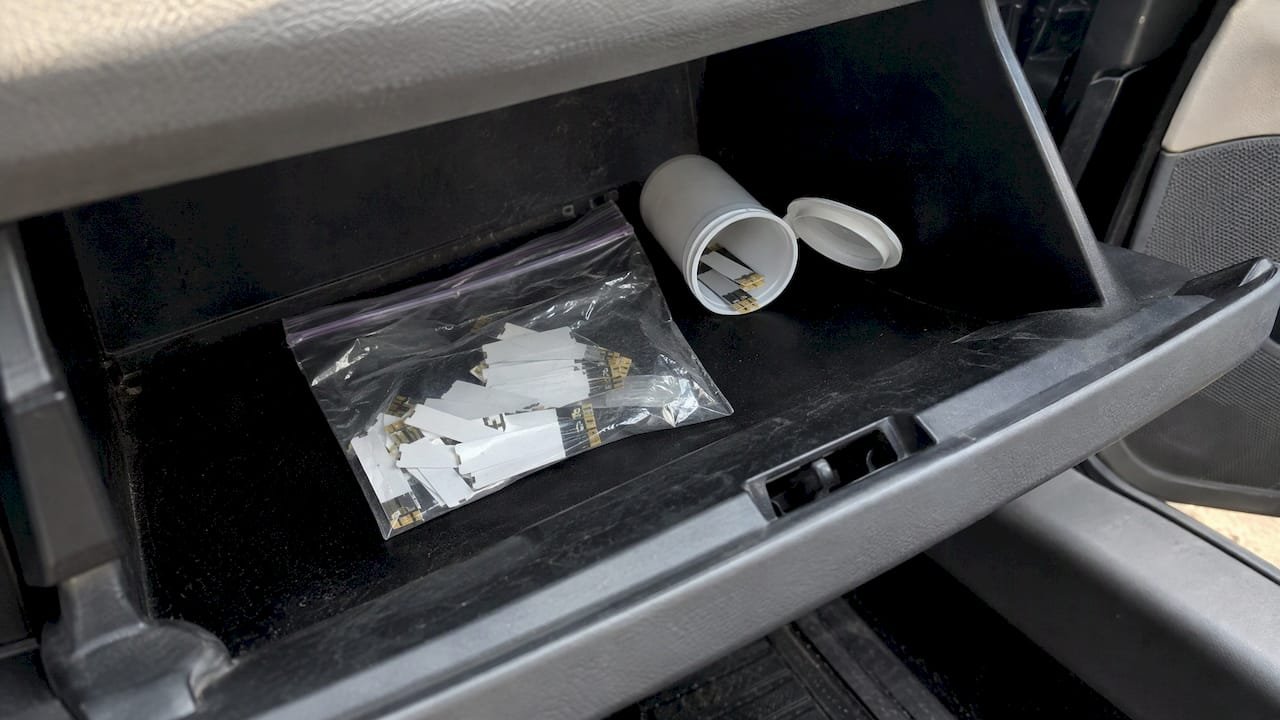
The same goes for strips that have been moved out of their original container. Lot numbers and dates live on the packaging, and without them the strips cannot be traced.
Damaged, cracked or water-stained packaging
Crushed boxes, torn seals, cracked vials, stains and signs of moisture all raise questions. Test strips are sensitive to moisture. A box that has been wet and dried may look fine and still perform badly.
For sensors and pods, a broken tamper seal or a punctured pouch means sterility can no longer be assumed. Those are rejected on sight.
Heat-exposed supplies
Florida is hard on supplies. A box left in a hot car or on a lanai in July has been through temperatures far outside what the label allows. Many strip makers print a storage range on the box, and our guide explains the 41°F to 86°F rule for storing strips in heat. If you cannot say where your supplies have been kept, a buyer cannot either. Our page on common mistakes storing excess test strips lists the habits that cause the most trouble.
Suspected counterfeits and gray-market packaging
Fake strips exist, and so do boxes meant for other countries. Packaging in a foreign language, mismatched lot numbers, odd printing or a seal that looks reapplied will get an item rejected. If you want to check a box yourself, here are six checks to spot counterfeit test strips.
Items nobody is looking for
Some supplies are sealed and in date, but still hard to sell. Strips for meters that are discontinued, or for brands with little demand, can be declined because there is no one to buy them next. Brand matters more than most people think, which is why we wrote about why test strip brands matter.
Quick reference: accepted or rejected?
| Item condition | Likely outcome | Why |
|---|---|---|
| Sealed box, original packaging, well within date | Usually accepted | Can be verified and resold |
| Sealed box, expires within a few weeks | Often declined or lower offer | Not enough time to resell |
| Expired at any level | Rejected | Past the manufacturer’s date |
| Opened vial of strips | Rejected | Exposure cannot be verified |
| Loose strips, no box | Rejected | No lot or date information |
| Crushed, torn or water-stained box | Rejected | Possible moisture or tampering |
| Kept in heat, such as a car | Rejected or questioned | Storage limits may have been exceeded |
| Box marked as a sample or not for resale | Usually declined | Labeling and legal questions |
| Insulin and other medications | Not a supply sale | Prescription drug rules apply |
This table is a general guide to how items are screened in the resale market. Any one buyer may handle edge cases differently.
Can you sell sample diabetic supplies?
This is one of the questions readers ask most, and the honest answer depends on what kind of sample you have.
Meter makers and clinics sometimes hand out free meters, strips or sensors. If the box says “sample,” “not for resale” or similar, many buyers will pass. The label is a statement from the manufacturer about how the item is meant to be used, and a buyer does not want to resell something carrying that wording.
Prescription drugs are a stricter case. In Florida, expired complimentary or sample packages of prescription drugs must be returned to the manufacturer or distributor. That rule is about drugs, not strips, but it shows how seriously samples are treated in the state.
If your sample item has retail packaging with no sample wording, it is a different situation. When in doubt, send us a photo of the box and we will tell you whether it is something we can look at.
What cannot be sold or transferred
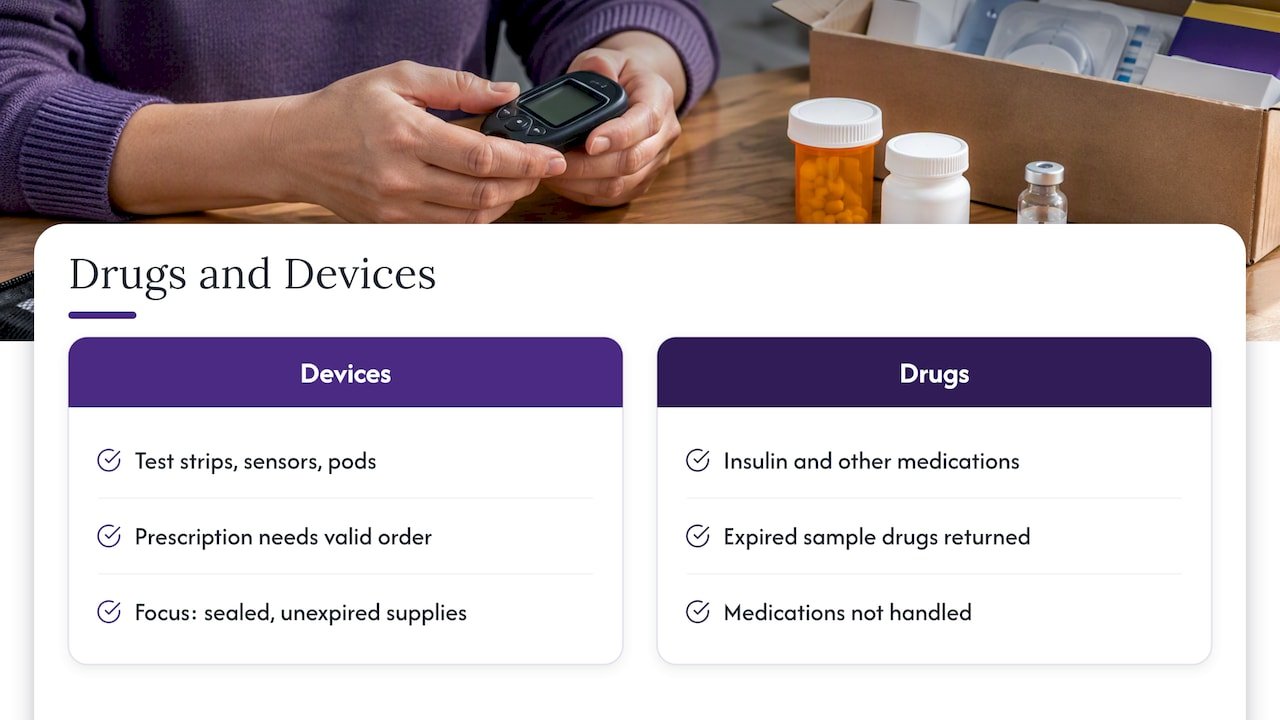
Test strips, sensors and pods are devices and supplies. Insulin and other medications are drugs, and they are treated differently.
Florida law makes it unlawful to sell, deliver, hold or offer for sale a drug or device that is adulterated, misbranded or rendered unfit. The same section also prohibits distributing a prescription device to a patient or ultimate consumer without a valid prescription or order from a licensed practitioner. In plain terms, anything damaged, spoiled or unfit for use is off the table. So is any prescription product you are not licensed to hand to another person.
For that reason, we focus on sealed, unexpired supplies such as sensors, pods and test strips. We do not deal in medications. If you have extra insulin or other drugs, ask your pharmacist or your doctor’s office about take-back and disposal options.
If you are unsure whether a product counts as a drug or a device, the box and the prescribing information will usually say. Your pharmacist can also tell you.
Injectable supplies and shelf life
Some people also have injection-related items at home, such as diluents or vials that have been opened. Once something has been opened, mixed or stored past its dating, it does not belong in a resale pile. Each product has its own clock, and the maker’s label is the guide. For an example of how this works, see this note on injection supply shelf life.
A five-minute check before you sell
Run through this list at home. It takes a few minutes and saves a wasted trip.
- Find the expiration date. It is printed on the box and on the vial, pouch or pod. Write it down.
- Look at the seal. It should be intact, with no signs of being reapplied.
- Check for damage. Look for dents, stains, warping and cracks.
- Think about storage. Were the supplies kept in a cool, dry place, or somewhere hot?
- Read the label. Look for the words sample, not for resale, or a language other than English.
- Match the contents. The box, the lot numbers and the item inside should agree.
- Take photos. Photograph the front, the back and the date. That lets a buyer give you a quick answer.
If you want a fuller walk-through of the selling process, we put one together in how to get cash for unused diabetic supplies.
Why people end up with supplies they cannot use
Most people who sell are not doing anything unusual. The most common stories are:
- A new meter. Your doctor or insurer changes your meter, and the old strips no longer fit. We explain why strips go unused after a meter switch.
- A device upgrade. You move from one CGM to another. Here is why people switch CGM devices.
- Automatic refills. Insurance keeps shipping more than you use.
- A change in prescription or provider. The new plan covers a different brand.
In each of these cases, the supplies are usually fine. The problem is storage and timing. Supplies that sit for a year in a drawer are more likely to be short-dated, and that is when they get rejected. The earlier you sell after you stop needing them, the better your chance of a yes.
Our perspective
We buy supplies from people in Orlando who changed devices, switched plans or just ended up with more than they need. Most of the time, we are looking at the same things you would check yourself: a sealed box, a date well in the future and original packaging.
We would rather tell you no before you drive across town than after. That is why we ask for a photo of the box first, and why we explain our reasons plainly. If your supplies are sealed and unexpired, we want to make a fair offer and pay you on the spot.
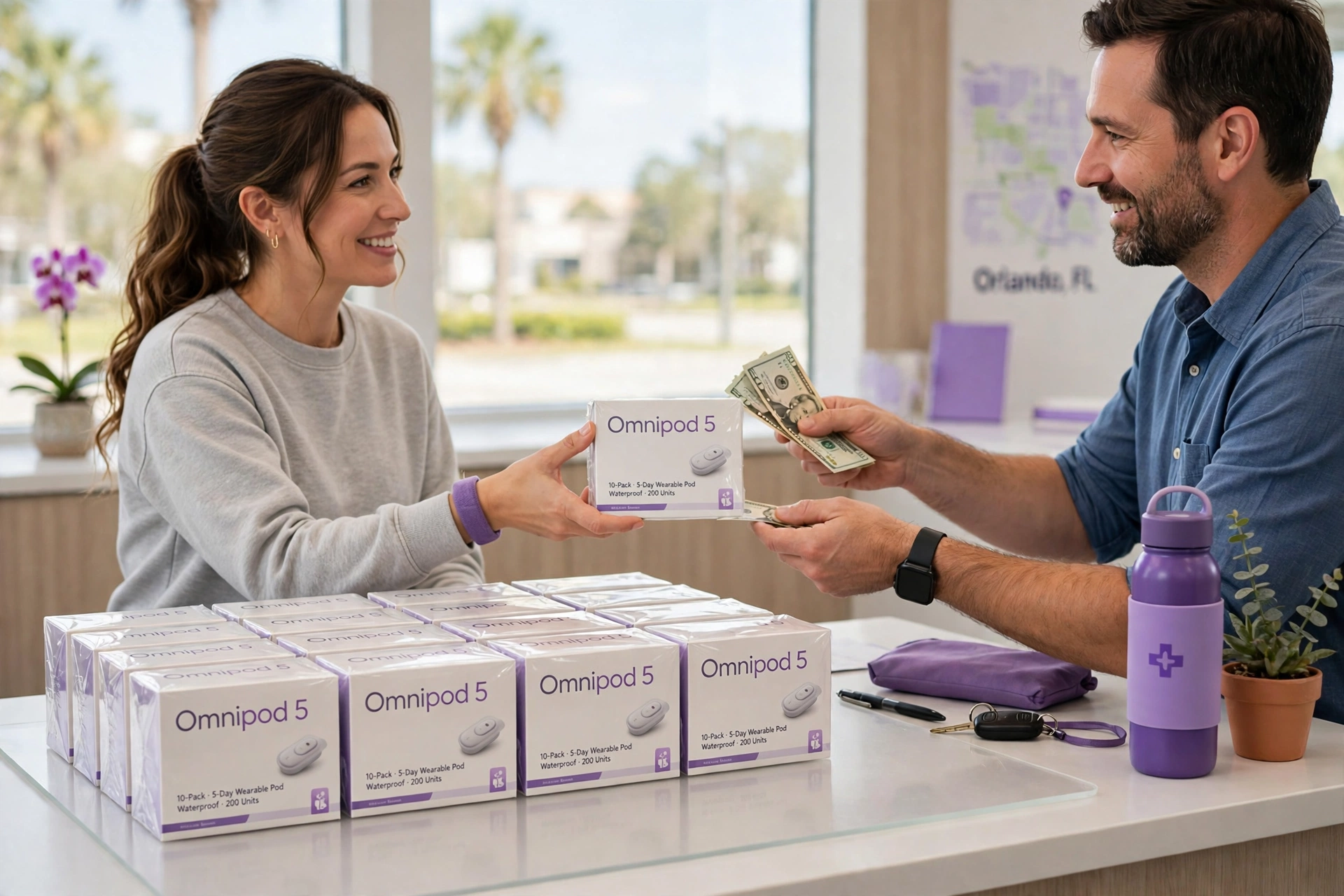
Meeting in a safe, public place in person also means you do not have to ship anything, wait for a check or wonder whether a package arrived. You hand over the items, we inspect them with you, and you get paid the same day.
Liliana
What we pay for items that pass
When supplies pass inspection, the offer depends on the product, the size of the box and the time left on the date. Our published ranges are:
- Dexcom G7: $70–$90 per pack. See our Dexcom G7 buyback page.
- FreeStyle Libre 2: $15–$20 per sensor. See our FreeStyle Libre 2 buyback page.
We also look at Dexcom G6 sensors, Omnipod pods and sealed test strips from major brands. Strips and pods are not priced on our site, so ask us for a quote with a photo of your box.
Got sealed, unexpired supplies in Orlando?
If your supplies pass the checklist above, we can meet you in a safe public location in the Orlando area, inspect them with you and pay you the same day.
Start on our main page to tell us what you have, or read which diabetic items have cash value first.
FAQ
Why was my box of test strips rejected?
The usual reasons are an expired or nearly expired date, an opened vial, damaged packaging or signs of heat or moisture. A missing original box is another common cause, because the lot number and date are on it. Photos of the box and the date help a buyer tell you in advance.
Can I sell free sample supplies?
It depends on the label. Items marked as samples or not for resale are commonly declined, and Florida has specific rules for prescription drug samples. If the packaging looks like normal retail packaging with no sample wording, send a photo and ask.
Can I sell insulin or other medications?
We do not buy medications. Florida treats drugs differently from strips and sensors, and it restricts selling or distributing drugs and devices that are unfit for use or lack a valid prescription. Ask your pharmacist about safe disposal or take-back.
Will a buyer take supplies that expire soon?
Sometimes, but often at a lower price or not at all. Resale takes time, and a short-dated box may expire before it reaches the next person. Selling soon after you stop needing supplies gives you the best chance.
Is it a problem if my supplies were kept in a hot car?
It can be. Heat can push strips outside the storage range on the box, and that is a reason to reject them. If you are unsure, check the label’s storage range and ask before you meet.
Sources
- How to Safely Use Glucose Meters and Test Strips for Diabetes, FDA
- FDA brochure on test strip use and storage
- Managing Sample Medication, Florida Department of Environmental Protection
- Florida Statutes, Section 499.005, Online Sunshine
- Bacteriostatic water shelf life for injections