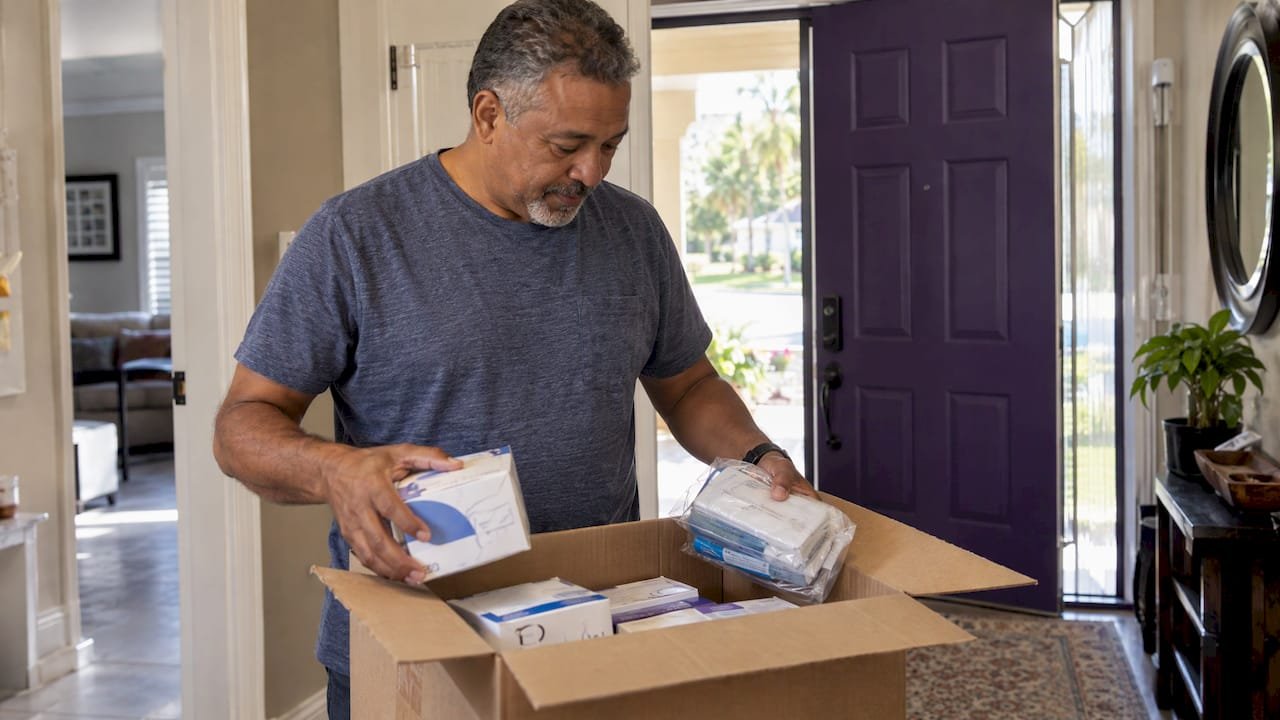
Bring the supplies in their original, sealed packaging, a quick check of the expiration dates, a photo ID, and a clear idea of how you got them. That covers most of what a local buyer needs to look at before paying you. If you are selling in Orlando, a short prep session at home can turn a meetup into a five-minute handoff.
This guide walks through what to put in the bag, how buyers judge condition, what gets an item turned down, and the insurance question you should settle before you sell anything.
TL;DR
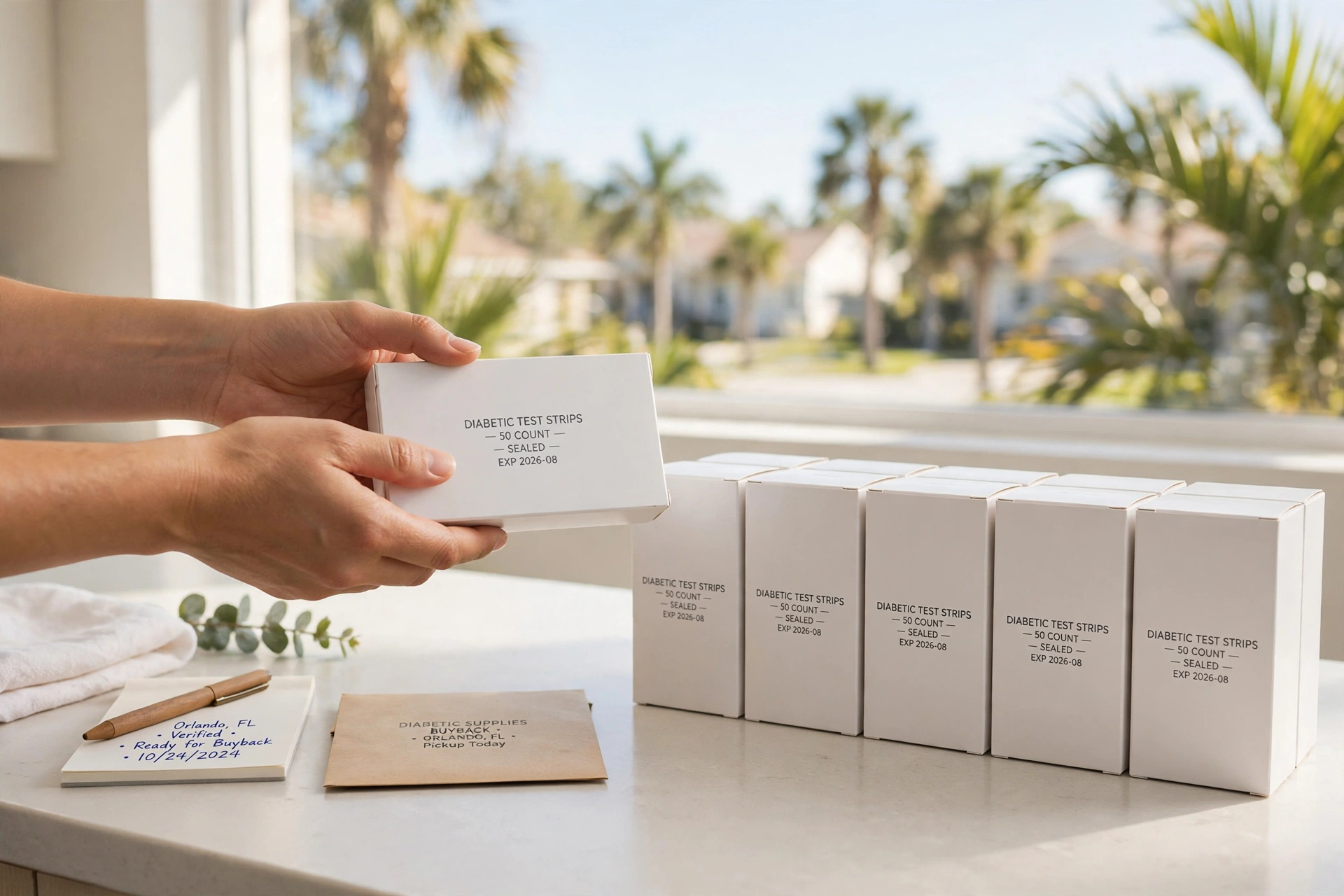
- Bring unopened, original boxes of sensors, pods or test strips, with labels and expiration dates readable.
- Check every expiration date and keep supplies in their original packaging, stored the way the maker says.
- Items that were opened, damaged, stored badly or paid for by a government program may not be eligible.
- Bring a photo ID and know how you received the supplies. Ask us anything before you meet.
- We pay on the spot for eligible items after an in-person inspection.
Table of Contents
- Your what-to-bring checklist
- How buyers grade condition
- Expiration dates and why they change the offer
- Storage: Florida heat is the hidden problem
- Ownership and insurance: settle this before you sell
- What gets an item turned down
- What we pay for common items
- Perspective
- A simple prep routine: ten minutes at home
- Ready to sell in Orlando?
- FAQ
- Sources
Your what-to-bring checklist
Keep it simple. Most sellers need only a few things.
- The supplies themselves. Original boxes, not loose items moved into a bag or a different container.
- Every item in its sealed state. Unopened cartons, intact foil packets, and unbroken bottle seals.
- A photo ID. It helps with a clean, documented sale.
- Your phone. We use it to confirm the meetup spot and the time. Having it with you also lets you show us any order or pharmacy details you want to share.
- A list of what you have. Brand, model, count and the soonest expiration date. If you text us this first, we can tell you what to expect before you drive anywhere.
If you have a mix, such as a few Dexcom boxes plus test strips and a case of pods, bring it all. We look at each item separately, so one problem box does not hold up the rest.
What to leave at home
Do not bring used sensors, opened strip vials, or anything you plan to keep using. Insulin and other medicines are a separate category, and you should not pack them with supplies for a buyback. If you are unsure whether something counts, our guide on what counts as an unused diabetic supply explains it in plain terms.
How buyers grade condition
When we inspect supplies in person, we look at the same few things every time. Knowing them ahead of time lets you sort your stock before you leave the house.
| What we check | What a good item looks like | What can cause a problem |
|---|---|---|
| Seal | Factory seal intact, box never opened | Torn tape, opened flap, broken seal, missing foil |
| Expiration date | Printed date is clearly readable and well ahead | Expired, very close to expiring, or smudged |
| Packaging | Original retail box, all text visible | Crushed, wet, stained, or covered in stickers |
| Storage | Kept in a normal indoor setting | Left in a hot car, a mailbox or direct sun |
| Completeness | Everything that came in the box is there | Missing parts or a mixed-up box |
| Origin | Supplies you own and can legally sell | Items tied to a government program |
The condition grade is not about how pretty the box is. It is about whether the product is still sealed, in date, and safe to pass on. A box with a small scuff on the corner is usually fine. A box that has been opened is a different story.
Sealed means sealed
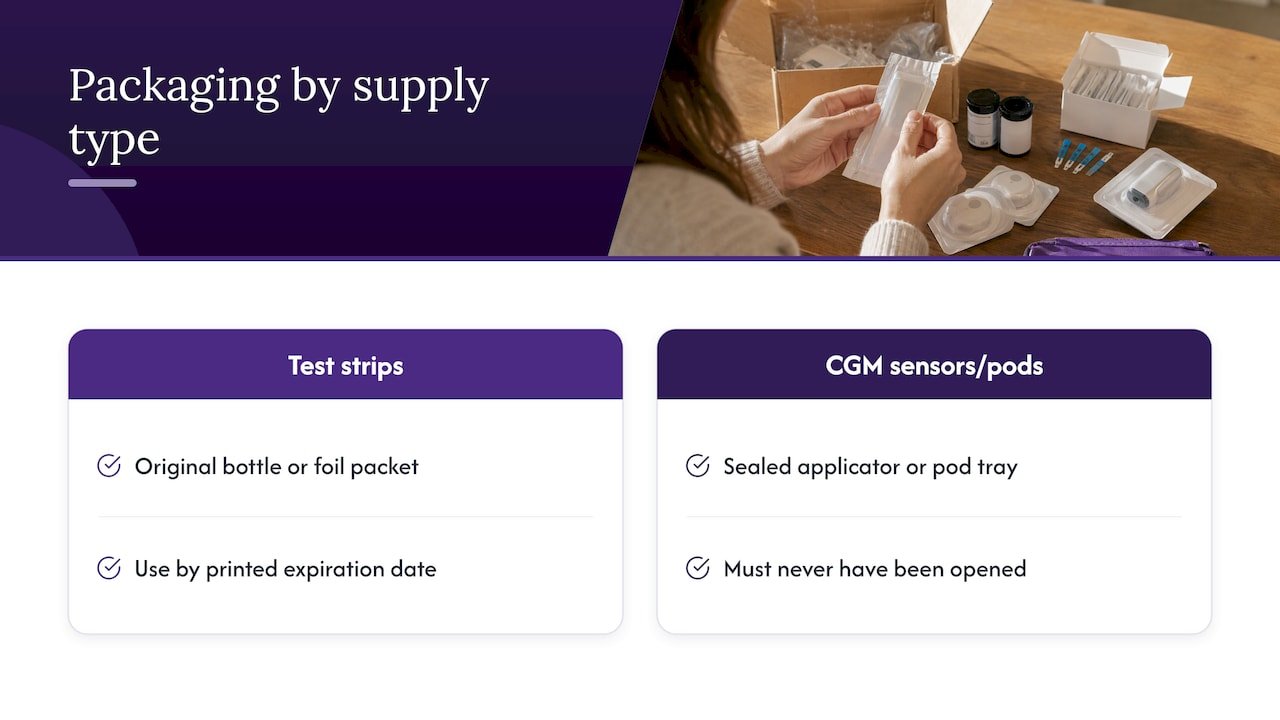
For test strips, the maker’s own instructions are a good guide to what “properly stored” means. Ascensia, for example, says strips should stay in their original bottle or foil packet and be used by the printed expiration date, according to its CONTOUR NEXT instructions. Once strips leave that packaging, a buyer cannot tell what has happened to them. That is why we ask for the original container.
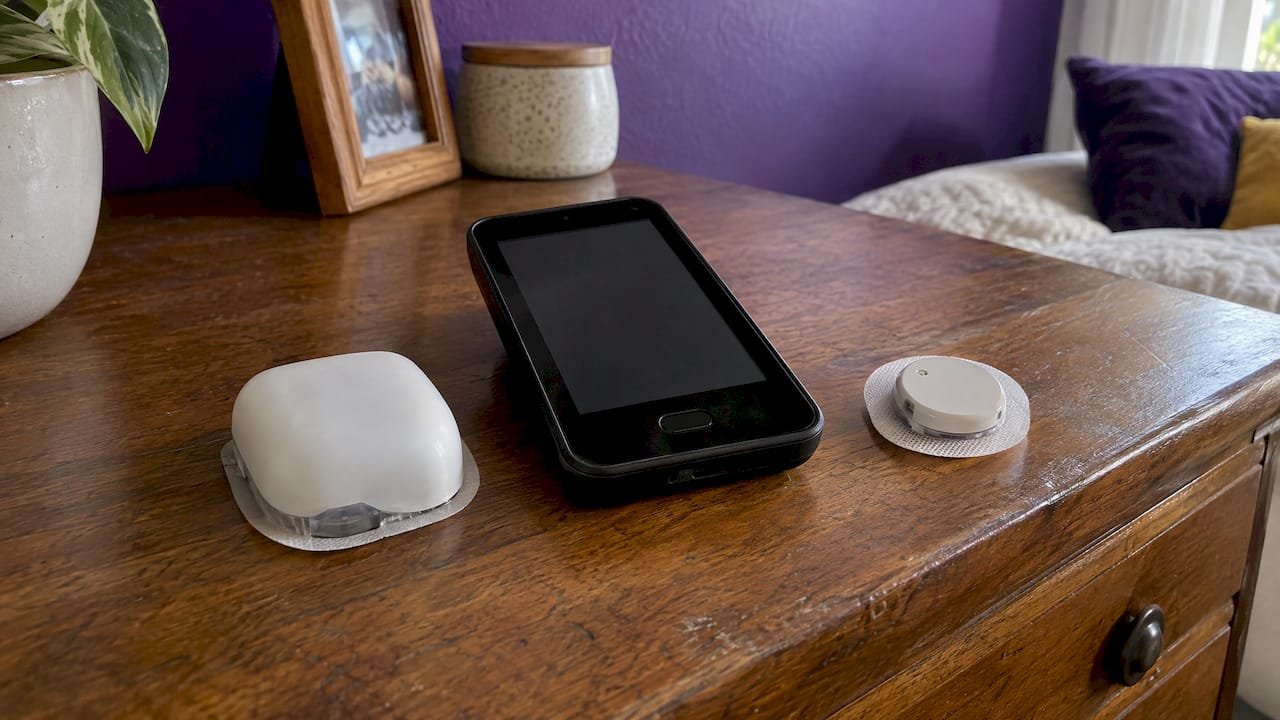
For CGM sensors and pods, the same idea applies. A sealed applicator or pod tray that has never been opened is what we are looking for.
Expiration dates and why they change the offer
The expiration date is the single most common reason an offer goes up or down. More time left means the supplies are easier to pass along. Less time means a lower offer, and a very short window may mean we cannot take them.
Two habits help:
- Read the date on every box, not only the first one. Boxes from different shipments often carry different dates.
- Sell earlier rather than later. Supplies lose value as the date gets closer.
We go deeper in two pages if you want details: how expiration affects buyback price and how test strip expiration affects value.
Storage: Florida heat is the hidden problem
Orlando summers are hard on supplies. A box left in a car, on a porch or near a window can sit well outside the range printed on the packaging. Heat can affect how a product performs, and a seller often does not see the damage from the outside.
There is a real-world reminder of how much temperature matters. The FDA published a notice about a voluntary recall of certain insulin product samples, and it said improper storage temperatures could cause a lack of efficacy, as described in the Novo Nordisk recall notice. That notice is about insulin, not test strips or sensors, but the lesson carries over: always follow the storage range on the label.
Practical steps before you sell:
- Store boxes indoors, in a cool, dry place.
- Do not leave them in a vehicle, even for a short errand on the way to a meetup.
- Check the storage range printed on each box.
- Bring them in a bag, not loose in a hot car.
For a deeper look, read our 41°F to 86°F storage rule for test strips and the page on common mistakes when storing excess test strips.
Ownership and insurance: settle this before you sell
This is the part many sellers skip, and it matters most. How you received your supplies can decide whether you can sell them at all.
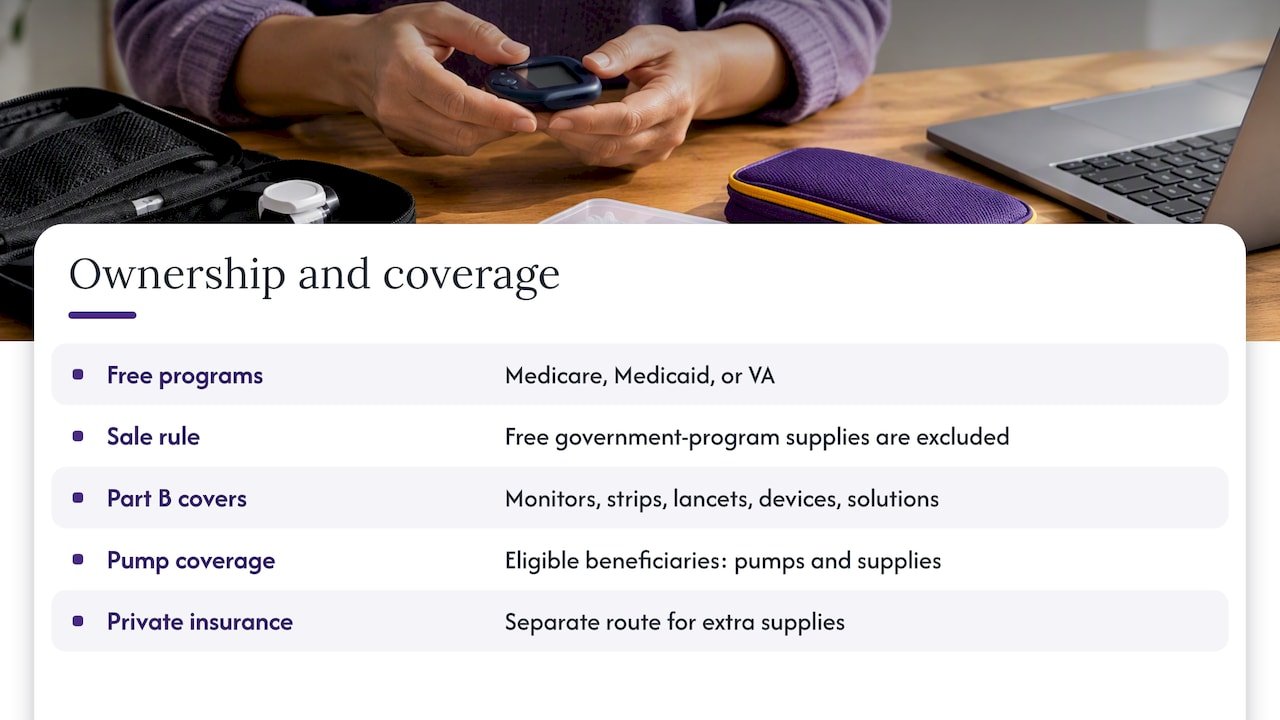
Local reporting from Tampa Bay 28 says diabetic testing supplies can legally be sold unless they come from a free government health program such as Medicare, Medicaid or the VA. The same report also says Medicare’s test-strip program has been described as open to fraud, waste and abuse. You can read the Tampa Bay 28 report for the full story.
Why this applies to many people: the American Diabetes Association notes that Medicare Part B covers blood sugar monitors, test strips, lancet devices, lancets and glucose control solutions, and that it covers insulin pumps and pump supplies for eligible beneficiaries. Its Medicare overview lists what is covered. If your supplies came through Medicare, check before you sell. Our page on selling test strips safely and Medicare checks explains what we ask about.
If you are not sure how your coverage treats equipment you receive, a plain explanation of Medicare durable medical equipment coverage can help you understand who owns what. For anything specific to your plan, call your plan or your pharmacy, or ask a licensed insurance agent.
If you have extra supplies through private insurance, we explain that route in how to sell insurance-covered diabetes overstock for cash.
What gets an item turned down
No one likes a surprise at the meetup. These are the common reasons an item is not accepted:
- The box or foil has been opened.
- The expiration date has passed, or it is too close to be useful.
- The packaging is damaged, wet or unreadable.
- The item has been in extreme heat or cold.
- The product was provided through a government program.
- The product is not on the list we buy.
If we cannot take something, we will tell you why on the spot. You keep the item and walk away with no pressure. For things we cannot buy, ask your pharmacy or your clinic about safe disposal or return options.
What we pay for common items
Prices depend on the item, the date and the condition. These are the amounts published on our offer pages:
| Item | Published amount |
|---|---|
| Dexcom G7 | $70 to $90 per pack |
| FreeStyle Libre 2 | $15 to $20 per sensor |
We do not publish a fixed price for test strips, other CGMs, pumps or pods. Those are quoted after we hear what you have. Send us the brand, count and dates and we will give you a straight answer.
Perspective
We talk with people every week who are surprised by how much they have in a closet. A prescription changes, a doctor switches a device, or insurance ships more than a month’s worth. The supplies sit there until the date gets close.
Our advice is simple. Sort early, keep everything sealed, and keep it cool. We built this around in-person meetups in safe, public places because shipping adds delays and risk, and because most people like seeing the inspection and getting paid right there.
We would rather tell you up front that something is not eligible than waste your afternoon. If you bring the right things and know where your supplies came from, the process is quick and fair.
Liliana
A simple prep routine: ten minutes at home
Here is a routine you can follow the day before a meetup.
- Lay everything out on a table and group it by brand and type.
- Read each expiration date and note the soonest one in each group.
- Check every seal. Set aside anything opened.
- Wipe off dust from the outside of the boxes if needed, but never open them.
- Write a short list with brand, count and dates.
- Text us the list so we can confirm what we can take.
- Pack the boxes in a bag and keep it indoors until you leave.
Our buyback timeline from quote to cash shows what happens after that first message.
Ready to sell in Orlando?
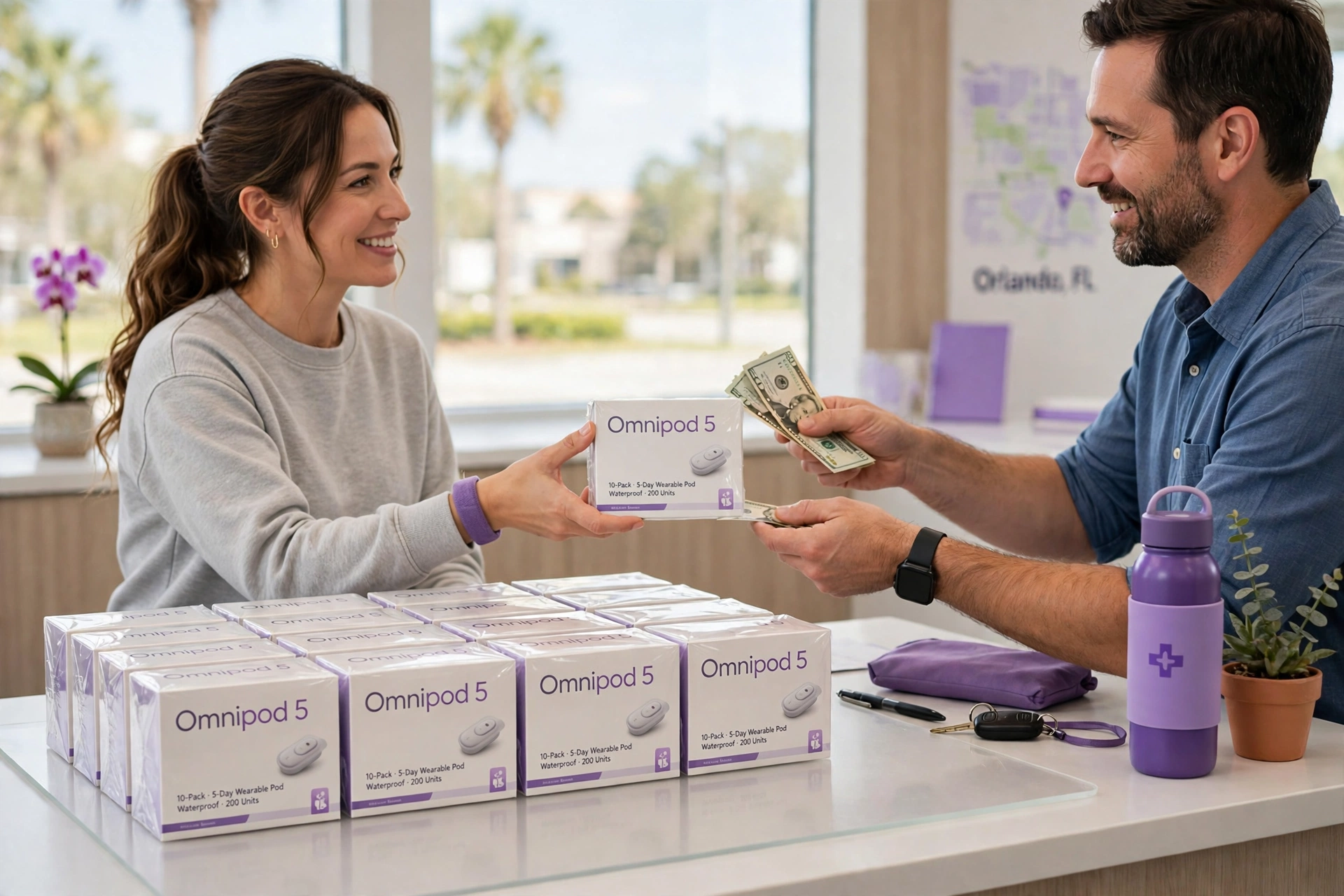
We buy unused Dexcom G7 sensors, Omnipod 5 pods, Libre 3 and Libre 3 Plus sensors, and sealed test strips in Orlando and nearby areas. We inspect in person, quote you clearly and pay the same day for eligible items.
Start on our main page for cash for diabetic supplies, or read how to get cash for unused diabetic supplies first. If you switched devices, our page on selling previous diabetes device supplies is a good place to start.
FAQ
Do I need the original box?
Yes, bring it. The original box shows the brand, lot and expiration date, and it proves the item has not been opened. Loose items or supplies moved to another container are much harder to accept.
Can I sell supplies that came from Medicare?
Check first. Local reporting says supplies from free government programs such as Medicare, Medicaid or the VA cannot legally be sold. If you are unsure how yours were paid for, call your plan or supplier before you arrange a meetup.
What if my supplies are close to expiring?
Bring them anyway, or send us a photo of the date first. A closer date lowers the offer, and in some cases we cannot take the item. Selling sooner is almost always better than waiting.
Where do we meet?
We meet in safe, local public locations in Orlando and surrounding areas. We confirm the spot with you by phone or text before you leave, so there is no guesswork.
Sources
- Medicare | American Diabetes Association
- I-Team uncovers diabetics selling insulin online | Tampa Bay 28
- Novo Nordisk voluntary nationwide recall notice | FDA
- CONTOUR NEXT Test Strips Instructions | Ascensia