
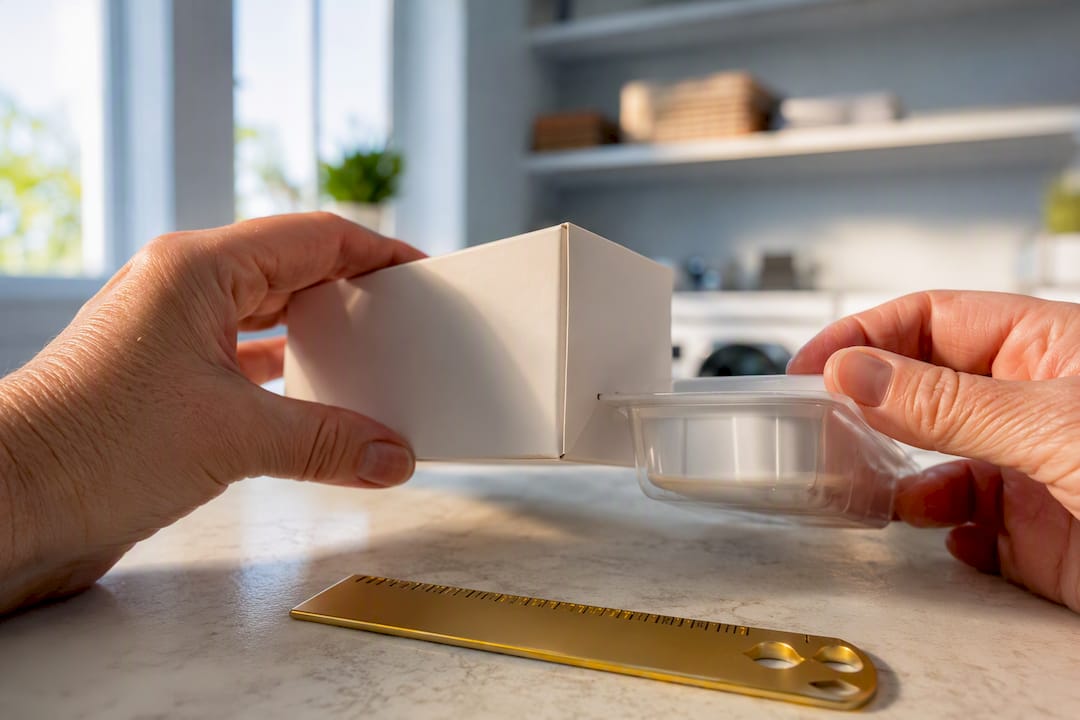
Before you do anything else with unused Omnipod pods, check the lot number against Insulet’s current medical device correction list and confirm the expiration date. If the lot is affected, stop and follow the manufacturer’s return process. If it’s not, and the box is factory-sealed with months of shelf life left, you have real options: donate it, sell it locally for cash, or hold it as backup supply. Opened, expired, or recalled pods go a different route entirely: safe disposal, not resale.
TL;DR:
- Most unused, sealed Omnipod pods with future shelf life are safe to sell or donate if they are not recalled, unopened, and unexpired.
- Only pods on Insulet’s correction list must be returned and cannot be resold or donated; verify the lot number before proceeding.
- The shelf life for DASH pods manufactured after December 6, 2022, can be extended to 24 months, which might mean some pods are more usable than they appear.
- Recalled, damaged, expired, or water-exposed pods should be disposed of properly as hazardous waste or through manufacturer instructions.
- Always check the lot number, expiration date, and any shelf-life extensions before attempting resale or donation to avoid losses or safety issues.
Table of Contents
- How Do You Check for an Omnipod Recall or Medical Device Correction?
- Can You Sell Unused Omnipod Pods?
- How Do You Check the Expiration Date and Shelf-Life Extensions?
- Where Can You Donate Unused Omnipod Pods?
- How Should You Dispose of Expired or Damaged Omnipod Pods?
- How Do You Prepare Omnipod Pods for Sale or Donation?
- What Sellers Get Wrong Most Often
- Get Same-Day Cash for Your Unused Omnipod Pods in Orlando
- Where to Verify Recalls, Shelf-Life Extensions, and Donation Rules
- Sources
- FAQ
How Do You Check for an Omnipod Recall or Medical Device Correction?
Every Omnipod box carries a lot number, printed on the outer carton and on the individual pod tray inside. That number is your first move. Insulet’s medical device correction notice explains exactly which lots are affected and what to do if yours matches. If your pods are on that list, the guidance is direct: stop using them, and return the unused affected units through the manufacturer’s return kit rather than trying to sell or donate them.
Pods not on the affected list remain safe to use under normal guidance. But confirming that takes about two minutes on Insulet’s site or a quick call to their support line, and it’s worth doing before you make any other decision about your inventory.
Here’s what to gather before you check:
- The lot number from the outer box (not just the individual pod, in case boxes got separated)
- The expiration date printed on the packaging
- Your Omnipod model (Omnipod 5, Omnipod DASH, or the older Omnipod Insulin Management System, sometimes called Eros pods)
Never use a pod past its printed expiration date. Manufacturer guidance is explicit that expired pods may not deliver insulin as intended, and interrupted delivery is not a minor inconvenience. A failed pod can mean hours without basal insulin, which raises real risk of hyperglycemia and, in more serious cases, diabetic ketoacidosis. That’s why Insulet’s own user guide recommends keeping backup insulin-delivery supplies on hand and knowing how to do an emergency pod change. If you’ve been told your lot is affected, talk to your care provider about a backup plan before you’re caught without one.
A quick number worth remembering: Insulet’s correction notice affects specific manufacturing lots, not the entire Omnipod 5 or Omnipod DASH product line. Most pods in circulation are unaffected. But “most” isn’t “yours,” so check before you assume.
Can You Sell Unused Omnipod Pods?
Yes, if they meet a few conditions that buyers and donation programs both apply consistently. The pods have to be factory-sealed, unexpired with meaningful shelf life remaining, and free of any recall flag. Anything short of that gets turned away.
Here’s what typically disqualifies a box from resale or donation:
- Opened outer packaging, even if the pod itself looks untouched
- Less than a minimum remaining shelf life until the printed or extended expiration date
- Any lot number appearing on a manufacturer correction or recall list
- Supplies originally obtained through Medicare or Medicaid, which many buyers and donation programs exclude due to funding restrictions
- Visible box damage, water exposure, or missing lot documentation
That last point about government-funded supplies trips people up more than anything else. If your Omnipod pods came through a Medicare or Medicaid benefit, reputable donation programs will refuse them outright, and honest buyers will ask directly. Disclose the funding source up front. It saves you a wasted shipment and saves the buyer a compliance headache.
What most buyers and donation intake staff want to see, at minimum, is a clear photo of the lot number and the outer box, plus a count of how many boxes you have and their expiration dates. That’s not bureaucracy for its own sake. It’s how the person on the other end verifies your pods are what you say they are without opening a sealed sterile package, which would make them unsellable anyway.
How Do You Check the Expiration Date and Shelf-Life Extensions?
Omnipod expiration dates aren’t always as simple as reading the number on the box. Insulet has issued shelf-life extensions for certain DASH lots, and the updated date sometimes appears only on the outer carton, not the inner pod tray.
- Read the outer box first. If Insulet applied a shelf-life extension over-label, it will be on the carton exterior, not necessarily reprinted on the inner packaging.
- Cross-check against Insulet’s published extension list. Omnipod DASH pods manufactured after December 6, 2022 for U.S. distribution carry an extended shelf life of 24 months, which can turn a box you assumed was expiring soon into one with a full year or more of usable life.
- Call manufacturer support if the dates conflict. When the inner and outer dates don’t match, or you can’t find your lot on the published list, a support call resolves it faster than guessing.
This step matters more than it sounds like it should. Skipping it means you might toss a perfectly sellable box, or worse, try to sell one that’s actually past its true expiration.
Where Can You Donate Unused Omnipod Pods?
Donation is often the simplest path if your pods are sealed and unexpired but you don’t need cash urgently. Insulin For Life is the most established program accepting unused diabetic supplies, including pump pods, and its rules are worth knowing before you pack a box.
- Supplies must be unused and factory-sealed, with a minimum remaining shelf life before expiration
- Insulin For Life does not accept opened, used, or recalled items under any circumstances
- Donors typically cover their own shipping costs and are expected to follow the program’s packaging guidance
- Temperature-sensitive items need appropriate handling, though sealed pods themselves are more shelf-stable than insulin vials
Confirm acceptance before you ship anything. A quick email or phone call to the program tells you whether your specific lot and quantity qualify, which beats finding out after a box arrives that it’s getting returned or discarded. Donation feels good, but it only works when the receiving organization can actually redistribute what you send.
How Should You Dispose of Expired or Damaged Omnipod Pods?
Not every unused pod is sellable or donatable, and that’s fine. What matters is disposing of it correctly instead of tossing it in household trash.
Used pods are biohazardous. They’ve held insulin, contacted skin, and carry a needle mechanism, so they belong in a medical-waste take-back program or a household hazardous waste site, not your kitchen garbage. Unused pods that are damaged, water-exposed, or on a recall list present a different problem: they contain batteries and electronics, which qualifies them as e-waste even when they’ve never been worn. Certified e-waste recyclers handle this correctly; regular trash pickup does not.
- Never place a used pod loose in household trash
- Check with your county or city for medical-waste or sharps take-back locations
- For recalled but unused pods, follow Insulet’s return kit instructions instead of disposing of them yourself
- For damaged unused pods with no recall path, use a certified e-waste recycler
Pro Tip: Keep a small dedicated bin for expired or rejected pods as you sort your inventory. It stops you from second-guessing which box was already checked and prevents a “maybe I’ll sell it anyway” pod from slipping into a batch that’s headed to a buyer.
How Do You Prepare Omnipod Pods for Sale or Donation?
A little documentation up front prevents almost every rejection later. Buyers and donation programs are working with sealed, sterile medical devices, so they lean on photos and paperwork instead of physical inspection.
- Photograph the outer box, the inner packaging, the UPC code, and the lot number clearly, in good light.
- Build a simple inventory sheet listing each box, its lot number, and its expiration date.
- Cross-check every lot number against Insulet’s shelf-life extension page and note any extensions on your inventory sheet.
- Pack boxes securely, using a shipping method with tracking and insurance if you’re mailing them anywhere.
- Slip a printed copy of your inventory sheet inside the box before sealing it.
A few extra habits pay off:
- Store pods in a cool, dry place while they wait, away from direct sunlight or heat that can degrade packaging
- Keep boxes from the same lot together rather than mixing partial quantities
- Note whether any supplies came through Medicare, Medicaid, or private insurance, since buyers and donation programs both ask
If you’re managing a growing pile of extra devices beyond just pods, a basic overstock management routine keeps everything organized before it becomes a sorting project.
What Sellers Get Wrong Most Often
Sellers lose money on things that are entirely preventable. Insufficient shelf life is the top one. A pod with two months left is a much harder sell than one with eight, even if both are technically unexpired. Damaged outer boxes come second. Crushed corners or torn cellophane make a buyer nervous even when the pod inside is fine. Missing lot photos slow everything down, because no serious buyer pays sight-unseen for a sealed medical device without verifying what’s in it.
In-person inspection solves most of this on the spot. Bring your sealed boxes, your expiration dates already noted, and be upfront about where the supplies came from. Transparency moves the transaction faster and tends to get you a fairer number than a vague listing with no photos ever will.
— Liliana
Get Same-Day Cash for Your Unused Omnipod Pods in Orlando
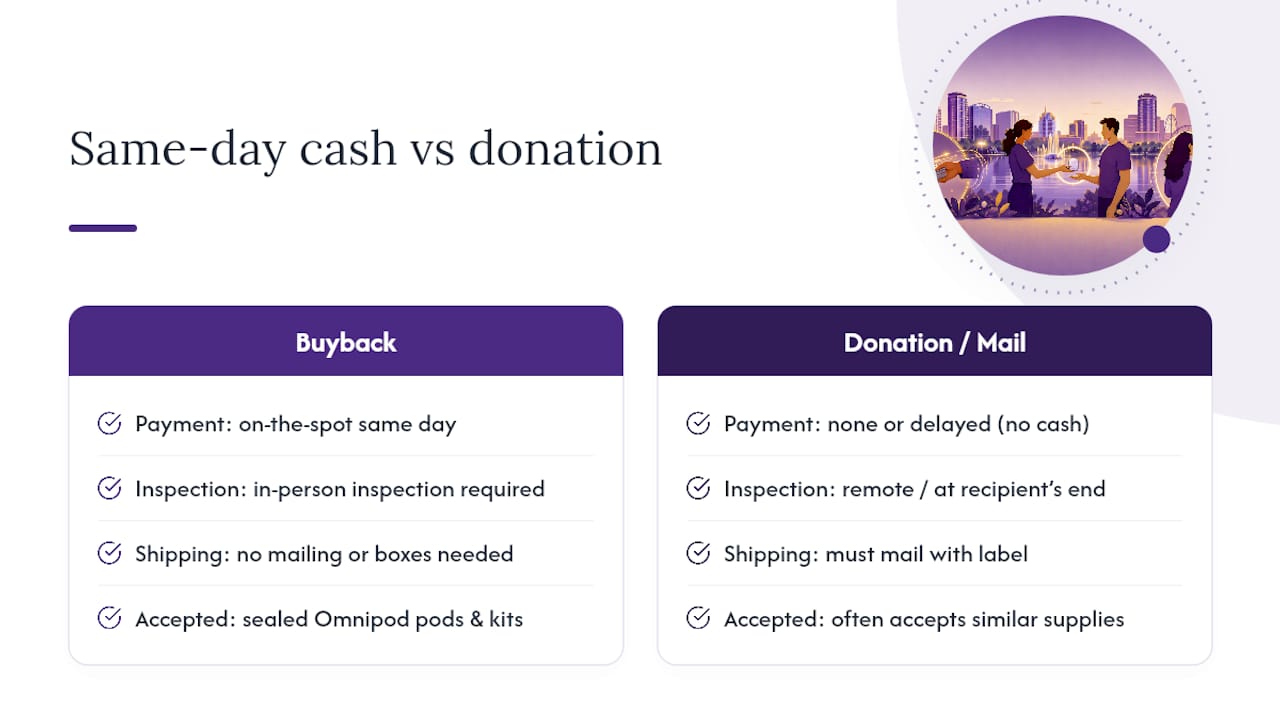
If your pods passed the lot check and you’d rather have cash today than wait on a donation program’s shipping label, Orlando Diabetic Supplies Buyback offers something neither route does: an in-person inspection and payment on the spot, the same day you show up. No mailing boxes, no waiting on a donation coordinator’s email, no wondering if your shipment got lost in transit.
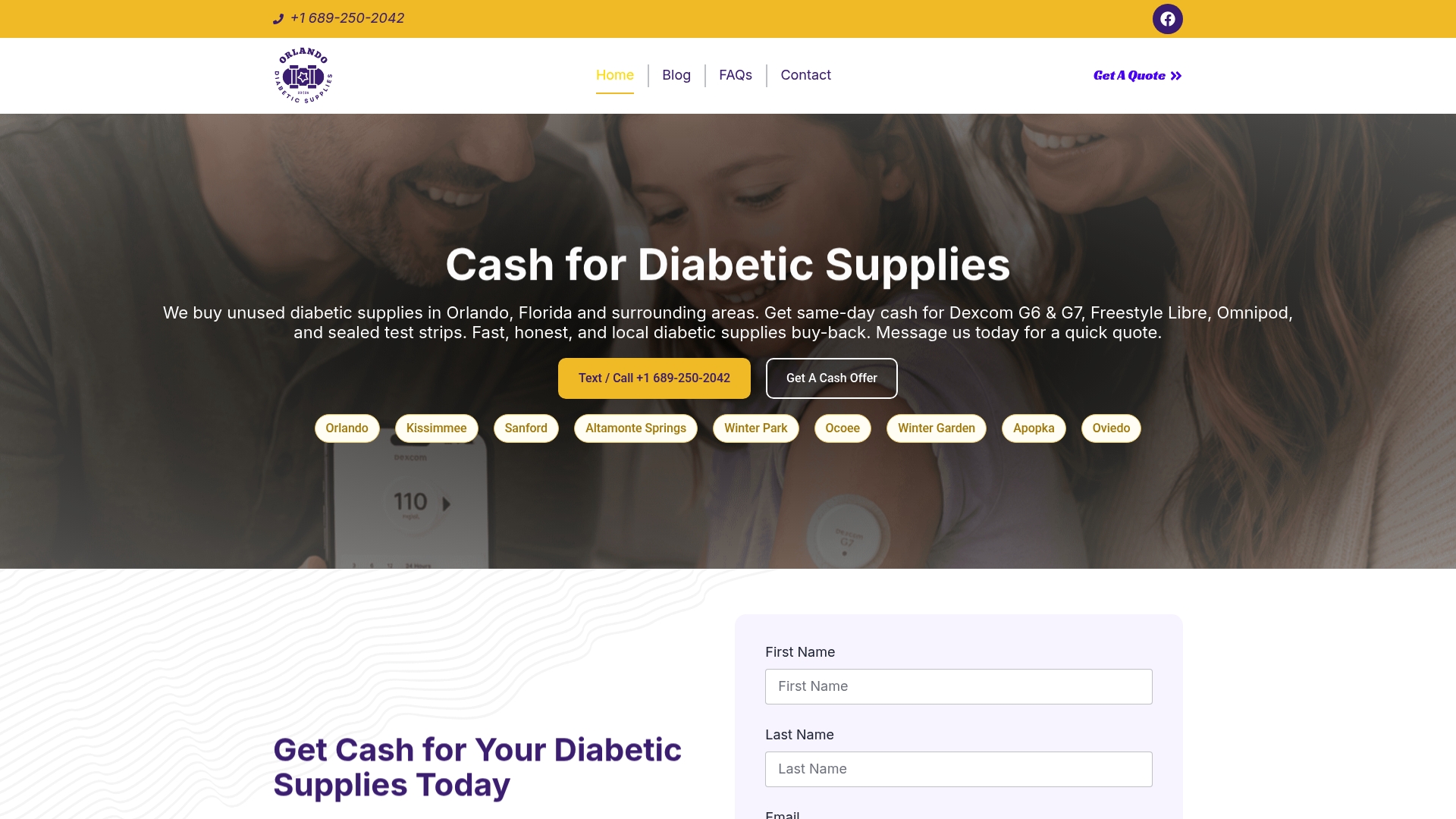
Orlando Diabetic Supplies Buyback purchases unused, factory-sealed Omnipod pods, along with Omnipod 5 kits, DASH pods, and other diabetic supplies, as long as the boxes are unopened and have enough shelf life remaining to be resold. Bring your sealed outer boxes, and if you’ve already photographed the lot numbers and expiration dates, that speeds up the inspection. Expired, recalled, or opened pods aren’t eligible, and that’s true here just as it is with any buyer or donation program.
Service is local to Orlando and the surrounding area, so this works best if you’re nearby and want to skip the shipping step entirely. Ready to see what your unused pods are worth? Visit the guide to getting cash for unused diabetic supplies to see how the process works and what to bring to your appointment.
Where to Verify Recalls, Shelf-Life Extensions, and Donation Rules
Before you sell, donate, or dispose of anything, confirm the details directly with these sources rather than relying on secondhand information:
- Insulet’s medical device correction page for current recall status and return instructions
- Omnipod DASH shelf-life extension page to check whether your lot’s expiration date has been extended
- Insulin For Life’s donation instructions for acceptance rules and shipping guidance
- FDA MedWatch for official device recall postings and safety reporting
Checking these directly takes a few minutes and prevents costly mistakes on either side of the transaction.
This article is general information, not a substitute for advice from a qualified doctor. Consult a qualified healthcare professional about your own circumstances before acting on anything here.
Sources
- Urgent: Medical Device Correction — Omnipod
- Donate Insulin and Supplies | INSULIN FOR LIFE
- MedWatch — The FDA Safety Information and Adverse Event Reporting Program
FAQ
What should you do with unused Omnipod pods?
Check the lot number against Insulet’s medical device correction list first. If it’s clear and the box is sealed with months of shelf life left, you can sell it, donate it through a program like Insulin For Life, or hold it as backup supply.
Can you sell unused Omnipod 5 pods?
Yes, as long as the box is factory-sealed, unexpired, not on a recall list, and wasn’t obtained through Medicare or Medicaid.
What happens if you use expired Omnipods?
Expired pods may not deliver insulin correctly, and manufacturer guidance warns against using any pod past its printed expiration date because interrupted delivery raises the risk of high blood sugar and diabetic ketoacidosis.
What should you do if you run out of Omnipod pods?
Contact your prescribing provider immediately for a refill and keep a backup insulin-delivery method, like an insulin pen, on hand for exactly this situation. Insulet’s own user guide recommends having supplies ready to perform an emergency pod change rather than waiting until you’re out.