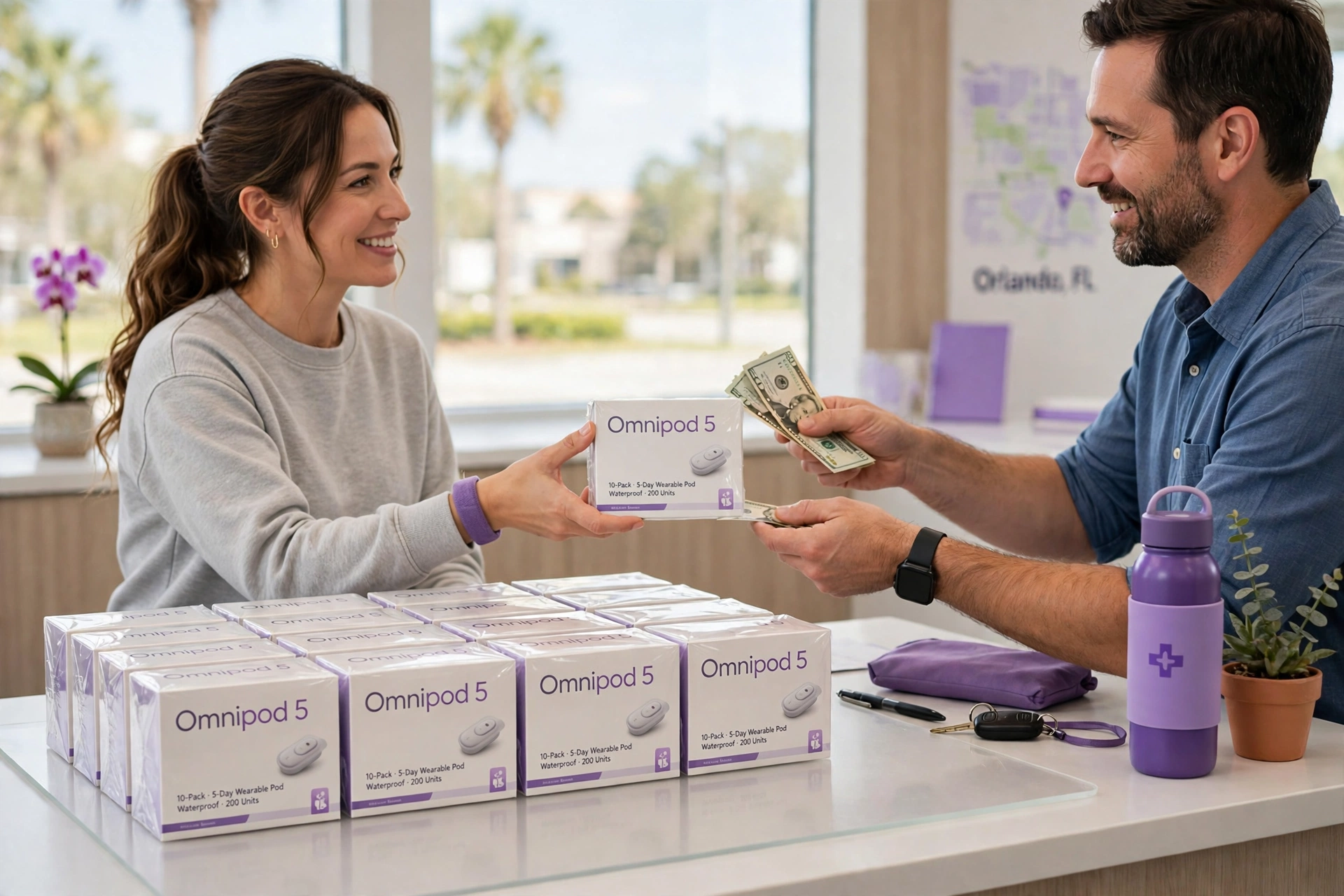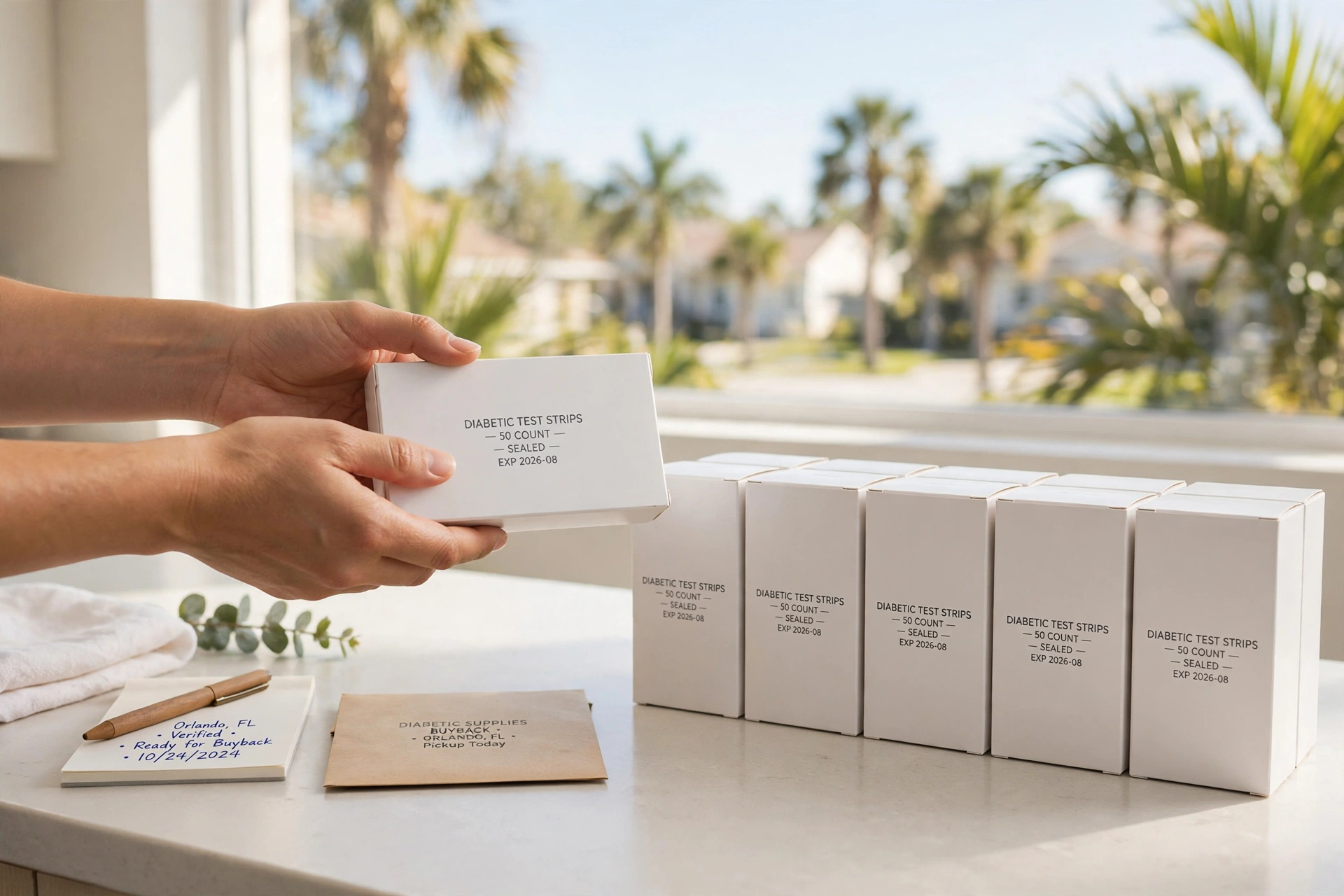
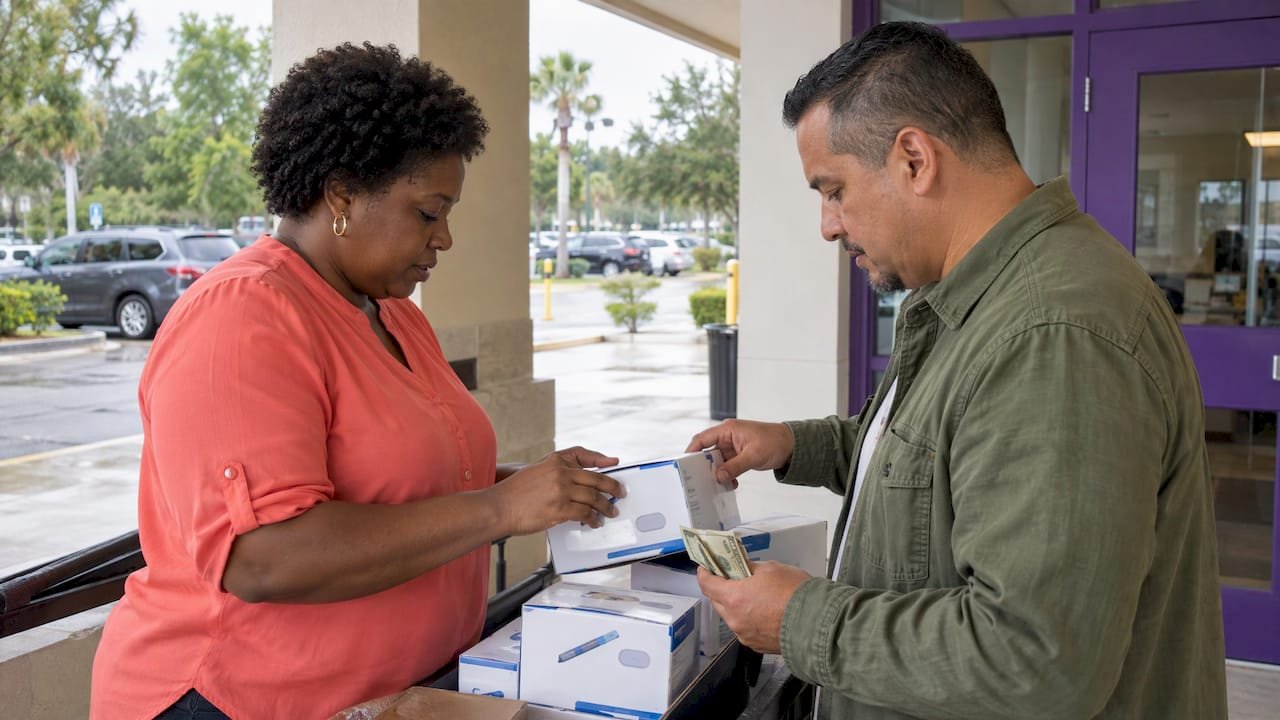
Local pickup means you hand your unused, sealed supplies to a buyer in person, in your own area, and get paid on the spot. The main benefits are speed, no shipping costs, less packaging and fewer things that can go wrong in transit. For diabetic supplies, it also means the items never sit in a hot delivery truck. If you have extra sensors, pods or test strips in Orlando or nearby, it is usually the simplest way to turn them into cash.
TL;DR
- Local pickup can get you paid the same day, because you count the cash or confirm the transfer before you hand anything over.
- You skip postage, boxes and trips to the carrier. Sellers and buyers both avoid shipping costs.
- Your supplies stay out of hot trucks and mail bins, which matters for heat-sensitive sensors and strips.
- Meeting in a busy, well-lit public place keeps the exchange safe and simple.
- Only sell supplies you own outright. Items paid for by Medicare, Medicaid or similar programs should not be resold.
Table of Contents
- What local pickup means for diabetic supplies
- Benefit 1: You get paid sooner
- Benefit 2: No shipping costs, no packing
- Benefit 3: Fewer ways for supplies to be damaged
- Benefit 4: You know the price before you hand anything over
- Benefit 5: It is easier to keep the sale safe
- Before you meet: a seller’s checklist
- At the handoff: what to confirm
- Which supplies you can sell
- Who benefits most from local pickup
- Our perspective
- Ready to sell? Here is how to start
- FAQ
- Sources
What local pickup means for diabetic supplies
When you sell used household items, “local pickup” usually means the buyer comes to you or you meet halfway. With diabetic supplies, we use it in a narrower way. You contact a local buyer, agree on the items and a meeting spot, and the buyer inspects the supplies when you meet. If everything checks out, you are paid right there.
The supplies that qualify are unused, sealed and unexpired: Dexcom G6 and G7 sensors, FreeStyle Libre sensors, Omnipod pods and sealed test strips from major brands. Opened boxes, damaged packaging and expired items are generally not eligible.
This is different from mailing a box to a stranger and waiting. There is no label to print, no tracking number to watch, and no wait for a check or transfer after the package “arrives.”
Benefit 1: You get paid sooner
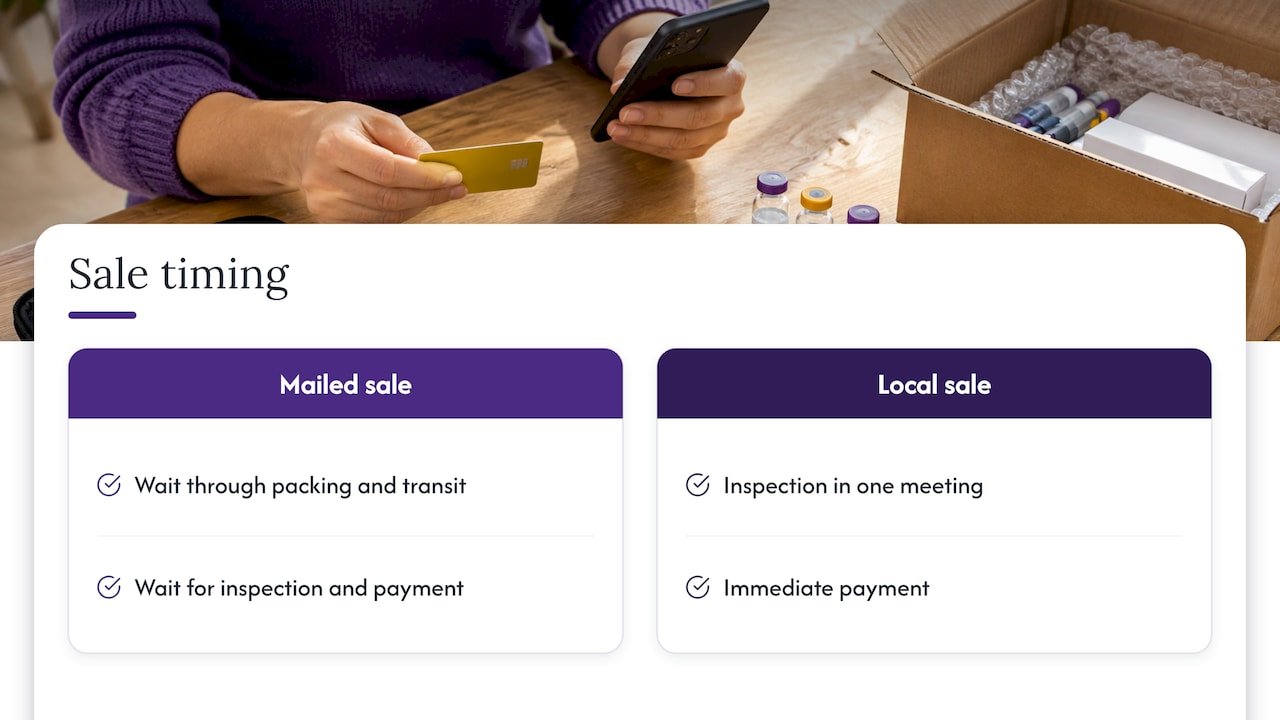
Speed is the benefit most sellers notice first. A mailed sale has several waiting periods: packing, transit, the buyer’s inspection, then payment. A local sale compresses all of that into one meeting.
The payment step is also easier to control. If you are paid in cash, you can count the bills before you hand over the supplies. If you are paid by electronic transfer, you can check your own banking or payment app and see the money arrive. One local-selling safety guide advises against releasing items based on a screenshot or a message saying payment is pending. Verify on your own device, then hand over the supplies.
That is exactly how our meetups work. You see the offer, we inspect the items, and you are paid immediately for what qualifies. You can read more about why this matters in our guide on same-day pickup for people with diabetes.
Benefit 2: No shipping costs, no packing
Shipping eats into small sales. You pay for postage, you buy a box and padding, and you spend time at the post office. Several marketplaces and business groups point out the same advantage of local handoffs:
- The U.S. Chamber of Commerce notes that in-store pickup lets local customers save on shipping costs and get orders faster, while the seller saves on packing materials and shipping.
- Whatnot’s Help Center says its free local pickup option saves the seller time and avoids shipping costs, with neither side paying for shipping.
For a seller with a few sensors, this is a real difference. A $15 to $20 sale does not leave much room for a shipping label. A local handoff keeps all of the payment in your pocket. See our page on how to sell without shipping for the full picture.
Benefit 3: Fewer ways for supplies to be damaged
Diabetic supplies are sensitive to temperature, and a package can spend days in places you cannot control. A mail truck or a porch in an Orlando summer is not where you want sensors sitting.
Manufacturers are specific about storage:
- Dexcom says unopened sensors should stay in their sterile packaging and be stored between 36°F and 86°F in a cool, dry place. It warns against leaving them in a hot parked car or letting them freeze.
- Trividia’s instructions for TRUEtrack strips say to keep strips in the original container, tightly closed, below 86°F (30°C), and to protect them from heat, cold, sunlight and humidity. Damaged strips may give inaccurate results.
With local pickup, you control the supplies until the moment of handoff. Keep them indoors in the air conditioning, carry them in a bag rather than leaving them in the car, and the buyer inspects them right in front of you. If you want to go deeper on storage, read our pages on storing test strips in heat and common mistakes when storing extra strips.
Benefit 4: You know the price before you hand anything over
In-person inspection means no surprises. The buyer looks at the box, the seal and the expiration date, and you agree on the amount while you are standing there. Nothing gets “re-quoted” after a package arrives.
Here are the prices we publish for two common items:
| Item | What we pay |
|---|---|
| Unused Dexcom G7 | $70-$90 per pack |
| Unused FreeStyle Libre 2 | $15-$20 per sensor |
Test strips, other CGMs and pods are assessed in person, so the offer depends on the brand, the quantity and the condition. Our guide to items with cash value lists what we look at.
Benefit 5: It is easier to keep the sale safe
Meeting in person sounds riskier than mailing, but with a few habits it is the more controlled option. Reliable local-selling advice is consistent:
- Choose a busy, well-lit public place, preferably in daylight.
- Tell someone where you are going, and consider bringing another person.
- Walk away if the buyer changes the terms at the last minute or pressures you to hurry.
These precautions appear in a step-by-step guide to selling on Facebook Marketplace and in the local-selling safety guide mentioned above.
In Orlando, you also have a specific option. The Orlando Police Department’s exchange zone policy describes the department’s parking lot as a well-lit, video-recorded public place for privately arranged sales. Check the department’s current instructions before you go.
We hold our meetups in safe, local public locations for the same reasons. Our pages on in-person sale safety and meeting, inspecting and getting paid safely walk through the full routine.
Before you meet: a seller’s checklist
A little preparation makes the handoff take minutes. Use this list.
- Check the source. Confirm you bought or received the supplies yourself and that no government program paid for them (more on this below).
- Check the dates. Look at every expiration date. Expired items do not qualify.
- Check the seals. Boxes should be sealed and undamaged. Do not open anything to “show” it.
- Check storage. Supplies should have been kept in a cool, dry place inside the temperature range on the label.
- Count and list. Write down brands, models and quantities so the conversation is quick.
- Pick the place and time. Choose a public spot with good lighting and foot traffic, in daylight if you can.
- Tell someone. Share the time and place with a friend or family member.
- Decide how you want to be paid. Cash or a transfer you can check on your own phone.
If delays worry you, our page on avoiding delays when selling supplies covers the common holdups.
At the handoff: what to confirm
The meeting itself should be short and calm. Here is what both sides should confirm:
- The items match the list. Brand, model, quantity and expiration dates.
- The packaging is intact. Seals unbroken, no crushed boxes, no moisture.
- The price is agreed. Say the number out loud before any money moves.
- The payment is real. For cash, count it. For a transfer, check your own app. A screenshot is not payment.
The zutilo safety guide is blunt on this point: no verified money, no handover. Being polite about it is easy. Most legitimate buyers expect it.
If you are also checking in on your own care while sorting out extra supplies, a primary care visit is a good time to review how your regimen is going. This overview of diabetes management in primary care shows what a routine review can cover.
Which supplies you can sell
This part matters more than anything else in the article.
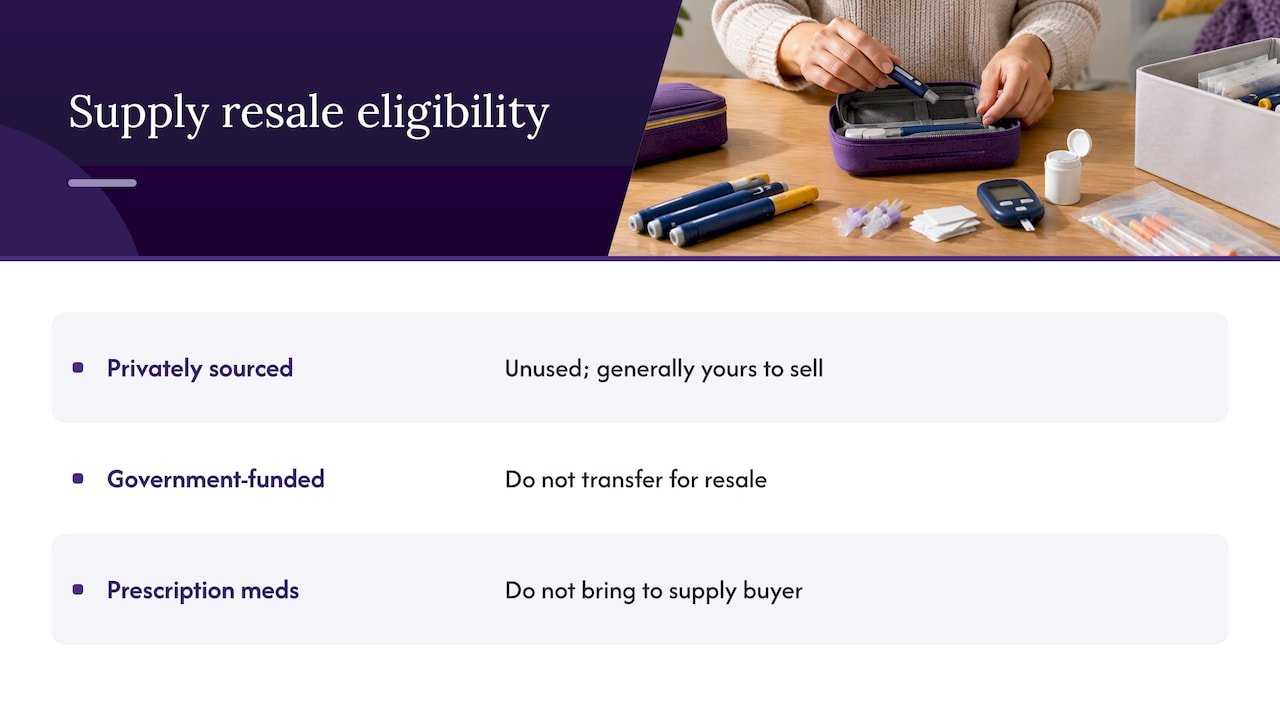
Supplies that you bought yourself or received through private insurance and never used are, in general, yours to sell. Supplies paid for by Medicare, Medicaid or other government programs should not be transferred for resale. KOLD News in Tucson reported that resale is generally legal for unused test strips, but that it excludes supplies from Medicare, Medicaid, the VA, Indian Health Service or similar government sources.
If you are not sure how your supplies were covered, check your insurance statements or call your plan before you sell. We explain our approach to this in our pages on Medicare and test strip resale in Florida and selling test strips safely.
Prescription medications such as insulin are a different category. Do not bring them to a supply buyer.
Who benefits most from local pickup
Local pickup works well for people who have a reason to clear out extra supplies quickly:
- You switched devices. You moved from Dexcom G6 to G7, or from one CGM to another, and have sealed sensors left. See why people switch CGM devices.
- Your prescription changed. Your doctor adjusted your supplies and you have boxes you will not use.
- Your private insurance sends more than you need. Automatic refills can pile up faster than you use them.
- You want cash fast. A same-day sale beats waiting on a mailed package.
If you are comparing options, we also wrote about where pharmacies fall short on test strips and the best place to sell test strips near you.
Our perspective
We built this service around local pickup on purpose. Shipping looks convenient until you count the costs: the label, the box, the waiting, and the days your supplies spend in a truck.
When you meet us, you see the inspection, you hear the price, and you are paid on the spot. That is the whole process. We think people who are managing diabetes already have enough to deal with, so selling extra supplies should be the easy part of the week.
We meet in safe, public places in the Orlando area, and we only look at unused, sealed and unexpired items. Our prices are published, and we explain them before any money changes hands. If something does not qualify, we say so plainly and you leave with your supplies.
For most of our sellers, the best benefit is simple: they walked in with a closet of unused boxes and walked out with cash the same day.
Liliana
Ready to sell? Here is how to start
If you have unused Dexcom, Libre, Omnipod or sealed test strips in the Orlando area, we can look at them in person and pay you the same day for what qualifies.
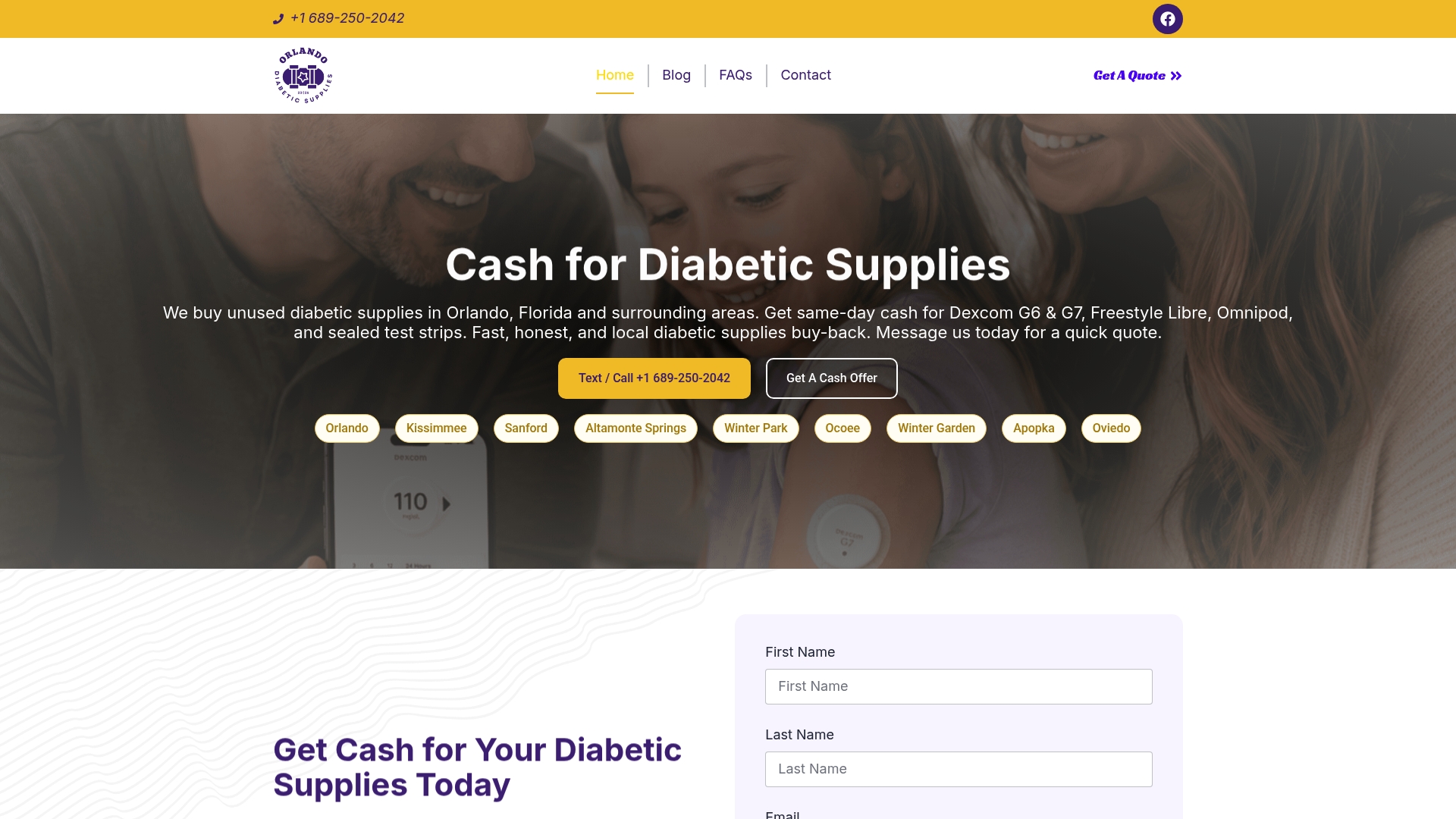
Start on our main page for cash for diabetic supplies, or go straight to the Dexcom G7 page or the FreeStyle Libre 2 page to see what we pay. For a step-by-step explanation, read how to get cash for unused diabetic supplies.
FAQ
Is local pickup safer than shipping diabetic supplies?
It can be, when you follow basic precautions. You keep control of the supplies until the handoff, so they are not exposed to heat in transit, and you confirm payment before you release them. Choose a busy, well-lit public place, tell someone where you will be, and leave if the terms change.
Do I need to pay anything for a local pickup sale?
No. The main appeal of a local handoff is that there is no postage or packing cost on either side, as the U.S. Chamber of Commerce and others note. With us, you are paid for qualifying supplies at the meeting.
What condition do my supplies need to be in?
They should be unused, sealed and unexpired, kept in their original packaging, and stored within the manufacturer’s temperature range. For example, Dexcom lists 36°F to 86°F for unopened sensors. Damaged or opened items are generally not eligible.
Can I sell supplies that Medicare or Medicaid paid for?
No. Supplies obtained through Medicare, Medicaid or other government programs should not be transferred for resale, as local news reporting on resale rules explains. If you are unsure, check with your plan before you sell.
How should I get paid at a pickup?
Cash you count yourself or a transfer you verify in your own app. Do not hand over supplies on the strength of a screenshot or a message saying payment is on the way.
Sources
- How to Save on Shipping Costs at Your E-Commerce Business, U.S. Chamber of Commerce
- Offer Free Pickup as a seller, Whatnot Help Center
- How do I store my Dexcom Supplies?, Dexcom
- Blood Glucose Test Strips Instructions for Use, Trividia Health
- Inside Tucson’s marketplace for second hand diabetic supplies, KOLD
- How to Meet Buyers Safely, Local Selling Safety Guide
- Commercial and Custody Exchange Zone policy, Orlando Police Department
- Diabetes management in primary care