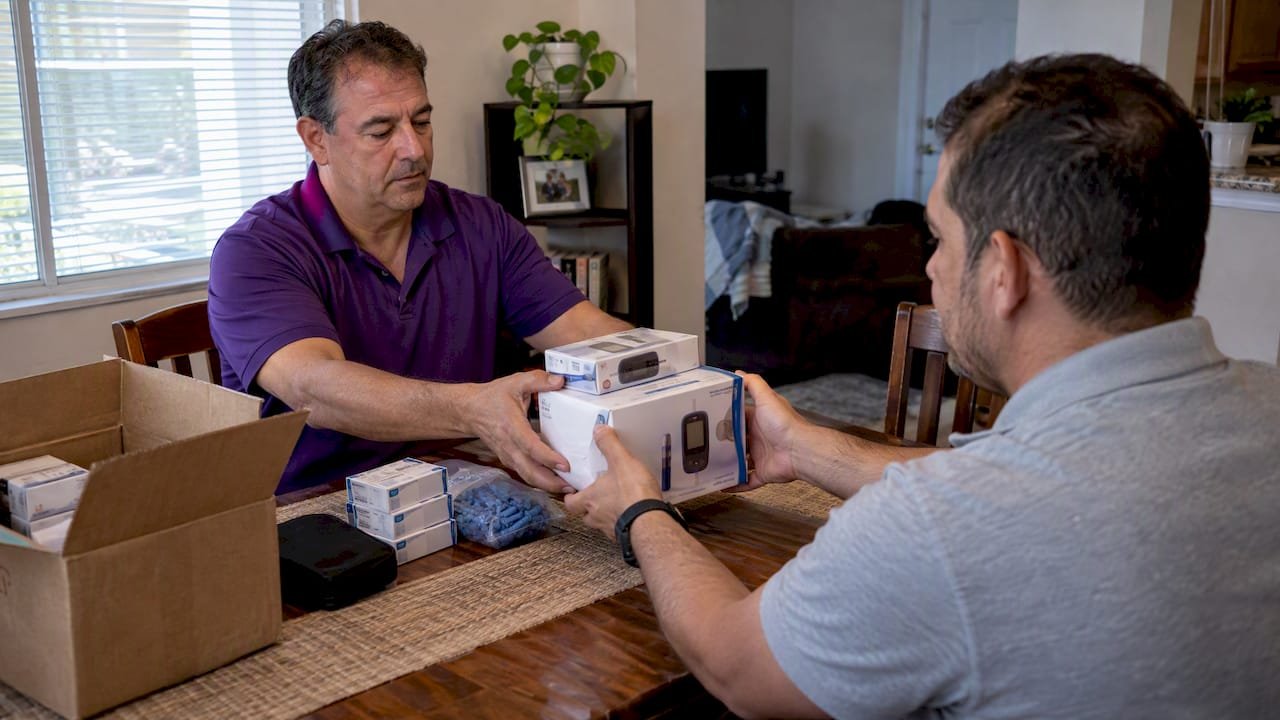
Sealed, unexpired sensors, pods, and factory-sealed test strips are frequently eligible for same-day local cash or donation, but you need to verify the lot or serial number and check the expiration date first. If your Dexcom G7 sensors, Omnipod 5 pods, Libre 3 and Libre 3 Plus sensors, and sealed test strips are still sealed, you can likely sell or donate them. Start by confirming the packaging is untouched, running a quick recall check, and deciding whether cash or donation fits your situation better.
TL;DR:
- Only unopened, sealed diabetic supplies with valid expiration dates and intact packaging are eligible for sale or donation; opened or damaged items are excluded.
- Always verify lot and serial numbers against manufacturer recall notices and the FDA database to avoid dangerous or recalled supplies.
- Prepare your supplies by photographing and recording details, keeping them stored properly to facilitate quick, trustworthy transactions.
- Local in-person buyback offers faster cash, and price depends on the product, quantity, and expiration date, with later dates paying more.
- Donating supplies is an option when expiration is adequate, but most programs require at least 90 days of remaining shelf life, and buyers or donors prioritize safety verification.
Table of Contents
- Which items qualify as sellable device upgrade leftovers
- Safety and recalls: how to verify your supplies before selling or donating
- How to prepare your leftovers and set fair price expectations
- Sell, donate, or keep: weighing your realistic options
- From the author: why a safety-first local approach matters
- Local same-day cash: how Orlando Diabetic Supplies Buyback works
- FAQ
- Sources
Which items qualify as sellable device upgrade leftovers
Not every leftover box in your cabinet is worth the same thing. Buyers and donation programs look for one thing above all else: an intact factory seal paired with an expiration date that is still comfortably in the future.
- Sealed Dexcom G7 sensor boxes with no torn tape or opened flaps.
- Unopened FreeStyle Libre sensors still in their original wrapping.
- Sealed Omnipod pods with the box seal unbroken.
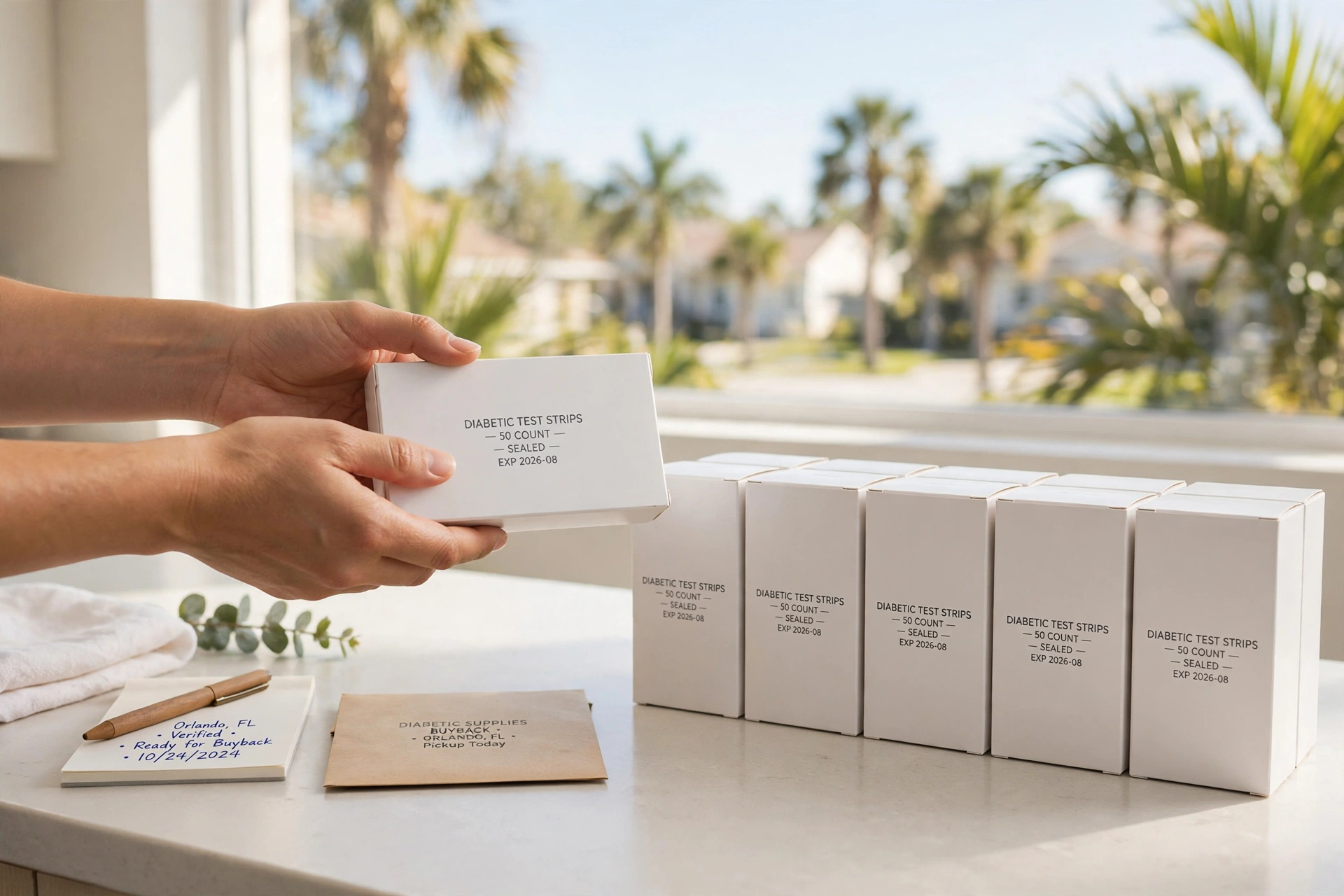
- Factory-sealed test strip vials or boxes, any major brand.
Items get excluded fast: opened boxes, punctured foil pouches, expired stock, or anything with water damage or crushed packaging. A common scenario we see involves someone who switched from a Dexcom G6 to a G7 and still has several sealed boxes sitting in a drawer, a textbook case of device upgrades creating leftover supplies through no fault of the patient. Insurance plans sometimes force a switch between brands mid-prescription, which is another frequent reason people end up with sealed supplies they will never use.
Safety and recalls: how to verify your supplies before selling or donating
Before you sell or donate anything, take a few minutes to confirm the supplies are legitimate and unaffected by any recall. This step protects you and whoever receives the product next.
- Find the lot number and serial number printed on the box, usually near the barcode.
- Check the manufacturer’s recall or safety notice page for that lot number.
- Search the FDA recall and safety database for your specific device and lot.
- If your item matches a recalled or flagged lot, stop and follow the manufacturer’s disposal or replacement instructions instead of selling it.
In May 2026, Dexcom reported that specific G7 sensor lots originally designated for scrap and destruction had been stolen and later redistributed, and the manufacturer notice instructed users to verify serial numbers directly and discontinue use of any affected device. Lot number alone was not always enough to catch these units, which is why a serial-number check matters even when the box looks completely normal.
Illicit supply chains are a real risk in this category. A DOJ and FDA press release detailed a large fraud scheme in which adulterated and misbranded diabetic test strips moved through wholesale channels into retail pharmacies in Florida. Avoid buyers or marketplaces that seem eager to skip verification. A seller who refuses to show a receipt or won’t let you photograph the lot number before paying is a red flag worth walking away from.
How to prepare your leftovers and set fair price expectations
A little prep work goes a long way toward a smooth, fast transaction. Buyers move quicker when you’ve already done the legwork.
- Keep every box sealed exactly as it was shipped, no tape removed.
- Photograph the box, the lot number, and the expiration date before you meet anyone.
- Note how many months remain before expiration for each item.
- Gather any receipts or pharmacy paperwork you still have, even if it’s not required.
- Store everything away from heat, direct sun, and humidity until the sale.
When you meet a buyer in person, pick a public location, bring photo ID, and let the buyer inspect the lot and serial numbers before any money changes hands to ensure compliance with medical identification standards. Reputable local buyers pay on the spot once everything checks out.
Pro Tip: A buyer’s offer usually reflects three things: brand and model, units remaining, and months until expiration, so a box with a year of shelf life left will typically price higher than one expiring in a few weeks.
If you ever receive a Form 1099-K for a sale like this, don’t panic. IRS guidance explains that selling personal items at a loss is generally not taxable, while selling at a profit means the gain should be reported. Keep your original purchase records just in case you need to explain the numbers later. For a full walkthrough of preparing boxes for sale, our guide on how to prepare diabetic supplies for sale covers packaging and photo examples in more detail.
Sell, donate, or keep: weighing your realistic options
Once you know your supplies are sealed, unexpired, and recall-free, the real decision is what to do with them.
- Donating helps someone who needs supplies and skips any income reporting, but most programs require items to be unexpired by at least 90 days and donors often cover shipping costs. Insulin for Life USA is one established option that accepts CGM sensors, pump supplies, and related items.
- Selling locally gets you cash the same day with no shipping involved, though the price will be lower than retail and you still need to confirm the buyer is legitimate before handing anything over.
- Keeping the items makes sense when expiration is close, when you’re unsure about a recall, or when something about the transaction doesn’t feel right.
For readers focused on fast cash rather than donation, a local in-person buyback is usually the simplest path. A buyer inspects your sealed boxes, confirms the lot and expiration, and pays on the spot, no mailing labels, no waiting for a check.
From the author: why a safety-first local approach matters
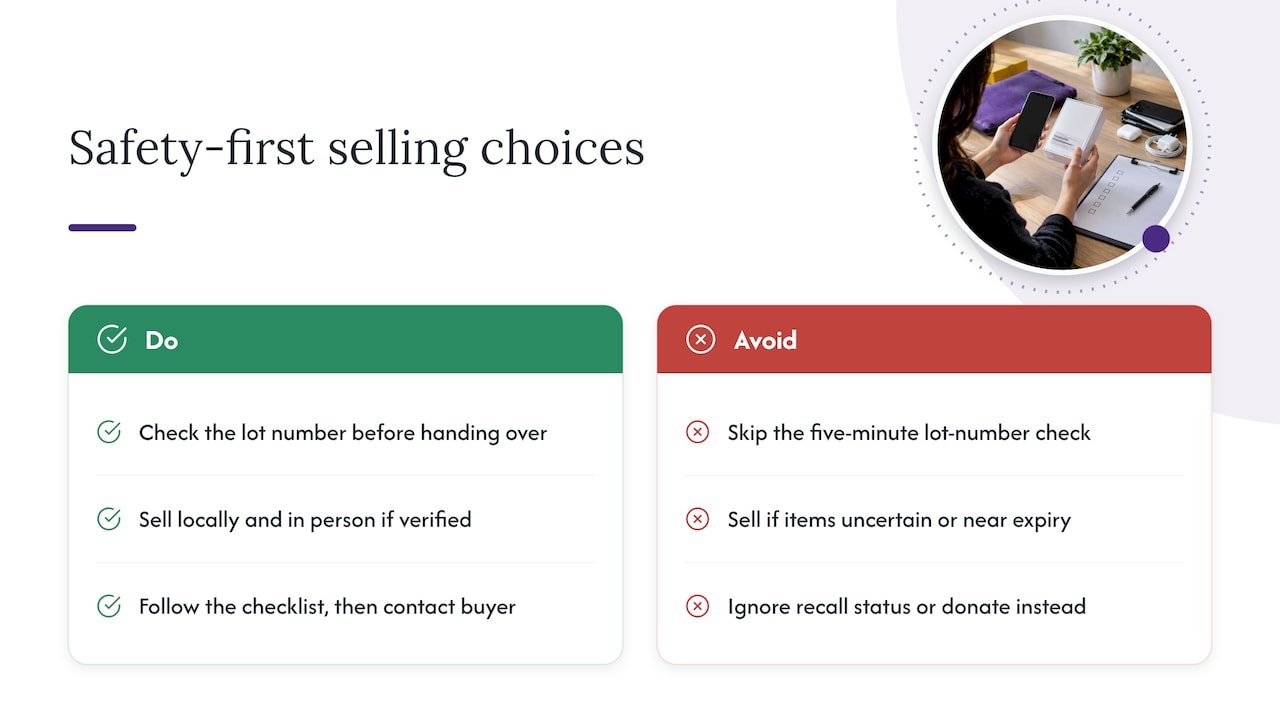
I’ve spent enough time looking at how leftover diabetic supplies change hands to know that the sellers who come out ahead are the ones who slow down just enough to check a lot number before they hand anything over. It’s a five-minute step that most people skip, and it’s the one that protects you most.
My stance is simple: sell locally and in person when your supplies are clean and verified, and lean toward donation when anything feels uncertain, expiration is close, or you can’t confirm a recall status. Either path is better than letting sealed, unexpired supplies sit in a drawer. Work through the checklist above, then reach out to a reputable local buyer if cash is what you need.
— Liliana
Local same-day cash: how Orlando Diabetic Supplies Buyback works
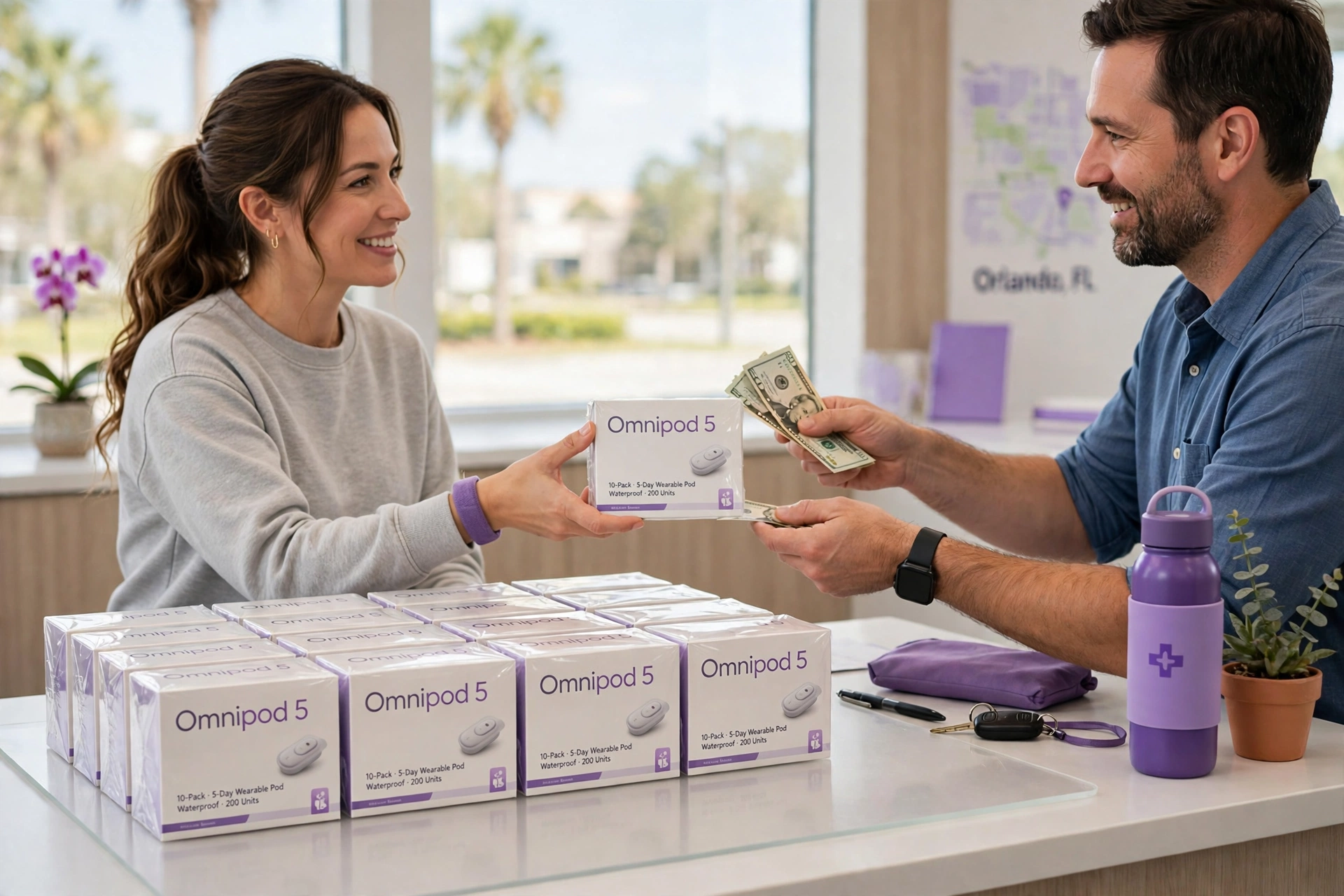
We buy sealed, unexpired Dexcom G7 sensors, Omnipod 5 pods, Libre 3 and Libre 3 Plus sensors, and sealed test strips, with in-person inspection and same-day payment. If your device upgrade left you with boxes you’ll never use, we’ve built our process around getting you paid quickly without the hassle of shipping anything.
When you reach out, here’s what to bring to the meetup:
- Sealed boxes with the lot and serial number clearly visible.
- A valid photo ID.
- Photos of the packaging and a receipt if you still have one.
- A suggested public meeting spot that works for your schedule.
We inspect everything on the spot, confirm the seal and expiration, and pay in cash or electronic transfer before you leave. Price depends on the product, quantity, and expiration date, with later dates paying more. Our Dexcom G7 buyback shows what we accept, and our FreeStyle Libre 2 buyback also shows what we accept. If you’re ready to turn your leftover supplies into cash today, visit our cash for diabetic supplies page to get started.
FAQ
Can I sell unopened diabetic supplies left over from a device upgrade?
Yes, sealed and unexpired items like Dexcom G7 sensors, Omnipod 5 pods, Libre 3 and Libre 3 Plus sensors, and sealed test strips are commonly accepted by local buyers. Always verify the lot number against the manufacturer’s safety notices before a sale.
How much can I get for unused Dexcom G7 or FreeStyle Libre 2 sensors?
Price depends on the product, quantity, and expiration date, with later dates paying more. Prices vary by how many months remain before the supply expires.
Do I have to pay taxes on selling leftover diabetic supplies?
Usually not. IRS guidance states that selling personal items at a loss is generally not taxable, while any profit from a sale should be reported.
Where can I donate unused CGM sensors or insulin pump supplies?
Insulin for Life USA accepts unopened, unexpired CGM sensors and pump supplies, though most programs require at least 90 days of shelf life remaining. Donors typically cover the cost of shipping.
How do I know if my diabetic supplies were part of a recall?
Check the lot and serial number on the box against the FDA’s recall and safety database or the manufacturer’s own notice page. If your item matches an affected lot, stop using or selling it and follow the manufacturer’s replacement instructions.
Sources
- What to do with Form 1099-K | Internal Revenue Service
- Where to Donate Diabetes Supplies | Donate Insulin Pens & Glucose Monitors
- Dexcom theft/scrap-lot notification (FDA entry)
- DOJ press release on diabetic test strip fraud (with FDA involvement)