The best time to sell unused diabetic supplies is as soon as you know you have extra: right after a device switch, a prescription change, or a delivery that is bigger than you need. Sealed, unexpired supplies with plenty of shelf life left bring the best offers, and every month that passes narrows that window. Below we explain how timing works, what to check before you sell, and how to get paid the same day in Orlando.
TL;DR
- Sell as soon as you know the supplies are surplus. Waiting only shortens the shelf life you can offer.
- Check the expiration date on every box before you call anyone. More time left on the date means a stronger offer.
- Keep supplies sealed, dry and out of heat. Damaged or opened packaging usually can’t be resold.
- Our published ranges are $70-$90 per pack for Dexcom G7 and $15-$20 per sensor for FreeStyle Libre 2.
- If your supplies were billed to Medicare or another government program, ask about the rules before you sell.
Table of Contents
- Why timing matters more than most people expect
- The moments when you most often have extra supplies
- How expiration dates change what you’re paid
- Keep supplies in sellable condition while you wait
- What we pay for common items
- Check the rules before you sell
- Perspective
- Sell your unused supplies for same-day cash in Orlando
- How to get the most when you sell
- What to do with supplies you can’t sell
- FAQ
- Sources
Why timing matters more than most people expect
Diabetic supplies don’t lose value because the market moves. They lose value because the clock on the box keeps running. A sealed sensor or box of strips is worth the most on the day it has the longest remaining shelf life, and a buyer has to resell it before it expires.
That is why the question is less “which month?” and more “how soon?” There is no holiday season or tax-time bump we can point to. What matters is the date printed on your packaging, and the sooner you act, the more of it is left.
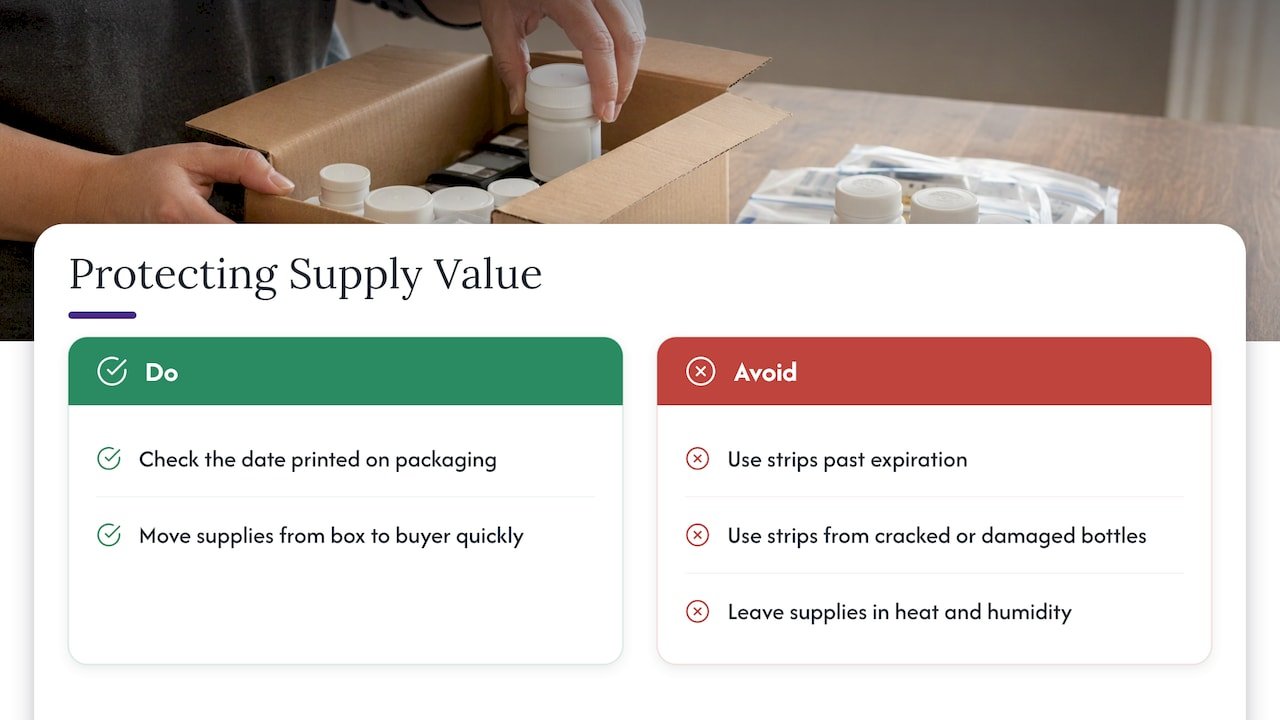
There is a second reason to move early. Surplus supplies pile up in closets, drawers and cars. Storage conditions affect supplies, and heat and humidity are the usual problems. The FDA says test strips should not be used past their expiration date or from a cracked or damaged bottle, and that heat and humidity can damage them. Supplies that sit in a hot place can end up unsellable. Supplies that go from the box to a buyer quickly stay in good shape.
The moments when you most often have extra supplies
Most of the people we meet sell after one of these events. If any of them is happening to you, it is a good time to sell.
You switched devices
Moving from one CGM to another, or from a meter to a CGM, often leaves you with a box or two of the old system. Those sensors don’t help you anymore, and the best moment to sell them is right after you confirm the new system is working. We cover the most common upgrades on our page about common diabetes device upgrades, and why people switch in this guide to switching CGM devices.
A new device also means new numbers to learn. If you want help reading them, a guide on how to interpret your CGM data explains the basic terms such as average glucose and time in range.
Your prescription changed
A new dose, a different test schedule or a different brand can leave strips, pods or sensors unused. If your care team has changed the plan, sell the old supplies while the dates are still long. Our page on selling previous diabetes device supplies walks through this situation.
Your insurance sends more than you use
Some private insurance plans ship a full quantity on a set schedule whether or not you used the last one. If the surplus builds up, don’t wait until a box is close to expiring. Sell the extra as it arrives, and keep a small buffer for yourself.
You found a forgotten stash
Cleaning a cabinet or moving house often turns up unopened boxes. Check the dates the same day. If they are still good, sell them soon. If you want a system for the future, see our guide to organizing unused diabetes equipment at home.
How expiration dates change what you’re paid
Expiration is the biggest factor in the offer. A buyer is paying for supplies that someone else can still use, so the longer the usable window, the better the price. We explain the reasoning in detail in how expiration date affects buyback price.
Here is how to think about it in practice:
| Situation | What it usually means for your offer |
|---|---|
| Sealed, many months of shelf life left | The strongest position to sell from |
| Sealed, date getting closer | Still sellable, but the offer reflects less time |
| Past the expiration date | Not eligible for resale |
| Opened, damaged or water-exposed packaging | Generally not eligible |
The exact figure for your supplies depends on the item and the date, so we confirm it in person when we inspect them.
Why expired supplies shouldn’t be used or sold
Expired supplies are a safety issue, not just a pricing issue. The FDA says not to use strips after the expiration date. The American Diabetes Association gives the same advice for insulin: check the expiration date and don’t use it past that date. If you have expired items, our guide on what happens to expired diabetic supplies explains safe handling.
A quick date check before you sell
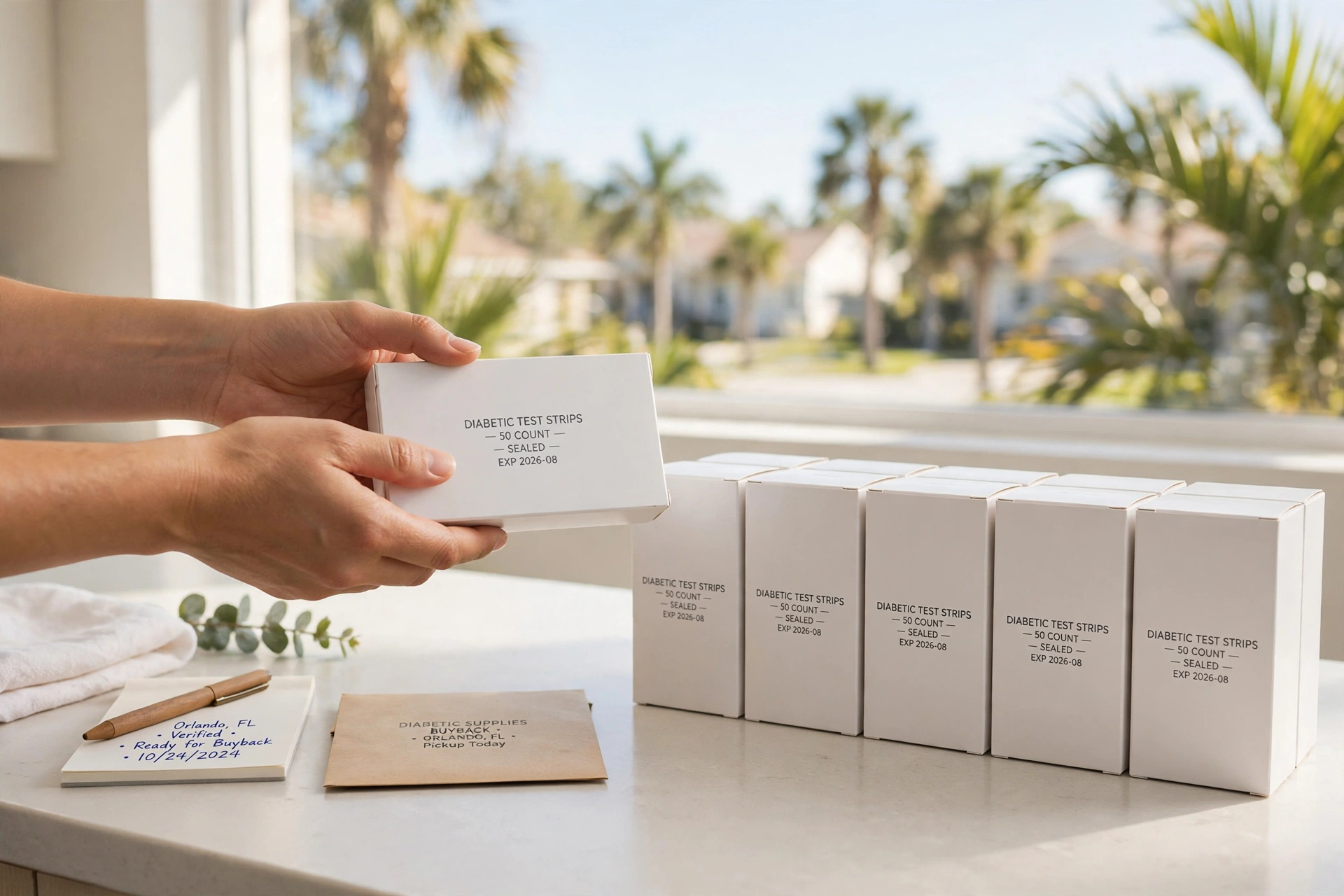
- Gather every box and look for the printed expiration date, not just the date on the outer carton.
- Write the dates down, or sort boxes from the newest date to the oldest.
- Set aside anything past its date.
- Set aside anything with a torn seal, a crushed box or signs of moisture.
- Keep the rest sealed and ready to show.
Our expiration date checklist and the page on how to check expiration before selling supplies go step by step.
Keep supplies in sellable condition while you wait
If you can’t sell right away, protect what you have. Condition affects eligibility as much as the date does.
- Keep the packaging sealed. An open vial is a problem. The FDA has warned that open or damaged vials can expose test strips to humidity and cause inaccurate results.
- Store them at room temperature, away from heat. Don’t leave boxes in a car, near a window or in a bathroom.
- Keep the original boxes. Original packaging helps show what the item is and that it is untouched.
- Don’t mix opened and unopened items. Keep them in separate bags so nothing sellable is lost.
For what we mean by unused, see our guide to what counts as an unused diabetic supply.
What we pay for common items
Prices are published on our item pages. Test strips, other CGMs and pods are priced after we see the item and its date.
| Item | Published range |
|---|---|
| Dexcom G7 | $70-$90 per pack |
| FreeStyle Libre 2 | $15-$20 per sensor |
| Test strips, other CGMs, pods | Quoted when we inspect them |
These are ranges. Where you land depends on the condition of the supplies and the expiration date, which is another reason to sell early.
Check the rules before you sell
Timing isn’t the only thing to get right. Where your supplies came from matters too.
Supplies paid for by private insurance and then left unused are a different situation from supplies billed to Medicare or another government program. Medicare has specific rules for how diabetic testing supplies are supplied. CMS states that Medicare-covered mail-order diabetic testing supplies must come from contract suppliers, with an exception for supplies a beneficiary or caregiver picks up in person at a Medicare-enrolled storefront.
If Medicare or Tricare covered your supplies, ask your plan or supplier what applies before you sell. Our page on selling test strips safely covers Medicare checks, and how to sell CGMs in Florida covers the state rules.
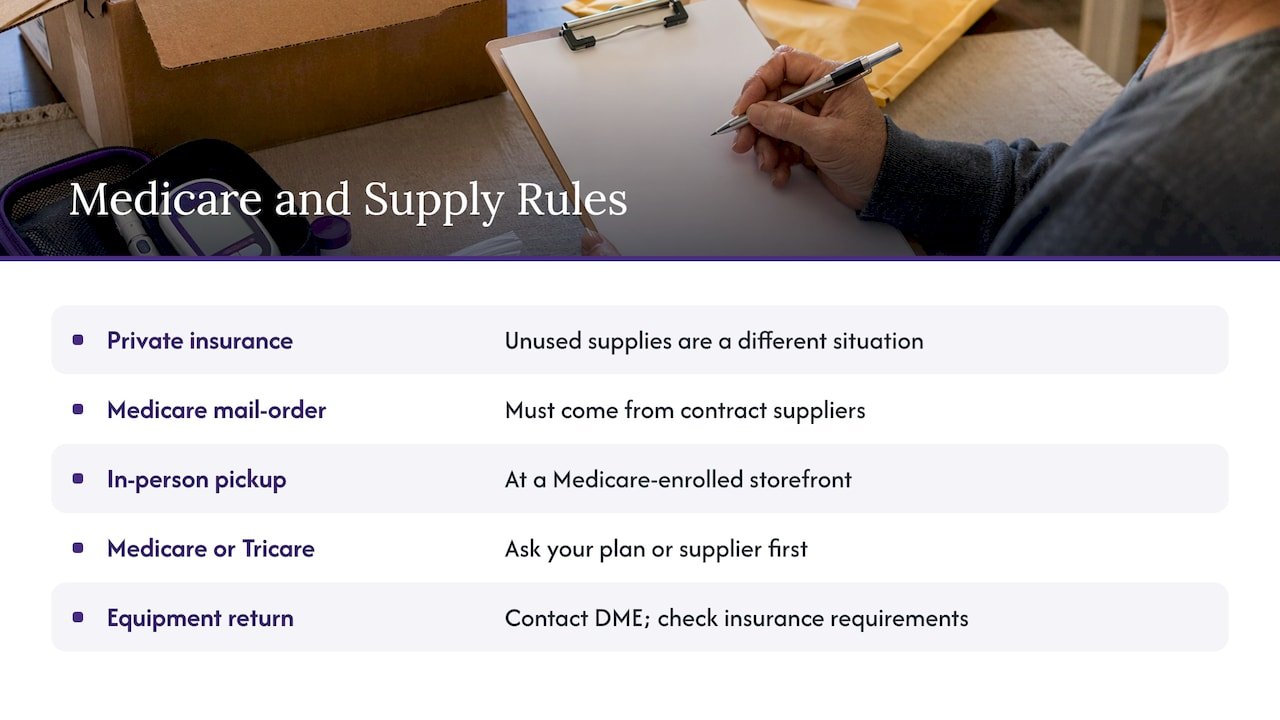
If your plan or supplier says they want the equipment back, returning it may be the right move. Children’s hospital guidance says that if you no longer need equipment, you should contact the DME company to arrange pickup and check whether your insurance requires it to be returned. We explain how to decide in return or sell unused diabetic supplies.
Perspective
From where we sit, the timing question has a simple answer: don’t wait. Almost every seller we talk to has the same story. They had extra supplies, meant to deal with them, and a few months went by. By then the dates were shorter and the boxes had been through a hot summer in a closet.
That’s why we built our service around speed and simplicity. We meet you in a safe, local public place in the Orlando area, look at your supplies in person and pay you on the spot for eligible items. There is no shipping, no waiting for a check and no guessing where your package is.
Our pricing is meant to be clear. For Dexcom G7 and FreeStyle Libre 2 you can see our published ranges before you contact us. For everything else we tell you the number when we see the items.
If you’ve just switched devices or noticed extra boxes, that’s the best moment to call. Your supplies are at their most valuable, and you free up space and some cash.
Liliana
Sell your unused supplies for same-day cash in Orlando
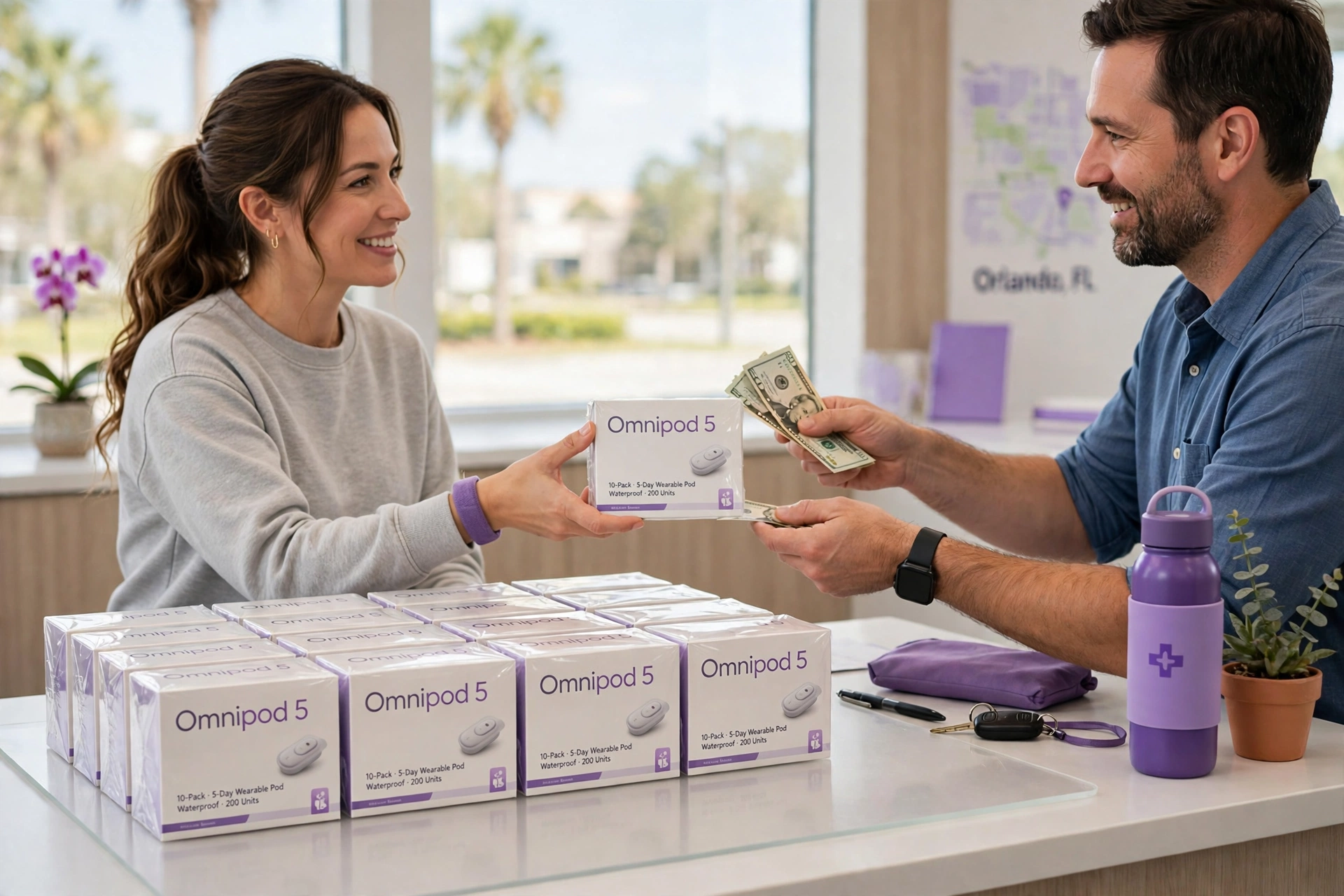
We buy unused, sealed and unexpired diabetic supplies in Orlando and the surrounding areas, including Dexcom G7 sensors, Omnipod 5 pods, Libre 3 and Libre 3 Plus sensors, and sealed test strips from major brands. We inspect in person and pay on the spot for eligible items.
Start with our cash for diabetic supplies page, or read how to get cash for unused diabetic supplies to see each step before you reach out.
How to get the most when you sell
- Act early. Contact a buyer as soon as you know the supplies are surplus.
- Sort by date. Put the longest-dated boxes first. They carry most of the value.
- Keep everything sealed. Don’t open a box to check it.
- Know where the supplies came from. If a government program paid for them, ask about the rules first.
- Choose a safe handoff. Meeting in a public place and being paid on the spot avoids the delays and risks of shipping.
- Ask for the price up front. A fair buyer tells you the number clearly before you hand anything over.
Protect yourself from scams
Quick-cash offers attract bad actors, so keep your personal information close. The HHS Office of Inspector General advises being wary of unsolicited calls offering “free” supplies, which are often designed to capture personal and insurance information. A legitimate cash sale doesn’t need your insurance ID or Medicare number.
If you want a local buyer to compare against shipping to a faraway company, think about what each route costs you in time and risk. We lay out the local options in where to sell diabetic test strips for cash in Orlando.
What to do with supplies you can’t sell
Some items won’t qualify: expired boxes, opened vials or used sharps. Handle them safely. Used sharps go straight into a sharps container. Healthline notes that if an FDA-cleared container isn’t available, a heavy-duty plastic household container may be used, subject to local rules. Check your county’s disposal rules before you throw anything out.
FAQ
What is the best month to sell diabetic supplies?
No month is best for everyone. The best time is as soon as you know you have extras, because the expiration date on the box decides most of the value. The more shelf life left, the stronger your position.
Can I sell diabetic supplies that expire soon?
Sometimes, but the offer reflects the shorter time left, and expired items can’t be resold. Check every date first, then call early. We confirm eligibility when we inspect your supplies in person.
Is it legal to sell unused diabetic supplies?
It depends on where the supplies came from. Medicare has specific rules on how diabetic testing supplies are supplied, so if a government program paid for yours, ask your plan or supplier before selling. For supplies from private insurance, we explain the Florida rules on our page about selling CGMs in Florida.
Does the brand change the price?
Yes. Brand, model and expiration date all affect the amount. Our published ranges are $70-$90 per pack for Dexcom G7 and $15-$20 per sensor for FreeStyle Libre 2. For other items we quote a price when we see them.
Should I open a box to check the contents?
No. Opening a sealed box can make it ineligible. Check the printed date on the outside and keep the seal intact.
Sources
- FDA: test strip use and storage guidance
- American Diabetes Association: insulin storage and syringe safety
- FDA recall record: AccuChek Aviva Plus test strips
- CMS: National Mail-Order Recompete fact sheet
- Nationwide Children’s Hospital: prescription medicines, supplies and equipment
- HHS OIG: fraud alert for people with diabetes
- Healthline: how to dispose of used diabetes supplies