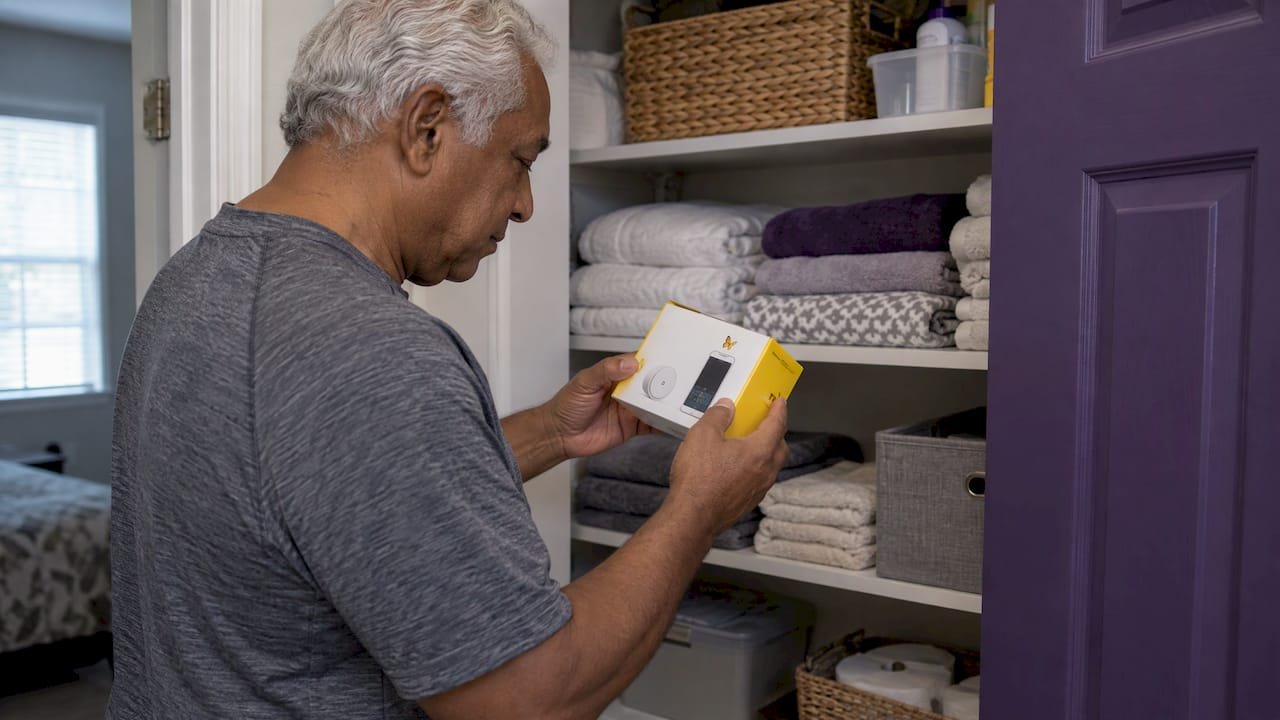
An unopened FreeStyle Libre sensor is good until the expiration date printed on its box, as long as it has been stored within Abbott’s temperature range. For Libre 2, Abbott’s U.S. support team says that date is the last day you can apply the sensor. Once it is on your arm, it keeps working for its full wear time. That means you can start a sensor on its expiration date and still get the full wear period.
Below, you will find what the date means, how long Libre sensors are approved to sit on a shelf, how to store them, and what to do if you have more sensors than you can use.
TL;DR
- The expiration date on the box is the last day to apply a Libre sensor. Check it before you open the package.
- FDA approval letters for earlier FreeStyle Libre systems set 9 months of storage for the sensor component. Your box date is the one that counts for your sensor.
- Store sensors at 39°F to 77°F for Libre 2, and 36°F to 82°F for Libre 3 and Libre 3 Plus. Never freeze them.
- Shelf life is not wear time. Libre 3 wears up to 14 days and Libre 3 Plus up to 15 days.
- Extra sealed, unexpired sensors still have value. In Orlando, we pay same-day cash for eligible ones.
Table of Contents
- What the expiration date on a Libre sensor means
- How long can an unopened Libre sensor sit on the shelf?
- Storage rules by model
- Can you use a Libre sensor after it expires?
- Shelf life versus wear time on each model
- Why people end up with extra sensors
- What affects what a sealed sensor is worth
- A simple routine to keep sensors in date
- Our perspective
- Sell your unused Libre sensors in Orlando
- FAQ
- Sources
What the expiration date on a Libre sensor means
Every Libre sensor box carries an expiration date. Abbott’s terms of sale say sensors have an expiry date printed on the packaging of each box and must be applied before that date. The terms are written for Ireland, but the rule is the same idea you will see on U.S. packaging.
For U.S. users, Abbott’s support site is more specific. It explains that for the FreeStyle Libre 2 sensor, the date is the last day you can apply the sensor. You can apply it on or before that day and use it for the whole wear period.
So there are two clocks:
- Shelf life: how long the sealed sensor can sit in its package. It ends on the date printed on the box.
- Wear time: how long the sensor works once it is on your body. It starts the moment you apply and activate it.
People mix these up all the time. A sensor with 10 days left on the box is not a sensor that dies in 10 days. It is a sensor you need to apply within 10 days.
Where to find the date
Look on the outside of the sensor kit box. Check the sensor pack and applicator as well if you have already separated them. Write the date on a sticky note or in your phone when a delivery arrives. If you receive several boxes at once, they may come from different lots with different dates, so check each one.
How long can an unopened Libre sensor sit on the shelf?
The exact date is set per lot and printed on the box, so there is no single number that fits every sensor. But the FDA gives a useful reference point.
The FDA’s approval of the original FreeStyle Libre system established expiration dating for the sensor component of 9 months of storage, at 39°F to 77°F and 10 to 90 percent non-condensing humidity. The approval for the Libre 14 day system followed the same pattern, with the same 9 months at the same conditions. Both letters name Abbott Diabetes Care Inc. of Alameda, California as the manufacturer.
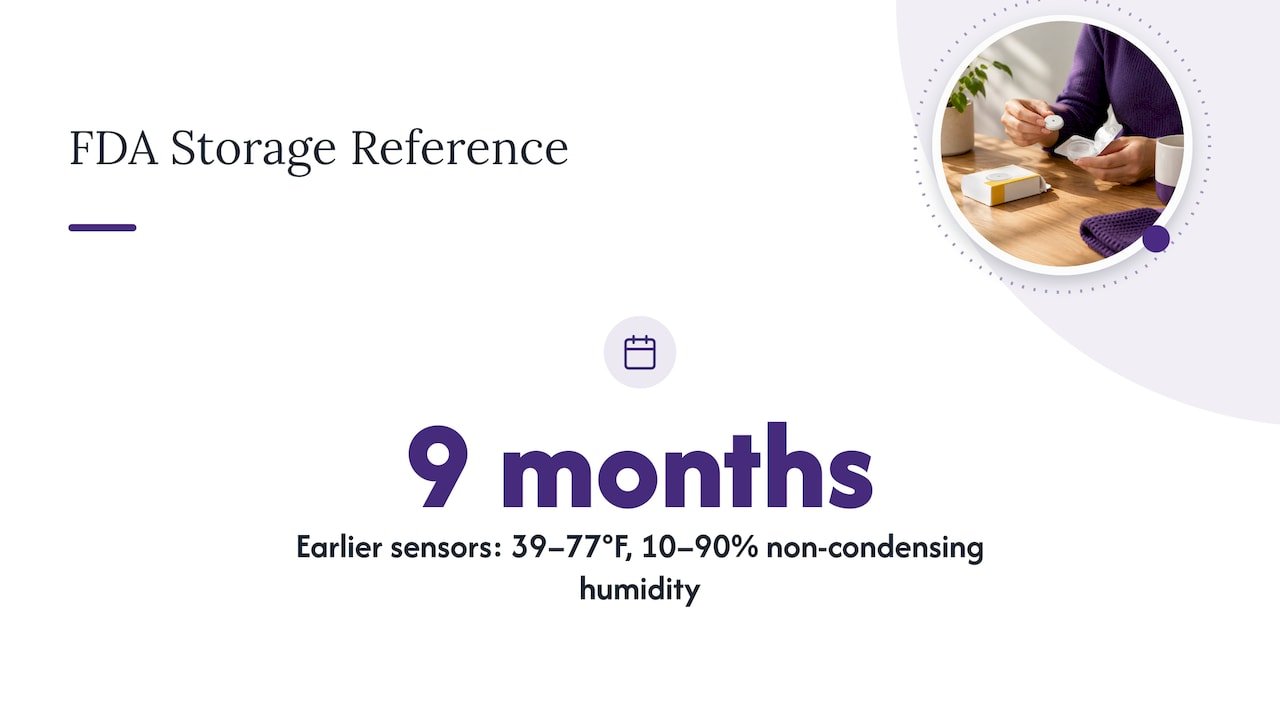
Those letters cover earlier Libre systems. Newer models such as Libre 2 and Libre 3 are approved separately, so rely on the date on your own box. What the letters do show is that Libre sensors are made to be stored for months, not years. In practice, that is why a sensor in your cabinet may carry a date only several months out.
That short window matters if you are stockpiling. A box that arrives with a date seven or eight months away has to be used or passed on well before then.
Storage rules by model
Heat is the main enemy of a sealed sensor. Abbott publishes storage ranges for each system, and they differ slightly between models.
| Model | Storage temperature | Humidity | Source |
|---|---|---|---|
| FreeStyle Libre 2 | 39°F to 77°F | 10 to 90% non-condensing | Abbott system specifications, 2023 |
| FreeStyle Libre 3 and Libre 3 Plus | 36°F to 82°F | 10 to 90% non-condensing | Abbott system specifications, 2024 |
The FDA’s device database agrees for Libre 3 Plus, listing a storage range of 36 to 82°F and 10 to 90 percent humidity, along with an atmospheric pressure range.
Practical storage tips
Abbott’s instructions for use tell you to keep the sensor kit between 39°F and 77°F. They warn that storage outside the range may cause inaccurate sensor glucose readings. The same instructions say you can refrigerate the kit if the refrigerator stays within that range, and that you should not freeze it.
In Florida, that advice is more than a footnote. A few easy habits:
- Keep sensors indoors in an air-conditioned room, in a drawer or closet away from outside walls.
- Never leave a box in a parked car, a mailbox, or on a porch. Florida summer heat passes 82°F easily.
- If a delivery sits outside in the sun, bring it in right away and check the box.
- If you use the fridge, keep sensors away from the freezer compartment and away from the back wall where items can freeze.
- Keep boxes closed and in their original packaging until you are ready to apply.
One point about operating temperature: it is different from storage temperature. Abbott’s Libre 14 day FAQ lists an operating range of 50°F to 113°F, while storage for the applicator and pack stays at 39°F to 77°F. The first applies to a sensor on your body. The second applies to a box in your home.
Can you use a Libre sensor after it expires?
Abbott says no. Its instructions tell you not to use the system if the kit contents are past the expiration date. They also say not to use it if the package, sensor pack, or applicator looks damaged or already opened.
Abbott’s Lebanon support page puts it plainly too: the expiration date is the last day to use the sensor, and it advises against using one past that date. It also says to start a new sensor before the old one runs out, so you have no gap in readings.
The reasoning is simple. Glucose readings guide decisions about food and insulin. A sensor that has aged or been stored badly may give readings you cannot trust. A few dollars saved is not worth that.
If you are close to the date, here is what to do:
- Check the date on the box today, not when you need the sensor.
- Apply the sensor with the closest date first.
- If you hold more than you can use before the dates pass, decide early whether to sell or hand off the extras.
- If the packaging is damaged, do not use it. Contact Abbott customer care through its support site for a replacement.
Shelf life versus wear time on each model
Once applied, a sensor has its own limit. The American Diabetes Association’s consumer guide says the Libre 3 sensor lasts 14 days and Libre 3 Plus lasts 15 days. It lists Libre 3 for ages 4 and up and Libre 3 Plus for ages 2 and up. Abbott’s own Libre 3 specifications also list wear of up to 14 days for Libre 3 and up to 15 days for Libre 3 Plus.
You can do some quick math. If you wear one sensor per 14 days, you use about two a month. A Libre 3 Plus user at 15 days needs two sensors a month as well. A three-month supply means about six sensors. If you have eight, the extra two are the ones to plan for early.
This is also why a date check matters on an automatic refill. Mail-order or pharmacy refills sometimes arrive ahead of when you need them, especially after a prescription change.
Why people end up with extra sensors
Most leftover sensors are nobody’s fault. Common reasons:
- A device switch. You moved from Libre 2 to Libre 3 Plus, or from Libre to another system, and a box of the old sensors is still sealed.
- Insurance quantities. Private plans sometimes fill more than you wear in a month, or the pharmacy auto-ships on a schedule that does not match your use.
- A prescription change. Your doctor changes your plan and the old supplies stop being useful.
- Fewer sensors needed. A longer wear time per sensor, such as 15 days, means a refill schedule built for shorter sensors can pile up.
Sealed, unexpired sensors are exactly what a local buyer looks for. Sensors that you can no longer use still have value for someone else, and the sooner you act, the more time is left on the date.
What affects what a sealed sensor is worth
The expiration date affects both safety and price. For a buyer, the basics are the same ones Abbott points to:
- Sealed, original packaging. An opened or damaged box cannot be resold.
- Time left on the date. More months left means more value. Our Libre 3 page explains the remaining-months guideline for that model.
- Proper storage. Sensors that stayed cool and dry are in the condition the box promises.
- The model. Libre 2, Libre 3, and Dexcom sensors are priced differently.
For reference, we currently pay $15 to $20 per sensor for FreeStyle Libre 2 and $70 to $90 per pack for unused Dexcom G7. Final offers depend on inspection and the date on the box.
If you want to read more first, we explain the legal side in our guide to selling FreeStyle Libre sensors legally. Our expiration date checklist covers other supplies, and our note on Dexcom sensor storage covers the sister product. If you also have strips, see how test strip expiration affects value.
A simple routine to keep sensors in date
You do not need a system. You need five minutes when a box arrives.
- Open the outer shipping box, not the sensor kit. Look at the date on each kit.
- Note the earliest date. Put it in your phone calendar with a reminder two months before.
- Shelve by date. Put the earliest date in front.
- Count what you will use. Divide the days until the earliest date by your sensor wear time.
- Act on extras early. If the count says you will have leftovers, decide then, not in the last month.
This habit also helps if you call your pharmacy. You can tell them you still have a month or two of stock and ask them to hold the next refill.
Our perspective
We talk to people with extra sensors every week, and the pattern is the same. The sensors are sealed, stored well, and sitting in a drawer, and the person just wants to know if they are still worth something.
Our view is that a sealed sensor with time left on its date should not go to waste. It can help someone else, and it can put money back in your pocket. The key is to move early. A sensor with many months left is easier to place than one near the date.
That is why we buy locally and in person. We meet in a safe, public place in the Orlando area, inspect the box and the date with you, and pay on the spot for eligible items. There is no shipping, no waiting for a check, and no guessing about what happens to your package.
Our advice is simple: check the date, keep the box cool and sealed, and call us before your sensors get close to expiring. If a sensor is past its date or the packaging is damaged, do not use it, and do not worry about it. We will tell you honestly what we can and cannot take.
Liliana
Sell your unused Libre sensors in Orlando
If you have sealed, unexpired FreeStyle Libre sensors you will not use, we can make you an offer. We buy Dexcom G7 sensors, Omnipod 5 pods, Libre 3 and Libre 3 Plus sensors, and sealed test strips in Orlando and nearby areas. We inspect the items in person and pay on the spot for eligible ones.
Start on our Cash for Diabetic Supplies page, or see how the process works. Have the box ready so we can check the model and the expiration date together.
FAQ
Can I start a Libre sensor on its expiration date?
For Libre 2, Abbott’s U.S. support page says the date is the last day you can apply the sensor. You can apply it on or before that day and use it for the full wear period. Do not apply one the day after.
How long does a Libre sensor last once it is on my arm?
It depends on the model. The American Diabetes Association lists Libre 3 at 14 days and Libre 3 Plus at 15 days. Wear time is separate from shelf life, which is the date on the box.
Is it safe to keep Libre sensors in the refrigerator?
Abbott’s instructions say you can refrigerate the kit as long as the refrigerator stays between 39°F and 77°F. Do not freeze it. Keep it away from the freezer section and the back wall.
What if my sensor box got hot in a car or on a porch?
Abbott says storage outside its range may cause inaccurate readings. If a box was exposed to heat, do not apply a sensor from it. Contact Abbott customer care through its support site about the box.
Can I sell sensors that are close to expiring?
Sensors with more time left on the date are easier to sell. Contact us with the model and the date on the box, and we will tell you what we can offer.
Sources
- Terms of Sale, FreeStyle, Abbott Ireland
- FreeStyle Libre 2 sensor expiring within 14 days, Abbott U.S. support
- FDA approval letter P160030
- FDA approval letter P160030/S017
- FreeStyle Libre 2 system specifications, Abbott
- FreeStyle Libre 3 system specifications, Abbott
- AccessGUDID: FreeStyle Libre 3 Plus
- FreeStyle Libre instructions for use, Abbott
- FreeStyle Libre 14 day system FAQ, Abbott U.S. support
- Does sensor expiry mean last day to apply or use, Abbott
- FreeStyle Libre 3 and Libre 3 Plus, American Diabetes Association consumer guide